 By Adrien Blanc
25 Best Habits to Start Tracking Today
Choosing the right habits to track is the difference between a system that sticks and one you abandon after a week. Research shows that tracked habits are 2.5 times more likely to be maintained than untracked ones, according to a meta-analysis on self-monitoring and goal attainment. But the key isn't tracking everything — it's tracking the right things. The 25 habits below are organized into four categories (health, productivity, mindset, and lifestyle) and chosen because each one is backed by research, simple to measure daily, and high-impact enough to change how you feel within weeks. Whether you're brand new to habit tracking or looking to refresh your list, start here.
How to Choose the Right Habits for You
Start with what matters most to you right now, not what looks impressive on paper. The best habit to track is one you genuinely want to build — not one you feel pressured into.
Here are three filters to run every potential habit through:
- Is it binary? The easiest habits to track have a clear yes/no: "Did I drink 8 glasses of water?" beats "Did I stay hydrated?" A study in Health Psychology Review found that tracking concrete processes rather than vague outcomes leads to 37% higher habit persistence.
- Is it within your control? Track behaviors, not results. "Exercise for 20 minutes" is trackable. "Lose 2 pounds" is not — it depends on too many variables.
- Does it compound? The most powerful habits create ripple effects. Morning exercise improves sleep, mood, and focus. One habit, three benefits.
A good rule of thumb: if you can't tell by the end of the day whether you did it, it's too vague to track. And if you're wondering how many habits to track at once, research suggests starting with three to five.
Start tracking your first 3 habits today
Download Free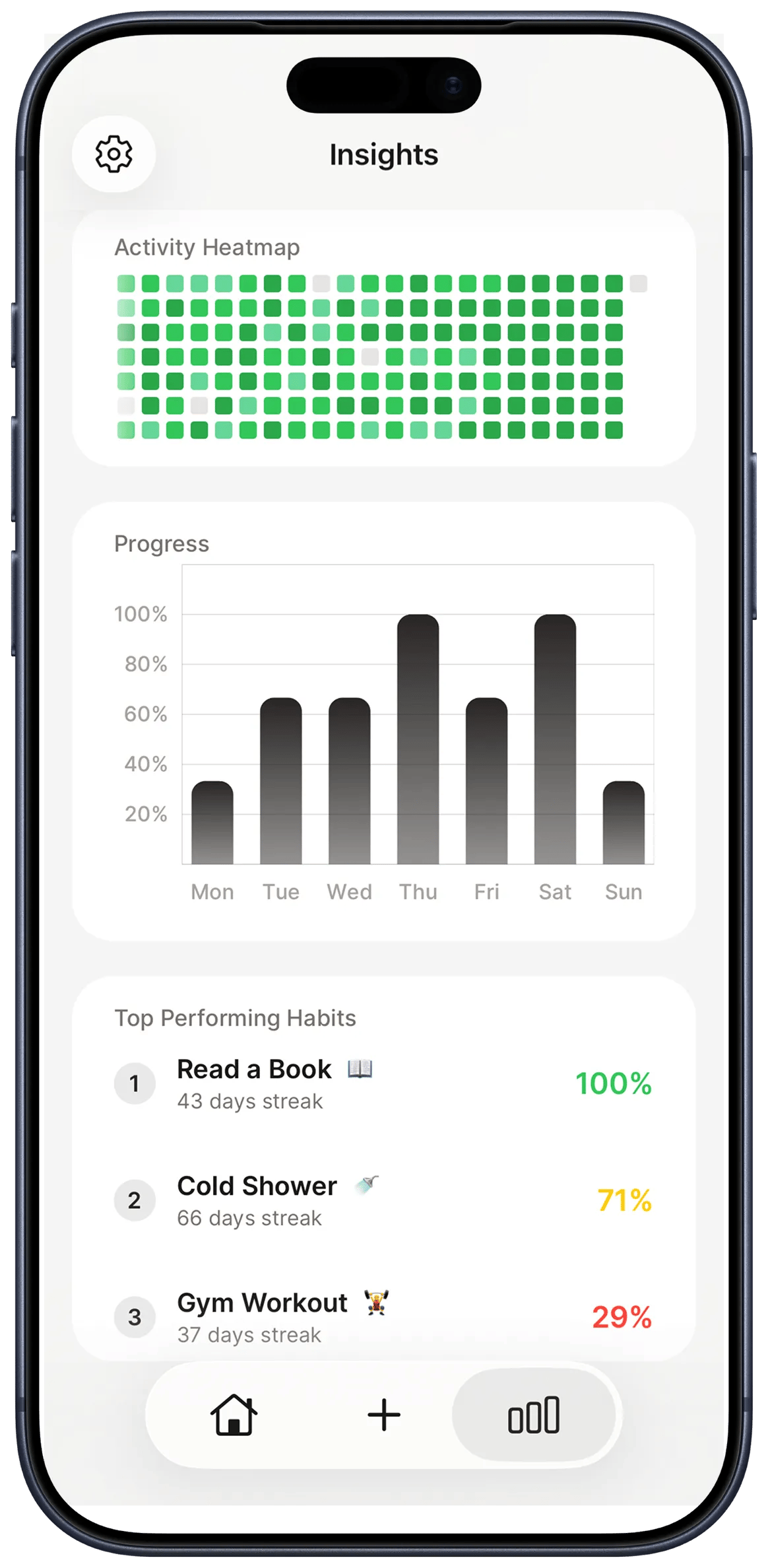
Health and Fitness Habits
Physical health habits are the most commonly tracked category worldwide — 57% of people who use tracking technology focus on health and fitness. These seven habits give you the broadest health benefits for the least complexity.
1. Exercise for 30 Minutes
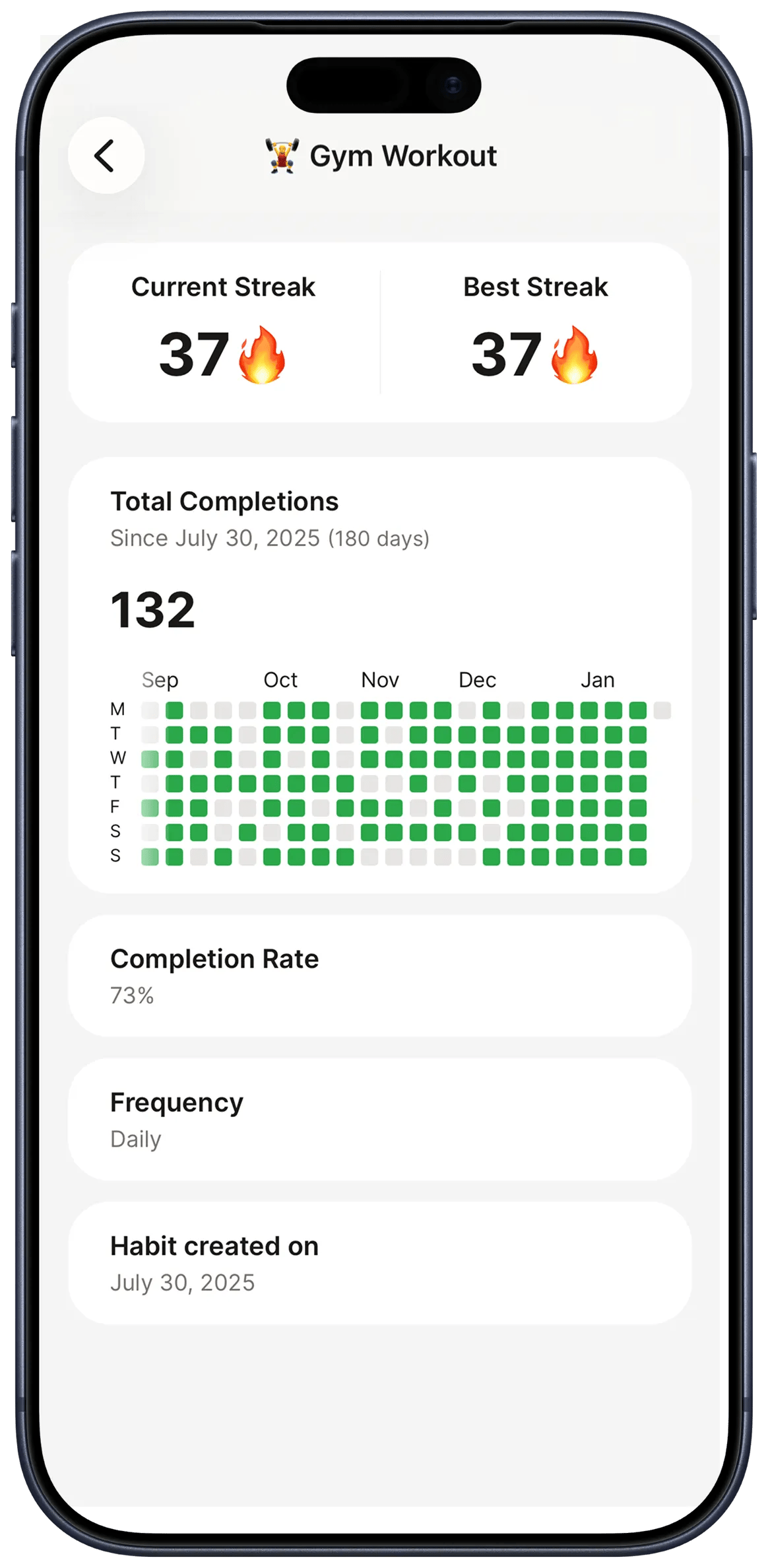
The WHO recommends at least 150 minutes of moderate-intensity activity per week. That's roughly 30 minutes, five days a week. People who are insufficiently active have a 20–30% increased risk of death compared to those who meet this threshold. A University of Copenhagen study found that 30-minute workouts provide the same fat-loss benefits as 60-minute sessions — so you don't need to overdo it.
2. Drink 8 Glasses of Water
About 75% of Americans are chronically dehydrated, according to research cited by UCSF. A major NIH study tracking over 11,000 adults for 30 years found that staying well-hydrated is linked to fewer chronic conditions and a longer life. Even mild dehydration (1–3% body weight loss) impairs concentration and mood. Track it glass by glass.
3. Get 7–9 Hours of Sleep
Sleep is the foundation habit — it affects everything else on this list. The CDC reports that a third of American adults sleep fewer than seven hours per night. Tracking your bedtime rather than your wake time gives you something you can control. If you want a full strategy, see our guide on building better sleep habits.
4. Eat a Serving of Vegetables
Rather than tracking complex calorie counts, start with one simple question: did you eat at least one serving of vegetables today? This low-friction approach makes the habit binary and achievable while still nudging your diet in a healthier direction.
5. Take a Walk
Research published in the British Journal of Sports Medicine shows that even 10 minutes of brisk walking improves cardiovascular health. Walking is the entry-level exercise habit — zero equipment, zero learning curve. Track whether you went for a deliberate walk, not just incidental steps.
6. Stretch or Mobilize
Five minutes of daily stretching reduces injury risk and improves posture. This habit pairs well with morning or evening routines and is easy to stack after another habit — like stretching right after your morning coffee. Habit stacking is one of the most reliable ways to make new behaviors automatic.
7. No Alcohol
The sober-curious movement is growing fast: 49% of Americans say they're trying to drink less in 2025, a 44% increase since 2023. Whether you want to go fully alcohol-free or just track dry days per week, this habit gives you data on how sobriety affects your sleep, energy, and mood.
Productivity and Focus Habits
Productivity habits help you get more from the hours you already have. These six habits are chosen for their measurability and their compound effect on focus and output.
8. Read for 20 Minutes
People who read books for 30 minutes a day live nearly two years longer than non-readers, according to a study published in Social Science & Medicine. Even six minutes of reading reduces stress by 68%. Track a daily minimum of 20 minutes — short enough to be consistent, long enough to finish a book every few weeks. For a full breakdown, check our reading habit guide.
9. Do Deep Work
Deep work — uninterrupted, cognitively demanding focus — is where your most valuable output happens. Track whether you completed at least one session of focused work (even 25 minutes counts). The habit isn't about hours logged; it's about protecting at least one block per day from distractions. Our deep work habit guide covers this in detail.
10. Plan Tomorrow Tonight
Spending five minutes each evening writing tomorrow's top three priorities eliminates morning decision fatigue. This is one of the simplest productivity habits to track — did you write down tomorrow's plan before bed? It pairs naturally with an evening routine.
11. No Phone First Hour
Starting your day without your phone protects your attention before the world floods it with notifications. Track whether you went at least 60 minutes after waking without checking email or social media. This single habit changes the tone of your entire morning.
12. Inbox Zero
Process your email to zero at least once per day. This doesn't mean responding to everything — it means deciding on everything. The habit forces triage and prevents the ambient stress of an overflowing inbox.
13. Learn Something New
Track whether you spent at least 15 minutes on deliberate learning — a course, a tutorial, a chapter of a technical book. Consistent skill-building compounds dramatically over months. Even 15 minutes a day adds up to over 90 hours per year.
Mindset and Mental Health Habits
Mental health is the fastest-growing tracking category, with 19% of people now tracking mood digitally. These six habits target the inner work that supports everything else.
14. Meditate for 10 Minutes
Nearly two-thirds of people who meditated for six to nine months reduced anxiety by 60%. Research from Nature Scientific Reports found that even 10 minutes produces measurable improvements in state mindfulness — comparable to 20-minute sessions. Track it as a simple yes/no: did you sit for at least 10 minutes? If sitting still feels impossible, our meditation habit guide offers practical starting strategies.
60%
anxiety reduction after 6-9 months of meditation
15. Write Three Gratitudes
A systematic review and meta-analysis found that gratitude interventions improved life satisfaction by nearly 7% and reduced anxiety scores by almost 8%. Weekly gratitude journaling increases optimism by 5–15% and improves sleep quality by 25%. Three items per entry is the sweet spot identified by most studies. For detailed prompts and strategies, see our gratitude journaling guide.
16. Journal for 10 Minutes
Beyond gratitude, free-form journaling helps process emotions, clarify thinking, and reduce stress. A 2022 study found that journaling interventions decreased stress and improved well-being in clinical populations. Track the act of writing — pen or digital, structured or freeform.
17. Practice a Positive Affirmation
Self-affirmation research from Social Cognitive and Affective Neuroscience shows that affirming personal values activates reward centers in the brain. Track whether you stated or wrote one specific affirmation today. Keep it concrete and personal rather than generic.
18. Spend Time in Nature
A study in Scientific Reports found that spending at least 120 minutes per week in nature is associated with significantly higher well-being. That's just 17 minutes a day. Track whether you spent deliberate time outdoors — a park walk, gardening, or simply sitting outside.
19. Digital Detox Period
Track whether you took at least 30 minutes away from all screens (excluding work requirements). This habit creates space for reflection, boredom, and the kind of unfocused thinking that leads to creative breakthroughs. For a full approach, see our screen time reduction guide.
Lifestyle and Self-Care Habits
These six habits round out the list with behaviors that improve your daily quality of life. They're the ones people often overlook but consistently rate as high-impact once they start tracking.
20. Make Your Bed
It sounds trivial, but completing a small task first thing creates momentum. In a 2014 commencement speech at the University of Texas, Admiral William McRaven argued that making your bed gives you a sense of accomplishment that cascades through the day. Track it as the simplest possible win each morning.
21. Cook a Meal at Home
Home-cooked meals are associated with better diet quality and lower calorie intake. Track whether you prepared at least one meal from scratch today. This habit saves money, improves nutrition, and builds a skill that compounds over time.
22. Connect With Someone
Social connection is one of the strongest predictors of longevity and mental health. Track whether you had a meaningful interaction — a phone call, a real conversation, or a handwritten message. Not a social media like or a Slack emoji.
23. Tidy for 10 Minutes
Rather than marathon cleaning sessions, track a daily 10-minute tidy. This prevents clutter from accumulating and keeps your environment calm. It's an ideal habit to stack — tidy while your coffee brews or after dinner.
24. Practice a Creative Hobby
Drawing, playing music, writing, coding a side project — track whether you spent time on a creative pursuit purely for enjoyment. Creative engagement improves mood, reduces stress, and builds skills outside your professional identity.
25. Review Your Day
End each day with a two-minute review: what went well, what didn't, what to adjust. This habit closes the feedback loop that makes all your other habits more effective. It's the meta-habit — the one that improves how you track everything else.
Habits to Break: What to Stop Tracking
Not everything deserves a spot in your tracker. Some habits actually backfire when tracked — and knowing what to avoid is just as important as choosing the right ones.
Avoid tracking outcomes you can't control. Weight, follower counts, and revenue are results, not behaviors. Track the behaviors that lead to those results instead.
Avoid overly complex habits. "Follow my full 12-step skincare routine" is hard to track honestly. Break it down into one binary step, or simplify the habit itself.
Avoid guilt-driven habits. If you're adding a habit because you feel you should rather than because you want to, you'll likely abandon it within weeks. Research on habit tracking mistakes shows that guilt-based motivation has the lowest persistence rate.
Watch for tracking fatigue. If you notice that monitoring a specific habit creates anxiety rather than motivation, remove it. The point of tracking is awareness, not punishment. Our article on what to do when you break a streak covers how to handle this.
How to Start With Just 3 Habits
The fastest way to fail at habit tracking is to track too many habits at once. Start with three. Here's how to pick them:
- One health habit from the list above — exercise, water, or sleep are the highest-impact starting points
- One mindset habit — meditation or gratitude journaling require minimal setup
- One productivity habit — reading or deep work will show results within a week
Set up your three habits in a tracker, commit to checking them off daily for two weeks, and resist the urge to add more until those three feel automatic. The science of habit formation tells us that it takes an average of 66 days for a behavior to become automatic, but the first two weeks are where most people decide whether to continue or quit.
Track your top 3 habits free with Habit Streak
Download FreeFrequently Asked Questions
What are the best habits to start tracking as a beginner?▼
Start with three simple, binary habits: drinking 8 glasses of water, exercising for 30 minutes, and writing 3 gratitudes. These cover physical health and mental well-being, are easy to measure, and show results quickly. Once they feel automatic (usually 2-4 weeks), add one more.
How many habits should I track at the same time?▼
Research suggests 3-5 habits is the sweet spot for most people. Tracking more than 7 increases the chance of abandoning all of them. Start with fewer and add gradually as each habit becomes consistent.
Does habit tracking actually work?▼
Yes. A meta-analysis of over 19,000 participants found that self-monitoring significantly increases goal attainment. Tracked habits are 2.5 times more likely to stick than untracked ones. The key is tracking the right habits — concrete, binary behaviors rather than vague goals.
What habits should I avoid tracking?▼
Avoid tracking outcomes you can't control (like weight or revenue), overly complex routines, and habits driven by guilt rather than genuine desire. Also avoid tracking so many habits that the tracker itself becomes a source of stress.
Should I track habits daily or weekly?▼
Daily tracking is more effective for new habits because it builds the feedback loop faster. Research shows that once a habit is established (around 3 months), you can switch to weekly tracking with similar results and lower dropout rates.
- 1.App-Based Habit Building Reduces Motivational Impairments During Studyingpmc.ncbi.nlm.nih.gov
- 2.Narrative Review of Hydration and Selected Health Outcomes in the General Populationpmc.ncbi.nlm.nih.gov
- 3.Habit Tracking Apps Market Size, Share, Growth & Trends Chart by 2033straitsresearch.com
- 4.Physical activitywho.int
- 5.Drinking Plenty of Water May Actually Be Good for Youucsf.edu
- 6.Good hydration linked to healthy agingnhlbi.nih.gov
- 7.Benefits of Physical Activitycdc.gov
- 8.49% of Americanscircana.com
- 9.A Chapter a Day – Association of Book Reading with Longevitypmc.ncbi.nlm.nih.gov
- 10.28 Meditation Statistics: How Many People Meditate?thegoodbody.com
- 11.Meditation Statistics (2026): Usage, Benefits & Researchmissiongraduatenm.org
- 12.The effects of gratitude interventions: a systematic review and meta-analysispmc.ncbi.nlm.nih.gov
- 13.A Brief Gratitude Writing Intervention Decreased Stress and Negative Affect During the COVID-19 Pandemicpmc.ncbi.nlm.nih.gov
- 14.The effect of ten versus twenty minutes of mindfulness meditation on state mindfulness and affectnature.com