 By Adrien Blanc
How to Build a Reading Habit: Read More Books This Year
You want to read more, but the books keep piling up on your nightstand. You are not alone. According to Gallup research, the average American reads just 12.6 books per year, and the typical reader finishes only four or five. Meanwhile, reading for pleasure has dropped by more than 40% over the past two decades.
The good news: building a reading habit does not require heroic willpower or hours of free time. Reading just 20 minutes a day exposes you to roughly 1.8 million words per year — enough to finish 15 to 24 books, depending on your reading speed. That would put you well ahead of most adults. Below, you will find research-backed strategies to make daily reading feel natural, enjoyable, and automatic.
Track your daily reading habit and build a streak that keeps you motivated.
Download Free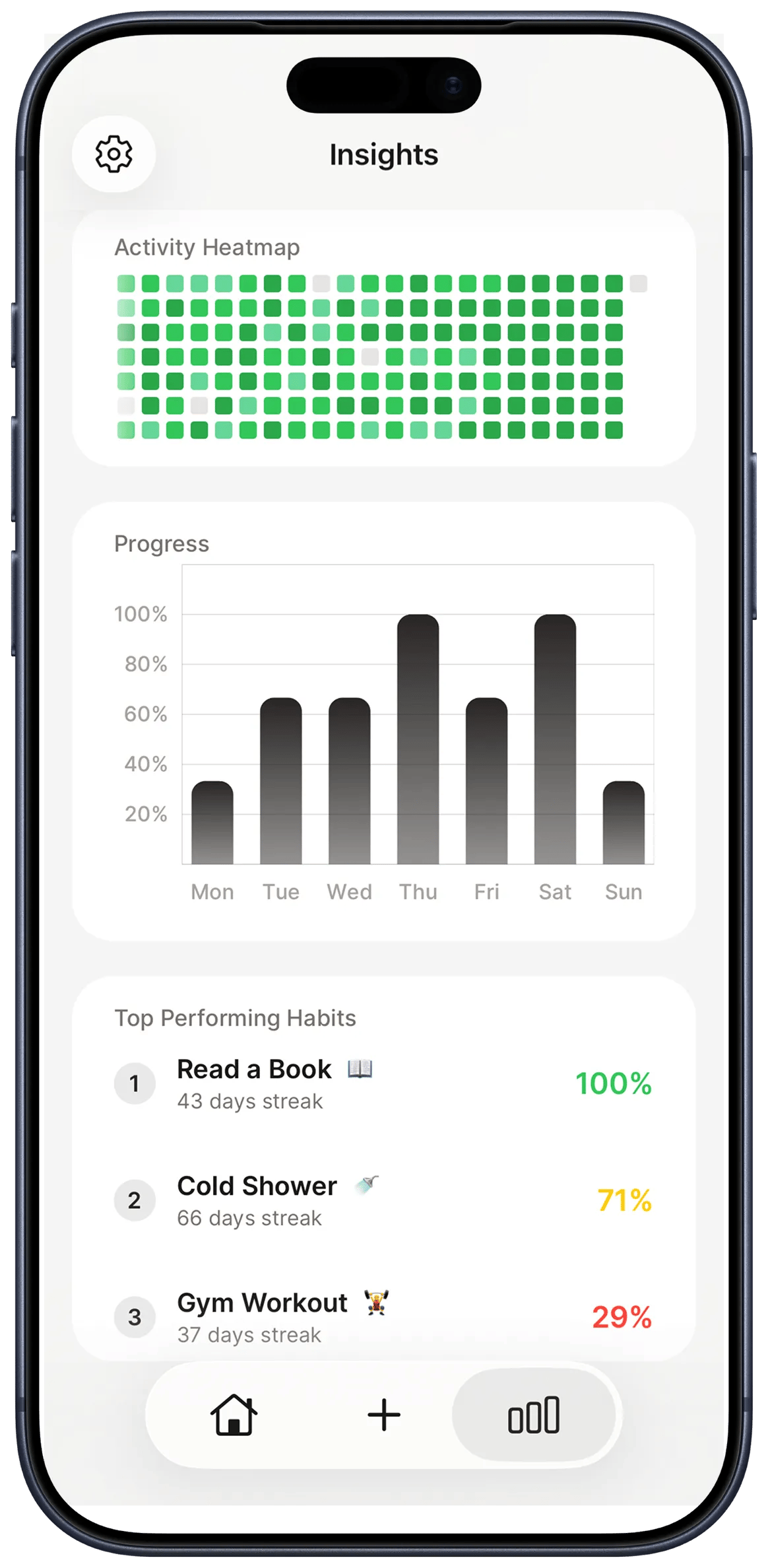
Why Most People Struggle to Read Consistently
The biggest barrier to reading is not a lack of interest — it is competing attention. Smartphones, streaming services, and social media fragment our free time into tiny slices that feel too short for a book. A 2025 national survey found that 44% of U.S. adults did not read a single book in the past year, with the 45-to-54 age group reporting the highest rate of non-readers at 60.9%.
The second obstacle is unrealistic expectations. People set ambitious reading goals — 52 books a year, two hours every night — and abandon them within weeks. Consistency beats volume. Reading 15 minutes daily, seven days a week, builds stronger habits and better comprehension than marathon sessions on weekends only.
68%
stress reduction from just 6 minutes of reading
The 20-Minute Reading Rule
If you read for 20 minutes a day, you can finish roughly 15 to 20 books per year. Here is the math: the average reader covers about 300 words per minute. At 20 minutes, that is 6,000 words per session, or approximately 20 pages. Over a year, that adds up to over 7,000 pages — well beyond what most people expect from such a modest daily commitment.
The key is to make 20 minutes your minimum, not your target. Some days you will read for an hour because you cannot put the book down. Other days, you will barely manage ten minutes before falling asleep. Both are fine. The habit is about showing up, not hitting a page count.
This approach aligns with the daily routines that actually work framework — small, repeatable actions that compound over time.
Start Smaller Than You Think
A 2024 meta-analysis published in Healthcare reviewed 20 studies involving 2,601 participants and found that new habits take a median of 59 to 66 days to form. The popular "21-day habit" claim is a myth. Some people lock in a reading habit within a few weeks; others need several months.
The practical takeaway: start with a goal so small it feels almost silly. Read one page before bed. Read for five minutes with your morning coffee. The point is to remove friction and build the neural pathways that make reading feel automatic.
- Week 1-2: Read for 5 minutes at the same time each day
- Week 3-4: Increase to 10-15 minutes
- Month 2-3: Aim for 20+ minutes as it starts to feel natural
This mirrors the principles behind habit stacking — attaching a new behavior to an existing routine so it requires less mental effort.
Choosing Books You Actually Want to Read
Nothing kills a reading habit faster than forcing yourself through a book you dread. Read what genuinely interests you, even if it is not what you think you "should" be reading. Graphic novels, memoirs, thrillers, fan fiction — they all count.
Here are a few ways to find books you will actually finish:
- Follow your curiosity. If a podcast episode or documentary sparks your interest, find a book on that topic.
- Use the 50-page rule. Give a book 50 pages. If it has not hooked you by then, move on without guilt.
- Mix formats. Alternate between audiobooks during your commute, ebooks on your phone, and print books at home. Research from Pew shows that people who use multiple formats tend to read more overall.
- Ask for recommendations. Friends, online communities, and curated lists from librarians beat algorithm-driven suggestions.
When and Where to Read
Attach reading to a specific time and place, and it becomes much easier to maintain. The 2024 habit formation meta-analysis found that habits practiced at a consistent time — especially in the morning — formed faster than those done at random times.
Effective reading windows:
- Morning: 10-15 minutes with coffee, before checking your phone. This pairs well with a no-phone morning habit.
- Commute: Audiobooks or ebooks on public transit.
- Lunch break: Even 10 minutes of reading mid-day can reset your focus.
- Before bed: Swap 20 minutes of scrolling for 20 minutes of reading. A study from Mindlab International at the University of Sussex found that just 6 minutes of reading reduced stress by 68% — more effective than listening to music, drinking tea, or going for a walk.
Create a reading-friendly environment. Keep a book on your nightstand, in your bag, and on your desk. The easier it is to grab a book, the more likely you are to read.
Replacing Screen Time With Reading Time
You do not need to find extra time to read. You need to reclaim time you are already spending on your phone. The average adult spends over three hours a day on their smartphone. Redirecting even a fraction of that toward reading can transform your year.
Practical swaps:
- Replace social media scrolling in bed with a chapter of your current book
- Swap one Netflix episode per week with an hour of reading
- Use a screen time reduction strategy to set boundaries on specific apps
1.8M
words read per year at just 20 minutes a day
Tracking Your Reading Streak
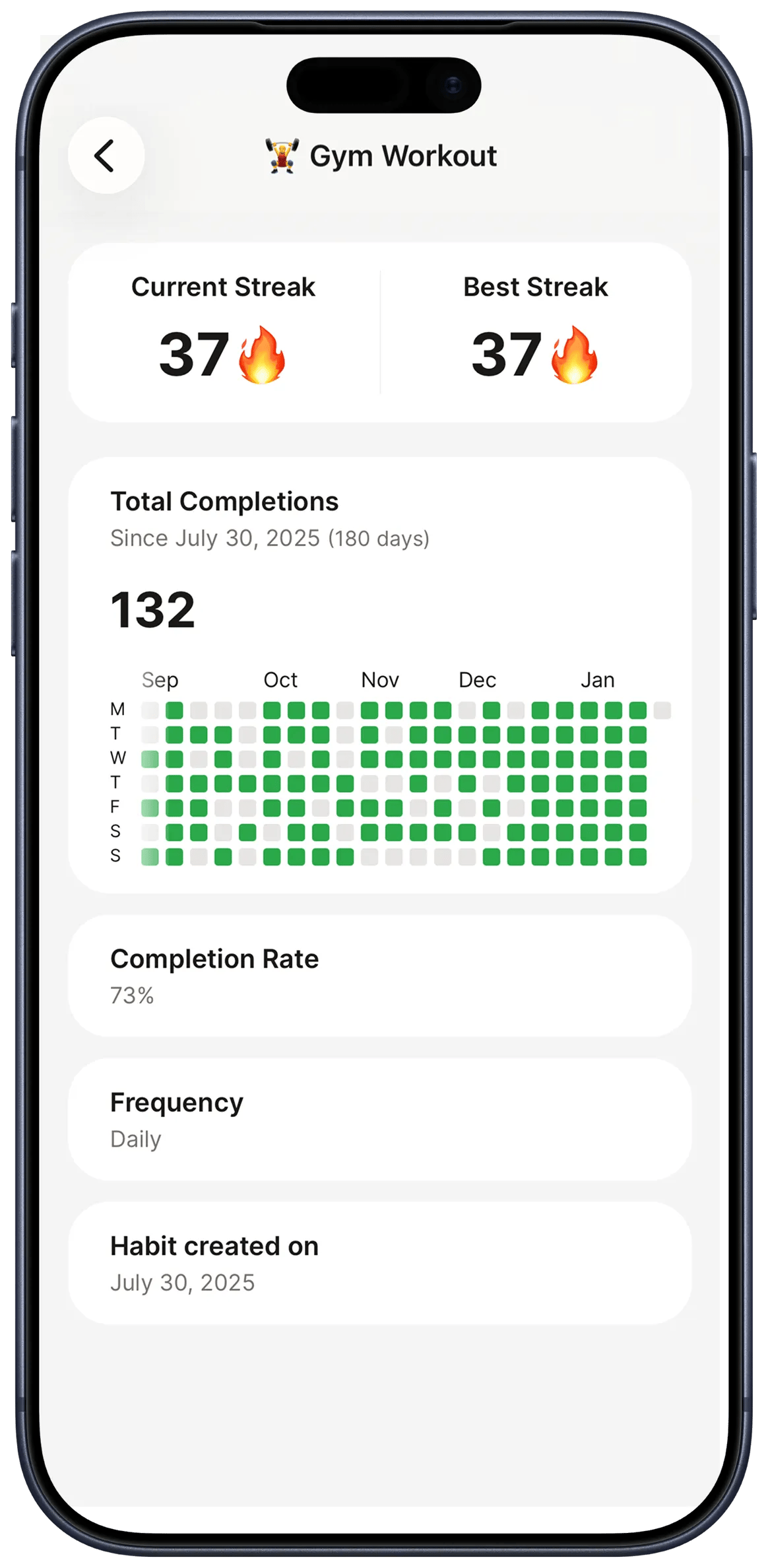
What gets tracked gets done. Logging your daily reading creates a visual streak that reinforces the habit through the same psychology that makes streaks so effective for other behaviors.
A simple tracking system works best:
- Mark each day you read in a habit tracker app or on a wall calendar
- Log books finished to see your progress over months
- Review weekly to spot patterns — when do you skip? What helps you show up?
Research on habit tracking consistently shows that people who monitor their behavior are more likely to maintain it. Seeing a 14-day reading streak makes you much less willing to break it on day 15.
Do not obsess over the numbers, though. Reading one page still counts. The streak is a tool to serve you, not a standard to stress over. If you miss a day, it is not the end of the world — just pick the book back up tomorrow.
The Cognitive Payoff of Reading
Beyond the enjoyment, regular reading delivers measurable benefits to your brain. A University of Cambridge study of over 10,000 adolescents found that reading for pleasure was linked to better cognitive performance, stronger verbal learning and memory, and improved mental wellbeing.
For adults, the benefits are just as compelling. A 14-year longitudinal study found that daily reading activity significantly slowed the rate of cognitive decline in older adults. Other research suggests that reading can slow memory decline by up to 32% and may reduce the risk of Alzheimer's disease.
Reading also builds empathy. Studies show that readers of literary fiction demonstrate a heightened ability to understand other people's feelings and beliefs — a skill researchers call "theory of mind." In short, reading makes you sharper, calmer, and more connected to others.
Start your reading streak today. Track your habit and watch the books add up.
Download FreeFrequently Asked Questions
How many books can I read if I read 20 minutes a day?▼
At average reading speed (about 300 words per minute), 20 minutes a day adds up to roughly 15 to 20 books per year. If you read slightly faster or choose shorter books, you could finish 24 or more.
What is the best time of day to read?▼
Research suggests that habits practiced at a consistent time form faster. Morning reading (before checking your phone) and bedtime reading (replacing screen time) are two of the most effective windows. Choose whichever fits your routine best.
How long does it take to build a reading habit?▼
A 2024 meta-analysis found that habits take a median of 59 to 66 days to form, though individual timelines range widely from a few weeks to several months. Start small, stay consistent, and give yourself at least two months before judging your progress.
Should I force myself to finish books I do not enjoy?▼
No. Abandoning books you dislike actually protects your reading habit. The goal is to keep reading consistently, not to finish every book. Use the 50-page rule: if a book has not engaged you by page 50, move on.
Do audiobooks count as reading?▼
Yes. Research shows that listening to audiobooks activates similar language-processing regions in the brain as reading print. Audiobooks are especially useful for building a reading habit during commutes, workouts, or household tasks.
- 1.Americans Reading Fewer Books Than in Pastnews.gallup.com
- 2.Reading for 20 minutes a day exposes a person to 1.8 million words a year.phoenixacademyomaha.org
- 3.US Book Reading Statistics (National Survey 2025)testprepinsight.com
- 4.Time to Form a Habit: A Systematic Review and Meta-Analysis of Health Behaviour Habit Formation and Its Determinantspmc.ncbi.nlm.nih.gov
- 5.Majority of Americans Are Still Reading Print Bookspewresearch.org
- 6.Reading For 6 Minutes Reduces Stress By 68 Percentanxietycentre.com
- 7.How to rebuild your reading habitspopsci.com
- 8.Reading for pleasure early in childhood linked to better cognitive performance and mental wellbeing in adolescencecam.ac.uk
- 9.Reading activity prevents long-term decline in cognitive function in older people: evidence from a 14-year longitudin...pmc.ncbi.nlm.nih.gov
- 10.Benefits of Reading Books: For Your Physical and Mental Healthhealthline.com