 By Adrien Blanc
How to Reduce Screen Time: A Habit-Based Approach

The most effective way to reduce screen time is not to rely on willpower or delete all your apps. It is to treat excessive screen use as a habit problem and solve it with habit-based strategies: identify your triggers, replace screen behaviors with better alternatives, and redesign your environment so the default choice is less scrolling, not more.
Here is why this matters. According to DemandSage's 2026 analysis, the average adult spends 6 hours and 54 minutes per day on screens, with Americans averaging over 7 hours. That is roughly 49 hours per week -- more time than most people spend at their jobs. And a randomized controlled trial published in BMC Medicine found that participants who cut their smartphone use to under two hours per day experienced a 35% improvement in sleep quality, a 40% reduction in depressive symptoms, and a 22% decrease in stress -- all within just three weeks.
6h 54m
Average daily screen time per adult worldwide in 2025
The problem is not that screens are inherently bad. Plenty of screen time is productive or genuinely enjoyable. The problem is the mindless, automatic kind -- the scrolling you do not remember choosing to start. That is a habit, and habits respond to specific, well-researched techniques. This guide walks you through exactly how to apply them.
Track your screen-free hours daily and build a lasting habit with Habit Streak.
Download Free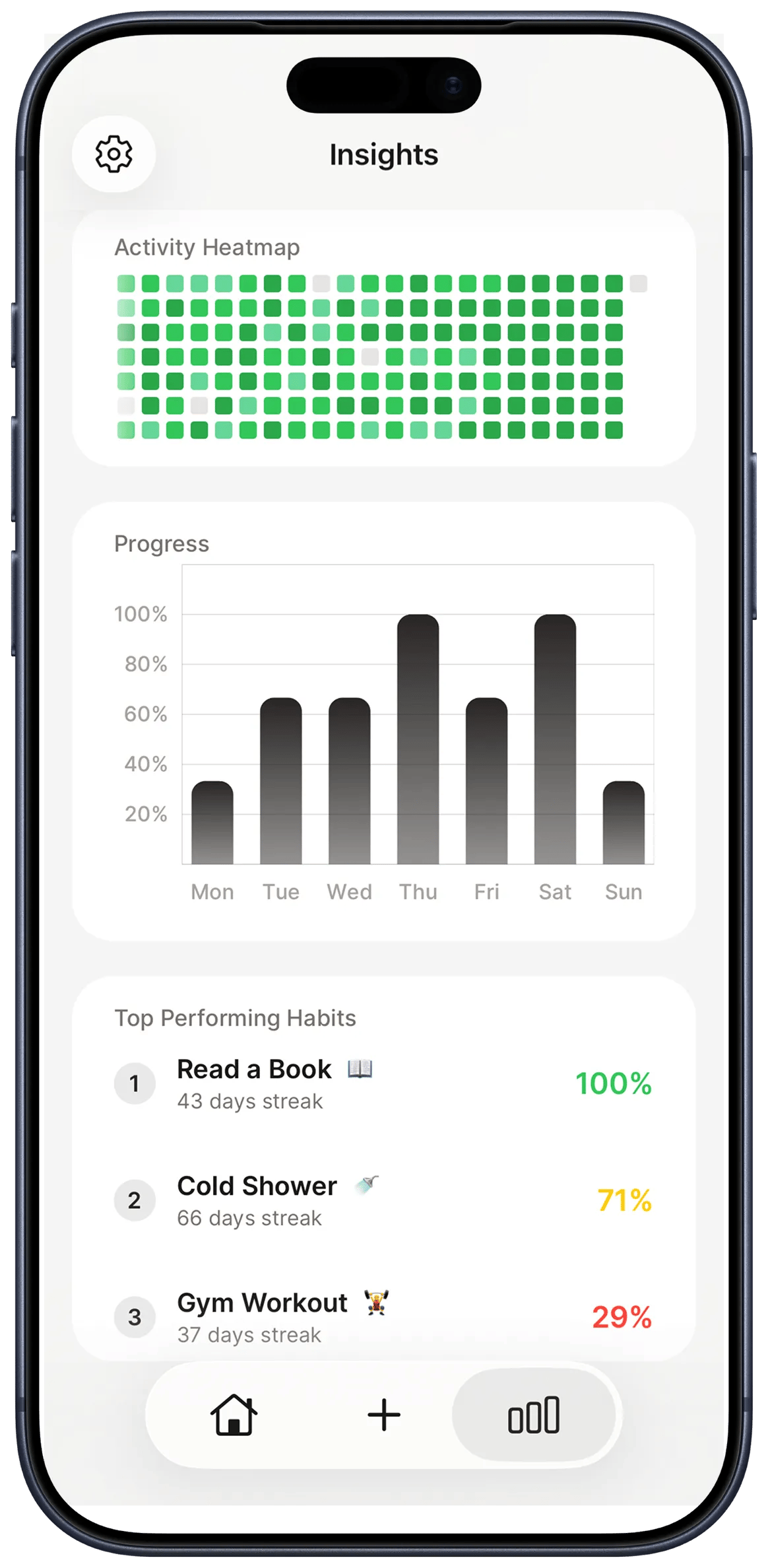
How Much Screen Time Is Too Much
There is no single magic number, but health professionals generally recommend limiting non-work screen time to under two hours per day. The key distinction is between intentional and unintentional use.
Work-related screen time is often unavoidable. The concern is recreational screen time -- social media, aimless browsing, and passive video consumption. A 2025 Backlinko report found that people spend an average of 2 hours and 31 minutes per day on social media alone, with TikTok consuming 59 minutes per user per day.
The dose-response relationship matters. Research from Harvard Medical School suggests that extremely low screen time can actually correlate with worse mental health outcomes, but after a certain threshold, more screen time consistently worsens mood, sleep, and cognitive function. The sweet spot is moderate, intentional use.
Signs your screen time has become problematic:
- You pick up your phone without a specific reason
- You lose track of time while scrolling
- Screen use is cutting into sleep, exercise, or social time
- You feel worse after extended screen sessions, not better
- You check your phone within five minutes of waking up
If several of these apply, your screen time has likely shifted from a tool you control to a habit that controls you.
Why Willpower Alone Does Not Work
Telling yourself to "just use your phone less" is a losing strategy. Willpower is a limited resource, and the apps competing for your attention have been engineered by teams of behavioral scientists to be as compelling as possible.
A systematic review in Preventive Medicine Reports examined behavior change techniques for reducing screen time and found that the most effective interventions were not about self-control. The techniques that actually worked were behavior substitution, action planning, goal setting, and social support -- all strategies that restructure the habit itself rather than fighting it head-on.
This aligns with what we know about breaking bad habits more broadly. As Dr. Gareth Dutton of the University of Alabama at Birmingham puts it: "When you're trying to break a habit, you almost always need a replacement behavior. It's very hard to just stop without filling that gap."
The habit loop for screen time typically looks like this:
- Cue: Boredom, anxiety, a notification, or simply sitting on the couch
- Routine: Pick up phone, open social media, scroll
- Reward: Brief dopamine hit, distraction from discomfort
To change the behavior, you need to keep the cue and the reward but swap in a different routine. That is the foundation of a habit-based approach.
Identify Your Screen Time Triggers
Before you can change a habit, you need to understand what is driving it. Most people have two or three primary triggers that account for the majority of their mindless screen time.
Common screen time triggers:
- Boredom: The number one trigger. Any moment without stimulation becomes a cue to reach for your phone.
- Stress or anxiety: Scrolling serves as an avoidance mechanism -- a way to numb uncomfortable emotions.
- Social pressure: Fear of missing out on conversations, news, or trends.
- Transition moments: Waiting in line, commuting, waking up, going to bed.
- Notifications: Each alert is a cue designed to pull you back in.
Run a trigger audit for one week. Every time you catch yourself reaching for your phone without a clear purpose, jot down what you were feeling and where you were. After seven days, patterns will emerge. Most people discover that 70-80% of their unintentional screen time is driven by just one or two triggers.
This self-awareness step is critical. If boredom is your main trigger, the solution looks different than if stress is driving the behavior. A journaling habit can be particularly useful here -- logging your triggers creates both awareness and accountability.
Replace Screen Habits With Better Alternatives
Once you know your triggers, the next step is habit substitution -- pairing the same cue with a healthier response that delivers a similar reward.
Here are replacement strategies matched to common triggers:
For boredom:
- Keep a book, puzzle, or sketchpad within arm's reach
- Start a reading habit -- even five pages fills the same gap scrolling does
- Take a five-minute walk or do a quick stretch
For stress and anxiety:
- Practice three minutes of box breathing (inhale 4 counts, hold 4, exhale 4, hold 4)
- Write down what is bothering you -- even two sentences helps
- Step outside for fresh air
For transition moments:
- Listen to a podcast or audiobook instead of scrolling
- Practice a brief meditation
- Use the 20-20-20 rule: every 20 minutes, look at something 20 feet away for 20 seconds
For bedtime scrolling:
- Charge your phone in another room
- Place a physical book on your pillow as a cue
- Build an evening routine that starts with putting the phone away
The key principle from habit stacking applies here: anchor your new behavior to an existing routine. "After I sit down on the couch, I will pick up my book instead of my phone" is far more effective than a vague commitment to read more.
Design Your Environment for Less Screen Time
Environment design is the most underrated screen time reduction strategy. It works because it removes the need for willpower entirely -- if your phone is not within reach, you cannot reflexively pick it up.
Research from the University of Texas at Austin demonstrated that the mere presence of a smartphone reduces available cognitive capacity, even when the phone is face-down and on silent. Your brain spends energy resisting the urge to check it. Moving the phone to another room eliminates that drain completely.
Practical environment changes:
- Create phone-free zones. The bedroom, the dining table, and your workspace (during focus blocks) are strong candidates.
- Use physical barriers. Charge your phone in a different room overnight. Put it in a drawer during meals. The extra friction of retrieving it is often enough to break the automatic reach.
- Rearrange your home screen. Move social media apps off the first page. Delete the worst offenders entirely. Use grayscale mode to make your phone visually less appealing.
- Turn off non-essential notifications. Keep calls and messages from close contacts. Disable everything else. Each notification is a trigger, and most are not urgent.
- Set up device-free time blocks. Use your phone's built-in Screen Time (iOS) or Digital Wellbeing (Android) features to enforce limits on specific apps.
This approach dovetails with building a no-phone morning habit. When your phone lives outside the bedroom, you automatically start your day without the wake-and-scroll pattern that sets a reactive tone for everything that follows.
Digital Detox Challenges That Actually Work
A structured challenge can provide the initial momentum you need. The most effective challenges are time-bounded, specific, and gradually progressive -- not extreme cold-turkey experiments.
22%
Mood improvement from reducing screen time by just 30 minutes per day
Here are three challenges worth trying, ordered by difficulty:
The 30-Minute Reduction (Beginner): Check your current daily average using your phone's built-in tracker. Set a goal to reduce it by 30 minutes per day for two weeks. The BMC Medicine RCT showed that even this modest reduction produced measurable mood improvements.
The Phone-Free First Hour (Intermediate): Do not touch your phone for the first 60 minutes after waking. Use an analog alarm clock. Spend the time on a morning routine -- exercise, journaling, breakfast, or a walk. This single change often cascades into lower screen time throughout the day because you start in a proactive state rather than a reactive one.
The Weekend Unplug (Advanced): Pick one weekend day per month where you go fully offline (except for calls). Plan analog activities in advance: hike, cook, read, visit a friend, play a board game. Most people are surprised by how much they enjoy it -- and how much time they suddenly have.
The 21-day morning routine challenge is another structured approach that naturally reduces screen time by front-loading your day with intentional habits instead of reactive phone use.
Tracking Your Screen Time Reduction
What you measure, you manage. Tracking creates accountability, reveals patterns, and provides the feedback loop that makes habit change stick.
Start with two metrics:
- Total daily screen time. Use your phone's built-in report (Screen Time on iOS, Digital Wellbeing on Android). Check it weekly, not daily -- you want the trend, not a reason to obsess.
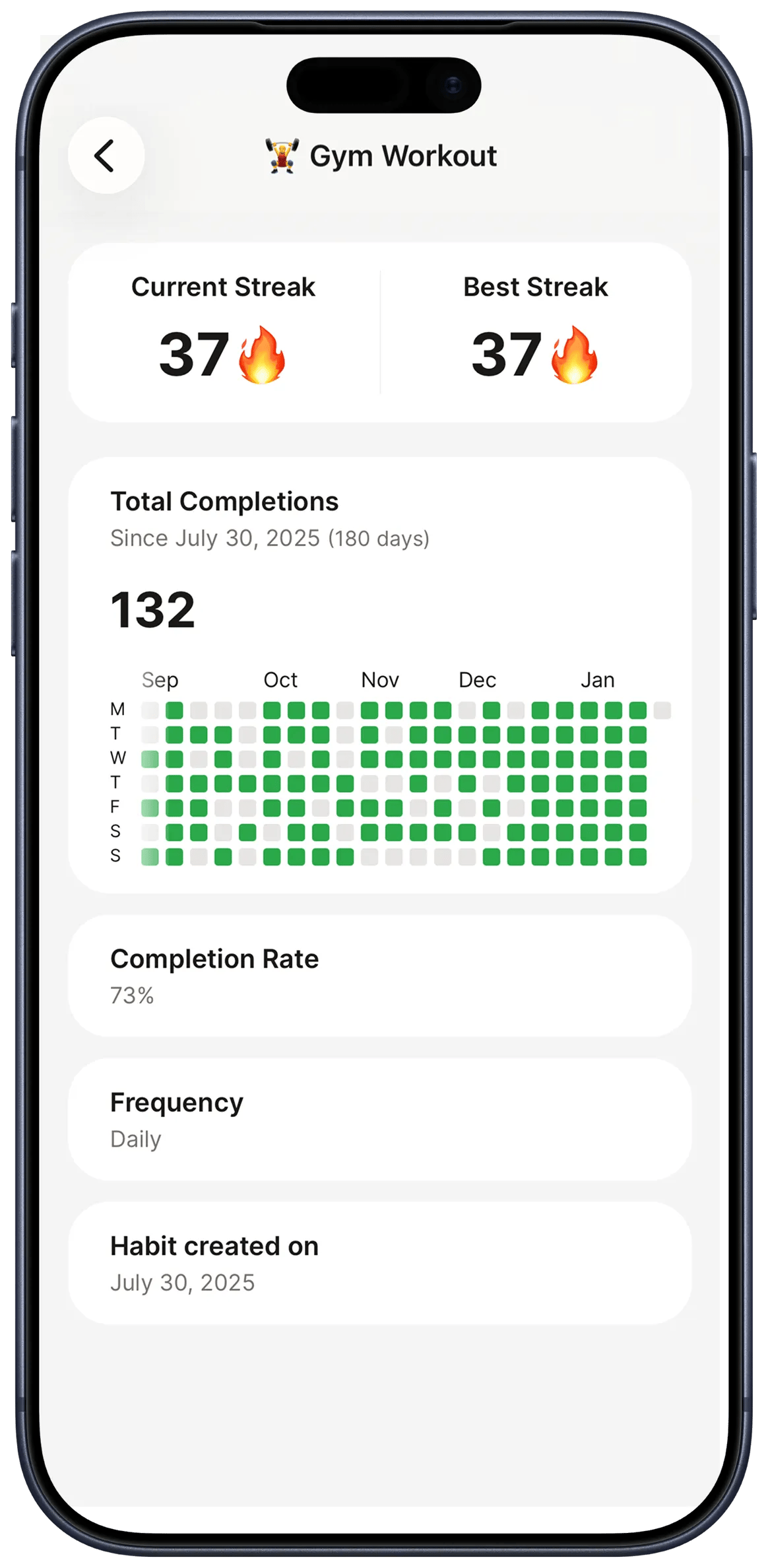
- Phone-free hours logged. Track this as a daily habit. Each day you hit your target -- whether that is a phone-free morning, a screen-free dinner, or two hours of device-free evening -- mark it as complete.
The second metric matters more than the first. Screen time totals fluctuate based on work demands, travel, and dozens of other factors. But a consistent phone-free habit is entirely within your control and builds the identity of someone who does not need a screen to fill every moment.
Research on habit streaks shows that visual progress tracking -- seeing an unbroken chain of completed days -- is one of the strongest motivators for maintaining a new behavior. The "don't break the chain" effect adds a small psychological cost to skipping a day, which is often just enough to keep you going when motivation dips.
This is where the habit-based approach comes full circle. You are not just reducing screen time. You are building a new identity around intentional technology use, one tracked day at a time. And that approach fits naturally into daily routines that actually work -- screen time management becomes one element of a broader system for how you structure your day.
Build a screen-free streak you can see. Track your daily phone-free hours with Habit Streak.
Download FreeFrequently Asked Questions
How long does it take to reduce screen time habits?▼
Research suggests it takes about 59 days on average for a new habit to reach peak automaticity. However, you will likely notice improvements in mood and sleep within the first two to three weeks. Start with small, specific changes and build gradually rather than trying to overhaul everything at once.
Is all screen time bad for you?▼
No. The distinction is between intentional and unintentional screen time. Video calls with friends, learning a new skill, or focused work on a computer are all productive uses. The concern is passive, mindless consumption -- scrolling without purpose, autoplay video loops, and habitual phone checking. Focus on reducing the second category, not eliminating screens entirely.
What is the best app to reduce screen time?▼
Your phone's built-in tools (iOS Screen Time or Android Digital Wellbeing) are a good starting point for setting app limits and monitoring usage. For habit building, a tracking app like Habit Streak lets you log phone-free hours as a daily habit and build a visual streak. Third-party blockers like Freedom or Cold Turkey can enforce limits on specific apps or websites during focus periods.
Should I do a full digital detox?▼
A complete digital detox can be a useful reset, but research shows the benefits tend to disappear once screen time habits revert to baseline. A more sustainable approach is to make incremental habit changes -- phone-free mornings, device-free meals, screen-free evenings -- that you can maintain permanently. Small, consistent changes beat dramatic temporary ones.
How do I reduce my child's screen time?▼
Model the behavior first -- parental screen time is one of the strongest predictors of children's screen habits. Set shared family rules (screen-free meals, no devices in bedrooms), provide engaging offline alternatives, and use collaborative limit-setting rather than top-down restrictions. Research shows that children respond better when they help create the rules.
- 1.Average Screen Time Statistics 2026 [By Age & Country]demandsage.com
- 2.Smartphone screen time reduction improves mental health: a randomized controlled triallink.springer.com
- 3.Revealing Average Screen Time Statistics for 2026backlinko.com
- 4.systematic review in Preventive Medicine Reportssciencedirect.com
- 5.Context Switching Statistics 2026: The Hidden Cost of Multitasking, App Toggling, and Fragmented Focusspeakwiseapp.com