 By Adrien Blanc
21-Day Morning Routine Challenge: Transform Your Mornings

A 21-day morning routine challenge works by adding one small habit per week so that by day 21, you have a three-part morning routine built on consistency rather than willpower. The key is progressive layering: master one habit before adding the next.
Research from University College London found that it takes an average of 66 days for a new behavior to become automatic, with simpler habits forming faster. That means 21 days is not a finish line -- it is a launch pad. But a structured three-week challenge still provides enormous value. As Dr. Kelly McGonigal of Stanford explains, committing to a 21-day challenge gives you enough time to experience real benefits, which then motivates continued practice.
This challenge uses a weekly layering approach grounded in behavioral science. You will start with one foundational habit in week one, add an energy-boosting habit in week two, and introduce a focus-sharpening habit in week three. Each layer builds on the last, so nothing feels overwhelming.
Track every day of your 21-day morning challenge with streaks that keep you accountable.
Download Free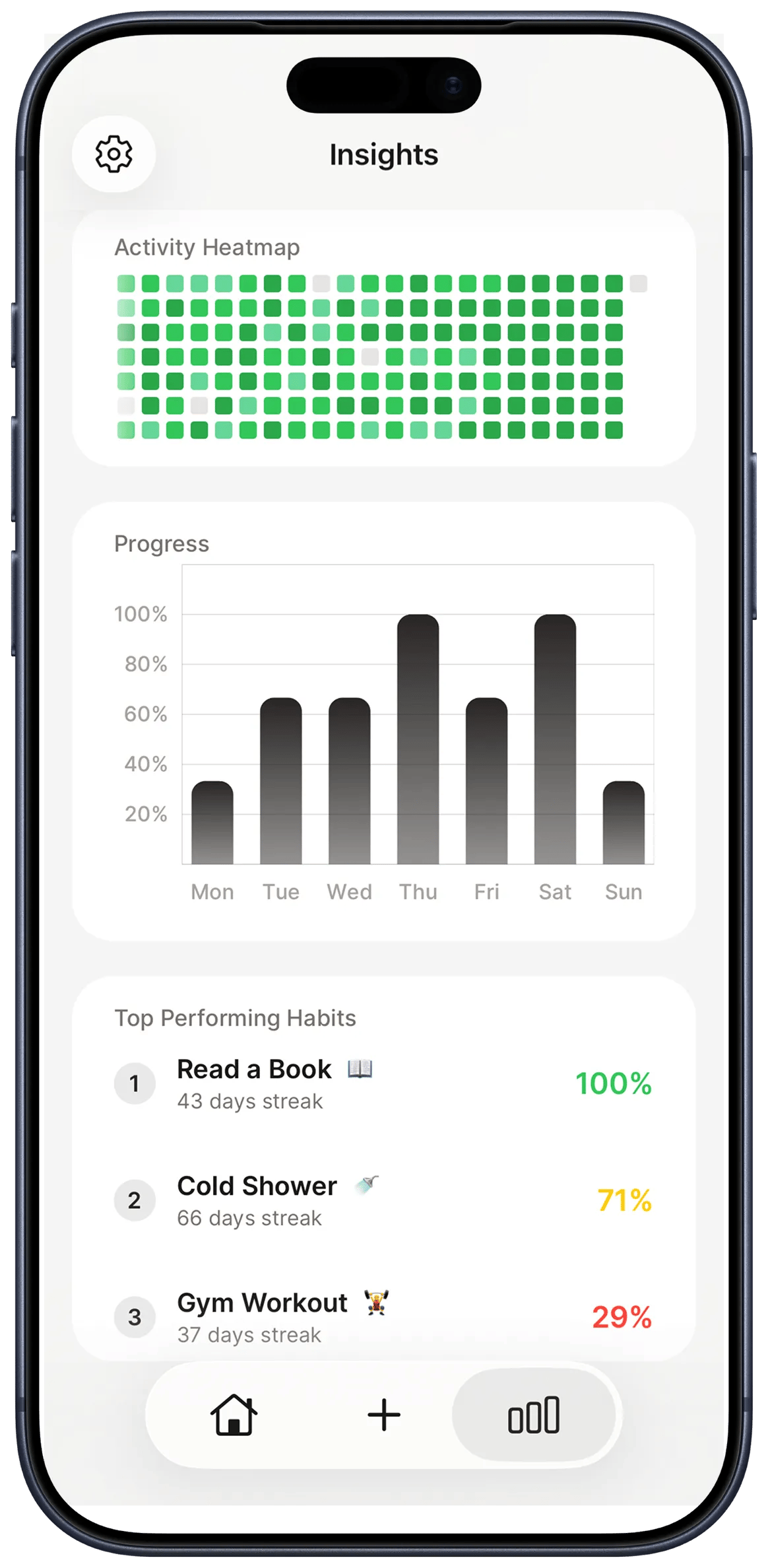
How This Challenge Works
The 21-day morning routine challenge follows a one-habit-per-week structure. Each week you add a single new behavior to your morning, giving you seven full days to practice it before layering on the next one.
Here is the framework:
- Week 1 (Days 1-7): Establish a consistent wake-up time and one foundational habit
- Week 2 (Days 8-14): Add a physical energy habit on top of your foundation
- Week 3 (Days 15-21): Layer in a mindset or focus habit to complete your routine
This progressive approach draws on BJ Fogg's Tiny Habits method. Research shows that people who start with minimal viable habits and gradually scale up are 2.7 times more likely to maintain long-term habits than those who start with ambitious targets.
The weekly cadence also uses habit stacking, where each new behavior anchors to the one you already established. Studies from the British Psychological Society found that habit stacking yields 64% higher success rates than trying to build standalone habits.
Before You Start: Preparation
Preparation is half the battle. Spend the day before Day 1 setting up your environment so your mornings run on autopilot.
Here is your pre-challenge checklist:
- Pick your wake-up time. Choose something realistic -- even 15 minutes earlier than usual counts. Consistency matters more than the specific hour. If you are curious about extreme early starts, read our take on the 5 AM morning routine.
- Set a non-negotiable bedtime. The Sleep Foundation recommends consistent sleep and wake times to regulate your circadian rhythm. Your morning starts the night before.
- Prepare your environment. Lay out workout clothes, set up your journal, pre-fill a water bottle. Research shows that people who strategically modify their physical environments report 58% higher success rates with new habits.
- Choose your three habits. Pick one from each category below (foundation, energy, mindset). Write them down.
- Tell someone. A meta-analysis of 42 studies found that individuals with accountability systems were 2.8 times more likely to maintain new habits.
Week 1: The Foundation Habit (Days 1-7)
Week one is about one thing only: waking up at the same time every day and completing one simple habit. Do not try to build a full routine yet.
Your foundation habit options (pick one):
- Drink a glass of water immediately after waking. Research from the Phillippa Lally study found that simple habits like drinking water reach automaticity fastest -- sometimes in as few as 18 days.
- Make your bed. It takes under two minutes and creates an immediate sense of accomplishment. Learn more about the make-your-bed habit.
- Step outside for two minutes of natural light. Morning light exposure helps regulate your cortisol awakening response, a natural 38-75% cortisol surge that prepares your brain for the day.
What to expect this week: Days 1-3 will feel forced. By Days 5-7, you will start to notice the habit requiring less mental effort. This matches the asymptotic curve pattern identified in the Lally study -- early repetitions produce the largest gains in automaticity.
Daily tracking tips:
- Mark each completed day on a calendar or habit tracker
- Note your wake-up time to spot drift
- Rate your energy from 1-5 each morning
Week 2: Adding Energy and Movement (Days 8-14)
With your foundation habit running smoothly, it is time to stack a physical habit on top of it. The rule: your new habit starts immediately after your Week 1 habit finishes.
Your energy habit options (pick one):
- 10-minute walk or stretch routine. A study in the Journal of Physiology found that morning exercise had more significant impacts on metabolic health than the same exercise performed in the evening.
- 5-minute bodyweight circuit. Push-ups, squats, or yoga sun salutations. Keep it short enough that skipping feels harder than doing it.
- Cold water face splash or cold shower finish. The cold exposure habit triggers a norepinephrine response that increases alertness.
The stacking formula for Week 2:
- Wake up at your set time
- Do your foundation habit (e.g., drink water)
- Immediately do your energy habit (e.g., 10-minute walk)
This sequence matters. Research on habit stacking confirms that linking a new behavior to an established cue dramatically improves consistency. Your brain starts treating the sequence as a single routine rather than separate decisions.
Week 3: Adding Mindset and Focus (Days 15-21)
The final layer is a cognitive or reflective habit that sets your mental direction for the day. By now your first two habits should feel relatively automatic, giving you the mental bandwidth for this addition.
Your mindset habit options (pick one):
- 5-minute journaling session. Write three things you are grateful for or your top three priorities. The journaling habit has strong evidence behind it for reducing stress and improving focus.
- 10-minute meditation or breathing exercise. A University of Toronto study found that people who practiced mindfulness in the morning showed greater resilience to stressors throughout the entire day. Our meditation habit guide covers getting started.
- No-phone first 30 minutes. Instead of scrolling, review your goals or read. Protecting this window reduces decision fatigue during your peak cognitive hours. See our guide on the no-phone morning habit.
Your complete Day 15-21 routine should look like this:
- Wake at set time
- Foundation habit (2 minutes)
- Energy habit (5-10 minutes)
- Mindset habit (5-10 minutes)
Total time: 15-25 minutes. That is a complete morning routine built in three weeks without ever trying to overhaul your entire morning at once.
After Day 21: Making It Permanent
Day 21 is a milestone, not the end. Remember, the Lally study found that full automaticity takes a median of 66 days. Here is how to keep your momentum going after the challenge ends.
The 66-day continuation plan:
- Days 22-45: Maintain your three-habit stack exactly as built. No additions. Focus on consistency.
- Days 46-66: Optionally extend duration (a 10-minute walk becomes 20 minutes) or add a fourth habit.
- After Day 66: Evaluate what stuck. Drop what does not serve you. Double down on what does.
Critical insight: missing a day is not failure. The Lally research found that missing one opportunity to perform a behavior did not materially affect the habit formation process. What kills habits is the "what-the-hell effect" -- where one missed day becomes a week. If you miss a day, just resume the next morning without guilt.
For a broader look at building sustainable routines beyond this challenge, read our pillar guide on daily routines that actually work.
Customizing the Challenge to Your Life
Not everyone has a leisurely morning. This challenge works whether you have 15 minutes or an hour -- the key is adjusting the duration, not the structure.
| Schedule | Foundation Habit | Energy Habit | Mindset Habit | Total Time |
|---|---|---|---|---|
| Minimal (busy parents, early shifts) | Glass of water (1 min) | 5-min stretch | 3 gratitude items (2 min) | ~10 min |
| Standard (most people) | Water + make bed (3 min) | 10-min walk | 5-min journal | ~20 min |
| Extended (flexible schedule) | Water + light exposure (5 min) | 20-min workout | 10-min meditation | ~35 min |
Adjustments for common situations:
- Night shift workers: Anchor your routine to whenever you wake up, not to a clock time. The habits work regardless of the hour.
- Parents with young kids: Your foundation habit might be something you do while the kids eat breakfast. Adapt the container, keep the structure.
- Students: The morning routine for students guide covers specific adaptations for academic schedules.
The point is not to copy someone else's morning. It is to build a sequence that you will actually repeat. Consistency with a simple routine beats perfection with a complex one.
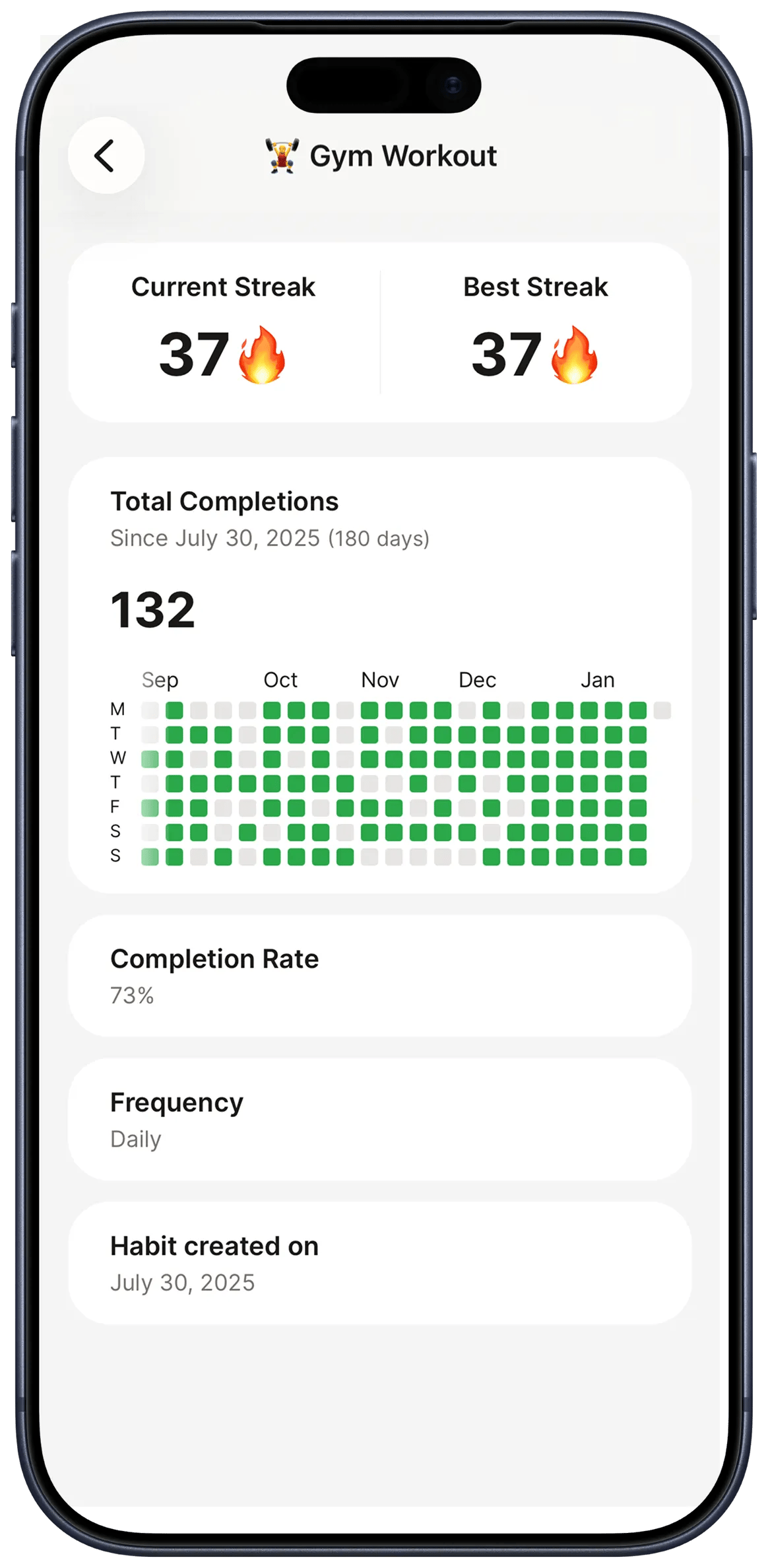
Keep your morning streak alive. Track your 21-day challenge and build habits that last.
Download FreeFrequently Asked Questions
Does it really take 21 days to form a morning routine habit?▼
Not exactly. The 21-day idea comes from a misquote of plastic surgeon Maxwell Maltz in the 1960s. Research from University College London found it takes an average of 66 days for a behavior to become automatic, ranging from 18 to 254 days depending on the habit's complexity. However, 21 days is enough to build momentum and see early benefits.
What happens if I miss a day during the challenge?▼
Resume the next day as normal. The same UCL study found that missing a single day did not significantly impact long-term habit formation. The danger is not one missed day -- it is letting one day become two, then three. Just pick it back up.
Should I wake up at 5 AM for this challenge?▼
No. The challenge works at any wake-up time. What matters is consistency -- waking at the same time each day. If you currently wake at 7:30 AM, start there. Forcing an extreme early wake-up adds unnecessary friction to an already new routine.
Can I do all three habits from Day 1 instead of adding one per week?▼
You can, but research suggests you will be less likely to stick with it. Studies show that people who start with minimal habits and scale gradually are 2.7 times more likely to maintain them long-term. The weekly layering approach exists because it works better for most people.
What is the best morning routine habit to start with?▼
The simplest one. Drinking a glass of water or making your bed are popular starting points because they take under two minutes and require no equipment or motivation. Once that feels automatic, adding a second habit becomes much easier.
- 1.University College Londononlinelibrary.wiley.com
- 2.Research showscoachpedropinto.com
- 3.Homesleepfoundation.org
- 4.The circadian system modulates the cortisol awakening response in humanspmc.ncbi.nlm.nih.gov
- 5.study in the Journal of Physiologyphysoc.onlinelibrary.wiley.com
- 6.How Long Does it Actually Take to Form a New Habit? (Backed by Science)jamesclear.com