 By Adrien Blanc
Morning Routine for College Students: Realistic and Effective
The best morning routine for college students is short, flexible, and anchored to your first obligation of the day — not to a specific wake-up time. Most morning routine advice assumes you have a stable 9-to-5 schedule and total control over your calendar. College life doesn't work that way. Your Monday might start at 8 AM and your Thursday at noon. You stayed up writing a paper until 2 AM. Your roommate's alarm went off three times before yours.
Here's the reality: a 2023 study published in PNAS, tracking over 600 first-year college students with Fitbit data, found that the average student slept just 6 hours and 37 minutes per night — and every hour of lost nightly sleep was associated with a 0.07-point drop in end-of-term GPA. That means the difference between averaging 6 hours and 8 hours of sleep could mean a full third of a letter grade. Your morning routine needs to account for this — not pretend you're getting 8 hours every night.
This guide gives you a realistic framework: a 20-minute routine that adapts to irregular schedules, protects your sleep, and sets you up to actually retain what you learn in class.
6h 37m
average nightly sleep for college students, well below the recommended 7-9 hours
This article is part of our guide on daily routines that actually work. If you're looking for broader academic habit strategies, see our list of good habits for students.
Track your morning routine streak with Habit Streak — even on chaotic class days
Download Free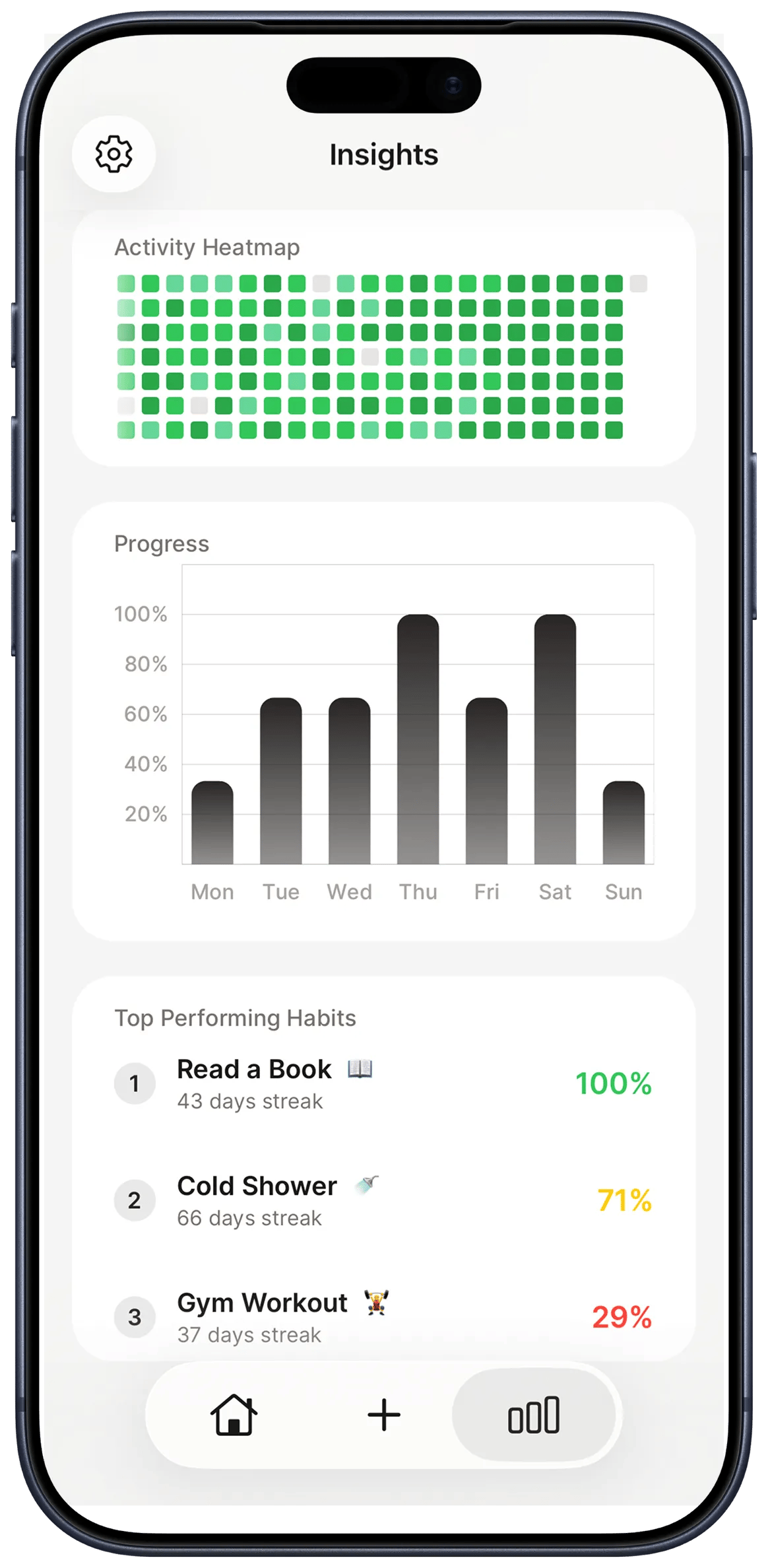
Why Most Morning Routine Advice Fails for Students
Standard morning routine content is built for adults with predictable schedules. The "5 AM club" model assumes you control your bedtime, your commute, and your calendar. College students deal with rotating class times, shared living spaces, social obligations that run late, and study sessions that don't end when planned.
A study published in NPJ Science of Learning found that sleep consistency — not total hours — accounted for nearly 25% of the variance in academic performance. Students who kept irregular sleep-wake patterns performed worse than those who slept less but on a consistent schedule. This means forcing yourself into a 5 AM routine that you can only maintain three days a week is worse than a flexible routine you follow every single day.
The other failure point is complexity. A 90-minute morning ritual with journaling, cold showers, meditation, and a full workout sounds impressive on a YouTube video. But when your alarm goes off 40 minutes before your first class and you went to bed at 1 AM, that routine goes straight out the window. The routines that actually improve your GPA are the ones you do on your worst mornings, not just your best ones.
A Flexible 20-Minute Student Morning Routine
This routine uses an activity sequence rather than fixed times. It works whether you wake up at 6:30 AM or 10:30 AM. The key is performing the same actions in the same order, every day, without exception.
The sequence (20 minutes total):
-
Hydrate (1 min) — Drink a full glass of water. You lose about 1 liter of water through breathing and sweating overnight. Even mild dehydration of 2% impairs cognitive function by 10-20%, which matters when your first class involves absorbing new material.
-
Move your body (5-10 min) — This doesn't mean a gym session. A brisk walk across campus, bodyweight stretches, or 10 minutes of yoga in your dorm room all count. Research from BMC Psychology shows that even brief exercise bouts improve cognitive performance, with the strongest effects in the first hour afterward.
-
Eat something (5 min) — It doesn't have to be elaborate. A banana and peanut butter, yogurt with granola, or overnight oats you prepped the night before. A study of 577 U.S. undergraduates found that breakfast consumption had a positive effect on GPA, with breakfast quality mattering more than quantity.
-
Review your day (3 min) — Open your calendar, check what's due, and identify your single most important task. This takes less than three minutes but prevents the scattered "what am I supposed to do today?" feeling that drains the first hour of your day.
-
Leave without your phone for the first 10 minutes (0 min extra) — If you can avoid checking social media and email during steps 1-4, you protect your morning focus. For a full breakdown of why this matters, see our guide on building a no-phone morning habit.
Adapting Your Routine to Your Class Schedule
Anchor your wake-up time to your first obligation, then count backward. If your earliest Monday class is at 9 AM and you need 30 minutes to get ready plus 15 minutes to walk there, your alarm is at 8:15 AM. On Thursday with a noon start, your alarm moves to 11:15 AM.
Here is how to handle the most common student schedules:
Early class days (8-9 AM start):
- Set your alarm to allow the 20-minute routine plus commute time
- Prep breakfast and clothes the night before to eliminate decisions
- Keep the routine minimal — hydrate, move, eat, review
Late start days (11 AM or later):
- Still do the routine. The temptation is to skip it because you have "plenty of time," but unstructured mornings lead to phone scrolling and procrastination
- Use the extra time for the most cognitively demanding work of your day — studying, writing, or problem sets — while your mind is fresh
No-class days:
- Pick a consistent wake-up time within 1 hour of your earliest class day. Sleeping until 1 PM on Saturday when you woke up at 7:30 AM on Friday creates "social jet lag" that disrupts your circadian rhythm and makes Monday morning painful.
Morning Habits That Improve Academic Performance
The link between morning habits and grades is not motivational — it's physiological. What you do in the first hour after waking directly affects your attention, memory encoding, and emotional regulation for the rest of the day.
Here are the morning habits with the strongest research support for academic performance:
Sleep consistency (the night before determines the morning): The PNAS study found that sleep duration early in the academic term predicted end-of-term GPA even after controlling for previous-term GPA, gender, race, and course load. This was the single strongest predictor. Your morning routine starts with what time you went to bed.
Breakfast before class: CDC data from the 2023 Youth Risk Behavior Survey found a dose-response relationship: students who never ate breakfast were twice as likely to report lower grades compared to those who ate breakfast daily. The odds of lower grades decreased with each additional day of breakfast consumption per week.
Morning exercise: A study in the British Journal of Sports Medicine found that adolescents who ate breakfast and exercised in the morning improved their math scores by 15.2% compared to 6.7% for those who did neither. Even 10 minutes of high-intensity movement improved reaction time when delivered in the morning.
Daylight exposure: Getting natural light within 30 minutes of waking helps regulate your circadian clock, which improves both nighttime sleep quality and daytime alertness. Walk to class instead of driving, or eat breakfast near a window.
25%
of the variance in academic performance explained by sleep quality, duration, and consistency
What to Do When You Stayed Up Late
A bad night does not mean you should skip your routine — it means you need a shorter version of it. The worst thing you can do after a late night is sleep through your alarm, skip breakfast, and stumble into class dehydrated and disoriented.
Here's a 5-minute emergency routine for rough mornings:
- Glass of water — immediately (30 seconds)
- Splash cold water on your face or take a 2-minute cold shower (2 min)
- Grab a portable breakfast — a protein bar, a piece of fruit, anything (1 min)
- Glance at your calendar while walking to class (1 min)
What to avoid after a late night:
- Don't hit snooze repeatedly. Each snooze cycle puts you into a new sleep stage that gets interrupted, leaving you groggier than if you'd just gotten up the first time.
- Don't skip class to catch up on sleep. According to the American College Health Association, each additional day per week a student experiences sleep problems, their likelihood of dropping a course increases by 10%. Missing class compounds the damage.
- Don't load up on energy drinks. 34% of 18-24 year-olds consume energy drinks regularly, with most using them to compensate for poor sleep. But caffeine after 2 PM disrupts that night's sleep, creating a cycle that gets worse every day.
Plan the recovery, not the compensation. After a bad night, commit to getting to bed on time that evening. One bad night is recoverable. Five in a row starts affecting your GPA. If your evenings are the problem, our guide to building an evening routine for better sleep can help you fix the root cause.
Building Consistency Despite a Changing Schedule
Consistency does not mean rigidity. You don't need to do the exact same thing at the exact same time every day. You need to do the same sequence of actions, in the same order, every day — regardless of when that sequence starts.
Here's how to build that consistency:
Use habit stacking. Attach each step to the one before it, not to a clock time. "After I turn off my alarm, I drink water. After I drink water, I stretch. After I stretch, I eat." This chain follows you no matter when you wake up.
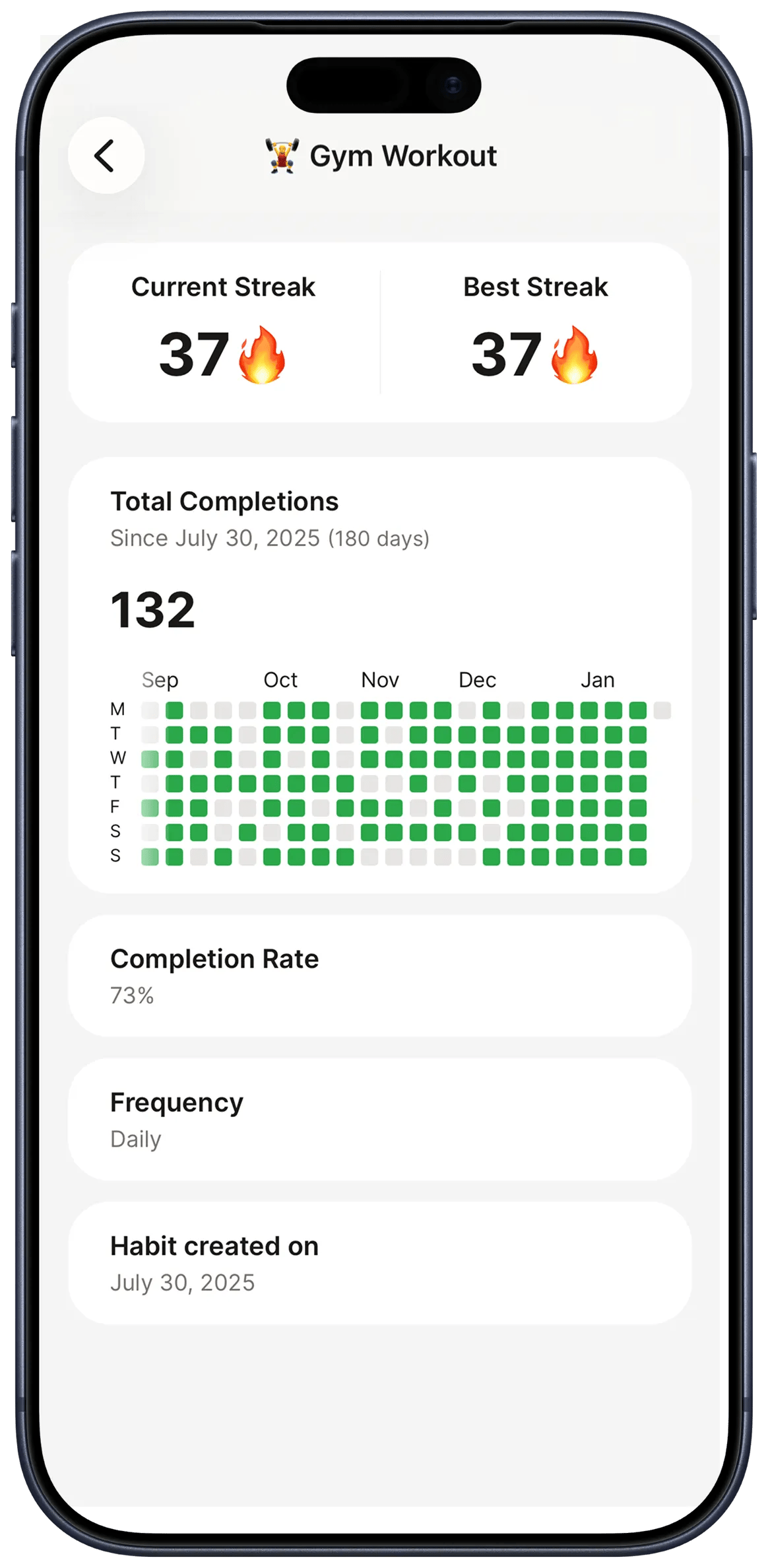
Track your streak. The research on habit formation shows that repetition in a consistent context is the strongest predictor of automaticity. Tracking your morning routine as a daily habit creates accountability and makes the pattern visible. Even a simple check mark on a calendar works — though a dedicated habit tracker makes it easier to see patterns over time.
Prepare the night before. Decision fatigue is real, and it's worst in the morning. Set out your clothes, fill your water bottle, and know what you're eating for breakfast before you go to sleep. Every decision you eliminate from the morning is one less barrier between you and your routine.
Give yourself a minimum viable version. On your best days, you do the full 20-minute routine. On your worst days, you drink water, eat something, and check your calendar. Both count. The goal is a zero-skip streak, not a perfect-execution streak.
If you want a structured way to build this habit, try our 21-day morning routine challenge — it adds one habit per week so you're never overwhelmed.
Start building your morning routine streak today with Habit Streak
Download FreeFrequently Asked Questions
What is the best wake-up time for college students?▼
There is no single best time. The right wake-up time is one that gives you 7-9 hours of sleep and enough time for a brief morning routine before your first obligation. A student with an 8 AM class might wake at 7:00 AM, while one with a noon class wakes at 10:30 AM. Consistency within your schedule matters more than the specific hour.
How do I wake up early for college when I went to bed late?▼
On rough mornings, use a 5-minute emergency routine: drink water, splash cold water on your face, grab a portable breakfast, and glance at your calendar. Do not hit snooze repeatedly. Then prioritize getting to bed on time that night to prevent a pattern of sleep debt.
Should college students follow a 5 AM morning routine?▼
For most college students, no. A 5 AM routine requires a 9-10 PM bedtime, which is unrealistic given social obligations, late study sessions, and evening classes. A flexible routine anchored to your first class — not to a fixed clock time — is far more sustainable and effective.
Does eating breakfast actually help with grades in college?▼
Yes. A study of 577 U.S. undergraduates found that breakfast consumption had a positive effect on GPA. CDC data also shows a dose-response relationship — students who eat breakfast more frequently report higher grades. Even a quick, portable breakfast counts.
How long does it take to build a consistent morning routine?▼
Research suggests it takes an average of 66 days to make a habit automatic, but you will likely notice benefits within the first 1-2 weeks. Start with just 2-3 steps and add more once those feel effortless. Tracking your streak helps accelerate the process.
- 1.2023 study published in PNASpnas.org
- 2.study published in NPJ Science of Learningnature.com
- 3.mild dehydration of 2% impairs cognitive function by 10-20%pmc.ncbi.nlm.nih.gov
- 4.Cognitive Benefits of Exercise: Is There a Time-of-Day Effect?pmc.ncbi.nlm.nih.gov
- 5.study of 577 U.S. undergraduatespubmed.ncbi.nlm.nih.gov
- 6.disrupts your circadian rhythmaasm.org
- 7.Skipping Breakfast and Academic Grades, Persistent ...cdc.gov
- 8.Breakfast and Exercise Improve Academic and Cognitive Performance in Adolescentspmc.ncbi.nlm.nih.gov
- 9.improved reaction timesciencedirect.com
- 10.Causes and consequences of sleepiness among college studentspmc.ncbi.nlm.nih.gov
- 11.research on habit formationonlinelibrary.wiley.com