 By Adrien Blanc
Evening Routine for Better Sleep: Wind Down in 7 Steps
A consistent evening routine is one of the most reliable ways to fall asleep faster and wake up feeling restored. The evidence is clear: a 2025 study published in BMC Public Health, analyzing 100,000 UK Biobank participants, found that maintaining a consistent sleep routine reduces the risk of developing mental health disorders far more than simply sleeping a certain number of hours. And according to the National Sleep Foundation's 2025 Sleep in America Poll, nearly 4 in 10 adults have trouble falling asleep three or more nights per week, while 72% of people with good sleep health reported they were flourishing in life, compared to just 46% of those with poor sleep.
The fix is not another supplement or sleep gadget. It is a simple sequence of habits performed in the same order, at roughly the same time, each night. The following seven steps are backed by peer-reviewed research and designed to take 30 to 60 minutes before your target bedtime. Think of them as signals — each one tells your brain and body that sleep is coming.
72%
of adults with good sleep health report flourishing in life
This guide is part of our series on daily routines that actually work. Where a strong morning routine sets the tone for your day, your evening routine determines how well you recover from it.
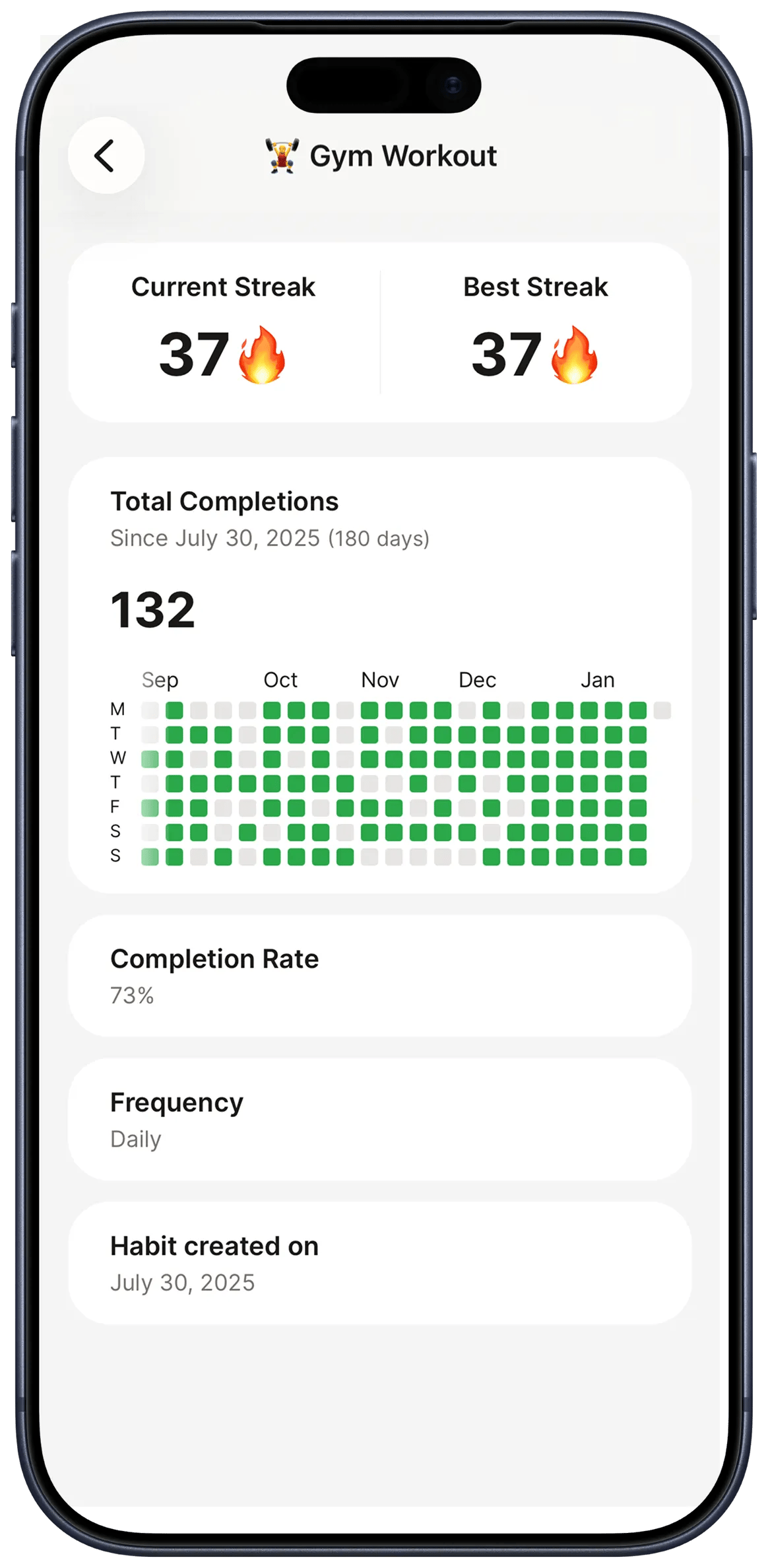
Track your evening routine habits with Habit Streak
Download Free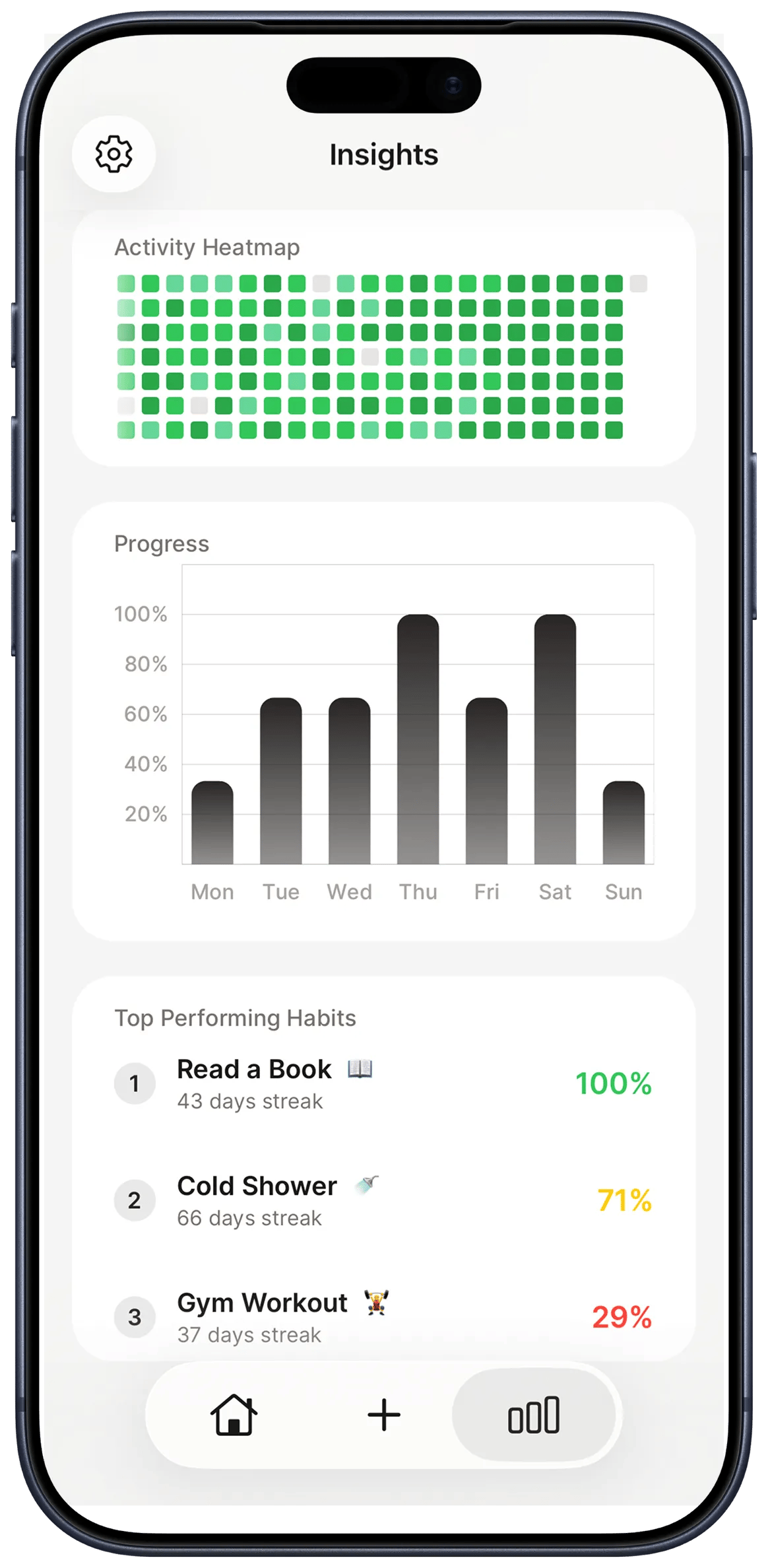
Why an Evening Routine Improves Sleep Quality
Your brain does not have an off switch — it needs a ramp-down period. The transition from wakefulness to sleep is governed by your circadian rhythm, a 24-hour internal clock that depends on consistent cues like light exposure, body temperature, and behavioral patterns.
When you repeat the same sequence of calming activities every night, you create what sleep researchers call a conditioned sleep onset association. Your body learns that these specific actions precede sleep, and it begins producing melatonin and lowering core body temperature earlier in response. Harvard Medical School's sleep hygiene guidelines emphasize that consistent behavioral cues are among the most effective non-pharmacological tools for improving both sleep onset and sleep quality.
Without a wind-down routine, your nervous system stays in a sympathetic (fight-or-flight) state longer. Cortisol remains elevated, body temperature stays high, and your brain keeps processing the day's events — which is why you end up staring at the ceiling replaying a conversation from 3 PM.
Step 1: Set a Consistent Wind-Down Time
Pick a time 30 to 60 minutes before your target bedtime and treat it like an appointment. Consistency matters more than the exact hour. Your circadian clock thrives on predictability, and a regular wind-down signal helps your body anticipate sleep rather than fight it.
The Sleep Foundation recommends starting your wind-down routine at the same time every night, including weekends. If your bedtime is 10:30 PM, your wind-down starts at 9:30 PM — every night. Weekend variation disrupts your rhythm and causes what researchers call "social jet lag," which depletes energy levels even when total sleep hours remain adequate.
Here is a practical way to anchor the time:
- Set a recurring alarm labeled "wind down" on your phone
- Use it as a hard stop for work, chores, and stimulating content
- Start the 7-step sequence in the same order each night
Step 2: Reduce Screen Exposure
Blue light from screens suppresses melatonin and delays sleep onset. Harvard researchers found that blue light exposure suppressed melatonin for about twice as long as green light of comparable brightness and shifted circadian rhythms by twice as much — 3 hours versus 1.5 hours.
The real-world impact is significant. A 2025 study published in JAMA Network Open found that adults who used screens before bed had a 33% higher rate of poor sleep quality and slept about 50 minutes less per week compared to those who avoided screens. And a 2020 interventional study showed that adults who stopped using their phones just 30 minutes before bed for four weeks fell asleep 12 minutes faster and slept 18 minutes longer each night.
33%
higher rate of poor sleep quality among adults who use screens before bed
Practical steps to reduce screen exposure:
- Set a device curfew 30 to 60 minutes before bed
- Enable night mode on all devices if you must use them
- Replace scrolling with a physical book, a paper journal, or conversation
- Charge your phone outside the bedroom — even having a device nearby increases the risk of poor sleep quality by 1.8x
For a deeper approach to building this habit, see our guide on reducing screen time.
Step 3: Prepare for Tomorrow
Planning the next day before bed reduces pre-sleep worry and speeds up sleep onset. A study from Baylor University found that participants who spent five minutes writing a to-do list for the following days fell asleep significantly faster than those who journaled about completed tasks.
This works because unfinished tasks create what psychologists call the Zeigarnik effect — your brain keeps cycling through incomplete items, generating low-level anxiety that interferes with sleep. Writing them down externalizes the loop and tells your brain it is safe to let go.
Keep it short:
- Write your top 3 priorities for tomorrow
- Check your calendar for early commitments
- Lay out clothes, pack your bag, or prep breakfast — reduce morning decisions now
This step also connects your evening routine to your morning routine, creating a smooth handoff between days.
Step 4: Practice Relaxation Techniques
Structured relaxation techniques reduce pre-sleep arousal and measurably shorten the time it takes to fall asleep. A 2026 systematic review and meta-analysis found that progressive muscle relaxation (PMR) markedly improves overall sleep quality in adults and reduces sleep disturbance scores by nearly four points on the Pittsburgh Sleep Quality Index.
Two methods that work particularly well before bed:
Progressive Muscle Relaxation (PMR):
- Starting with your toes, tense each muscle group for 5 seconds
- Release and notice the contrast for 10 seconds
- Work upward through calves, thighs, abdomen, chest, arms, and face
- The full sequence takes about 10 minutes
Box Breathing:
- Inhale for 4 counts
- Hold for 4 counts
- Exhale for 4 counts
- Hold for 4 counts
- Repeat for 5 to 10 cycles
Both techniques shift your nervous system from sympathetic (alert) to parasympathetic (rest) mode. If you want a broader approach, consider building a meditation habit — even 10 minutes of mindfulness practice has been shown to improve emotional regulation and sleep quality.
Step 5: Create a Sleep-Friendly Environment
Your bedroom environment directly controls how fast you fall asleep and how deeply you stay asleep. Temperature, light, and noise are the three variables that matter most.
Here is what the research supports:
- Temperature: Set your thermostat to 60-67 degrees Fahrenheit (15-19 degrees Celsius). Your core body temperature needs to drop by about 1 degree Fahrenheit to initiate sleep, and a cool room assists that process.
- Darkness: Use blackout curtains or a sleep mask. Even small amounts of ambient light suppress melatonin production and reduce deep sleep time.
- Noise: Use earplugs or a white noise machine if your environment is noisy. Consistent low-level sound masks disruptive noises without fragmenting sleep stages.
- Bedding: Your mattress and pillow should support a neutral spine position. If you wake with back or neck pain, these are worth re-evaluating.
A warm bath or shower 90 minutes before bed is one of the most well-supported sleep interventions. A systematic review and meta-analysis from the University of Texas at Austin, analyzing 5,322 studies, found that a warm bath (104-109 degrees Fahrenheit) taken 1-2 hours before bed reduced sleep onset latency by an average of 10 minutes — a 36% improvement. The mechanism is counterintuitive: warm water raises your surface temperature, which then accelerates core body temperature drop as heat dissipates, triggering sleepiness.
Step 6: Light Stretching or Gentle Yoga
Gentle movement before bed relieves physical tension without raising your heart rate. Unlike vigorous exercise — which can interfere with sleep when done within two hours of bedtime — slow stretching and restorative yoga activate the parasympathetic nervous system and promote muscle relaxation.
A simple 10-minute bedtime stretch routine:
- Neck rolls — 30 seconds each direction
- Seated forward fold — hold for 60 seconds, breathing deeply
- Supine spinal twist — 60 seconds per side
- Legs up the wall — 2 to 3 minutes (this position calms the nervous system and reduces swelling)
- Child's pose — 60 seconds with slow, deep breaths
You do not need a yoga mat or special equipment. These can be done on your bed or on a carpeted floor. The goal is not flexibility training — it is releasing the physical stress your body accumulated during the day.
Step 7: Gratitude or Journaling Practice
Writing down what you are grateful for before bed improves sleep quality by shifting your pre-sleep thoughts from worry to appreciation. A landmark study by Wood et al. (2009), published in the Journal of Psychosomatic Research, found that gratitude predicted greater subjective sleep quality and sleep duration, and lower sleep latency. The mechanism is specific: grateful people have more positive and fewer negative pre-sleep cognitions, which directly reduces the mental chatter that keeps you awake.
Additional research from Emmons' gratitude studies showed that people who kept a daily gratitude journal for three weeks slept 30 minutes longer per night and felt significantly more refreshed than the control group.
A simple gratitude journaling practice:
- Write 3 specific things you are grateful for from today
- Be concrete — "My coworker helped me solve the database issue" works better than "I am grateful for my job"
- Spend 5 minutes maximum — this should feel effortless, not like homework
If gratitude journaling does not resonate with you, a general brain dump works well too. Write down whatever is on your mind — worries, ideas, plans — to clear your mental workspace before sleep. For more on building a consistent writing practice, see our journaling habit guide.
Putting Your 7-Step Evening Routine Together
Here is the full routine at a glance:
| Step | Action | Time |
|---|---|---|
| 1 | Set wind-down alarm and stop stimulating activities | 1 min |
| 2 | Put devices away, switch to analog activities | Ongoing |
| 3 | Write tomorrow's top 3 priorities, prep for morning | 5 min |
| 4 | Progressive muscle relaxation or box breathing | 10 min |
| 5 | Warm bath/shower, dim lights, cool the bedroom | 15 min |
| 6 | Light stretching or gentle yoga | 10 min |
| 7 | Gratitude journaling or brain dump | 5 min |
Total time: 45 to 60 minutes. If that feels like too much, start with just Steps 1, 2, and 7 — a 10-minute micro-routine that still covers the essentials. Add one step per week until the full sequence feels natural.
The key is consistency, not perfection. Track your evening routine as a daily habit, and within two to three weeks, you will notice faster sleep onset, fewer nighttime awakenings, and more energy in the morning.
Build your wind-down streak — track your evening routine with Habit Streak
Download FreeFrequently Asked Questions
How long before bed should I start my evening routine?▼
Start 30 to 60 minutes before your target bedtime. Research shows that a consistent wind-down period helps your body anticipate sleep by triggering melatonin production and lowering core body temperature. Even a 10-minute routine is better than none — the consistency matters more than the length.
What is the best temperature for sleeping?▼
Between 60 and 67 degrees Fahrenheit (15 to 19 degrees Celsius). Your body needs to drop its core temperature by about 1 degree Fahrenheit to initiate sleep. A cool room supports this natural process and promotes deeper, less disrupted sleep.
Does a warm bath really help you sleep?▼
Yes. A systematic review of 5,322 studies found that a warm bath (104-109 degrees Fahrenheit) taken 1 to 2 hours before bed reduced sleep onset latency by an average of 10 minutes. The warm water causes your body to shed heat afterward, accelerating the core temperature drop that triggers sleepiness.
Can I use my phone before bed if I enable night mode?▼
Night mode reduces blue light but does not eliminate the problem. The mental stimulation from scrolling social media, reading news, or checking email keeps your brain in an alert state. For best results, put your phone away 30 to 60 minutes before bed and switch to a physical book or journaling.
How long does it take for an evening routine to improve sleep?▼
Most people notice improvements within 1 to 2 weeks of consistent practice. Research suggests it takes an average of 66 days to fully automate a new habit, but the sleep benefits — reduced time to fall asleep and fewer nighttime awakenings — often appear much sooner.
- 1.Beyond the hours slept: inconsistent sleep routines threaten mental health in 100,000 UK Biobank participantslink.springer.com
- 2.National Sleep Foundation's 2025 Sleep in America Pollthensf.org
- 3.Sleep hygiene: Simple practices for better resthealth.harvard.edu
- 4.Sleep Foundation recommendssleepfoundation.org
- 5.Screen time and sleep: What new studies revealsleepeducation.org
- 6.Electronic Screen Use and Sleep Duration and Timing in Adultspmc.ncbi.nlm.nih.gov
- 7.The proliferation of online for-profit medical journalspubmed.ncbi.nlm.nih.gov
- 8.Bedtime Journaling Benefits: Clear Your Mind and Sleep Bettersleep.me
- 9.2026 systematic review and meta-analysissciencedirect.com
- 10.Before-bedtime passive body heating by warm shower or bath to improve sleep: A systematic review and meta-analysispubmed.ncbi.nlm.nih.gov
- 11.Gratitude influences sleep through the mechanism of pre-sleep cognitionspubmed.ncbi.nlm.nih.gov
- 12.Is Gratitude Good for Your Health?greatergood.berkeley.edu