 By Adrien Blanc
8 Habits for Better Sleep That Actually Work
You do not need a new mattress, a fancy supplement, or a $200 sleep tracker to sleep better. What you need are consistent habits. According to the National Sleep Foundation's 2025 Sleep in America Poll, 72% of people with good sleep health reported flourishing in life, compared to just 46% of those with poor sleep. Yet nearly 4 in 10 adults have trouble falling asleep three or more nights per week.
The gap between sleeping well and sleeping poorly is rarely about one dramatic change. It is about a handful of small, repeatable behaviors -- habits that regulate your circadian rhythm, reduce arousal before bed, and create an environment where sleep happens naturally. A systematic review in Sleep Medicine Reviews confirms that sleep regularity is now considered as important as sleep duration for overall health outcomes.
These eight habits are backed by peer-reviewed research. None of them cost money, and all of them can be tracked daily as part of a science-based approach to building healthy habits.
72%
of adults with good sleep health report flourishing in life
Build your sleep routine one habit at a time. Track your nightly habits with Habit Streak.
Download Free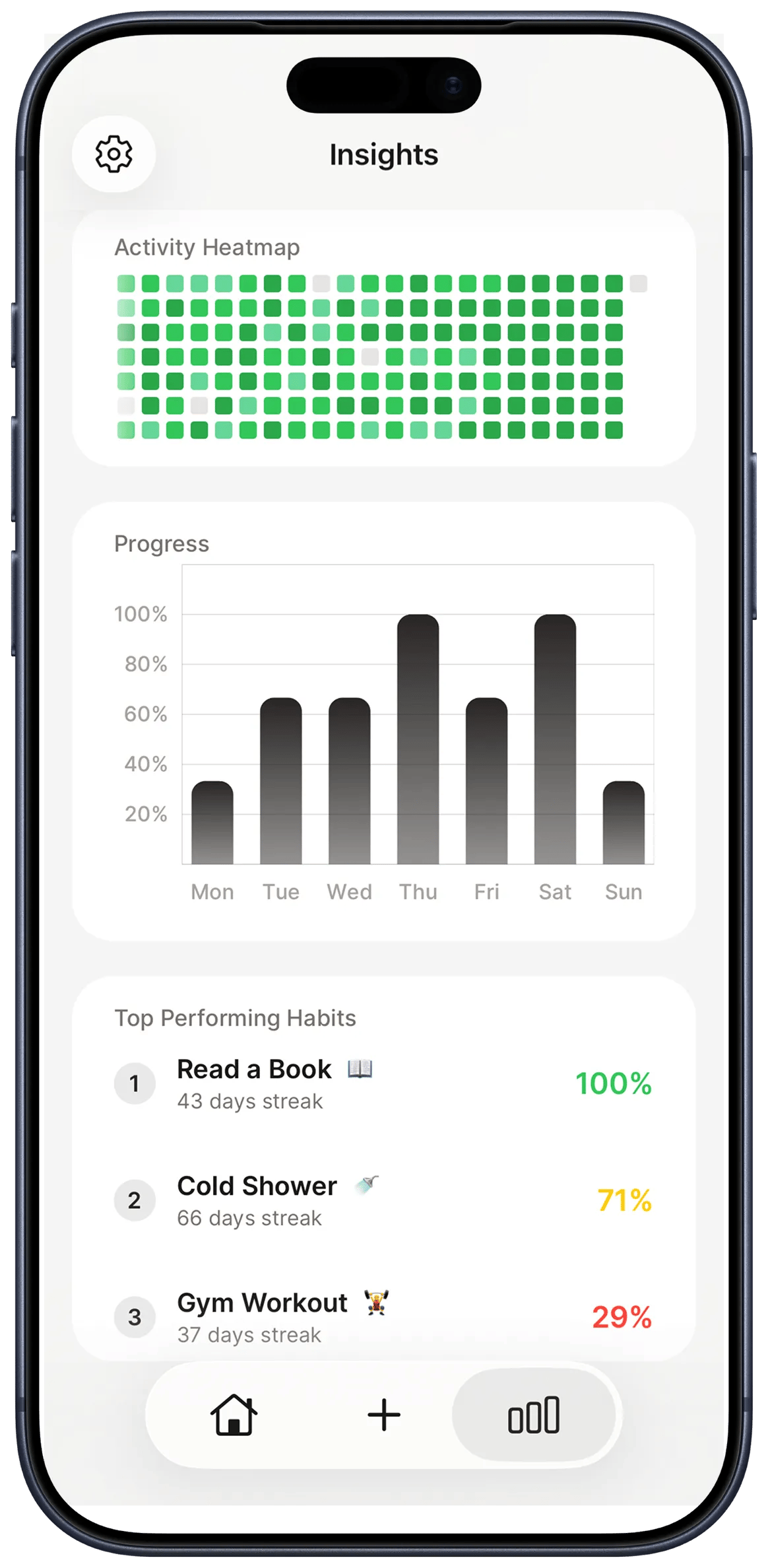
1. Consistent Wake Time Every Day
A fixed wake time is the single most powerful anchor for your circadian rhythm. Your body's internal clock depends on predictable light-dark and sleep-wake cues. When you wake at different times on weekdays and weekends -- a pattern researchers call "social jet lag" -- you disrupt the timing signals that govern melatonin release, cortisol secretion, and core body temperature.
A 2025 systematic review published in Sleep Medicine Reviews found that stable sleep timing is associated with better mental health, metabolic regulation, cardiovascular health, and cognitive resilience -- often more so than total sleep duration. A separate analysis of 41 studies covering 92,340 participants confirmed that greater sleep variability was linked to higher risks of depression, obesity, and cardiovascular disease.
How to build this habit:
- Pick a wake time you can sustain seven days a week -- weekends included
- Set an alarm at the same time every morning, even if you went to bed late
- Allow your bedtime to adjust naturally as your body learns the rhythm
Your wake time drives everything else. Get this right, and the remaining seven habits become much easier to maintain.
2. Morning Sunlight Exposure
Getting bright light within the first hour of waking resets your circadian clock and improves that night's sleep. Light enters through your eyes and signals the suprachiasmatic nucleus (SCN) in the hypothalamus -- the master clock that controls melatonin timing, alertness, and body temperature rhythms.
A daily diary study of 103 U.S. adults found that morning sunlight exposure predicted better sleep quality the following night, regardless of total time spent outdoors. The timing of the exposure mattered more than the duration. And a 2025 cross-sectional study of 1,762 adults found that for every extra 30 minutes of morning sun before 10 a.m., the midpoint of sleep shifted 23 minutes earlier -- meaning people naturally fell asleep and woke up at healthier times.
For practical ways to build morning light into your routine, see our guide on morning routines that work.
3. Caffeine Cutoff Time
Caffeine consumed too late in the day silently erodes sleep quality -- even when you feel fine. A 2023 meta-analysis of 24 studies found that caffeine reduced total sleep time by 45 minutes and sleep efficiency by 7%, while increasing the time it took to fall asleep by 9 minutes. Most notably, deep sleep duration decreased by 11.4 minutes -- the restorative stage critical for memory consolidation and immune function.
The same analysis calculated that to avoid reductions in total sleep time, a standard cup of coffee (~107 mg) should be consumed at least 8.8 hours before bedtime. For higher doses (above 200 mg), the cutoff stretches to 13 or more hours.
A randomized clinical trial published in SLEEP added an important finding: participants could not perceive the sleep disruption caused by caffeine consumed 4 to 8 hours before bed, even though objective measurements showed clear decreases in sleep efficiency and increases in nighttime awakenings.
Practical guidelines:
- Set a personal caffeine cutoff -- noon to 2 p.m. works for most people with a 10 p.m. bedtime
- Remember that tea, chocolate, and some medications contain caffeine
- If you suspect caffeine sensitivity, try a two-week elimination test and track your sleep quality
4. Regular Physical Activity
People who exercise regularly sleep better -- and the research is overwhelming. A meta-analysis of 200 randomized controlled trials covering 23,523 participants found that exercise consistently improves both subjective and objective measures of sleep quality. Walking, aerobic exercise, tai chi, and qigong showed the largest benefits.
13%
of people meet both sleep and physical activity recommendations
A 2025 study using data from 70,963 participants revealed that only 12.9% of people routinely meet both sleep and physical activity recommendations -- suggesting that building an exercise habit is one of the highest-impact changes most people can make.
What the research suggests for timing and intensity:
- Moderate-intensity exercise (brisk walking, cycling, swimming) shows the most consistent sleep benefits
- Morning or afternoon exercise is ideal -- vigorous exercise within two hours of bedtime can raise core body temperature and delay sleep onset
- Even 20 to 30 minutes of movement counts -- you do not need marathon training sessions
5. Evening Screen Reduction
Screens before bed disrupt sleep through two mechanisms: blue light suppresses melatonin, and content keeps your brain in alert mode. A 2025 study in JAMA Network Open analyzing 122,058 participants found that adults who used screens before bed had a 33% higher rate of poor sleep quality and slept about 50 minutes less per week.
The good news is that even modest reductions help. A 2020 interventional study randomized adults to avoid phones for just 30 minutes before bed for four weeks. The result: they fell asleep 12 minutes faster, slept 18 minutes longer, and reported better mood and working memory the next day.
Not all screen time is equally harmful. Research on adolescents found that interactive activities like gaming and social media multitasking were far more disruptive than passive content like listening to music. The key variable is mental stimulation, not just light exposure.
Steps to reduce evening screens:
- Set a device curfew 30 to 60 minutes before bed
- Charge your phone outside the bedroom -- having a device nearby increases poor sleep risk by 1.8x
- Replace scrolling with a physical book, stretching, or conversation
- If you must use a device, keep it to passive, low-stimulation content
For a structured approach, our guide on screen time reduction covers how to build this habit gradually.
6. Cool and Dark Bedroom Environment
Your body needs to drop its core temperature by about 1 degree Fahrenheit to initiate sleep, and your bedroom environment either helps or hinders that process. The Sleep Foundation recommends setting your thermostat between 65 and 68 degrees Fahrenheit (18 to 20 degrees Celsius) for optimal sleep. Sleep neurologist Dr. Chris Winter notes that "somewhere between 65 and 67 degrees yields the most sleep continuity, efficiency, and depth of sleep."
A study published in Science of the Total Environment tracking nearly 11,000 person-nights found that sleep efficiency dropped by 5 to 10% when bedroom temperatures rose above 77 degrees Fahrenheit.
Beyond temperature, optimize for darkness and quiet:
- Use blackout curtains or a sleep mask -- even small amounts of ambient light suppress melatonin
- Remove or cover LED indicator lights on electronics
- Use earplugs or a white noise machine if your environment is noisy
- Consider a warm shower 60 to 90 minutes before bed -- it raises surface temperature, which then accelerates core cooling and triggers sleepiness
7. Relaxation Routine Before Bed
A structured wind-down routine signals your nervous system to shift from alert mode to rest mode. Without it, your brain stays in sympathetic (fight-or-flight) activation -- cortisol stays elevated, thoughts race, and you end up staring at the ceiling.
A 2026 meta-analysis of 31 randomized controlled trials found that progressive muscle relaxation (PMR) significantly improved sleep quality compared to control groups, with effect sizes that are uncommon for non-pharmacological interventions. PMR also increased slow-wave sleep -- the deepest, most restorative stage -- in healthy adults.
Two techniques that work well before bed:
Progressive Muscle Relaxation (10 minutes):
- Tense each muscle group for 5 seconds, then release for 10 seconds
- Work from toes upward through calves, thighs, abdomen, chest, arms, and face
- Focus on the contrast between tension and relaxation
Box Breathing (5 minutes):
- Inhale for 4 counts, hold for 4, exhale for 4, hold for 4
- Repeat for 5 to 10 cycles
For more relaxation strategies, our evening routine guide walks through a full seven-step wind-down sequence. If you want to build a daily mindfulness practice, see our meditation habit guide.
8. Consistent Bedtime
Going to bed at roughly the same time each night completes the circadian loop you started with a fixed wake time. While your wake time is the stronger anchor, a consistent bedtime reinforces the pattern and ensures you accumulate enough total sleep.
The CDC recommends that adults aim for seven to nine hours of sleep per night. Working backward from your fixed wake time gives you your target bedtime. If you wake at 6:30 a.m. and need eight hours, your bedtime is 10:30 p.m. -- every night, including weekends.
A clinical study on sleep hygiene found that schedule consistency correlated with sleep quality at r = 0.9 -- one of the strongest associations among all sleep hygiene elements studied.
Tips for maintaining a consistent bedtime:
- Set a "wind-down" alarm 30 to 60 minutes before your target bedtime
- Treat your bedtime like an appointment -- it is not negotiable on most nights
- If you are not sleepy at bedtime, do a quiet activity (reading, stretching) rather than scrolling -- the routine still matters even if sleep does not come immediately
Building These Habits Into Your Life
You do not need to adopt all eight habits at once. Start with the two that feel most actionable -- a consistent wake time and a caffeine cutoff are strong starting points -- and add one new habit every week or two.
Track your progress daily. Research on habit formation shows that consistency is the single biggest predictor of whether a behavior becomes automatic. Marking each habit as done or missed gives you feedback and motivation.
Use habit stacking to attach sleep habits to existing routines. For example: "After I brush my teeth, I will set my phone to charge outside the bedroom." Small links like these reduce the willpower required and make new habits stick faster.
Track your 8 sleep habits every night. Habit Streak makes it simple to build and maintain your sleep routine.
Download FreeFrequently Asked Questions
How long does it take for sleep habits to improve sleep quality?▼
Most people notice improvements within one to two weeks of consistent practice. Research suggests that circadian rhythm adjustments begin within a few days of maintaining a regular wake time. However, the full benefits of habits like exercise and caffeine management may take two to four weeks to stabilize. The key is daily consistency rather than perfection.
What is the single most important sleep habit?▼
A consistent wake time. Sleep researchers consistently rank it as the strongest anchor for your circadian rhythm. When your wake time is fixed, your body naturally adjusts melatonin release and cortisol timing, making it easier to fall asleep and wake up at the right times. Everything else builds on this foundation.
Can I catch up on sleep during the weekend?▼
Sleeping in on weekends creates what researchers call social jet lag, which disrupts your circadian rhythm and can worsen sleep quality during the week. A study of over 92,000 participants found that greater sleep variability was linked to higher risks of depression and cardiovascular disease. Instead of sleeping in, keep your wake time consistent and go to bed earlier if you need extra rest.
Is it okay to exercise in the evening if that is my only option?▼
Yes, moderate exercise in the evening is fine for most people. Research shows that vigorous, high-intensity exercise within two hours of bedtime can delay sleep onset by raising core body temperature and adrenaline. But moderate activities like walking, yoga, or light cycling in the evening generally do not disrupt sleep and may even help.
Do sleep supplements like melatonin replace good sleep habits?▼
No. Melatonin supplements can help with specific issues like jet lag or shift work, but they do not replace the cumulative benefits of consistent sleep habits. Behavioral changes like a fixed wake time, light management, and a wind-down routine address the root causes of poor sleep rather than masking symptoms. Consult a healthcare provider before using sleep supplements regularly.
- 1.National Sleep Foundation's 2025 Sleep in America Pollthensf.org
- 2.systematic review in Sleep Medicine Reviewssciencedirect.com
- 3.Sleep regularity as an important component of sleep hygiene: a systematic reviewsciencedirect.com
- 4.separate analysis of 41 studies covering 92,340 participantscdnsciencepub.com
- 5.daily diary study of 103 U.S. adultsjournals.sagepub.com
- 6.The role of sunlight in sleep regulation: analysis of morning, evening and late exposurelink.springer.com
- 7.The effect of caffeine on subsequent sleep: A systematic review and meta-analysissciencedirect.com
- 8.randomized clinical trial published in SLEEPacademic.oup.com
- 9.Effects of exercise on sleep quality in general population: Meta-analysis and systematic reviewsciencedirect.com
- 10.Bidirectional associations between sleep and physical activity investigated using large-scale objective monitoring datanature.com
- 11.Effects of exercise timing and intensity on physiological circadian rhythm and sleep quality: a systematic reviewpmc.ncbi.nlm.nih.gov
- 12.Electronic Screen Use and Sleep Duration and Timing in Adultspmc.ncbi.nlm.nih.gov
- 13.Screen time and sleep: What new studies revealsleepeducation.org
- 14.Screen Use at Bedtime and Sleep Duration and Quality Among Youthspmc.ncbi.nlm.nih.gov
- 15.Best Temperature for Sleepsleepfoundation.org
- 16.Nighttime Ambient Temperature and Sleep in Community-Dwelling Older Adultspmc.ncbi.nlm.nih.gov
- 17.2026 meta-analysis of 31 randomized controlled trialssciencedirect.com
- 18.Progressive muscle relaxation increases slow‐wave sleep during a daytime nappmc.ncbi.nlm.nih.gov
- 19.About Sleepcdc.gov
- 20.Sleep hygiene efficacy on quality of sleep and mental ability among insomniac patientspmc.ncbi.nlm.nih.gov