 By Adrien Blanc
How to Make Exercise a Habit When You Hate Working Out

You do not need to love exercise to do it consistently. The secret is not willpower, motivation, or finding the perfect workout plan. It is building a system so simple that showing up becomes automatic. A large-scale study of over 500,000 fitness app users found that only 18.1% of beginners were still exercising at the six-month mark, with a median dropout time of just 14 weeks. The good news: the same research showed that consistency in the first 28 days was the single strongest predictor of long-term success. That means the strategies you use right now, in the first few weeks, matter more than any gym membership or fitness gadget you will ever buy.
This guide draws on behavioral science to show you exactly how to make exercise stick, even if the thought of a treadmill makes you cringe. Every technique here is designed for people who have tried and failed before, because the problem was never you. It was the approach.
Start tracking your exercise habit with a simple daily check-in.
Download Free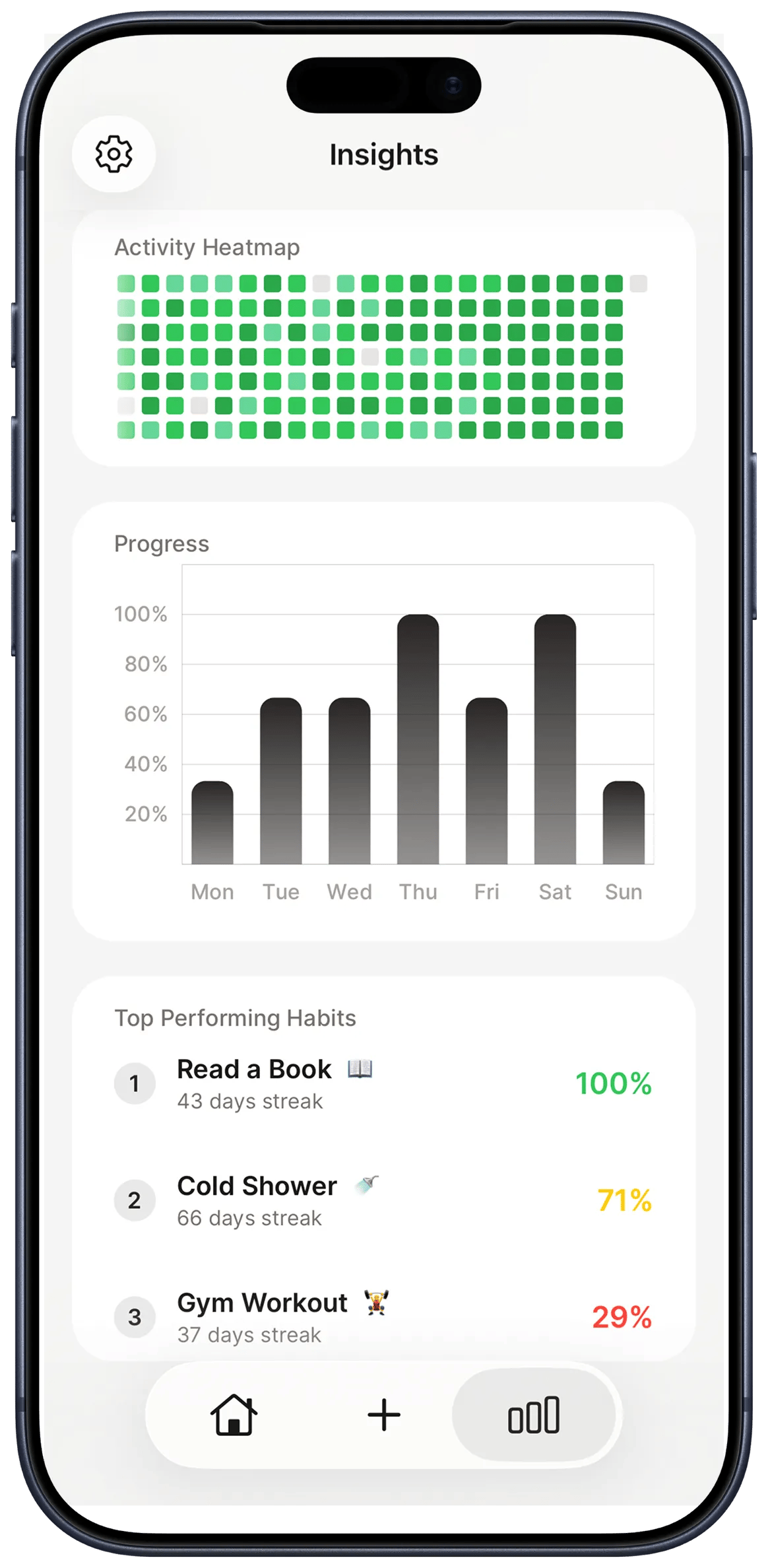
Why Motivation Is Not the Answer
Motivation is unreliable, and that is actually fine. Research on habit formation shows that the median time to build automaticity for a health behavior is between 59 and 66 days. During those weeks, your motivation will rise and fall constantly. If you rely on feeling inspired to lace up your sneakers, you will quit the moment life gets stressful.
What works instead is designing your environment and routine so that exercise requires almost no decision-making. Studies show that consistency, low behavioral complexity, and a supportive environment are the strongest predictors of habit formation. Motivation may get you through day one, but a well-designed system carries you through month six.
The goal is not to feel pumped about exercise. The goal is to make it as automatic as brushing your teeth. That shift in thinking changes everything, and it is at the core of the science of building healthy habits.
The 2-Minute Exercise Rule
Scale your workout down until it feels almost too easy to skip. James Clear's Two-Minute Rule, inspired by BJ Fogg's Tiny Habits research, says that any new habit should take less than two minutes to start. For exercise, that might mean:
- Putting on your workout shoes and stepping outside
- Doing five bodyweight squats
- Walking to the end of your block and back
- Stretching for 90 seconds after your morning coffee
This sounds absurdly small, and that is the point. When the barrier is laughably low, you eliminate the mental resistance that keeps you on the couch. As Clear puts it, "We're so focused on finding the best workout program that we don't give ourselves permission to show up even in a small way."
The two-minute version is not the end goal. It is a gateway habit that naturally leads to longer sessions once the routine is established. You will find it surprisingly hard to stop at two minutes once you have already started.
Finding Movement You Actually Enjoy
If you hate your workout, you will not keep doing it. Period. A one-year follow-up study of fitness club beginners found that people who exercised regularly were significantly more likely to report exercising for inherent enjoyment, while dropouts cited lack of priority as their biggest barrier. Only 37% of participants maintained regular exercise throughout the first year.
Exercise does not have to mean running on a treadmill or lifting heavy weights. Consider alternatives:
- Dancing (Zumba, hip-hop, or just in your living room)
- Hiking or nature walks
- Swimming or water aerobics
- Martial arts or boxing classes
- Cycling outdoors or on a stationary bike
- Yoga or tai chi (check out our yoga habit guide for beginners)
- Team sports like basketball, pickleball, or soccer
- Active video games like Beat Saber or Ring Fit
The best exercise is the one you will actually do. Spend the first month experimenting. Try a different activity each week and pay attention to what you look forward to versus what you dread.
Use Temptation Bundling to Make It Fun
Pair exercise with something you already love, and working out becomes the highlight of your day. This strategy, called temptation bundling, was studied by Katherine Milkman at Wharton. In her original experiment, participants who could only listen to addictive audiobooks while at the gym attended 51% more than the control group.
51%
increase in gym attendance when participants bundled audiobooks with exercise
A larger follow-up study with over 6,700 participants confirmed the effect: temptation bundling boosted the likelihood of a weekly workout by 10-14% and continued to show benefits up to 17 weeks after the intervention ended.
Here are some practical bundles to try:
- Podcast or audiobook you only listen to while walking or at the gym
- Favorite TV show you only watch while on a stationary bike or treadmill
- Social time with a friend reserved for walking or hiking together
- Music playlist you only play during workouts
The key is restriction. The temptation becomes more appealing when it is tied exclusively to exercise.
The Role of Identity in Exercise Habits
Stop trying to motivate yourself to work out and start seeing yourself as someone who moves. Research on habit-identity associations from the University of Bath found that habits become more automatic and resilient when they are connected to a person's sense of identity and core values.
This is the difference between outcome-based thinking ("I want to lose 10 pounds") and identity-based thinking ("I am becoming a person who exercises"). The identity approach works because:
- It removes the finish line. You do not stop once you hit a number.
- It reframes setbacks. Missing one workout does not erase your identity.
- It creates internal motivation. You exercise because it is who you are, not because of external pressure.
You do not need to call yourself an athlete. Start with something honest: "I am someone who moves their body a few times a week." Each completed session reinforces that self-image through what psychologists call self-perception theory. You watch yourself exercise, and you update your beliefs about who you are.
Building From 5 Minutes to a Full Workout
Gradual progression, not dramatic overhauls, is how lasting exercise habits are built. The research is clear: dropout rates are lower when exercise starts at moderate intensity rather than vigorous. Jumping into an intense program is one of the fastest ways to burn out.
Here is a practical 8-week progression:
- Weeks 1-2: 5-10 minutes of light movement (walking, stretching). Focus purely on consistency.
- Weeks 3-4: 15-20 minutes. Add one new activity type. Start exploring what you enjoy.
- Weeks 5-6: 20-30 minutes. Introduce slightly more effort. Add a second session per week if you feel ready.
- Weeks 7-8: 30+ minutes. Settle into 3-4 sessions per week. You are now past the critical 42-day period where 48% of people in habit studies report automaticity.
The most important rule: never miss twice in a row. Research on exercise interventions found that the top-performing strategy offered small rewards for returning after missed workouts. A single missed day is normal. Two missed days starts to erode the habit. If you miss Monday, make Tuesday non-negotiable, even if it is only a five-minute walk.
Tracking Exercise Streaks for Motivation
Seeing a visual chain of completed workouts creates a psychological pull to keep going. This is sometimes called the Seinfeld Strategy or the "don't break the chain" method, and it works because it taps into loss aversion. Once you have a streak going, the cost of breaking it feels higher than the effort of showing up.
Habit tracking gives you three benefits at once:
- Visual proof of progress when you cannot feel physical changes yet
- A clear signal of when you are slipping before it becomes a full dropout
- Dopamine from checking off each completed session
Research shows that training consistency in the first 28 days is the strongest predictor of six-month adherence. Tracking makes that early consistency visible and rewarding. If you are new to tracking habits, a habit tracker for beginners can help you start without overcomplicating things.
The trick is to track the minimum viable action, not an ambitious goal. Do not track "completed a 45-minute workout." Track "moved my body today." This keeps your streak alive on days when all you managed was a short walk, and that matters more than any single intense session.
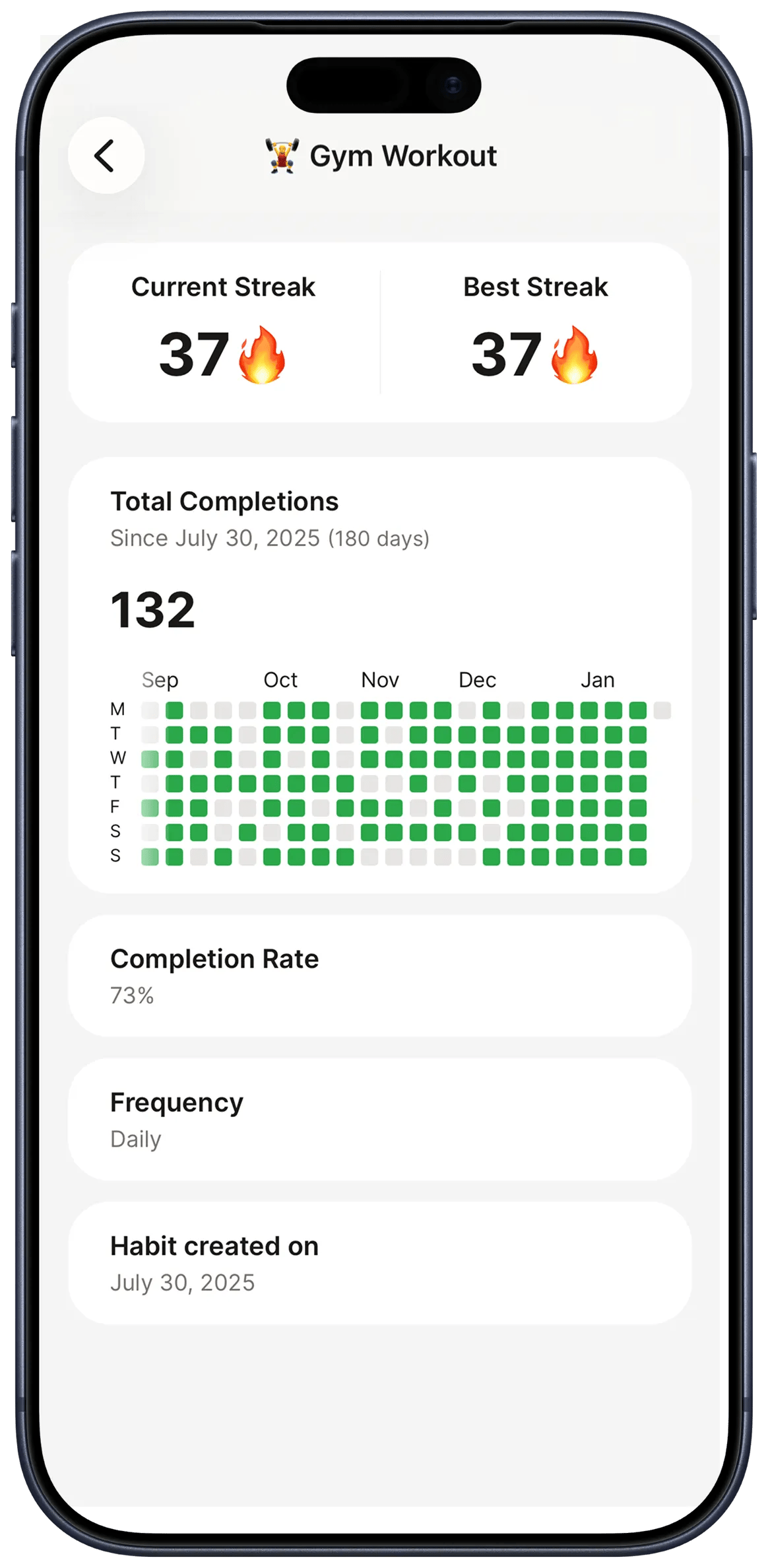
Track your exercise streak and watch consistency build over time.
Download FreeFrequently Asked Questions
How long does it take to make exercise a habit?▼
Research shows the median time to form an exercise habit is around 59-66 days, though individual timelines range from 4 weeks to over 5 months. Exercise habits tend to take longer than simpler behaviors like handwashing because they require more effort and planning. The most important factor is not the number of days but maintaining consistency, especially during the first month.
What if I keep failing to stick with exercise?▼
You are probably starting too big. Scale back dramatically. If a 30-minute workout feels impossible, try 5 minutes. If even that feels like too much, start with putting on your workout clothes and stepping outside. Research consistently shows that lowering the barrier to starting is more effective than increasing motivation. Also consider switching activities entirely. You may not hate exercise. You may hate the type of exercise you have been forcing yourself to do.
Can I build an exercise habit without going to the gym?▼
Absolutely. Walking, dancing, home bodyweight exercises, hiking, swimming, cycling, and active games all count. A study of fitness club members found that 63% dropped out in the first quarter. The gym works for some people, but it is not the only path. Choose whatever form of movement is most accessible and enjoyable for you.
Is it better to exercise every day or a few times a week?▼
For habit formation specifically, daily is easier than a few times per week. A daily cue (like exercising every morning after coffee) is simpler for your brain to automate than an irregular schedule. That said, your daily exercise can be very light on rest days. The key is maintaining the routine, even if the intensity varies.
How do I stay consistent when I travel or my routine changes?▼
Have a minimum viable workout that requires no equipment and no specific location. Something like a 10-minute bodyweight routine or a walk around the block. The goal during disruptions is not performance but keeping the habit loop alive. Research shows that habit strength drops significantly after breaks, so even a tiny session while traveling protects your progress.
- 1.Predictors of long-term resistance exercise adherence among beginners: Evidence from a large cohort of mobile app use...sportrxiv.org
- 2.Time to Form a Habit: A Systematic Review and Meta-Analysis of Health Behaviour Habit Formation and Its Determinantspmc.ncbi.nlm.nih.gov
- 3.Motives and barriers to initiation and sustained exercise adherence in a fitness club setting—A one‐year follow‐up studypmc.ncbi.nlm.nih.gov
- 4.Holding the Hunger Games Hostage at the Gym: An Evaluation of Temptation Bundlingpmc.ncbi.nlm.nih.gov
- 5.Teaching temptation bundling to boost exercise: A field experimentsciencedirect.com
- 6.Frontiers | Habit and Identity: Behavioral, Cognitive, Affective, and Motivational Facets of an Integrated Selffrontiersin.org
- 7.Determinants of Dropout from and Variation in Adherence to an Exercise Intervention: The STRRIDE Randomized Trialspmc.ncbi.nlm.nih.gov
- 8.Huge study unlocks the secrets to developing a workout habitnbcnews.com