 By Adrien Blanc
The Tiny Habits Method: Start Small, Change Everything
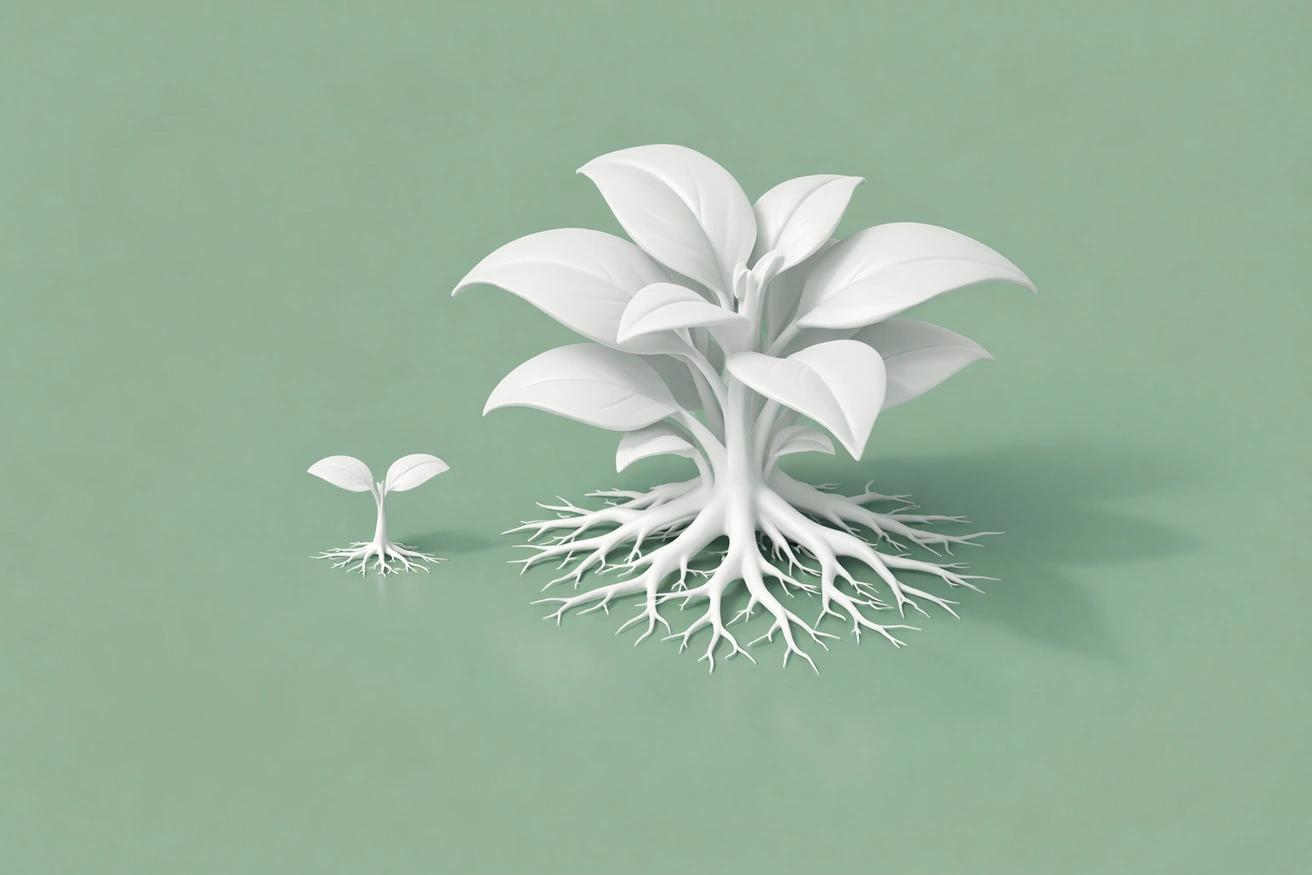
Most habits fail because people start too big. BJ Fogg, a Stanford behavior scientist who has personally coached over 60,000 people through habit change, discovered that the secret to lasting behavior change is not motivation or willpower — it's making the habit so small you can't say no. His Tiny Habits method, refined over 20 years at Stanford's Behavior Design Lab, replaces the brute-force approach with a simple formula: anchor a new behavior to an existing routine, make it take less than 30 seconds, and celebrate immediately after. A 2025 study found that people who started with minimal habits were 2.7 times more likely to maintain them long-term compared to those who started with ambitious targets. This guide breaks down exactly how the Tiny Habits method works, why it succeeds where other approaches fail, and how to apply it today.
Start tracking your tiny habits today
Download Free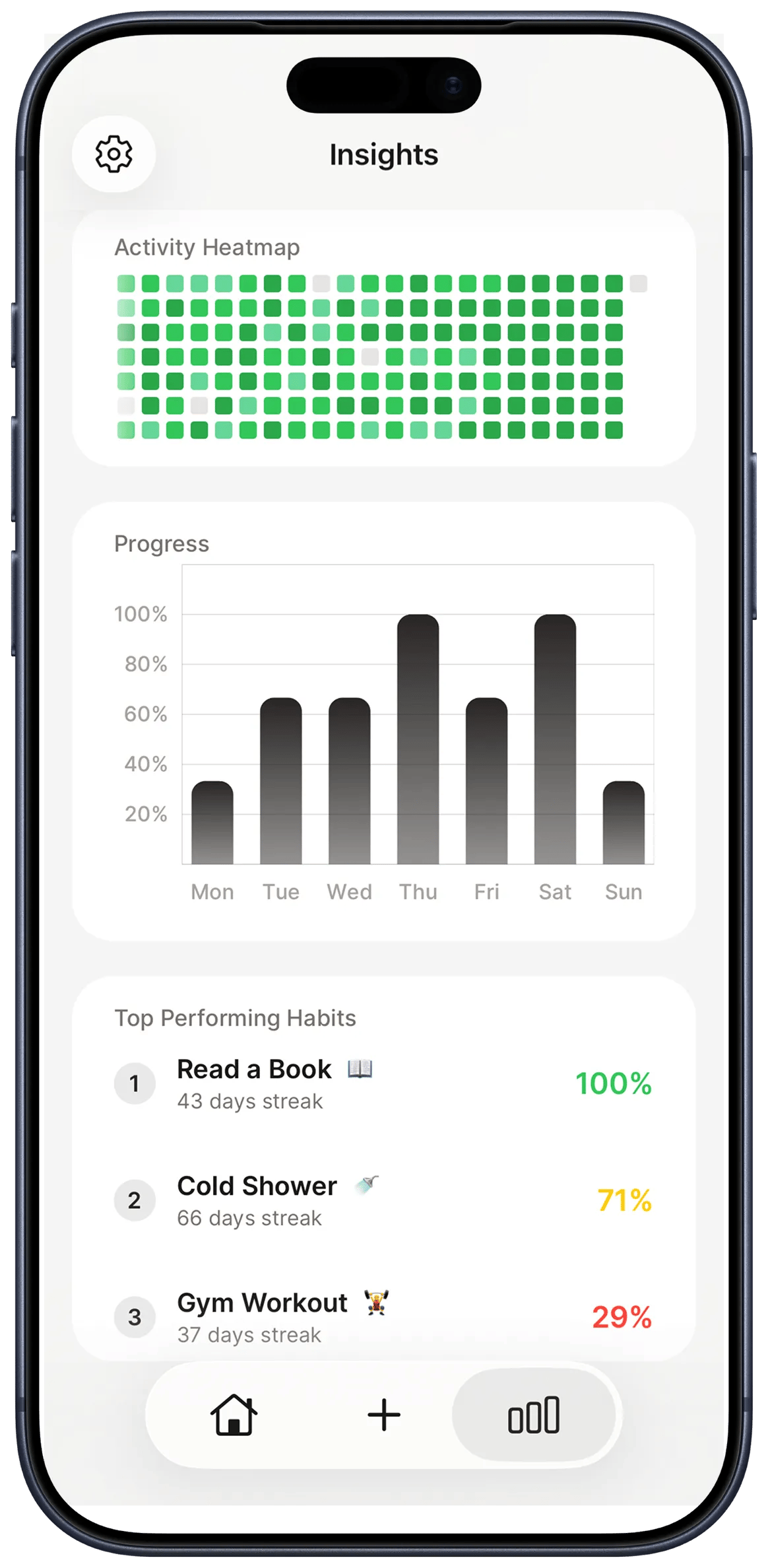
What Are Tiny Habits?
A Tiny Habit is a behavior that takes less than 30 seconds, is anchored to an existing routine, and is followed by an immediate celebration. BJ Fogg developed the concept at Stanford University after realizing that conventional habit advice — set big goals, stay motivated, use willpower — fails most people most of the time.
The core insight is counterintuitive: you don't need motivation to build a habit if the habit is small enough. Motivation fluctuates daily. You feel fired up on Monday and exhausted by Thursday. Tiny Habits sidestep this problem entirely by making the behavior so easy that motivation becomes irrelevant.
Fogg structures every Tiny Habit as a recipe with three parts:
- Anchor moment — an existing behavior that reliably happens in your routine (brushing your teeth, pouring your morning coffee, sitting down at your desk)
- Tiny behavior — the new habit, scaled down to its smallest possible version (one push-up, opening your journal, drinking one sip of water)
- Celebration — an immediate positive emotion you generate right after doing the behavior (a fist pump, saying "I did it!", a smile)
This recipe format — "After I [anchor], I will [tiny behavior], then I [celebrate]" — is what Fogg calls a Tiny Habits Recipe. It sounds almost absurdly simple. That's the point.
The method is backed by over 1,900 academic publications that reference Fogg's underlying behavior model, and Fogg's Tiny Habits book has been published in 31 languages. For a deeper look at the neuroscience behind why habits form, see our guide on the science of building healthy habits.
BJ Fogg's Behavior Model: Motivation, Ability, and Prompt
Every human behavior follows the same pattern: it happens when motivation, ability, and a prompt come together at the same moment. Fogg calls this the B = MAP model — Behavior equals Motivation times Ability times Prompt. If any one element is missing, the behavior doesn't happen.
Motivation
Motivation is your desire to do the behavior. Fogg identifies three core motivators:
- Sensation — seeking pleasure, avoiding pain
- Anticipation — hope for a positive outcome, fear of a negative one
- Belonging — desire for social acceptance, avoidance of rejection
The critical problem with motivation-based approaches: motivation is unreliable. It spikes when you watch an inspiring video and crashes when you're tired, stressed, or busy. Building habits on motivation alone is like building a house on sand.
Ability
Ability is how easy or hard the behavior is to perform. Fogg identifies six factors that determine ability:
- Time — how long does it take?
- Money — what does it cost?
- Physical effort — how demanding is it?
- Mental effort — how much thinking is required?
- Social deviance — does it go against social norms?
- Routine disruption — does it break your current patterns?
The key insight: simplicity is a function of your scarcest resource at the moment. If you're short on time, even a five-minute habit feels impossible. If you're mentally drained, anything requiring focus is too hard.
Prompt
The prompt is the trigger — the thing that tells you "do this now." Without a prompt, even a highly motivated person with full ability won't act. Fogg classifies prompts into three types:
- Facilitator — helps when motivation is high but ability is low
- Spark — boosts motivation when ability is high but motivation is low
- Signal — a simple reminder when both motivation and ability are sufficient
This is why Tiny Habits works where raw willpower fails. You're not fighting your psychology — you're working with it. The anchor moment serves as a reliable prompt, the tiny behavior maximizes ability, and the celebration provides motivation through positive emotion.
The Tiny Habits Recipe Formula
The formula is: "After I [anchor moment], I will [tiny behavior]." This simple sentence structure is what Fogg calls a Tiny Habits Recipe, and it's the practical engine of the entire method.
Step 1: Choose your anchor
Your anchor must be a behavior you already do reliably, every day, in a consistent context. Good anchors:
- After I pour my morning coffee...
- After I sit down at my desk...
- After I put my plate in the dishwasher after dinner...
- After I put my head on the pillow at night...
Bad anchors are vague ("sometime in the morning") or unreliable ("after my workout" — if you don't work out daily).
Step 2: Scale the behavior down
This is where most people resist. Fogg insists the behavior must take less than 30 seconds. Not five minutes. Not two minutes. Thirty seconds or less.
- Want to start meditating? Your Tiny Habit is three deep breaths
- Want to exercise? Your Tiny Habit is two push-ups
- Want to read more? Your Tiny Habit is reading one paragraph
- Want to journal? Your Tiny Habit is writing one sentence
- Want to floss? Your Tiny Habit is flossing one tooth
The goal is not to do a meaningful amount of the behavior. The goal is to establish the neural pathway and build consistency. The behavior will naturally grow once the habit is wired in.
Step 3: Celebrate immediately
This is the step most people skip — and the one Fogg considers most important. Immediately after your tiny behavior, you create a feeling of success. This can be:
- A quiet "Yes!" or "Good job!"
- A fist pump or victory gesture
- A genuine smile
- Humming a few bars of a song you love
Why does this matter? Neuroscience research shows that dopamine — the brain chemical that reinforces behavior — is released during moments of positive emotion. By celebrating immediately after the behavior, you create a dopamine spike that neurologically tags the behavior for repetition. This is how habits get wired into the basal ganglia, the brain region responsible for automatic behaviors.
Research supports this: teams that regularly celebrated habit milestones showed 53% higher habit maintenance than those without recognition systems.
10 Tiny Habit Examples You Can Start Today
Here are ten proven Tiny Habits Recipes you can begin immediately. Each follows Fogg's formula: a reliable anchor, a behavior under 30 seconds, and a celebration.
- After I pour my morning coffee, I will write one thing I'm grateful for. (Then smile.)
- After I sit down at my desk, I will write today's most important task on a sticky note. (Then say "Let's go.")
- After I put my dinner plate in the sink, I will wipe down one kitchen counter. (Then think "Nice.")
- After I brush my teeth at night, I will floss one tooth. (Then do a fist pump.)
- After I start the coffee maker, I will do two push-ups. (Then say "I'm strong.")
- After I close my laptop for the day, I will take three deep breaths. (Then exhale with a "ahh.")
- After I put my phone on the charger at night, I will read one page of my book. (Then smile.)
- After I use the bathroom, I will drink a glass of water. (Then think "Hydrated.")
- After I walk through my front door after work, I will hang up my keys on the hook. (Then say "Home.")
- After I sit down for lunch, I will eat one bite of vegetables first. (Then nod approvingly.)
These examples seem trivially easy — and that's exactly right. Research from the British Psychological Society found that people who used habit stacking (anchoring new behaviors to existing ones) reported 64% higher success rates than those who tried to establish standalone habits.
For more habit ideas to track, see our list of 25 best habits to start tracking today.
How Tiny Habits Grow Into Big Changes
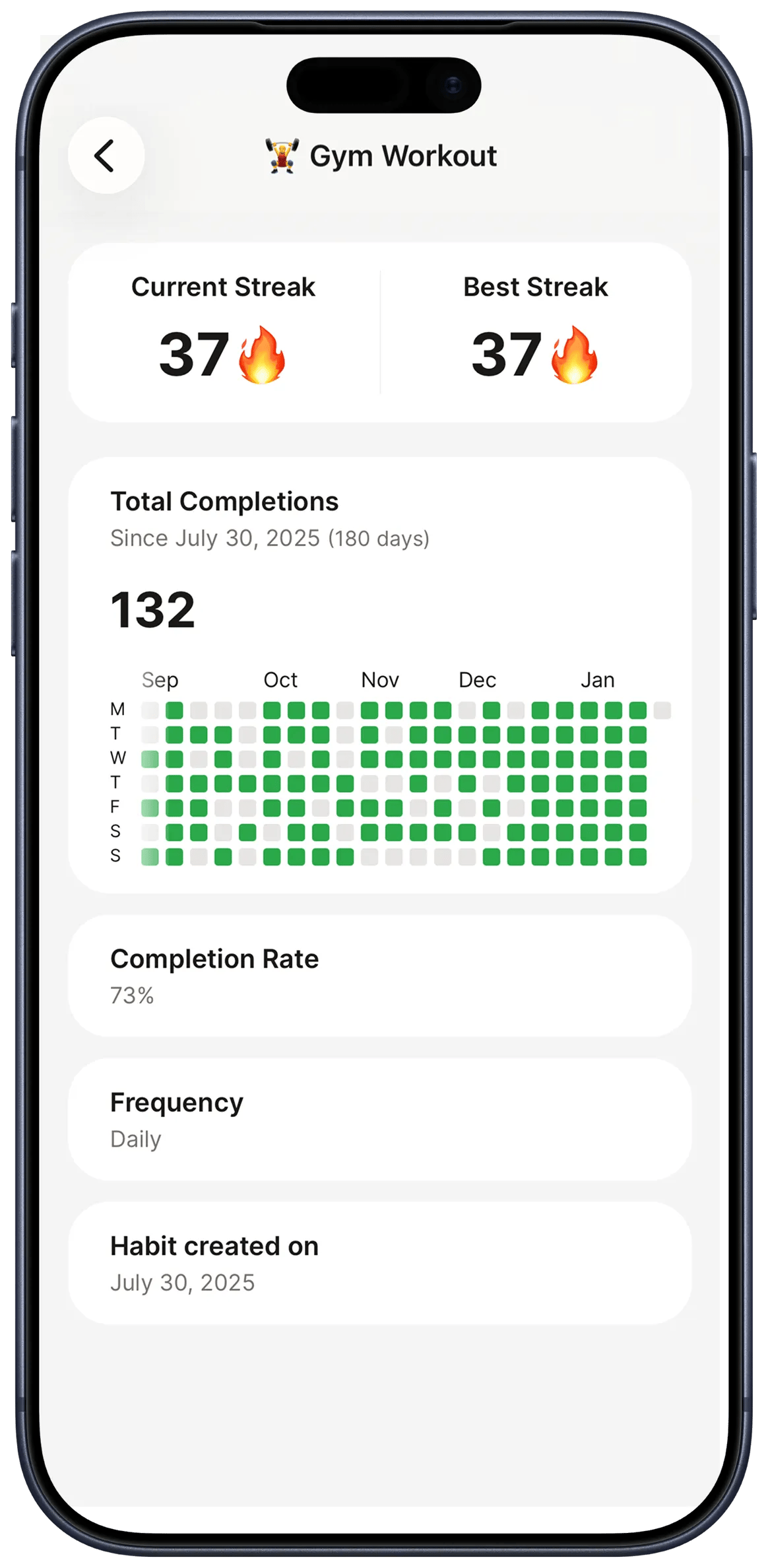
Tiny Habits don't stay tiny. Once a behavior is wired into your routine, it naturally expands — a process Fogg calls "growing the habit." Two push-ups become five, then ten, then a full morning workout. One sentence of journaling becomes a paragraph, then a page.
This happens through two mechanisms:
Natural momentum
Once the prompt-behavior-celebration loop is automatic, your brain stops resisting the behavior. You no longer need to convince yourself to act. And when the friction is gone, you naturally do more because it feels good, not because you're forcing yourself.
Research on habit formation from University College London shows this pattern clearly: automaticity follows an asymptotic curve. The first few weeks show rapid gains in consistency, then the behavior plateaus into a stable routine. The average time to reach automaticity is 66 days, though the range spans 18 to 254 days depending on the person and behavior complexity.
The ripple effect
Fogg has observed that people who successfully establish two or three Tiny Habits often spontaneously start improving other areas of their life — without being asked. He calls this the ripple effect. The feeling of success from small wins builds self-efficacy, which spills over into bigger changes.
This aligns with research on identity-based habit change. Each small success shifts how you see yourself: "I'm someone who exercises," "I'm someone who meditates." This identity shift, not the behavior itself, is what drives lasting change.
One critical finding from the UCL study: missing one day did not materially affect the habit formation process. Perfection is not required. Consistency over time matters more than any single day. For more on handling streak breaks, see our guide on what to do when you break your habit streak.
Tiny Habits vs. Other Habit Frameworks
The Tiny Habits method is not the only approach to building habits, but it differs from popular alternatives in important ways. Here's how it compares to the most well-known frameworks.
Tiny Habits vs. Atomic Habits
James Clear's Atomic Habits and Fogg's Tiny Habits share common ground — Clear participated in Fogg's original 5-Day Tiny Habits program in 2012 and credits it as influential. Both emphasize starting small and using environmental design.
Key differences:
- Focus: Fogg emphasizes emotion (celebration) as the primary driver of habit wiring. Clear emphasizes systems and identity.
- Framework: Fogg uses B = MAP (Behavior = Motivation + Ability + Prompt). Clear uses the Four Laws: make it obvious, attractive, easy, and satisfying.
- Scope: Tiny Habits focuses specifically on building new positive behaviors. Atomic Habits also covers breaking bad habits and broader self-improvement strategy.
- Starting point: Fogg insists on under 30 seconds. Clear recommends the "two-minute rule" — scale any habit down to two minutes.
Both approaches are evidence-based and effective. For breaking bad habits specifically, see our guide on how to break a bad habit.
Tiny Habits vs. the 21-Day Rule
The "21-day rule" claims you can form a habit in three weeks. This is a myth originating from a 1960 self-help book by plastic surgeon Maxwell Maltz, not from any scientific study. The actual research shows habit formation takes an average of 66 days, with massive individual variation.
Tiny Habits doesn't promise a specific timeline. Instead, it focuses on making the behavior so easy and the emotional reward so immediate that consistency happens naturally.
Tiny Habits vs. Habit Stacking
Habit stacking — linking new behaviors to existing ones — is actually a core component of the Tiny Habits method. Fogg's "anchor moment" is essentially a habit stack. The difference is that Tiny Habits adds the celebration component and the explicit instruction to scale behaviors down to under 30 seconds.
Common Mistakes When Starting Tiny Habits
Even a simple method can be done wrong. Here are the most common pitfalls Fogg has identified across coaching more than 60,000 people:
- Starting too big. If your "tiny" habit takes more than 30 seconds, it's not tiny enough. Two push-ups, not twenty.
- Choosing a weak anchor. Your anchor must be something you already do consistently. "After I work out" fails if you don't work out every day.
- Skipping the celebration. This is the most common mistake and the most costly. Without celebration, you're just doing a small task — not wiring a habit.
- Trying too many habits at once. Fogg recommends starting with just two or three recipes. Research confirms that tracking too many habits at once reduces success rates.
- Relying on motivation. If you're waiting to "feel like it," you've missed the point. The whole system is designed to work without motivation.
- Expecting instant transformation. Tiny Habits produce big results, but over weeks and months — not days. Trust the process.
For more on avoiding tracking pitfalls, read our guide to habit tracking mistakes that kill your progress.
Build your tiny habits streak with Habit Streak
Download FreeFrequently Asked Questions
What is the Tiny Habits method?▼
The Tiny Habits method, created by Stanford behavior scientist BJ Fogg, is a system for building new habits by making them extremely small (under 30 seconds), anchoring them to existing routines, and celebrating immediately after. The formula is: 'After I [anchor moment], I will [tiny behavior].' It's based on Fogg's B = MAP behavior model and has been tested with over 60,000 participants.
How small should a Tiny Habit be?▼
A Tiny Habit should take less than 30 seconds to complete. Examples include doing two push-ups, flossing one tooth, writing one sentence, or taking three deep breaths. The goal is to make the behavior so easy that you don't need motivation to do it. Once the habit is wired in, it will naturally grow larger over time.
Does the Tiny Habits method actually work?▼
Research supports the core principles of the method. A 2025 study found that people who started with minimal habits were 2.7 times more likely to maintain them long-term compared to those who started with ambitious targets. The method is grounded in the Fogg Behavior Model, which has been referenced in over 1,900 academic publications.
What is the difference between Tiny Habits and Atomic Habits?▼
Both methods emphasize starting small, but they differ in focus. BJ Fogg's Tiny Habits centers on emotion — using celebration to wire habits neurologically. James Clear's Atomic Habits emphasizes systems and identity change, using the Four Laws framework. Clear participated in Fogg's original Tiny Habits program in 2012 and credits it as influential.
Why is celebration important in the Tiny Habits method?▼
Celebration creates an immediate positive emotion after performing the tiny behavior, which triggers a dopamine release in your brain. This dopamine signal neurologically tags the behavior for repetition, effectively wiring the habit into your basal ganglia — the brain region responsible for automatic behaviors. Without celebration, you're just doing a small task without the neurological reinforcement that makes it stick.
- 1.Tiny Habits Booktinyhabits.com
- 2.Fogg Behavior Modelbehaviordesign.stanford.edu
- 3.2025 studycoachpedropinto.com
- 4.Fogg Behavior Modelbehaviormodel.org
- 5.Neuroscience of Habit Formationchromosomevi.com
- 6.habit formation from University College Londononlinelibrary.wiley.com
- 7.How long does it take to form a habit?ucl.ac.uk
- 8.How Long Does It Really Take to Form a Habit?scientificamerican.com
- 9.Let Tiny Habits change your lifetinyhabits.com
- 10.Here's Why You Can't Break That Bad Habithealthline.com