 By Adrien Blanc
7 Habit Tracking Mistakes That Kill Your Progress

You downloaded a habit tracker, filled it with ambitious goals, stayed consistent for a week or two... and then stopped. Sound familiar? You are far from alone. Research suggests that around 92% of people fail to stick with their habit-building attempts within the first 60 days, and a study by psychology professor John Norcross found an 81% failure rate for New Year's resolutions over two years.
But here is the thing: the problem usually is not willpower. It is strategy. The way most people set up and use their habit tracker practically guarantees failure. Small, avoidable mistakes compound over days and weeks until tracking feels like a chore rather than a tool for growth.
This guide covers the seven most common habit tracking mistakes, why each one sabotages your progress, and exactly how to fix them. If your tracker has not been working, chances are at least one of these is the culprit. For a broader look at how tracking fits into behavior change, see our complete guide to habit tracking.
92%
of habit tracking attempts fail within 60 days
Habit Streak is designed to help you avoid these mistakes with smart defaults and flexible tracking.
Download Free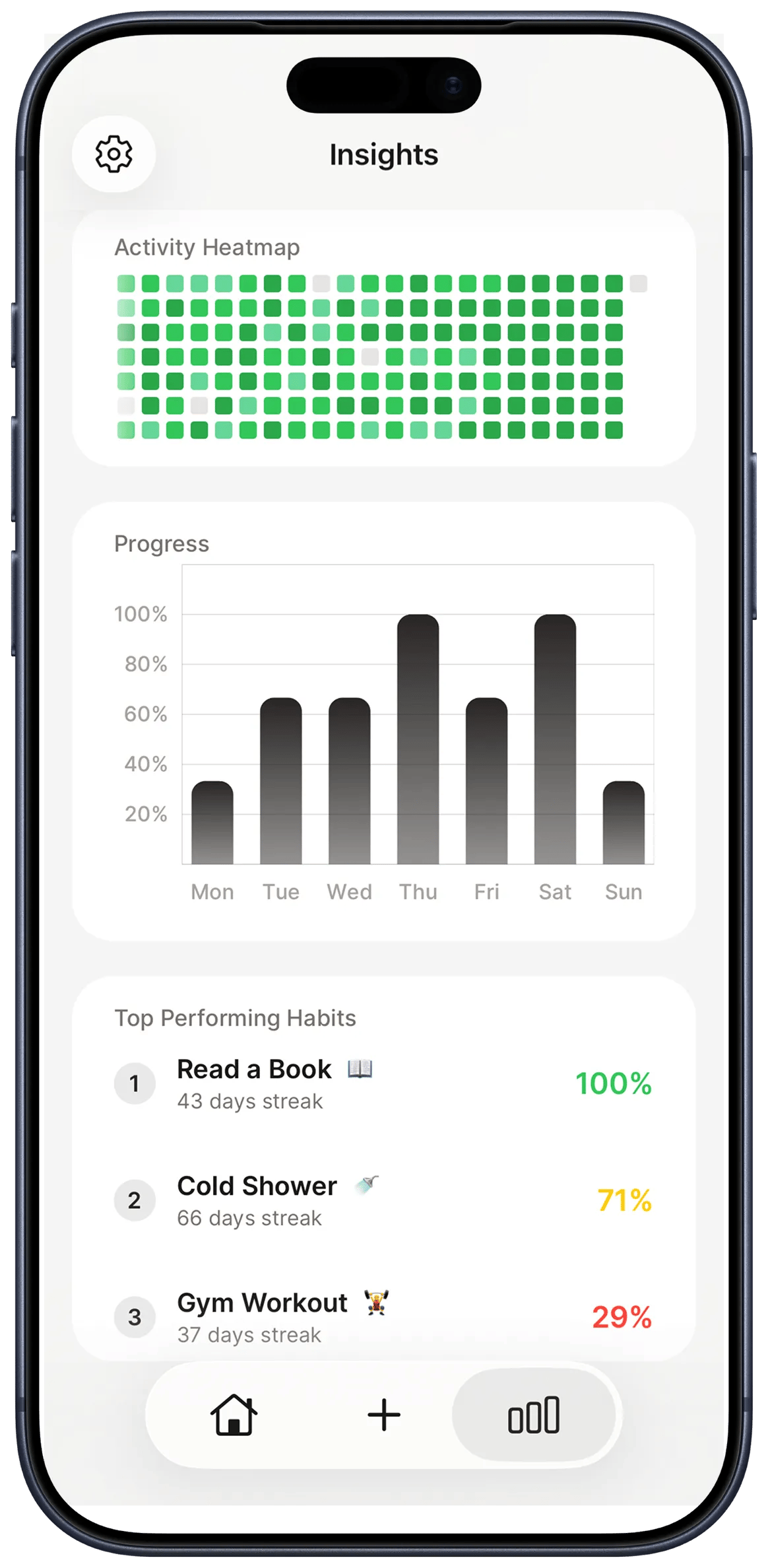
1. Tracking Too Many Habits at Once
Starting with seven or ten habits because you feel motivated is the single fastest way to burn out. Behavioral scientist BJ Fogg at Stanford recommends working on no more than three new habits at a time -- and even then, only if each one is remarkably small.
Why it backfires: Every new habit demands cognitive effort. Research by Dr. Roy Baumeister shows that self-regulation draws from a limited pool of willpower. When you spread that pool across ten different behaviors, none of them gets enough fuel to become automatic.
How to fix it:
- Start with one to three habits, maximum.
- Master those before adding anything new.
- If you are unsure how many to choose, read our guide on how many habits to track.
2. Making Habits Too Ambitious Too Soon
"Meditate for 30 minutes daily." "Run 5 km every morning." "Read for an hour before bed." These look great on paper. In practice, they collapse the first time life gets in the way.
A 2025 study on habit formation in leaders found that those who began with minimal viable habits were 2.7 times more likely to maintain long-term habits than those who started with ambitious targets. Big changes trigger resistance; small ones fly under the radar.
How to fix it:
- Shrink each habit until it feels almost too easy. One page, not a chapter. Five minutes of movement, not an hour at the gym.
- Once the behavior is automatic, gradually raise the bar.
- If motivation drops, cut the habit by 50%. Then cut it again.
3. Being Too Rigid With Your Tracking
Perfectionism is a silent killer of habit streaks. Many trackers offer only binary options -- done or not done -- which trains your brain to see anything less than 100% as failure. This all-or-nothing mindset is what psychologists Janet Polivy and C. Peter Herman call the "what the hell" effect: one slip leads you to abandon your goals entirely.
The reality is that partial completion still counts. A 10-minute walk on a day you planned a 45-minute run is not a failure. It is consistency in action.
How to fix it:
- Use a tracker that supports flexible completion levels rather than simple yes/no.
- Define a "minimum viable version" for each habit: the smallest action that still counts.
- Track effort, not perfection.
4. Quitting After Missing One Day
This is closely related to rigidity, but it deserves its own section because it destroys more habit-building attempts than almost anything else. You miss a single day, the streak counter resets to zero, and suddenly it feels like all your progress has evaporated.
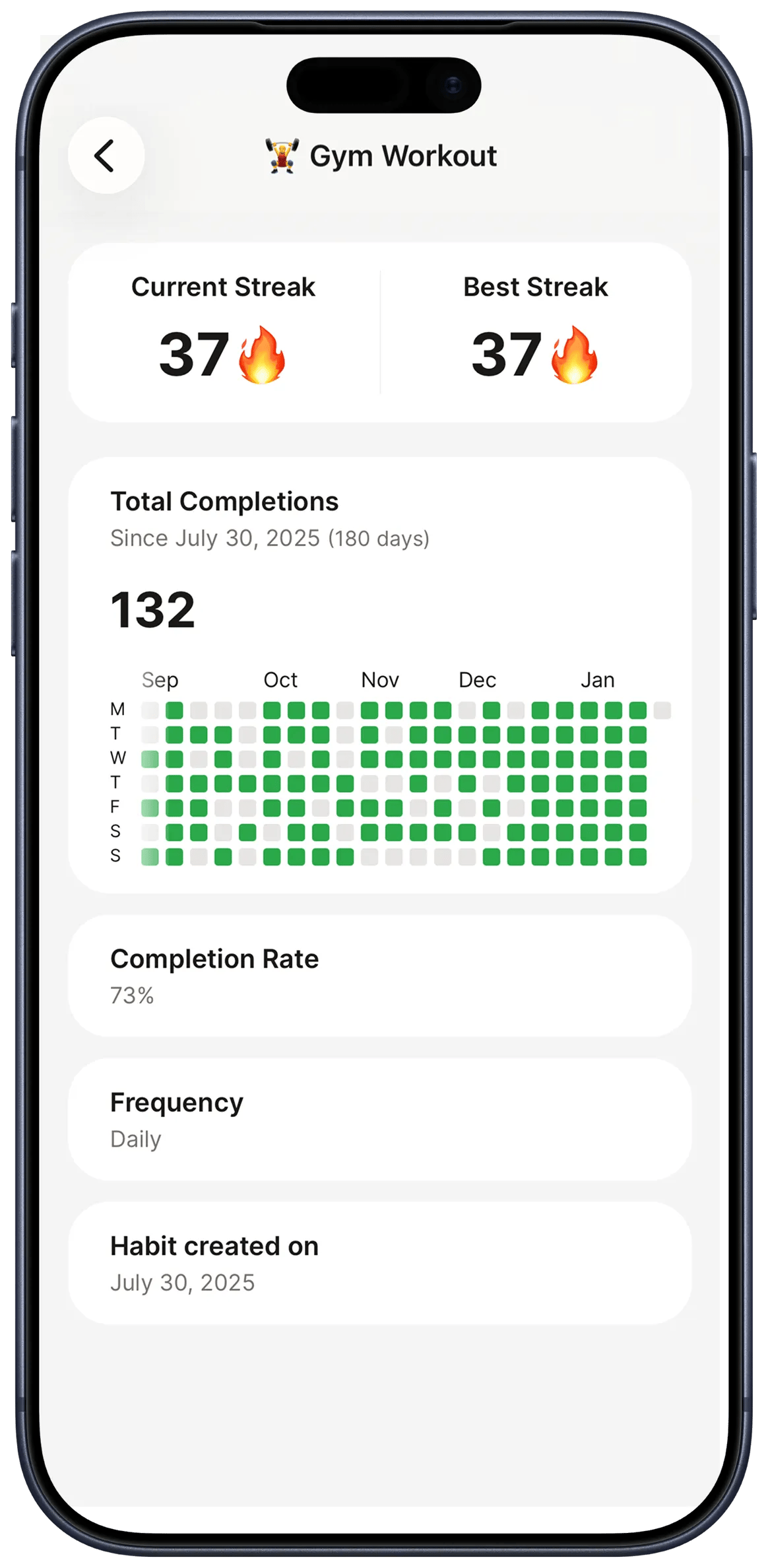
The research tells a different story. Phillippa Lally's landmark study at University College London found that missing one day had no measurable impact on long-term habit formation. What mattered was the overall pattern of repetition, not an unbroken chain.
How to fix it:
- Adopt the "never miss twice" rule. One miss is a slip. Two in a row is the start of a new pattern.
- Choose a tracker that does not punish you for one missed day. Read more about why streaks work -- and when they can backfire.
- Remind yourself: consistency over time matters far more than perfection on any single day.
5. Not Having a Clear "Why" Behind Each Habit
If you cannot finish the sentence "I track this habit because..." then the habit will not survive its first real test. Vague goals like "be healthier" or "exercise more" lack the specificity your brain needs to act consistently. Research on implementation intentions shows that specific, measurable goals are 2-3 times more likely to be achieved than vague ones.
How to fix it:
- For each habit in your tracker, write a one-sentence reason it matters to you.
- Frame habits as gains, not restrictions. "I walk 20 minutes after lunch to have more energy in the afternoon" beats "I should stop being sedentary."
- Connect each habit to a larger identity: "I am someone who moves their body daily."
6. Focusing on Streaks Over Actual Progress
Streaks are powerful motivators, but they can become the goal instead of the means. When maintaining the streak becomes more important than the behavior itself, you end up doing the absolute minimum just to keep the number going -- or worse, marking habits as done when they were not.
Research by Wendy Wood at Duke University shows that about 40% of our daily behaviors are habitual, driven by context rather than conscious choice. The real measure of success is not a streak number but whether the behavior is becoming automatic.
How to fix it:
- Use streaks as a signal, not a score. They indicate consistency, but they are not the end goal.
- Periodically ask: "Is this habit easier now than it was a month ago?" That is real progress.
- Review your tracking data to spot trends, not just count consecutive days.
7. Not Reviewing Your Tracking Data
This might be the most overlooked mistake. Many people track diligently but never look back at their data. They treat their habit tracker as a to-do list rather than a feedback system. Without regular review, you cannot identify patterns, spot obstacles, or celebrate genuine progress.
How to fix it:
- Schedule a weekly review -- even five minutes is enough. Look at which habits had the highest completion rate and which ones struggled.
- Ask three questions during each review:
- Which habits felt easy this week? (These might be ready to level up.)
- Which habits did I skip most often? (These might need to be smaller or redesigned.)
- What time of day or context supported my habits best?
- Monthly, decide whether to keep, adjust, or remove each tracked habit.
How to Get Habit Tracking Right
Avoiding these seven mistakes comes down to a few core principles:
- Start small. One to three habits. Minimum viable versions.
- Stay flexible. Partial completion beats skipping entirely.
- Review regularly. Let data guide your adjustments.
- Be kind to yourself. Missing a day is not failure. Missing a month of reflection is.
If you are new to tracking, our beginner's guide to habit tracking walks through the full setup process. And if you are wondering whether tracking is right for your situation, check out our honest take on whether habit tracking is for everyone.
Track smarter, not harder. Habit Streak helps you build lasting habits without the common pitfalls.
Download FreeFrequently Asked Questions
Why does my habit tracker stop working after a few weeks?▼
The most common reason is tracking too many habits at once, which drains your willpower. Start with one to three habits and build from there. Also check whether your habits are too ambitious -- if you need motivation to complete them, they are probably too big.
Should I restart my streak after missing a day?▼
Research by Phillippa Lally at UCL found that missing a single day has no measurable impact on habit formation. Focus on the 'never miss twice' rule rather than maintaining a perfect streak.
How many habits should I track at one time?▼
Behavioral scientist BJ Fogg recommends no more than three new habits at a time, and only if each one is very small. Most people do best starting with just one or two habits and adding more once those feel automatic.
Is it better to use a paper or digital habit tracker?▼
Both can work well. The best tracker is the one you will actually use consistently. Digital trackers offer reminders and data analysis, while paper trackers provide a tactile experience some people prefer. See our comparison of digital vs. paper habit tracking for a detailed breakdown.
How often should I review my habit tracking data?▼
A quick five-minute weekly review is the minimum. Look at completion rates, identify which habits feel easy versus hard, and adjust accordingly. Do a deeper monthly review to decide whether to keep, modify, or drop each habit.
- 1.Why Do 90% of People Quit Habit Trackers Within 30 Days?mooremomentum.com
- 2.81% failure rate for New Year's resolutionsdrpaulmccarthy.com
- 3.5 Common Mistakes That Cause New Habits to Failjamesclear.com
- 4.2025 study on habit formation in leaderscoachpedropinto.com
- 5.The “What the Hell" Effect & How to Conquer Its Vicious Cyclebrainscape.com
- 6.Phillippa Lally's landmark study at University College Londononlinelibrary.wiley.com
- 7.Key to Changing Habits Is In Environment, Not Willpower, Duke Expert Saystoday.duke.edu