 By Adrien Blanc
Habit Tracker for Beginners: How to Start in 5 Minutes

You can set up a working habit tracker in under five minutes -- and it might be the single most effective thing you do for your goals this year. A meta-analysis of 138 studies published in Psychological Bulletin found that people who monitor their progress toward goals are significantly more likely to achieve them. The study, led by Benjamin Harkin at the University of Sheffield, analyzed data from nearly 20,000 participants and concluded that self-monitoring is one of the most reliable behavior change strategies available.
You don't need a complicated system. You don't need to track a dozen habits. You need three things: a short list of habits, a simple way to mark them done, and the willingness to show up most days. This guide walks you through the entire setup -- from choosing your first habits to building real momentum -- so you can start today and see results within weeks.
2x
more weight lost by people who tracked daily food intake vs. those who didn't
Start tracking your first habits in under a minute
Download Free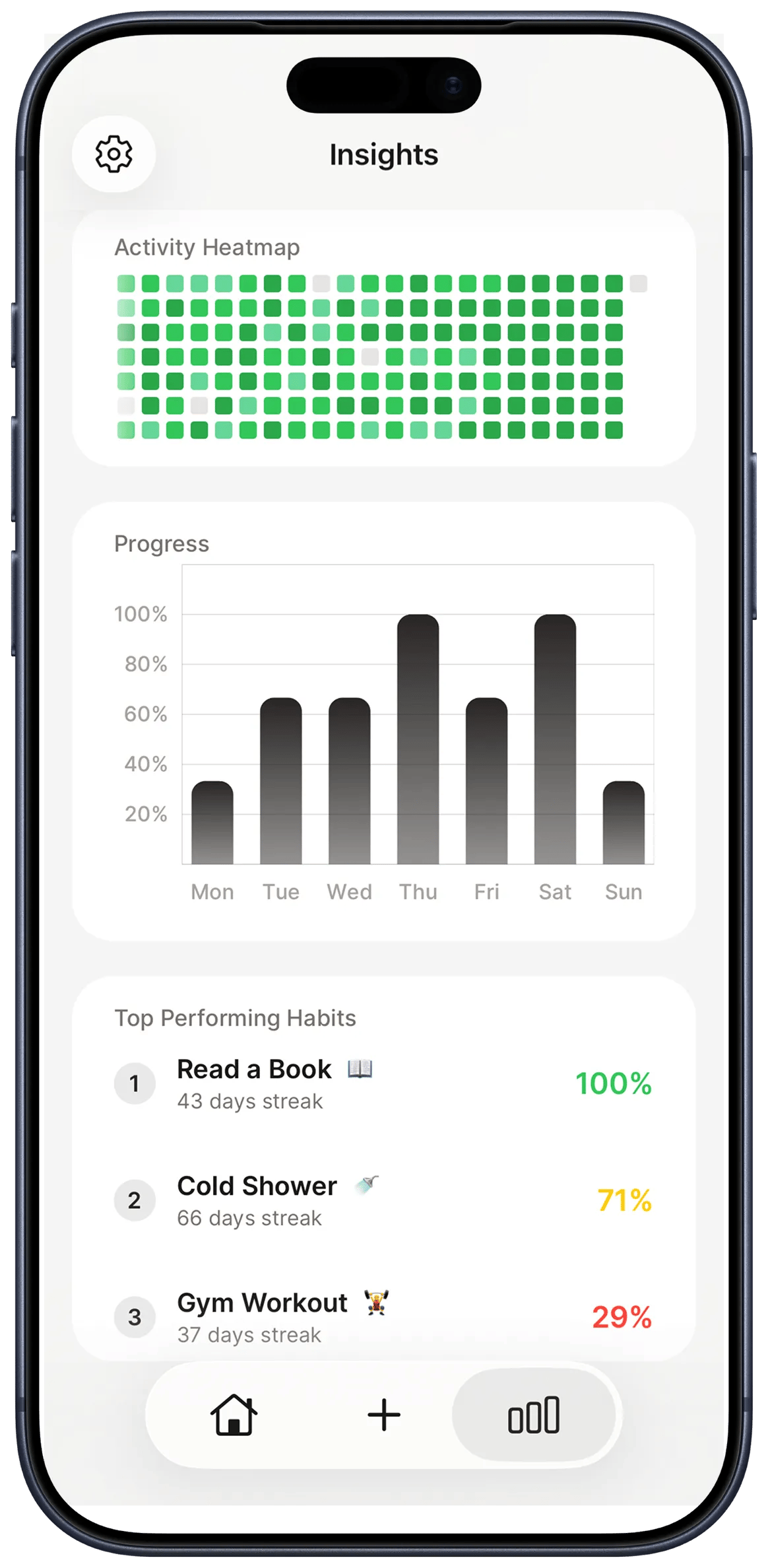
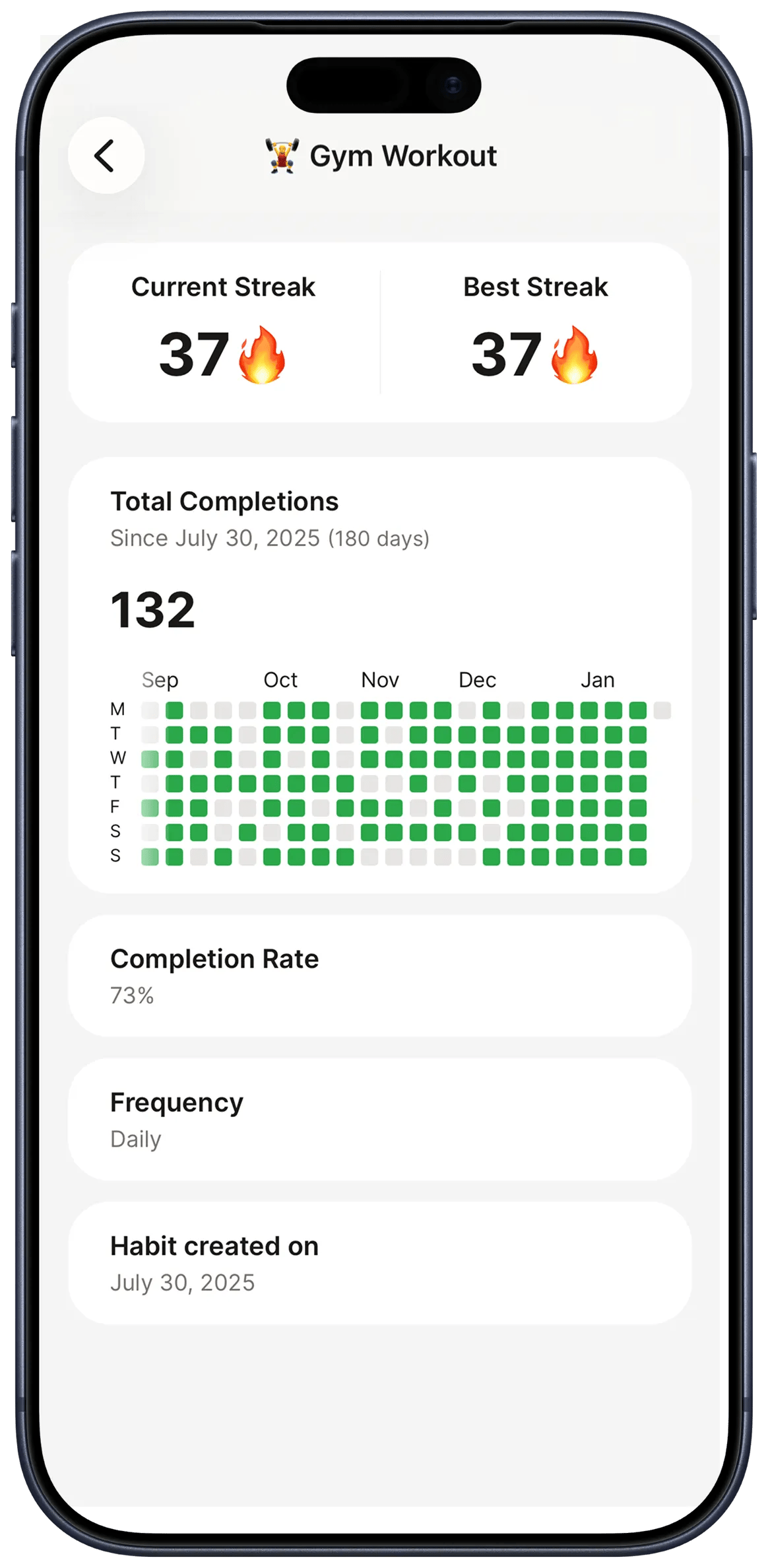
What Is a Habit Tracker and Why Should You Use One?
A habit tracker is any system that records whether you performed a specific behavior each day. It can be as simple as a checklist on a sticky note or as polished as a dedicated app on your phone. The format matters less than the act of tracking itself.
Why does this work? The psychological mechanism is called self-monitoring -- when you observe and record your own behavior, you become more aware of what you actually do versus what you think you do. Most people overestimate their consistency. A tracker removes that blind spot.
Here is what tracking does for you:
- Creates accountability. Even if no one else sees your tracker, the act of recording a "miss" makes you more likely to follow through the next day.
- Provides visual proof of progress. A row of completed days is concrete evidence that you are changing. This matters more than motivation on hard days.
- Triggers a small reward. Checking off a habit releases a dopamine response that reinforces the behavior loop, making it easier to repeat tomorrow.
- Surfaces patterns. After a few weeks, you can see which days you skip, what triggers success, and where your routine breaks down.
A Kaiser Permanente study of nearly 1,700 participants demonstrated this principle clearly: those who kept daily food diaries lost twice as much weight as those who kept no records. The simple act of writing things down changed behavior.
Choosing Your First 3 Habits
Start with exactly three habits -- no more. Research consistently shows that people who focus on a small number of changes at a time are far more successful than those who try to overhaul everything at once. For a detailed breakdown, see our guide on how many habits to track at once.
Your first three habits should follow these rules:
- Keep each one under 5 minutes. BJ Fogg, founder of Stanford's Behavior Design Lab, recommends starting with habits so small they feel almost trivial -- floss one tooth, read one page, meditate for two minutes. Small habits build the tracking muscle without overwhelming you.
- Make them binary. Each habit should have a clear yes or no answer. "Exercise more" is vague. "Do 10 pushups after breakfast" is trackable.
- Cover different areas. Pick one health habit, one productivity habit, and one personal habit. This creates variety without overloading any single area of your life.
Good starter habits for beginners:
- Drink a full glass of water first thing in the morning
- Read for 10 minutes before bed
- Write down three things you are grateful for
- Take a 10-minute walk after lunch
- Meditate for 2 minutes after your morning coffee
- Stretch for 5 minutes before showering
Setting Up Your Tracker in 5 Minutes
The best tracker is one you will actually use. Don't spend hours researching the perfect app or designing an elaborate bullet journal spread. Pick a method and start today.
Option 1: A Habit Tracking App (2 minutes)
Download an app, add your three habits, set a daily reminder. Done. Apps are great for beginners because they handle the structure for you -- reminders, streaks, and visual progress are built in.
Option 2: Paper Tracker (3 minutes)
Draw a simple grid. Write your three habits on the left side. Add the days of the week across the top. Check off each habit as you complete it. A sticky note on your bathroom mirror or a page in your notebook works perfectly.
Option 3: Notes App or Spreadsheet (3 minutes)
Open your phone's notes app or a simple spreadsheet. Create a daily checklist with your three habits. Copy it each day or use a template.
Which method is best? A 2025 study comparing digital and analog tracking found no significant difference in habit formation success between the two approaches. But participants who used their preferred method were 3.1 times more likely to keep tracking consistently. Choose whatever feels natural to you.
| Method | Best For | Setup Time |
|---|---|---|
| Habit app | People who want reminders and streaks | 2 minutes |
| Paper grid | People who prefer writing things down | 3 minutes |
| Notes app | People who want zero friction | 2 minutes |
| Spreadsheet | People who love data and charts | 5 minutes |
Your First Week of Habit Tracking
Your only goal in week one is to build the tracking habit itself. Don't worry about perfection. Don't add more habits. Just practice showing up and recording what you did.
Here is a day-by-day approach:
- Days 1-2: Just track. Complete your habits and mark them done. Notice how it feels to check things off. If you forget a habit, mark it honestly as a miss.
- Days 3-4: Find your rhythm. You will start noticing when and where each habit fits best in your day. Adjust timing if something feels forced.
- Days 5-7: Review your first data. At the end of the week, look at your tracker. Which habits did you complete most often? Which ones did you skip? Why?
Expect imperfection. Research from Phillippa Lally at University College London found that missing a single day did not meaningfully impact the habit formation process. What matters is overall consistency, not a flawless record. If you completed two out of three habits on most days, you are doing well.
Building Momentum and Scaling Up
Add one new habit only after your existing ones feel easy. The benchmark: you have hit 80% completion on your current habits for at least two consecutive weeks. At that point, the behaviors are becoming automatic and your brain has room for something new.
Here is a realistic scaling timeline:
- Weeks 1-3: Stick with your original 3 habits. Focus entirely on consistency.
- Weeks 4-6: If you are at 80%+ completion, add one new habit. Drop or simplify anything consistently below 50%.
- Weeks 7-12: Continue adding one habit at a time as previous ones become automatic. Most people plateau around 5-7 tracked habits total.
- After 3 months: Evaluate which habits have become truly automatic -- you do them without thinking about it. Move those off your active tracker and use the freed slots for new behaviors.
This gradual approach respects the science. Lally's research found that the average time for a new behavior to become automatic is 66 days, with a range from 18 to 254 days depending on complexity. Rushing to add new habits before old ones are established forces your brain to juggle too many conscious decisions at once.
What to Do When You Miss a Day
Missing a day is normal and does not ruin your progress. The "what-the-hell effect" -- where one slip becomes an excuse to quit entirely -- is the real enemy, not the missed day itself.
Follow the "never miss twice" rule: if you skip today, make tomorrow non-negotiable. This rule works because it keeps a single lapse from snowballing into a pattern. A 2025 study published in the Journal of Personality and Social Psychology found that people who had specific recovery strategies after missing a habit were significantly more likely to reestablish their routine than those who did not.
When you miss a day:
- Record it honestly. Don't leave the day blank -- mark it as missed. Honesty keeps your data useful.
- Skip the guilt. One miss is a data point, not a verdict on your character.
- Do the minimum version tomorrow. If your habit is "read for 10 minutes," read for 2 minutes. Getting back on track matters more than hitting the full target.
- Check for patterns. If you keep missing the same habit on the same day, that is useful information. Maybe Wednesday evenings are too packed for a workout -- move it to morning or swap it for a different day.
For a deeper understanding of why streaks work and how to recover from breaks, we have a dedicated guide on the psychology behind consistency.
The Mindset That Makes Tracking Work
Think of your tracker as a mirror, not a judge. The purpose is awareness, not perfection. A tracker that shows you completed your habits four out of seven days is not a failure report -- it is a realistic picture of where you are and a starting point for improvement.
James Clear, author of Atomic Habits, puts it well: each completed day is a "vote" for the type of person you want to become. You don't need a unanimous vote. You just need a majority. Over weeks and months, those votes add up into a real identity shift.
Three principles that keep beginners on track:
- Progress over perfection. A 70% completion rate sustained for three months beats a 100% rate that lasts two weeks.
- Systems over goals. Don't track to reach a specific outcome. Track to build a system of daily actions that makes the outcome inevitable.
- Simplicity over sophistication. The fanciest tracker in the world is useless if you don't open it. Keep your system boring enough to use every single day.
For a complete walkthrough of tracking methods, tools, and long-term strategies, see our complete guide to habit tracking.
Build your first streak and watch the momentum grow
Download FreeFrequently Asked Questions
What is the best habit tracker for beginners?▼
The best tracker is the one you will actually use every day. A simple app with reminders works well for most beginners because it removes friction and provides built-in streaks. But a paper checklist works just as effectively if you prefer writing things down. Research shows no significant difference in outcomes between digital and analog methods.
How many habits should a beginner track?▼
Start with three. This gives you enough variety to feel progress without overwhelming your willpower. Add one new habit only after your current ones are at 80% completion for two consecutive weeks. Most people eventually settle at five to seven tracked habits.
How long does it take to form a habit?▼
Research from University College London found that the average time to form a habit is 66 days, with a range of 18 to 254 days depending on the complexity of the behavior. Simple habits like drinking water form faster than complex ones like daily exercise. Consistency matters more than perfection during this period.
What should I do if I miss a day of tracking?▼
Mark it honestly as a miss and move on. Research shows that missing a single day does not significantly impact habit formation. Follow the never miss twice rule: make the next day non-negotiable, even if you only do a minimal version of the habit.
Is it better to track habits in the morning or at night?▼
Track at whatever time you are most likely to remember. Many people prefer a quick evening review where they check off all completed habits before bed. Others prefer tracking each habit immediately after doing it. Experiment during your first week and settle on what feels most natural.
- 1.Does monitoring goal progress promote goal attainment? A meta-analysis of the experimental evidencepubmed.ncbi.nlm.nih.gov
- 2.The Science Behind Habit Trackingpsychologytoday.com
- 3.Keeping A Food Diary Doubles Diet Weight Loss, Study Suggestssciencedaily.com
- 4.91% follow-through ratebpspsychub.onlinelibrary.wiley.com
- 5.2025 study comparing digital and analog trackingmooremomentum.com
- 6.Research from Phillippa Lally at University College Londononlinelibrary.wiley.com