 By Adrien Blanc
Habit Stacking: How to Build New Habits Using Existing Ones

Habit stacking is the practice of linking a new behavior to an existing habit you already do automatically. The formula is simple: "After I [CURRENT HABIT], I will [NEW HABIT]." Instead of relying on willpower or trying to remember a new behavior at a random time of day, you attach it to something your brain already does on autopilot — like pouring your morning coffee or brushing your teeth. A study published in the Journal of Applied Psychology found that people who used habit stacking had a 64% higher success rate compared to those who tried to build standalone habits from scratch. The technique was developed by behavior scientist BJ Fogg as part of his Tiny Habits program and later popularized by James Clear in Atomic Habits. If you have ever struggled to make a new behavior stick, habit stacking is one of the most reliable methods backed by behavioral science.
What Is Habit Stacking?
Habit stacking is a form of implementation intention that uses an existing habit as your cue. Traditional implementation intentions follow the format "If [SITUATION], then I will [BEHAVIOR]." Habit stacking refines this by making the "if" a behavior you already perform consistently, rather than a time or location.
The concept builds on research by psychologist Peter Gollwitzer, whose meta-analysis of 94 studies involving over 8,000 participants showed that implementation intentions produce a medium-to-large effect on goal attainment (Cohen's d = 0.65). In practical terms, people who made specific "if-then" plans were two to three times more likely to follow through than people who simply set goals.
BJ Fogg calls this approach "anchoring" — your existing habit acts as an anchor that holds the new one in place. James Clear adopted the term "habit stacking" and introduced it to a wider audience. Regardless of the name, the core principle is the same: piggyback on a behavior your brain already does automatically, and the new behavior comes along for the ride.
The Habit Stacking Formula
The formula has two versions — basic and advanced. Both are simple enough to memorize.
Basic formula:
After I [CURRENT HABIT], I will [NEW HABIT].
Examples:
- After I pour my morning coffee, I will write down three things I am grateful for.
- After I sit down at my desk, I will write my top three priorities for the day.
- After I put my plate in the dishwasher after dinner, I will prepare my bag for tomorrow.
Advanced formula (habit stacking + temptation bundling):
After [CURRENT HABIT], I will [HABIT I NEED]. After [HABIT I NEED], I will [HABIT I WANT].
This version pairs a behavior you need to do with one you enjoy, creating a built-in reward.
Example:
- After I finish my lunch, I will read for ten minutes (need). After I read for ten minutes, I will check social media (want).
The key to making the formula work is specificity. "After breakfast, I will exercise" is too vague. "After I put my breakfast dishes in the sink, I will do ten push-ups next to the kitchen counter" gives your brain a clear, actionable cue.
15 Practical Habit Stacking Examples
Here are proven habit stacking combinations organized by time of day. Each one follows the "After I [CURRENT HABIT], I will [NEW HABIT]" format.
Morning Habit Stack Examples
- After I turn off my alarm, I will drink a full glass of water from the bottle on my nightstand.
- After I start the coffee machine, I will do two minutes of stretching in the kitchen.
- After I pour my coffee, I will write in my journal for five minutes.
- After I brush my teeth, I will say one positive affirmation out loud.
- After I put on my shoes to leave, I will review my three priorities for the day.
Evening Habit Stack Examples
- After I close my laptop at the end of the workday, I will write down one thing that went well today.
- After I finish dinner, I will take a ten-minute walk around the block.
- After I put on my pajamas, I will set my phone on the charger outside the bedroom.
- After I get into bed, I will read for ten minutes instead of scrolling.
- After I turn off the bedside lamp, I will do three minutes of deep breathing.
Workday Habit Stack Examples
- After I sit down at my desk, I will write my top three tasks on a sticky note.
- After I finish a meeting, I will stand up and drink a glass of water.
- After I send my last email before lunch, I will do ten push-ups next to my desk.
- After I return from my lunch break, I will spend two minutes tidying my workspace.
- After I complete a deep work session, I will log my progress in my habit tracker.
Track your habit stacks and build streaks that last
Download Free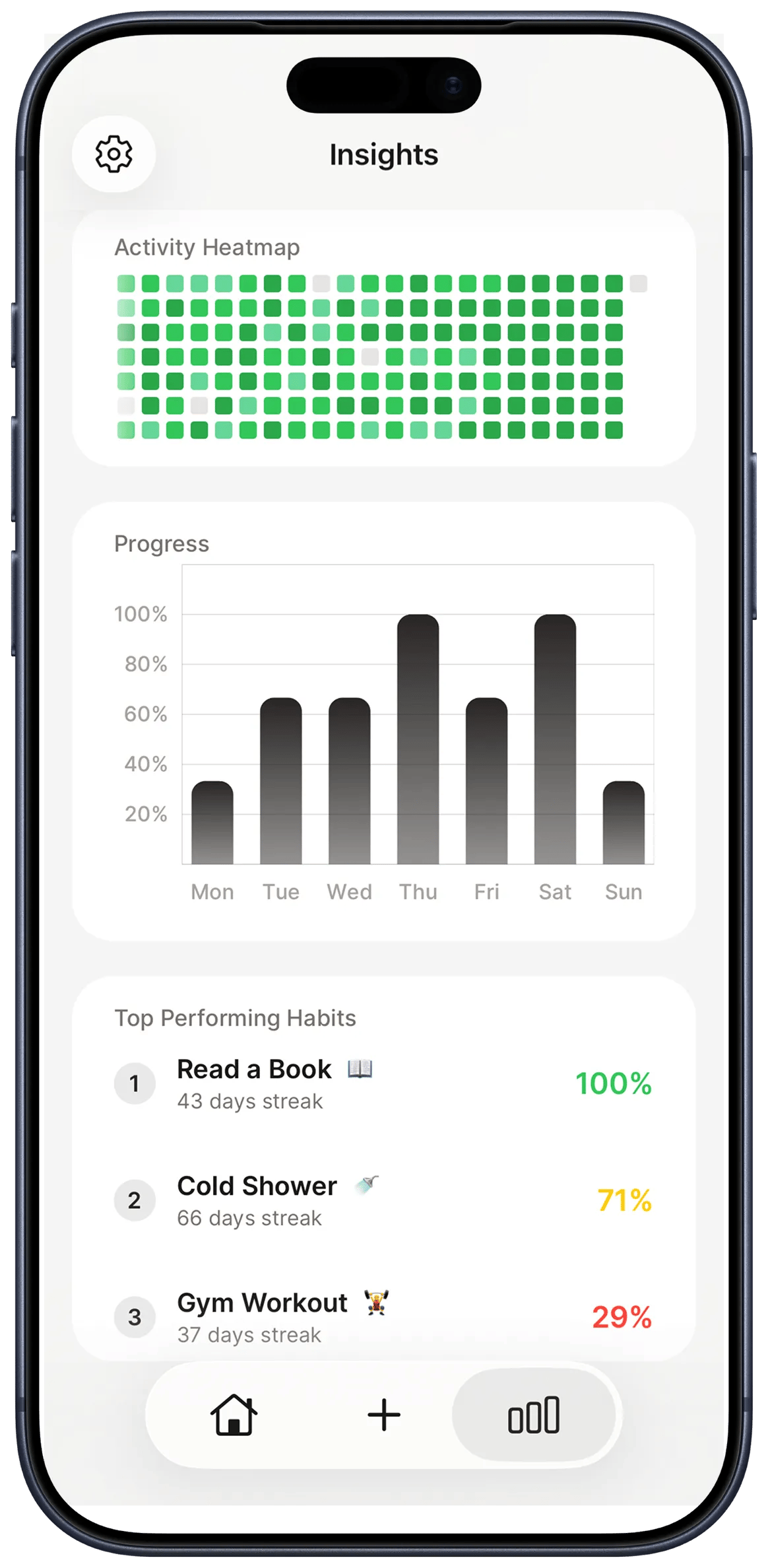
Why Habit Stacking Works So Well
Habit stacking works because of a process called synaptic pruning. As you age, your brain strengthens neural connections you use frequently and removes ones you do not. Your existing habits — brushing your teeth, making coffee, commuting to work — run on strong, well-established neural pathways. When you consistently perform a new behavior right after an established one, your brain begins linking the two, eventually treating them as a single behavioral unit.
There are three mechanisms at work:
1. You Borrow Established Neural Pathways
When you perform a well-established habit, your brain releases neurotransmitters like dopamine and norepinephrine. Dopamine creates a sense of reward. Norepinephrine sharpens attention and aids memory retrieval. By attaching a new behavior to this moment, you essentially borrow that neurochemical boost for the new habit.
2. You Bypass Decision Fatigue
A study from Duke University found that up to 45% of daily behaviors are habitual — performed without conscious deliberation. Each decision you make during the day depletes mental energy. Habit stacking removes the decision of "when should I do this?" because the answer is always "right after this thing I already do."
3. You Create Reliable Cues
The habit loop — cue, routine, reward — depends on having a consistent trigger. Time-based cues ("I will meditate at 7 AM") fail when your schedule shifts. But behavior-based cues ("after I pour my coffee") happen reliably regardless of the clock. This consistency is why habit stacking produces a higher success rate than standalone habits.
Research on habit formation consistently shows that context stability — performing a behavior in the same circumstances each time — is one of the strongest predictors of automaticity. Habit stacking provides that stability by design.
How to Build Your First Habit Stack (Step by Step)
Follow these five steps to create a habit stack that actually sticks.
Step 1: List Your Current Daily Habits
Write down every behavior you do automatically each day, from waking up to going to bed. Include the small, obvious ones — turning off the alarm, brushing teeth, boiling the kettle, sitting at your desk. These are your potential anchors.
Step 2: Choose One New Habit
Pick a single behavior you want to add to your life. Make it small — two minutes or less is ideal when starting out. You can scale up later once the behavior is automatic.
Step 3: Find the Right Anchor
Your anchor habit should be:
- Something you do every single day, not just most days
- Performed at a time that makes sense for the new habit (do not stack a physical exercise onto a habit you do while sitting in a meeting)
- Clear and specific — "after breakfast" is vague; "after I put my cereal bowl in the dishwasher" is precise
Step 4: Write Your Habit Stack Statement
Use the formula: After I [ANCHOR HABIT], I will [NEW HABIT].
Write it down or put it somewhere you will see it. The act of writing an implementation intention increases follow-through, as confirmed by Gollwitzer's meta-analysis.
Step 5: Track and Adjust
Use a habit tracking app to mark each day you complete your stack. If you miss more than two days in a row, reassess: is the anchor reliable? Is the new habit too ambitious? Adjust and try again.
Common Habit Stacking Mistakes
Even a simple technique can fail if applied incorrectly. Here are the most common errors and how to avoid them.
1. Using a Weak Anchor
If your anchor habit only happens "most days" or "when you remember," the entire stack falls apart. Your anchor must be bulletproof — something you do every single day without thinking. Brushing your teeth works. "Going to the gym" does not, unless you already go daily.
2. Stacking Too Many Habits at Once
It is tempting to design an elaborate morning chain of eight new habits on day one. This approach fails almost every time. Start with one new habit stacked on one anchor. Once that feels automatic (typically 4–8 weeks), add another link.
3. Being Too Vague
"After breakfast, I will exercise" is not specific enough. When exactly after breakfast? What kind of exercise? Where? James Clear has noted that he adjusted a failing habit stack by changing "after lunch, I will do push-ups" to "when I close my laptop for lunch, I will do ten push-ups next to my desk." The added specificity eliminated ambiguity.
4. Ignoring Context Fit
Stacking a loud behavior (blending a smoothie) onto a quiet one (morning meditation) creates a conflict. The new habit should flow naturally from the anchor in terms of location, energy level, and time required.
5. Quitting After One Missed Day
Missing a day does not reset your progress. Research from University College London found that skipping one day had a negligible effect on habit formation. The real danger is the "what-the-hell effect" — the tendency to abandon a behavior entirely after a single lapse. If you miss a day, do a smaller version of the habit the next day to maintain momentum.
Habit Stacking vs. Habit Chaining
Habit stacking adds one new behavior to one existing behavior. Habit chaining links multiple behaviors into a sequence. The distinction matters because they serve different purposes.
A habit stack is ideal when you want to introduce a single new behavior:
After I pour my coffee, I will write three things I am grateful for.
A habit chain builds a complete routine by linking several behaviors in order:
Wake up → make bed → pour water → stretch → journal → shower.
Chains are powerful once established, but they are fragile when new. If one link breaks, the rest of the chain often collapses. Start with individual stacks, and once each behavior is automatic, connect them into a chain for a structured daily routine.
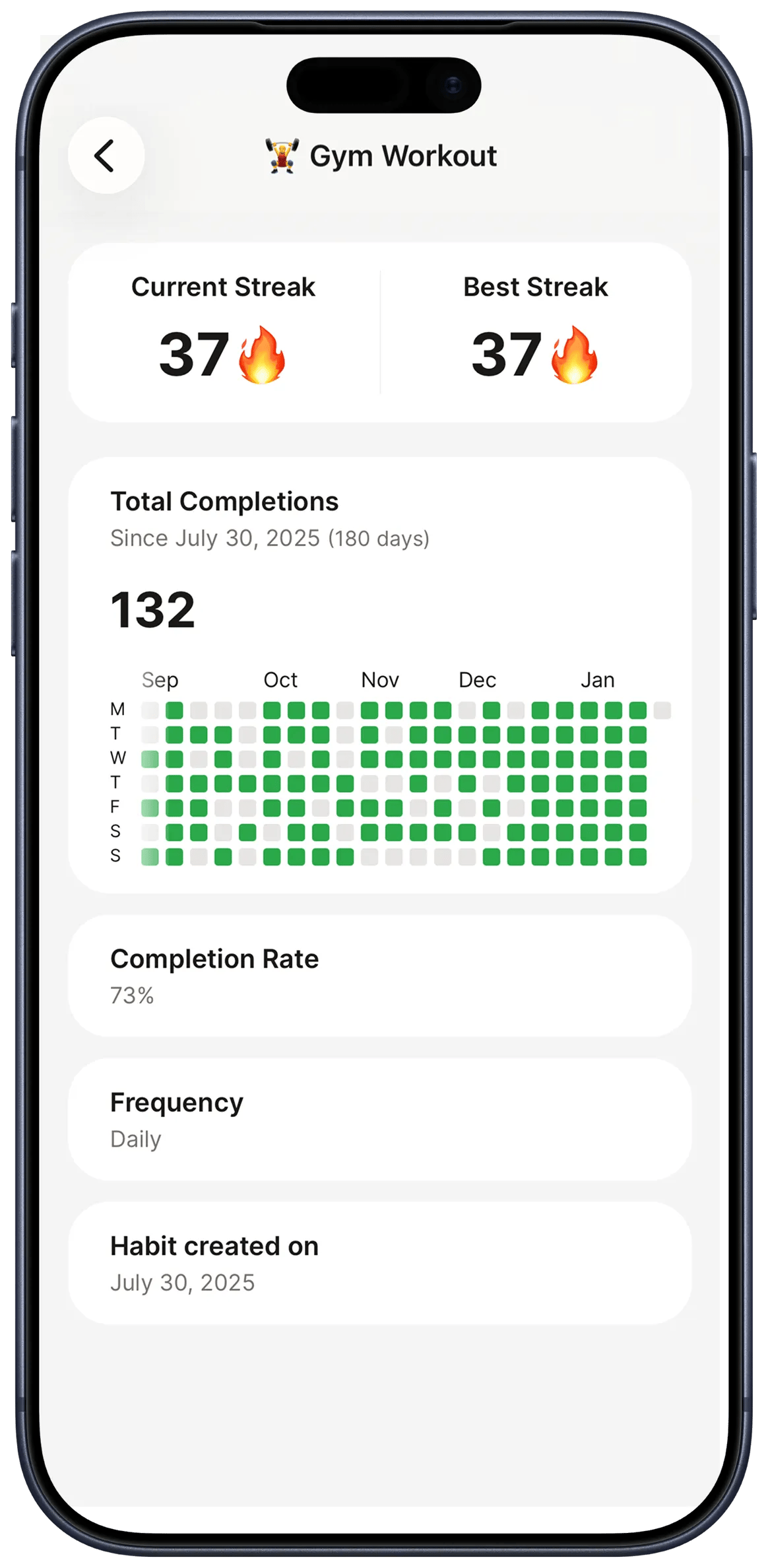
Build your daily habit stack and track every link
Download FreeFrequently Asked Questions
How many habits can I stack at once?▼
Start with one. Once that new behavior feels automatic — usually after 4 to 10 weeks — add a second. Research shows that stacking too many new habits at once dramatically increases failure rates. Keep your chain to 3–4 links maximum, and only add links that have individually become automatic.
What if my anchor habit changes or disappears?▼
Find a new anchor. This is common when routines shift — a job change, a move, a new schedule. Review your current daily habits, identify a new bulletproof anchor, and rewrite your habit stack statement. The transition is easier than starting from scratch because you have already built the new behavior.
Does habit stacking work for breaking bad habits too?▼
Yes, with a modification. Instead of 'After X, I will do Y,' use a substitution: 'After I feel the urge to [unwanted behavior], I will [replacement behavior] instead.' For example, 'After I feel the urge to check social media, I will take three deep breaths and drink water.' This redirects the neural pathway rather than trying to suppress it.
Is habit stacking the same as the Tiny Habits method?▼
Habit stacking is one component of BJ Fogg's Tiny Habits program. Fogg calls it 'anchoring' — attaching a new tiny behavior to an existing routine. James Clear popularized the term 'habit stacking' in Atomic Habits and expanded on the concept. Both approaches use the same core mechanism: leveraging existing habits as cues for new ones.
How long does it take for a habit stack to become automatic?▼
Research from University College London found that new habits take an average of 66 days to become automatic, with a range of 18 to 254 days. Habit stacking can accelerate this because you start with a reliable cue, but the timeline still depends on the complexity of the new behavior and how consistently you perform it.
- 1.study published in the Journal of Applied Psychologycoachpedropinto.com
- 2.Tiny Habitstinyhabits.com
- 3.How to Build New Habits by Taking Advantage of Old Onesjamesclear.com
- 4.APA PsycNetpsycnet.apa.org
- 5.borrow that neurochemical boostdrginacleo.com
- 6.study from Duke Universitydorfriedman.scholarly.emory.edu
- 7.Everything You Need To Know About Habit Stacking for Self-Improvementhealth.clevelandclinic.org