 By Adrien Blanc
How Long Does It Take to Form a Habit? The Real Answer
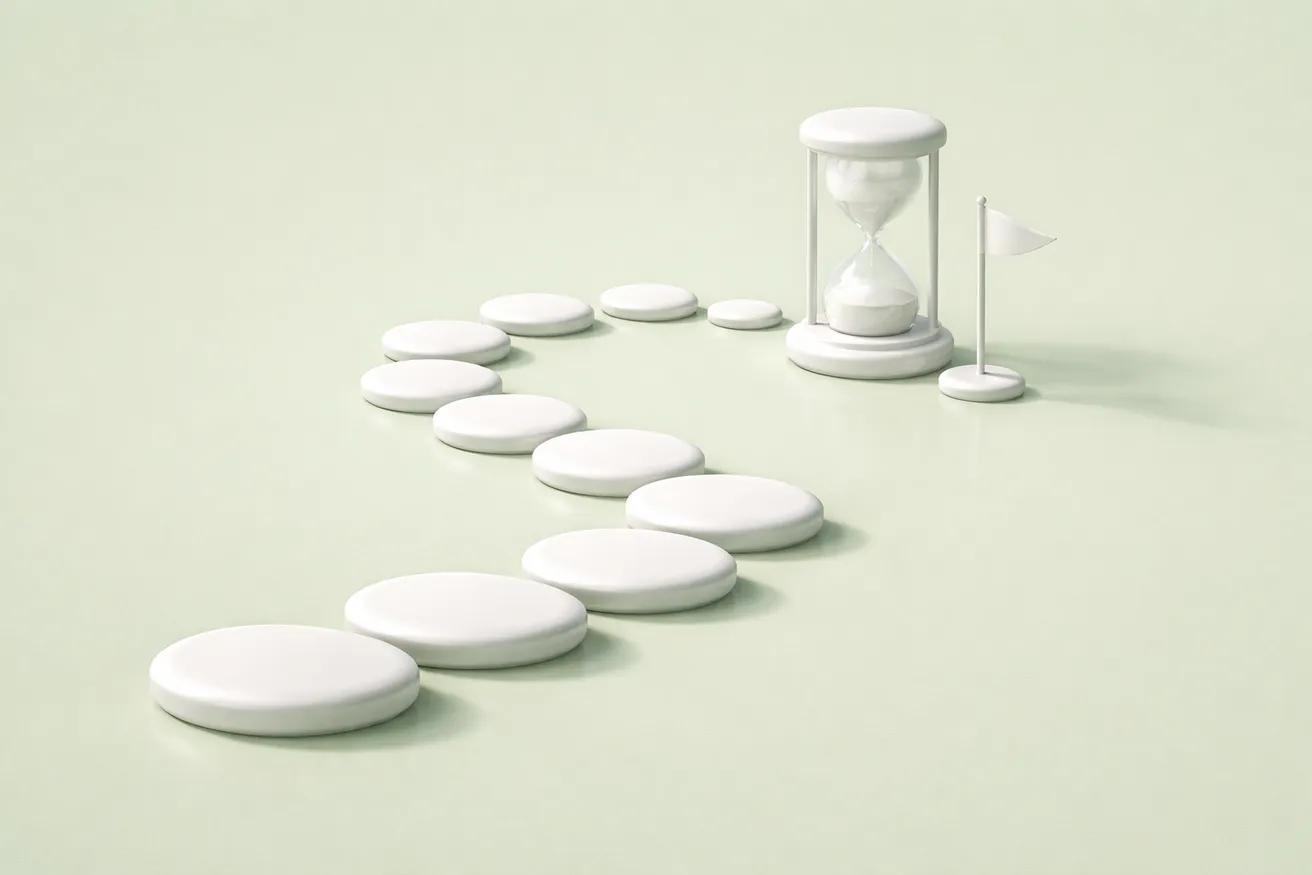
It takes an average of 66 days to form a new habit, not 21 days as most people believe. This number comes from a landmark study by Phillippa Lally and her team at University College London, published in the European Journal of Social Psychology. The researchers tracked 96 participants over 12 weeks as they tried to adopt a new daily behavior — like drinking water after breakfast or going for a run before dinner. They found that the time it took for a behavior to become automatic ranged from 18 to 254 days, depending on the person and the complexity of the habit. So if you have been trying to stick with something new and it still feels like an effort after three weeks, you are not failing. You are just getting started.
66 days
average time to form a habit
A 2024 systematic review and meta-analysis of 20 studies with 2,601 participants confirmed this range, finding median habit formation times of 59 to 66 days and mean times of 106 to 154 days. The bottom line: forming a habit is a weeks-to-months process, and anyone telling you it only takes three weeks is repeating a myth.
Where the 21-Day Myth Came From
The "21 days to form a habit" idea was never based on habit research. It traces back to a 1960 self-help book called Psycho-Cybernetics by Dr. Maxwell Maltz, a plastic surgeon. Maltz observed that his patients took about 21 days to get used to their new appearance after surgery. He also noticed that amputees experienced "phantom limb" sensations for roughly three weeks, and that people needed about 21 days before a new house started to feel like home.
In his book, Maltz wrote that it requires "a minimum of about 21 days" for an old mental image to dissolve and a new one to form. The key words — "a minimum of" and "mental image" — got lost as the idea spread. Psycho-Cybernetics sold over 30 million copies, and motivational speakers and self-help authors gradually shortened the message to a simple, catchy claim: "It takes 21 days to form a habit."
The critical mistake? Maltz was talking about habituation — adjusting to a change in your environment or body — not habit formation, which is the process of building an automatic behavioral response through repetition. These are fundamentally different psychological processes. Getting used to a new nose has nothing to do with making yourself run every morning.
The University College London Study: 66 Days on Average
The most cited habit formation study followed 96 volunteers who each chose one new daily behavior — eating, drinking, or activity-related — and performed it in the same context (like "after breakfast") for 12 weeks. Researchers measured automaticity using the Self-Report Habit Index, tracking how naturally the behavior occurred over time.
Here is what Lally and her colleagues found:
- Median time to automaticity: 66 days. This is when most participants reached a plateau where the behavior felt natural.
- Range: 18 to 254 days. Some simple habits formed in under three weeks. Complex ones took more than eight months.
- Automaticity follows an asymptotic curve. Early repetitions produce the biggest gains. Each additional day of practice contributes less, until you reach a plateau.
- Missing a single day did not significantly affect the process. Automaticity dipped by only 0.29 points on average, and gains resumed with the next performance.
That last point is worth underlining. The research shows that one missed day does not reset your progress. The all-or-nothing mindset — "I broke my streak so I might as well quit" — is not supported by the data. What matters is getting back on track the next day.
18–254 days
range of habit formation time
Track your habits and watch automaticity build over time
Download Free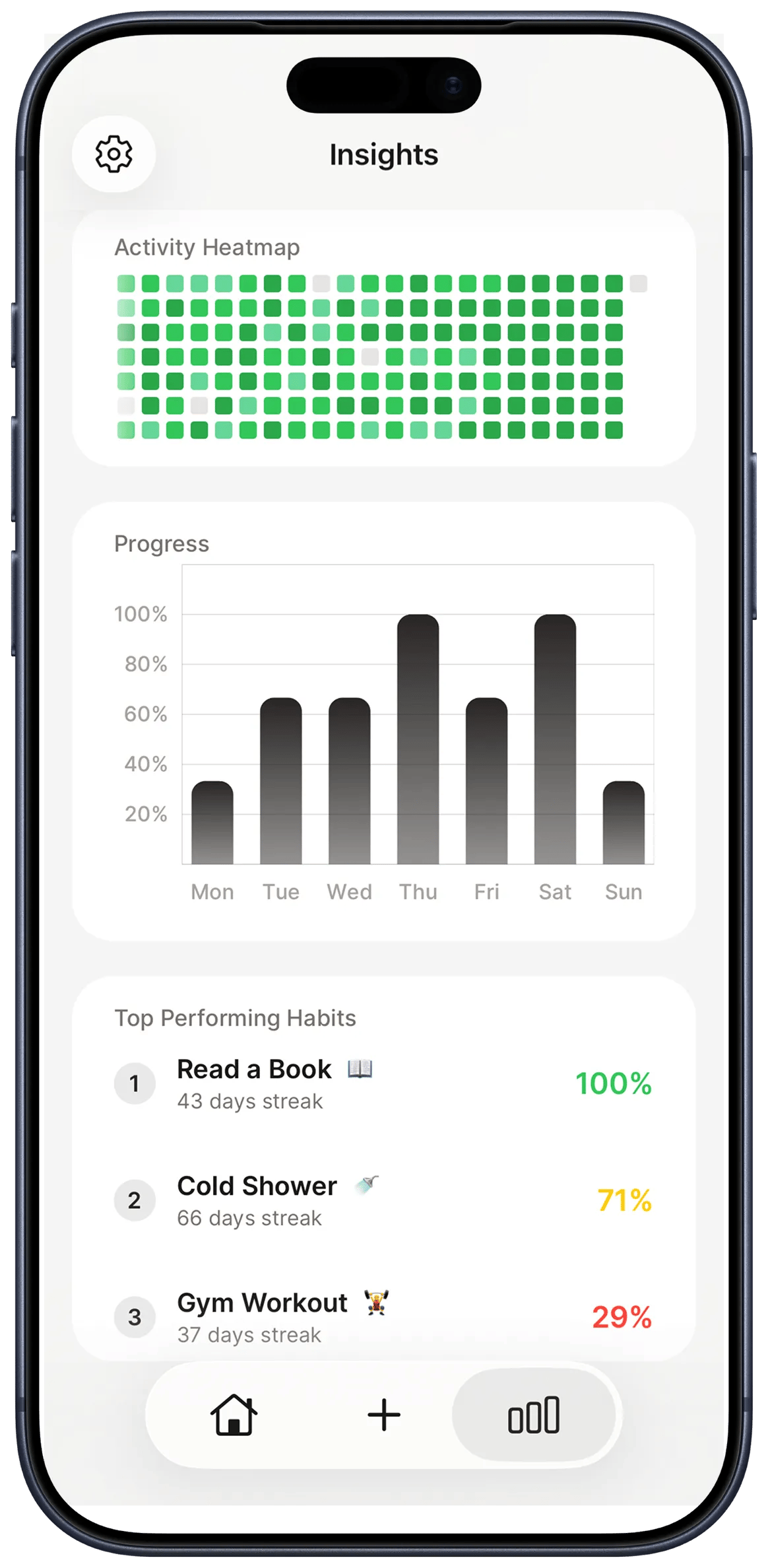
Why Some Habits Form Faster Than Others
Simple behaviors become automatic much faster than complex ones. In Lally's study, participants who chose easy habits like drinking a glass of water after breakfast reached automaticity in about 20 to 30 days. Those who chose demanding behaviors like running for 15 minutes before dinner needed 100 days or more.
Several factors explain the difference:
- Behavioral complexity. Drinking water requires almost no effort or planning. A workout requires changing clothes, warming up, and pushing through discomfort. The more steps and effort involved, the longer habit formation takes.
- Context stability. Habits form faster when tied to a consistent cue and environment. If you meditate in the same chair right after making coffee every morning, the cue-behavior link strengthens quickly. If the timing and location keep changing, automaticity takes longer.
- Enjoyment and positive affect. Research on exercise habits shows that positive feelings during the activity significantly boost habit strength. Monotonous or unpleasant sessions fail to produce lasting automaticity.
- Frequency of repetition. A study of new gym members found that exercising at least four times per week for six weeks was the minimum threshold for establishing a self-sustaining exercise habit. Less frequent behaviors take proportionally longer to become automatic.
Factors That Speed Up Habit Formation
You cannot change the neuroscience of habit formation, but you can create conditions that make it happen faster. Here are strategies backed by research:
1. Attach the New Habit to an Existing One
This technique — sometimes called habit stacking — links your new behavior to something you already do automatically. "After I pour my morning coffee, I will write in my journal for two minutes." The existing habit serves as a reliable cue, which research confirms accelerates the formation of the new one.
2. Make It Easy to Start
Reducing friction makes a behavior more likely to happen consistently. Lay out workout clothes the night before. Keep your journal next to the coffee machine. The less decision-making required in the moment, the faster the behavior moves toward automaticity.
3. Track Your Progress
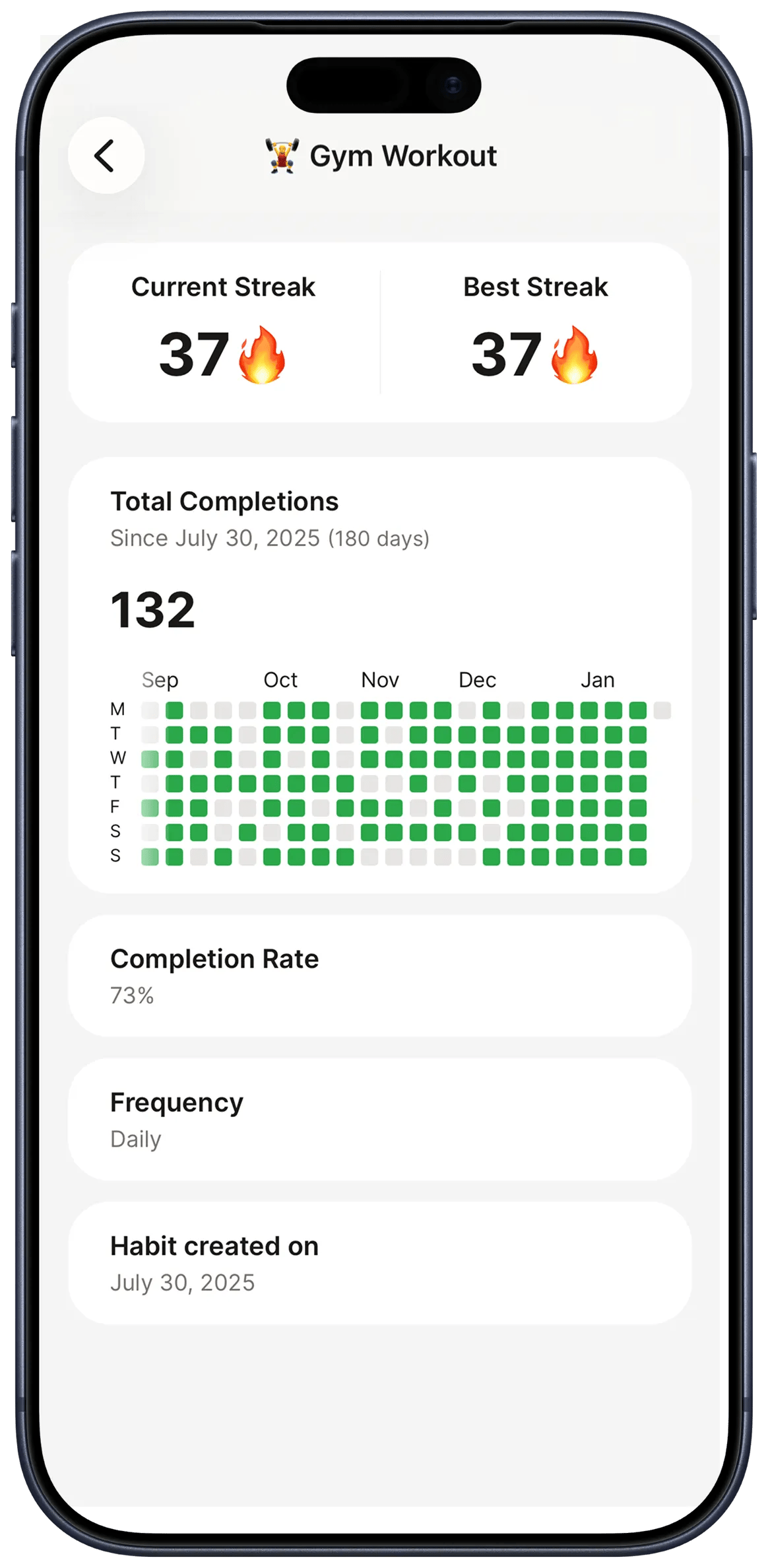
Tracking creates accountability and makes your consistency visible. Research suggests that simple yes/no tracking outperforms complex measurement systems during the formation phase. You do not need detailed metrics early on — just a daily check-in that reinforces the pattern.
4. Focus on Identity, Not Outcomes
Author James Clear popularized the concept of identity-based habits in Atomic Habits: instead of saying "I want to run a marathon," tell yourself "I am a runner." When a habit aligns with your sense of identity, it becomes self-reinforcing. Each completed repetition is a vote for the person you want to become.
5. Prioritize Morning Habits
Studies on habit formation timing suggest that morning practices, combined with self-selection of habits and integration into stable daily routines, increase formation success. Morning routines benefit from consistent timing and fewer competing demands on your attention. For more on structuring your mornings, see our guide on daily routines that actually work.
What Happens in Your Brain During Habit Formation
Habits live in the basal ganglia, a region deep in the brain associated with automatic behaviors. When you first try a new behavior, the prefrontal cortex — responsible for conscious decision-making — does the heavy lifting. Every repetition strengthens neural pathways between the cue and the response. Over time, control gradually shifts from the prefrontal cortex to the basal ganglia, and the behavior requires less and less conscious effort.
This is what "automaticity" actually means. It is not that you stop thinking entirely. It is that the behavior requires minimal mental energy to initiate. You stop debating whether to do it and start doing it without an internal negotiation.
The asymptotic curve from Lally's research maps onto this neural process. Early repetitions cause rapid increases in automaticity because the neural pathway is being built. Later repetitions reinforce what already exists, so the gains are smaller — but still essential for long-term stability.
What to Do When It Takes Longer Than Expected
If your habit still feels effortful after two months, you are not doing anything wrong. Remember: the range in the UCL study went up to 254 days. Some habits simply take longer, especially if they are complex, physically demanding, or performed in variable contexts.
Here is how to keep going:
- Reduce the scope. If a 30-minute workout feels unsustainable, drop it to 10 minutes. A smaller habit performed consistently beats an ambitious one done sporadically.
- Check your cue. A vague trigger like "sometime in the evening" produces weaker habit associations than a specific one like "right after I close my laptop." Make the cue concrete and tied to something you already do.
- Allow imperfect days. Lally's research is clear: missing one day does not derail the process. What matters is not performing the behavior perfectly every single time — it is performing it most of the time over an extended period.
- Watch for the "what-the-hell" effect. Researchers use this term for the tendency to abandon a goal entirely after one slip. If you miss a day, the worst thing you can do is interpret it as evidence that you have failed. Get back to it tomorrow.
- Track your streak. Even if the habit does not feel automatic yet, seeing a chain of completed days builds motivation. A habit tracking app makes this visual and easy.
Start your 66-day habit formation journey
Download FreeThe Timeline Is a Guide, Not a Deadline
The 66-day average is useful, but it is not a finish line. Treating it as a rigid target can backfire. If day 67 arrives and the habit still feels hard, you might conclude the process has failed — when in reality, you may just need a few more weeks.
A better approach is to stop counting days altogether and focus on consistency. The research shows that what predicts habit formation is not hitting a specific number — it is the pattern of regular repetition in a stable context over a sustained period.
Here is a rough guide based on the research:
- Simple habits (drinking water, taking a vitamin): 3–5 weeks
- Moderate habits (journaling, stretching, a short walk): 6–10 weeks
- Complex habits (exercise routines, meditation, dietary changes): 10–36 weeks
Your personal timeline depends on the habit's complexity, your environment, how often you repeat it, and whether you enjoy the activity. The 66-day average is just that — an average. Use it as a rough benchmark, not a pass/fail threshold.
Frequently Asked Questions
Is it really 21 days or 66 days to form a habit?▼
The 21-day claim is a myth based on a 1960 observation about adjusting to cosmetic surgery — not habit formation. Research from University College London found the actual average is 66 days, with a range of 18 to 254 days depending on the person and the habit's complexity.
Does missing one day break a habit?▼
No. The UCL study found that missing a single day had a negligible effect on habit formation. Automaticity dipped slightly but recovered with the next repetition. The key is getting back on track rather than maintaining a perfect streak.
What is the fastest a habit can form?▼
In Lally's study, the fastest habit formation occurred in 18 days — for a very simple behavior like drinking a glass of water. Most habits take significantly longer, especially if they involve physical effort or multiple steps.
Why do some habits take months to form?▼
Complex behaviors require more cognitive effort and involve more steps, which slows the shift from conscious effort to automaticity. Exercise habits, for instance, took over 100 days in the research because they require planning, physical exertion, and recovery.
How can I speed up habit formation?▼
Use a consistent cue (same time, same place), start with the smallest possible version of the habit, stack it onto an existing routine, track your progress daily, and choose activities you find at least somewhat enjoyable. These factors all accelerate the path to automaticity.
- 1.landmark study by Phillippa Lally and her team at University College Londononlinelibrary.wiley.com
- 2.Time to Form a Habit: A Systematic Review and Meta-Analysis of Health Behaviour Habit Formation and Its Determinantspmc.ncbi.nlm.nih.gov
- 3.observed that his patients took about 21 days to get used to their new appearanceblogs.ucl.ac.uk
- 4.sold over 30 million copiesacsh.org
- 5.How long does it take to form a habit?ucl.ac.uk
- 6.Research on exercise habitslink.springer.com
- 7.study of new gym memberspubmed.ncbi.nlm.nih.gov
- 8.research confirmspmc.ncbi.nlm.nih.gov
- 9.The Science Behind Habit Trackingpsychologytoday.com