 By Adrien Blanc
How to Break a Bad Habit: A Neuroscience-Based Guide
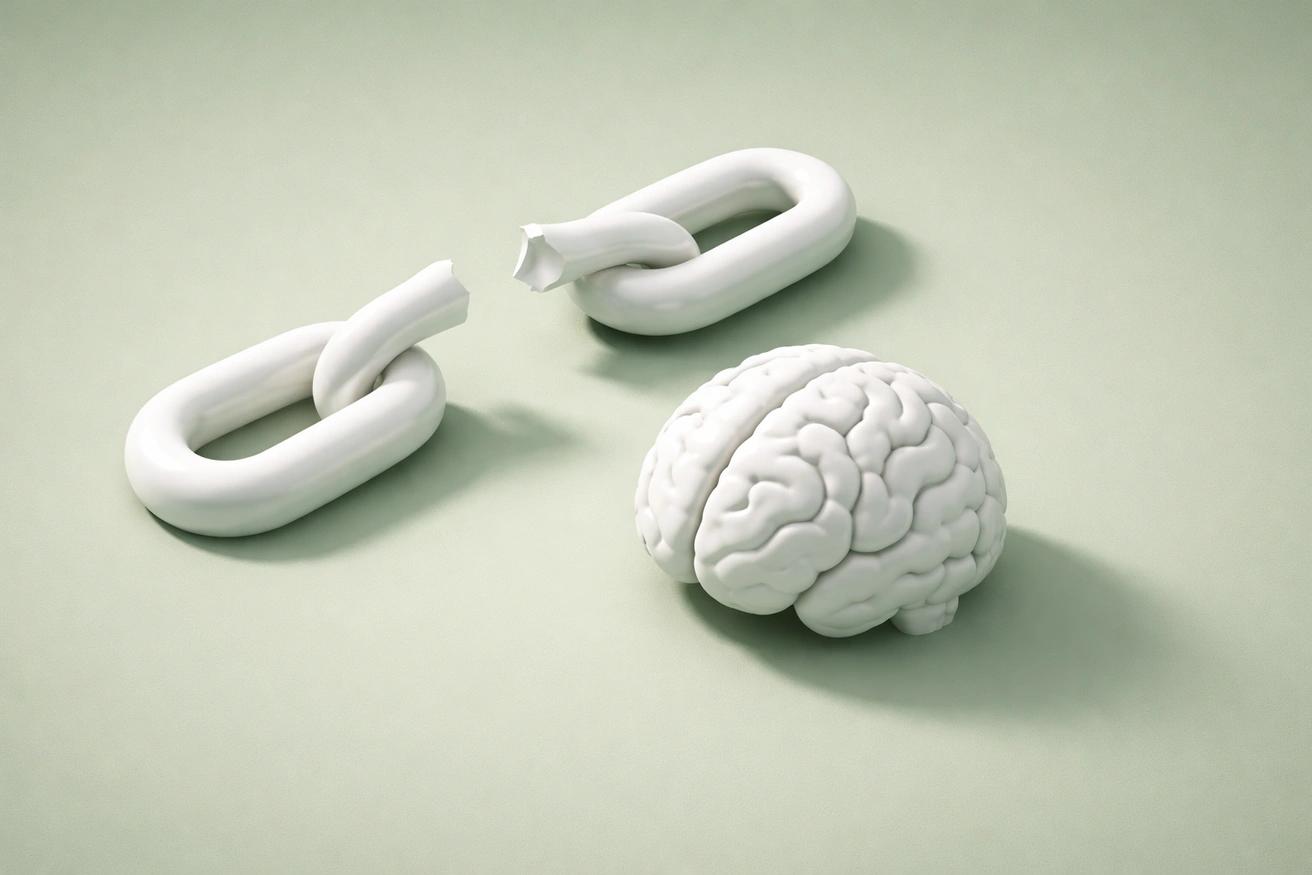
Breaking a bad habit is hard because your brain is designed to keep doing it. Neuroscience research shows that habits live in the basal ganglia — a deep brain structure that automates repeated behaviors so you can act without thinking. A 2024 study from Trinity College Dublin found that bad habits persist because two brain systems — one automatic, one goal-directed — fall out of balance, leaving the automatic system in control. The good news: the same brain plasticity that wired the habit in the first place can rewire it. Research from the University of Southern California shows that modifying environmental cues can reduce habitual behavior by up to 60% without relying on willpower. This guide walks you through the neuroscience of why bad habits stick and the evidence-based steps to break them for good.
43%
of daily actions are driven by habit, not conscious choice
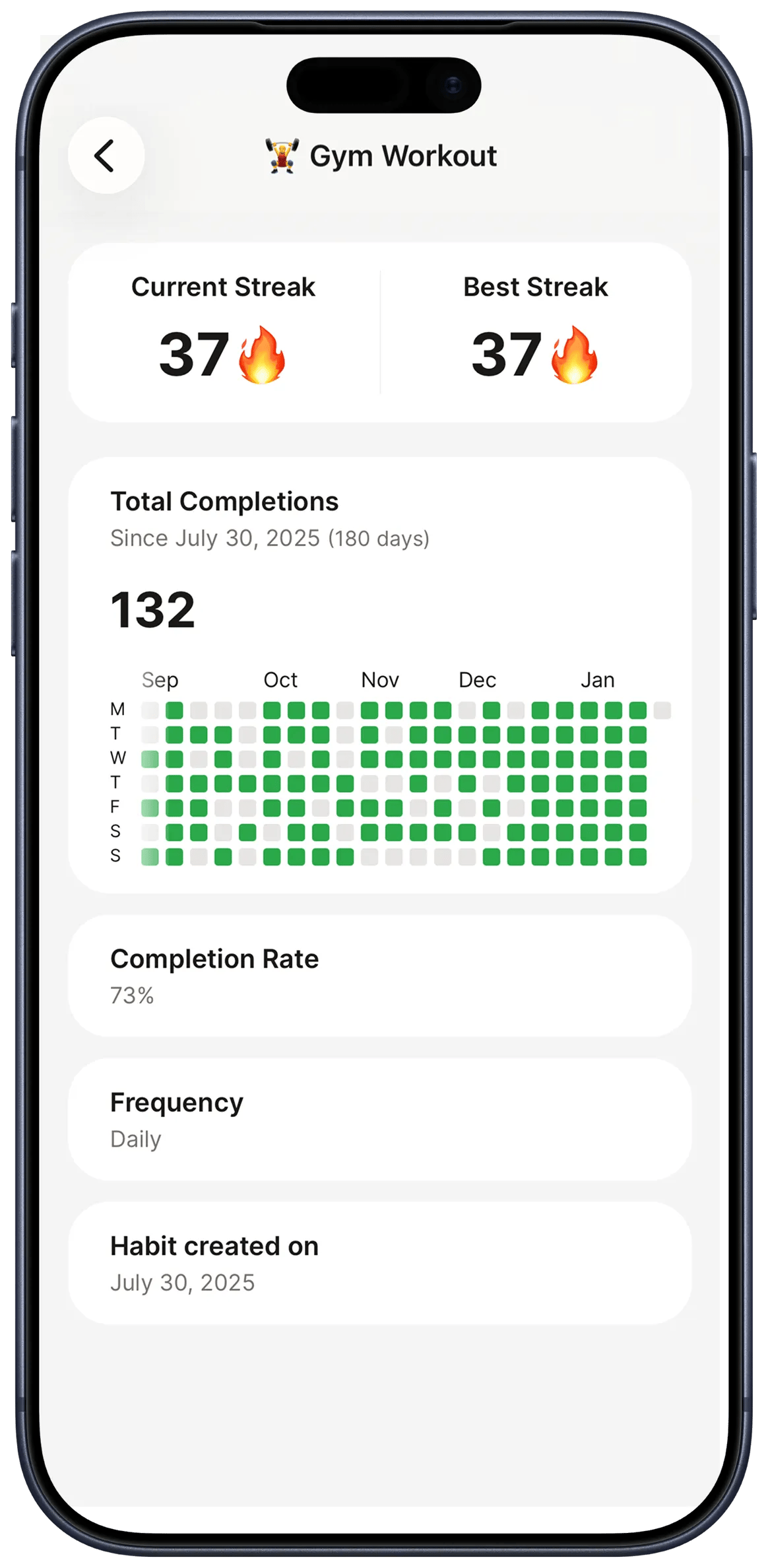
Track your habit-breaking progress day by day
Download Free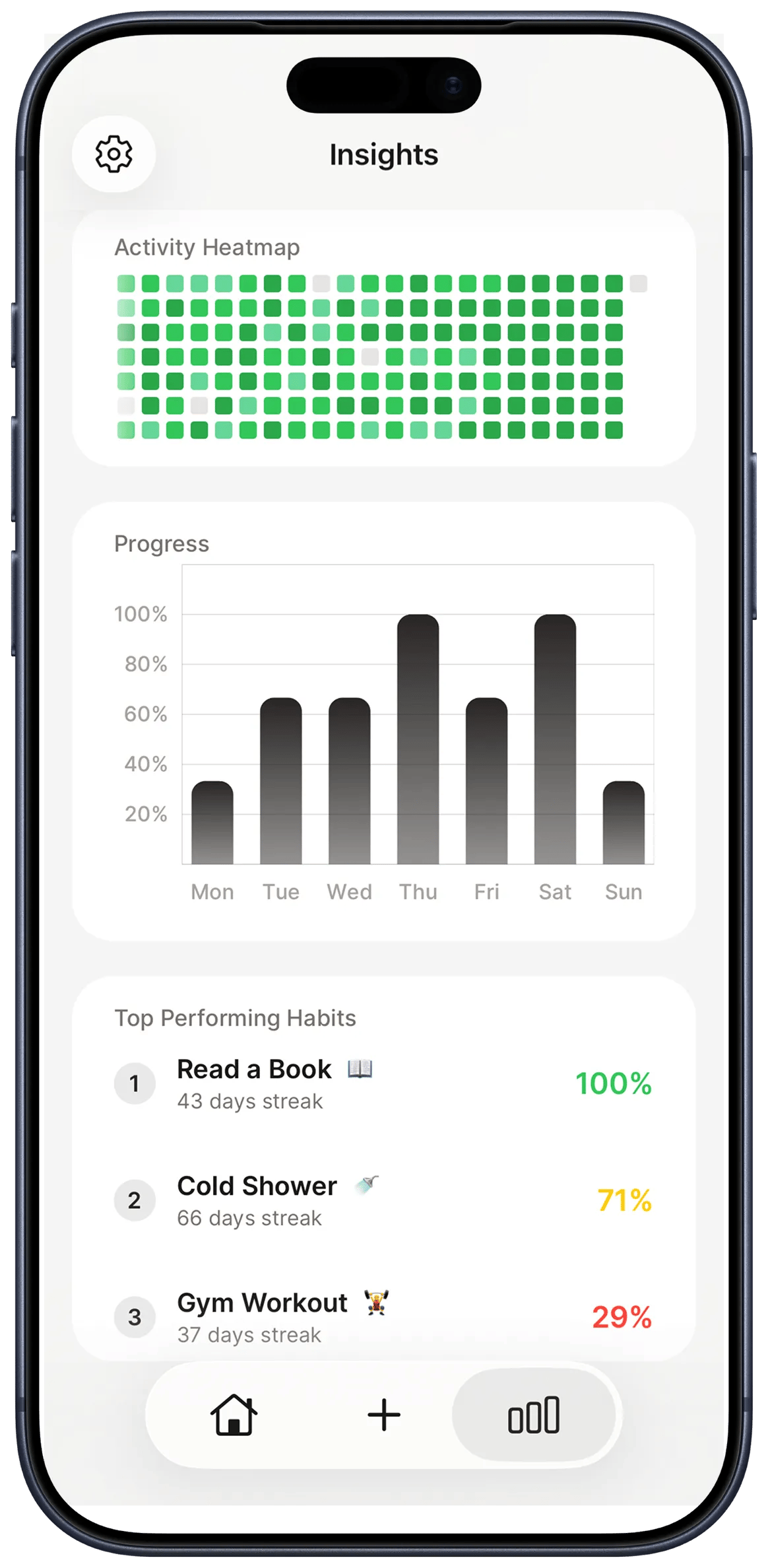
Why Bad Habits Are So Hard to Break
Your brain treats bad habits the same way it treats good ones — as efficient shortcuts. When you repeat any behavior, your prefrontal cortex (the decision-making part of your brain) gradually hands control to the basal ganglia, where the behavior gets stored as an automatic routine. This is why you can drive home without thinking about the route — and also why you reach for your phone the moment you feel bored.
Dopamine plays a central role. Each time a habit delivers its reward, your brain releases dopamine, strengthening the neural pathway and making the behavior more likely to repeat. As the NIH explains: "If you do something over and over, and dopamine is there when you're doing it, that strengthens the habit even more. When you're not doing those things, dopamine creates the craving to do it again."
This creates what researchers call the cue-induced wanting trap: the habit itself generates the cues that trigger the next repetition. Feel stressed, so you scroll social media. Scrolling makes you feel unproductive, which creates more stress, which sends you back to scrolling.
There are three reasons bad habits are especially stubborn:
- The original habit never fully erases. Research from the NIH confirms that replacing a habit with a new one doesn't delete the original — both remain in your brain. You need to consistently strengthen the new one.
- Willpower is unreliable. Your prefrontal cortex fatigues over the course of a day, making it harder to override automatic behaviors by evening.
- Environmental cues are everywhere. Since most habit cues are tied to context — a location, time of day, emotional state — you encounter them constantly without realizing it.
Understanding these mechanisms is the first step. For a broader look at how habits form and stick, see our guide on the science of building healthy habits.
The Neuroscience of Bad Habit Loops
Every habit runs on a three-part loop: cue, routine, reward. This framework, grounded in decades of basal ganglia research, explains why habits feel so automatic and how to intervene at each stage.
The cue
A cue is any trigger that tells your brain to initiate the habit. Common cues include:
- Time of day (reaching for coffee at 3 PM)
- Emotional states (anxiety triggering nail biting)
- Locations (the couch triggering TV binging)
- Preceding actions (sitting at your desk triggering social media checking)
The routine
The routine is the behavior itself — the snacking, scrolling, smoking, or procrastinating. Once activated by a cue, the basal ganglia executes the routine with minimal conscious input.
The reward
The reward is the payoff your brain receives — a dopamine hit that reinforces the loop. Critically, the reward doesn't have to be healthy or even truly pleasurable anymore. Your brain craves the anticipated dopamine release, not the actual experience.
This is why understanding how long it takes to form a habit matters — the same timeline applies in reverse when you're replacing a bad habit with a better one.
Step 1: Identify Your Triggers
You cannot break a habit you don't fully understand. The most effective first step is mapping exactly which cues activate the behavior. Research on vigilant monitoring found that no other strategy was as effective at controlling strong habits as simply thinking "don't do it" and watching carefully for slipups.
Run a trigger audit
For one week, every time you catch yourself performing the bad habit (or about to), write down:
- What time is it?
- Where are you?
- Who is around you?
- What were you doing right before?
- What emotion are you feeling?
After a week, patterns will emerge. You might discover that your late-night snacking only happens when you watch TV alone, or that you bite your nails exclusively during work meetings.
Find the real reward
Ask yourself: what is this habit actually giving me? The answer is often not what you think. You might eat at 3 PM not because you're hungry but because you want a break from your desk. You might check your phone not for information but for a brief dopamine hit of novelty.
Once you know the cue and the true reward, you can design a replacement that delivers the same payoff through a healthier routine. For practical tools to track your triggers, see our complete guide to habit tracking.
Step 2: Replace the Routine, Keep the Reward
The most reliable way to break a bad habit is not to eliminate it but to replace it. Neuroscience research confirms that the brain's habit pathways don't disappear — they need to be overwritten with a competing behavior tied to the same cue and reward.
The Trinity College Dublin researchers describe this as "formation of competing S–R associations." In plain terms: wire a new action to the old trigger until the new pathway becomes stronger than the old one.
How to build a replacement habit
- Choose a substitute that delivers a similar reward. If snacking gives you a break, try a five-minute walk instead. If social media gives you novelty, try reading a chapter of a book.
- Use an implementation intention. Research published in the British Journal of Health Psychology shows that creating specific if-then plans can double or triple success rates compared to simple goal-setting. Example: "If I feel the urge to scroll at 3 PM, then I will stand up and stretch for two minutes."
- Repeat consistently. The Lally et al. study from University College London found that it takes an average of 66 days for a new behavior to become automatic, with a range of 18 to 254 days depending on the person and complexity.
- Accept slip-ups. The same study found that missing one day did not materially affect the habit formation process. Perfection is not required.
66 days
average time to form a new automatic behavior
This approach aligns with habit stacking — anchoring a new behavior to an existing cue so your brain has a clear path to follow.
Step 3: Design Your Environment Against the Habit
Changing your surroundings is more effective than relying on willpower. Since most habit cues are environmental, redesigning your environment removes the trigger before your automatic system even activates.
Research from Wendy Wood at USC demonstrates that environment modification can reduce habitual behavior by up to 60% without requiring conscious effort. This makes it one of the most powerful — and most underused — strategies for breaking bad habits.
The "make it invisible" approach
For each bad habit, ask: how can I remove or reduce the cue?
- Snacking: Remove junk food from countertops. Studies on cafeteria placement show that moving unhealthy options out of sight reduces consumption by up to 70%.
- Phone scrolling: Charge your phone in another room. Delete social media apps from your home screen.
- Smoking: Avoid the break spot where you usually smoke. Change your after-meal routine.
- Late-night TV: Move the remote to a drawer. Set a screen-time limit on your devices.
Add friction to the bad habit
You don't need to make the habit impossible — just inconvenient enough that the automatic loop breaks:
- Use website blockers during focus hours
- Keep cigarettes in the car, not your pocket
- Put a 30-second delay app on social media
The habit discontinuity effect
Research shows that major life changes — a new job, a move, a new relationship — are natural windows for habit change. One study found that 36% of people who successfully changed a habit had recently moved, compared to only 13% of those who failed. If a big life change is coming, use it as a strategic reset point.
Step 4: Track Your Progress
Self-monitoring is one of the most replicated findings in behavioral science for changing habits. A study of more than 1,600 people found that those who kept a daily log lost twice as much weight as those who did not. The principle applies to any habit you want to break.
Tracking works through several mechanisms:
- Increased awareness. Writing down when you slip up forces you to notice your cues and patterns rather than operating on autopilot.
- Dopamine replacement. Each checkmark on a tracker triggers a small dopamine reward, gradually shifting your brain's reward pathway from the old habit to the new one.
- Reduced cognitive load. Offloading your intentions to a tracker frees your working memory for the harder work of resisting cues.
What to track
Rather than tracking the bad habit itself (which focuses your attention on what you don't want), track the replacement behavior:
- Instead of "didn't smoke," track "went for a walk at break time"
- Instead of "didn't snack," track "ate an apple at 3 PM"
- Instead of "didn't scroll," track "read for 10 minutes"
For a deeper look at effective tracking methods, see our guide on whether habit tracking actually works and our beginner's guide to habit tracking.
Start tracking your replacement habits with Habit Streak
Download FreeHow Long It Takes to Break a Bad Habit
Forget the 21-day myth — breaking a bad habit takes longer than most people expect. The popular claim that habits change in 21 days comes from a plastic surgeon named Maxwell Maltz who observed patients adjusting to their appearance in about three weeks. It was never a scientific study.
The best available evidence comes from the Lally et al. (2009) study at University College London:
- Average: 66 days for a new behavior to become automatic
- Range: 18 to 254 days, depending on complexity and individual differences
- Key factor: More complex habits take significantly longer. Quitting smoking is a different challenge than stopping nail biting.
Experts at the Cleveland Clinic suggest that most people should expect at least 10 weeks to break a meaningful bad habit, with many taking several months.
What the timeline depends on
- How long you've had the habit. A 20-year smoking habit has deeper neural pathways than a six-month social media habit.
- How strong the reward is. Habits with intense dopamine payoffs (substances, gambling, sugar) take longer to overwrite.
- Your environment. If you remain in the same environment with the same cues, expect a longer timeline.
- Your replacement strategy. People who actively replace the habit (rather than just trying to stop) tend to succeed faster.
The non-linear truth
Progress is not linear. You might go three weeks without the old habit and then slip. This is normal — research confirms that a single lapse does not reset the habit formation process. What matters is the overall trend, not any single day.
Common Bad Habits and How to Approach Them
Different bad habits respond to different strategies. Here are evidence-based approaches for some of the most common ones:
Screen time and phone addiction
Screen time before bed is the bad habit Americans find hardest to quit, according to YouGov polling. The cue is usually boredom or the transition to bed.
- Environment fix: Charge your phone outside the bedroom
- Replacement: Keep a book on your nightstand
- Tracking: Log screen-free evenings
Stress eating and snacking
The cue is typically an emotional state (stress, boredom) rather than hunger.
- Environment fix: Remove visible snacks from your workspace and counters
- Replacement: Keep healthy alternatives pre-prepared. Use the "3 PM walk" as a substitute break
- Tracking: Log your emotion and what you ate — patterns reveal the true trigger
Smoking
Smoking involves powerful neurochemical reinforcement. Half of people who report having a smoking habit say they've quit, making it one of the more commonly overcome addictions — but it requires deliberate strategies.
- Environment fix: Avoid smoking locations and triggers. Change post-meal routines
- Replacement: Nicotine replacement therapy paired with a behavioral substitute
- Tracking: Track cigarette-free days and note which cues almost triggered a lapse
Procrastination
The reward from procrastination is immediate relief from an unpleasant task.
- Environment fix: Block distracting websites. Work in a location you associate with focus
- Replacement: Use the "two-minute rule" — commit to just two minutes of the task
- Tracking: Log completed focus sessions rather than tracking avoidance
Building a Long-Term Strategy
Breaking a bad habit is not a one-time event — it's a process of gradually shifting your identity. The most effective long-term approach combines the four steps above into a system:
- Map your triggers so you catch the cue before the automatic loop starts
- Design a specific replacement with an implementation intention
- Restructure your environment to reduce cue exposure
- Track the replacement behavior to build momentum and awareness
Research from a 2024 systematic review in JMIR found that the most effective digital behavior change interventions combined self-monitoring, goal setting, and contextual cues — not just willpower or motivation.
If you're building new habits to replace old ones, habit stacking is one of the most effective frameworks — and for a step-by-step system, our daily routines guide covers how to structure your entire day around positive defaults.
Frequently Asked Questions
What is the fastest way to break a bad habit?▼
The fastest approach combines three strategies: remove environmental cues that trigger the habit, create a specific replacement behavior using an if-then plan, and track your progress daily. Research shows that environment design alone can reduce habitual behavior by up to 60%.
Why do I keep going back to bad habits?▼
Your brain stores the original habit even after you've built a new one. Both neural pathways remain — the old one gets reactivated when you encounter familiar cues, especially during stress. This is normal and does not mean you've failed. Consistent repetition of the replacement behavior gradually weakens the old pathway.
Can you break a bad habit in 21 days?▼
The 21-day claim is a myth with no scientific backing. Research from University College London found that it takes an average of 66 days for a new behavior to become automatic, with a range of 18 to 254 days depending on the habit's complexity and individual factors.
Does tracking habits help you break bad ones?▼
Yes. Self-monitoring is one of the most replicated findings in behavioral science. A study of over 1,600 people found that those who kept a daily log lost twice as much weight as those who did not. Tracking increases awareness of triggers, provides dopamine through checkmarks, and reduces cognitive load.
What are the hardest bad habits to break?▼
Technology habits — especially screen time before bed and excessive phone use — are among the hardest to quit according to polling data. Substance-related habits like smoking are also difficult due to strong neurochemical reinforcement, though about half of people who develop a smoking habit eventually quit.
- 1.2024 study from Trinity College Dublincell.com
- 2.reduce habitual behavior by up to 60%behavioralpolicy.org
- 3.Flattery and ingratiation - first cousin of manipulation?listeningpartnership.com
- 4.Neuroscience and addiction: Unraveling the brain’s reward systemlpsonline.sas.upenn.edu
- 5.Breaking Bad Habitsnewsinhealth.nih.gov
- 6.The place of dopamine in the cortico-basal ganglia circuitpmc.ncbi.nlm.nih.gov
- 7.Rewiring Your Brain for Better Habits: Understanding Dopamine, Reward Loops, and Real Changemindfulspark.org
- 8.Can't control yourself? Monitor those bad habitspubmed.ncbi.nlm.nih.gov
- 9.How To Break Bad Habits Using Science-Backed Cue-Based Strategiesdrzam.com
- 10.How Long Does it Actually Take to Form a New Habit? (Backed by Science)jamesclear.com
- 11.reduces consumption by up to 70%centerforhci.org
- 12.Here’s what happens in your brain when you’re trying to make or break a habittheconversation.com
- 13.The Science Behind Habit Trackingpsychologytoday.com
- 14.Here's Why You Can't Break That Bad Habithealthline.com
- 15.How To Break Bad Habitshealth.clevelandclinic.org
- 16.Bad habits that Americans havetoday.yougov.com
- 17.Digital Behavior Change Intervention Designs for Habit Formation: Systematic Reviewjmir.org