 By Adrien Blanc
You Broke Your Habit Streak. Now What?

Breaking a habit streak does not erase your progress. That 30-day meditation streak, the 60-day running chain, the weeks of consistent journaling -- all of that work is still stored in your brain's neural pathways. A landmark study by Phillippa Lally at University College London found that missing a single day had no measurable impact on long-term habit formation. Automaticity -- the feeling that a behavior happens without thinking -- resumed its upward trajectory as soon as participants got back on track. Yet most people don't know this. Research from the University of Pennsylvania's Behavior Change for Good Initiative found that people who committed to resuming a habit within 24 hours of a lapse were 71% more likely to maintain long-term consistency than those who let the break linger. The difference between someone who builds a lasting habit and someone who doesn't isn't perfection. It's recovery speed.
71%
more likely to maintain habits when resuming within 24 hours
Broke a streak? Habit Streak helps you bounce back with flexible tracking that rewards consistency over perfection.
Download Free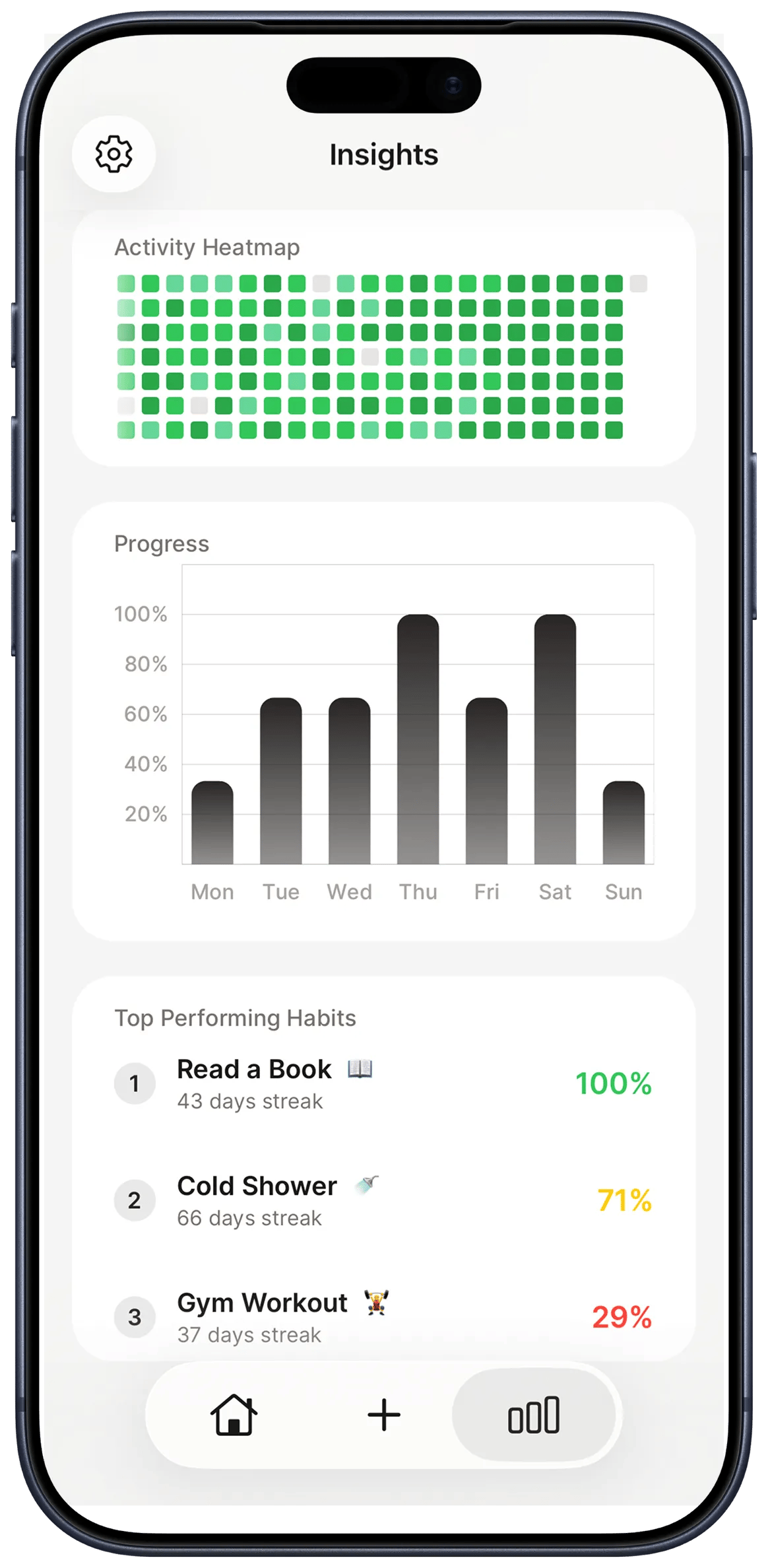
Why Missing One Day Feels So Devastating
The pain of losing a streak is disproportionate to the actual setback. This comes down to a well-documented bias called loss aversion -- the principle that losing something feels roughly twice as painful as gaining something equivalent feels good. When you break a 45-day streak, your brain doesn't register it as "I completed 45 out of 46 days." It registers it as a total loss.
Behavioral economists have found that people expend 40% more effort to maintain a streak than to achieve the same behavior without streak tracking. That extra effort is a sign of how emotionally invested your brain becomes in the number itself. The streak stops being a reflection of the habit and starts feeling like the point.
On top of loss aversion, there's identity threat. If you've been telling yourself "I'm someone who works out every day," a missed day doesn't just break a chain -- it challenges who you believe you are. That's why the emotional response to a broken streak often feels more like grief than frustration.
The "What-the-Hell Effect" and Why It's Your Biggest Risk
The most dangerous moment after breaking a streak isn't the day you miss. It's the day after. Psychologists call it the "what-the-hell effect" -- a pattern where one small lapse triggers full abandonment. The term was coined by diet researchers Janet Polivy and Peter Herman, who observed that dieters who ate a single slice of pizza beyond their plan would then consume an entire extra meal, reasoning "I already blew it, so what the hell."
The mechanism works the same way with habit streaks:
- You miss a day and feel guilty
- Guilt triggers self-criticism ("I can't stick with anything")
- Self-criticism kills motivation to restart
- You miss another day, and the spiral accelerates
As psychologist Kelly McGonigal explains, "It's not the first giving-in that guarantees the bigger relapse. It's the feelings of shame, guilt, loss of control, and loss of hope that follow." The slip itself is minor. The emotional aftermath is what destroys habits.
The Science: One Missed Day Does Not Reset Your Brain
Your neural pathways don't care about your streak counter. Lally's research at UCL tracked 96 participants building new habits over 12 weeks. The key finding: missing one opportunity to perform the behavior did not materially affect the habit formation process. Daily ratings of automaticity showed that "automaticity gains soon resumed after one missed performance."
Think of habit formation like a path through a forest. Every time you walk the path, it gets a little clearer. Missing one day doesn't cause the forest to grow back. It takes sustained absence -- weeks of neglect -- for the trail to become overgrown again.
This matters because many people treat habit streaks as binary: either perfect or failed. But the research shows that maintaining a habit 80% of the time produces nearly identical long-term results to 100% adherence, while being significantly more sustainable. If you practiced a daily habit for 10 months and missed one day per week, you'd have completed the habit roughly 300 times. That is more than enough to build deep automaticity. For a full breakdown of how long it takes to form a habit, the average is 66 days -- but the range stretches from 18 to 254 days depending on the person and the behavior.
The Never-Miss-Twice Rule
If there's a single principle that separates successful habit builders from everyone else, it's this: never miss twice in a row. Missing once is an accident. Missing twice is the beginning of a new pattern. This rule, popularized by author James Clear, is backed by research showing that the critical window for habit recovery is the 24-hour period immediately following a lapse.
Here's how to put it into practice:
- Make day-after recovery non-negotiable. Even if you can only do a fraction of the habit, do something. A five-minute walk counts when you missed your hour-long run.
- Lower the bar temporarily. You don't need to come back at full intensity. The goal is reactivation, not compensation.
- Remove decision-making. Set an automatic reminder or prepare your environment the night before so that restarting requires zero willpower.
The never-miss-twice rule works because it reframes the goal. You're no longer chasing a perfect streak. You're building a resilient pattern of consistency that can absorb the occasional missed day without collapsing.
How to Rebuild Momentum After a Broken Streak
Start smaller than you think you need to. Research on the Tiny Habits method shows that people who restart with minimal versions of their habit are 2.7 times more likely to sustain it long-term. After a streak break, your motivation is low and your self-trust is shaken. Fighting both of those at once is a losing battle.
A practical recovery plan:
- Day 1 after the break: Do the smallest possible version of your habit. One pushup. One page. One minute of meditation.
- Days 2-3: Gradually increase back toward your normal level.
- Day 4 onward: Resume your standard habit, but add a specific trigger using habit stacking -- linking the habit to an existing routine.
Stanford psychologist Kelly McGonigal's research shows that people who frame a lapse in terms of identity rather than outcome recover faster. Saying "I'm a runner who missed a day" is psychologically different from "I broke my running streak." The first preserves continuity. The second implies failure.
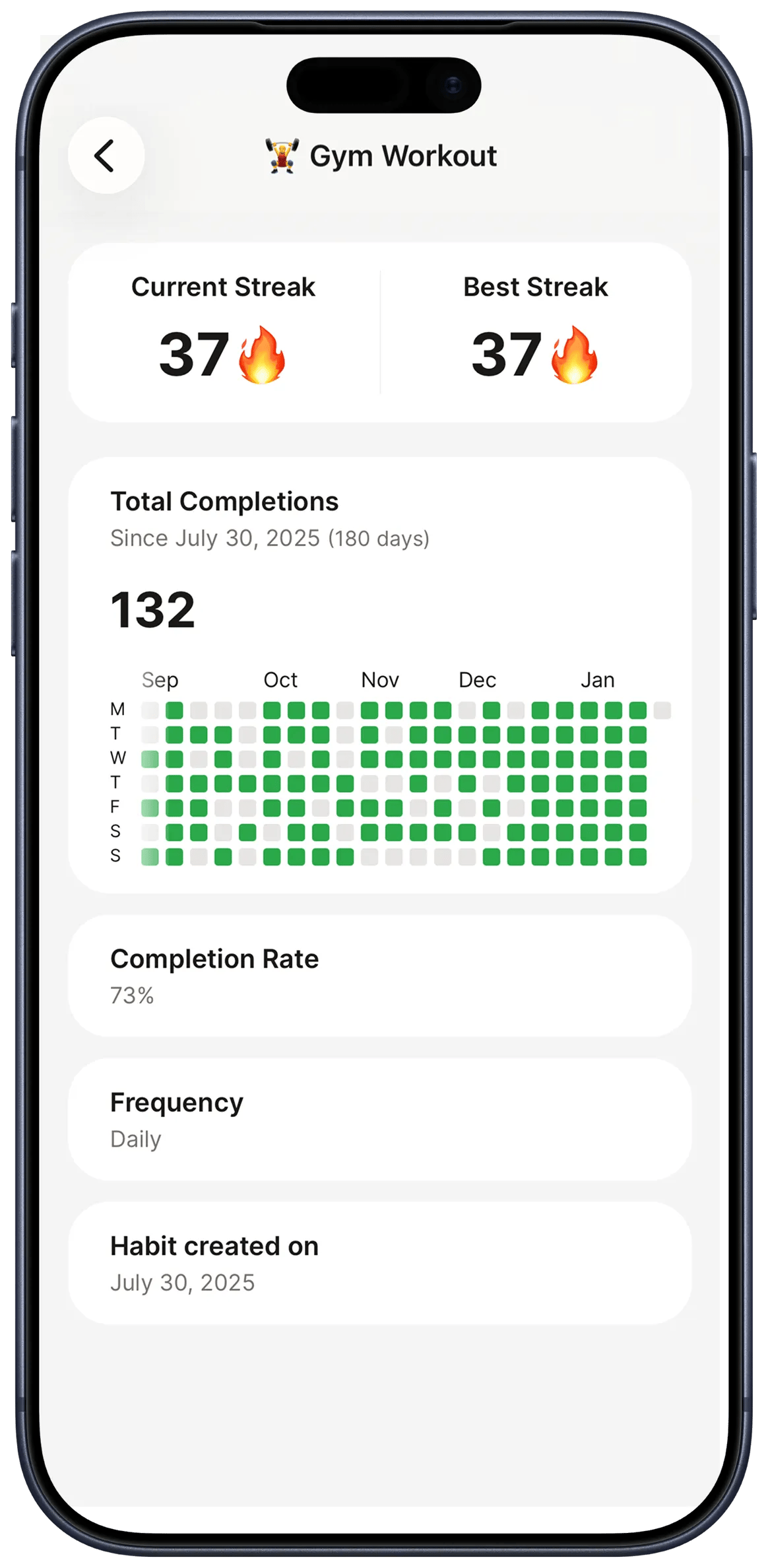
Track your consistency rate, not just your streak. If you completed your habit 27 out of 30 days, that's a 90% consistency rate -- outstanding by any standard. Focusing on percentage rather than an all-or-nothing streak counter reduces the devastating impact of a single missed day.
Turning Setbacks Into Learning Opportunities
Every broken streak contains data about your habit system. Instead of treating a missed day as a character flaw, treat it as a diagnostic tool. Ask yourself:
- What happened? Was it travel, illness, stress, or just forgetfulness?
- Was the habit too ambitious? If you're regularly struggling, the habit might need to be scaled down.
- Is the timing wrong? A morning habit that keeps getting skipped might work better in the evening.
- Is the environment set up for success? Research on building healthy habits consistently shows that environment design outperforms willpower.
Breines and Chen (2012) found that self-compassion after a failure -- acknowledging the setback without harsh self-judgment -- actually increased motivation to improve. Participants who practiced self-compassion for personal weaknesses and failures showed more motivation to change, tried harder to learn, and were less likely to repeat past mistakes. Self-criticism, on the other hand, activates the body's stress response and makes future lapses more likely.
When to Adjust Your Habit Instead of Pushing Through
Sometimes a broken streak is a signal that the habit needs redesigning, not more discipline. If you find yourself breaking the same habit repeatedly despite genuine effort, consider these adjustments:
- Reduce the scope. A 30-minute daily habit might work better as 15 minutes. Research shows that starting smaller dramatically increases adherence.
- Change the frequency. Not every habit needs to be daily. Three times per week might be more sustainable and still effective.
- Stack it differently. Anchor the habit to a different part of your routine using habit stacking for a stronger contextual cue.
- Address the real barrier. If stress or poor sleep is causing you to miss your habit, tackling the root cause will do more than willpower alone.
The distinction matters: quitting a habit because it's hard is different from modifying a habit because the current design doesn't fit your life. The first is avoidance. The second is smart iteration.
Track your habits with flexibility built in. Habit Streak shows your consistency rate alongside your streaks -- so one missed day never erases your progress.
Download FreeFrequently Asked Questions
Does breaking a habit streak mean I have to start over?▼
No. Research by Phillippa Lally at UCL found that missing a single day did not significantly affect long-term habit formation. Your brain retains the neural pathways you've built. The key is to resume the habit as soon as possible -- ideally the next day.
How long does it take to rebuild a broken habit streak?▼
If you resume quickly (within 24-48 hours), there's essentially no rebuilding needed. Your automaticity picks up where it left off. If you've been away for weeks, expect a few days of conscious effort before the habit feels automatic again, but it will return faster than it took to build the first time.
Is it better to track streaks or consistency percentages?▼
Both have value. Streaks provide strong day-to-day motivation through loss aversion. Consistency percentages (like 90% over 30 days) are more psychologically sustainable because a single missed day doesn't reset your progress. Ideally, use a tracker that shows both.
What is the 'what-the-hell effect' and how do I avoid it?▼
The what-the-hell effect is the tendency to abandon a goal entirely after one small lapse. To avoid it, practice self-compassion instead of self-criticism after a miss, commit to the 'never miss twice' rule, and remember that one off day in a month of consistency is a 97% success rate.
Should I use streak freezes or recovery days in my habit tracker?▼
Streak freezes can be helpful as long as they're used sparingly. They reduce the psychological damage of a broken streak while maintaining your overall tracking momentum. The goal is to prevent the what-the-hell effect from derailing your habit entirely.
- 1.landmark study by Phillippa Lally at University College Londononlinelibrary.wiley.com
- 2.Research Explains Why Streaks Make Resolutions Sticknewswise.com
- 3.The Psychology of Maintaining and Breaking Streakshustleescape.com
- 4.Designing A Streak System: The UX And Psychology Of Streakssmashingmagazine.com
- 5.How The What-The-Hell Effect Impacts Your Willpowerpsychologytoday.com
- 6.The “What the Hell" Effect & How to Conquer Its Vicious Cyclebrainscape.com
- 7.Why Most Habit Streaks Fail (And How to Build Ones That Don't)mooremomentum.com
- 8.Publications by Kristin Neffself-compassion.org