 By Adrien Blanc
How to Start a Yoga Habit as a Complete Beginner
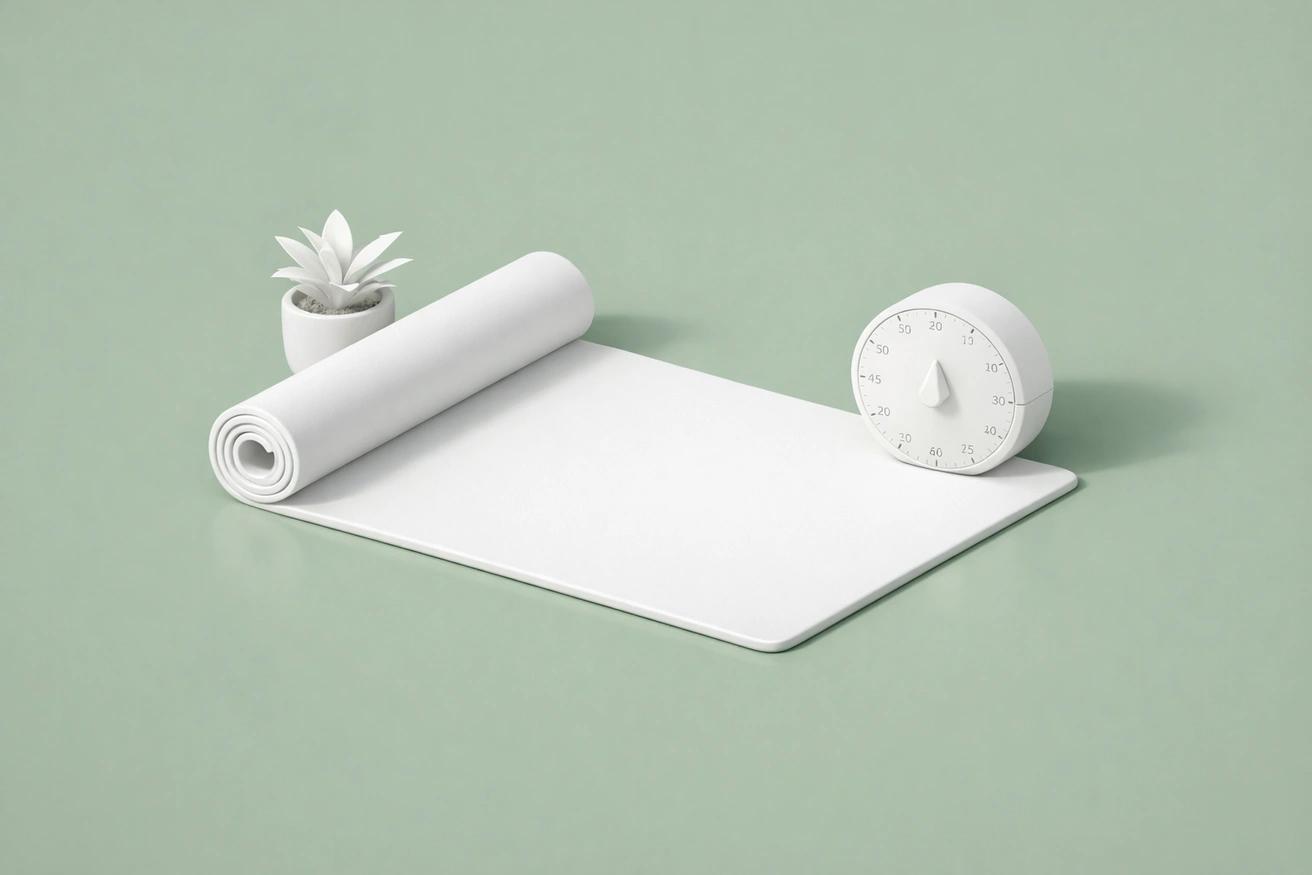
You do not need to be flexible, athletic, or spiritual to start yoga. That belief is the single biggest barrier keeping beginners from stepping onto a mat. Yoga is a practice you grow into, not a skill you need before showing up. A study published in Frontiers in Public Health found that complete beginners who practiced just one 90-minute hatha yoga session per week for ten weeks showed measurable improvements in balance, flexibility, and core strength — no prior experience required. Meanwhile, over 300 million people now practice yoga worldwide, with the number of U.S. practitioners growing from 21 million in 2010 to over 34 million today. The practice is more accessible than ever, with free videos, beginner-friendly apps, and styles designed specifically for people who have never tried it. Here is how to build a yoga habit that actually lasts, starting with just 10 minutes a day.
300M+
people practice yoga worldwide
Track your daily yoga streak and build a practice that sticks
Download Free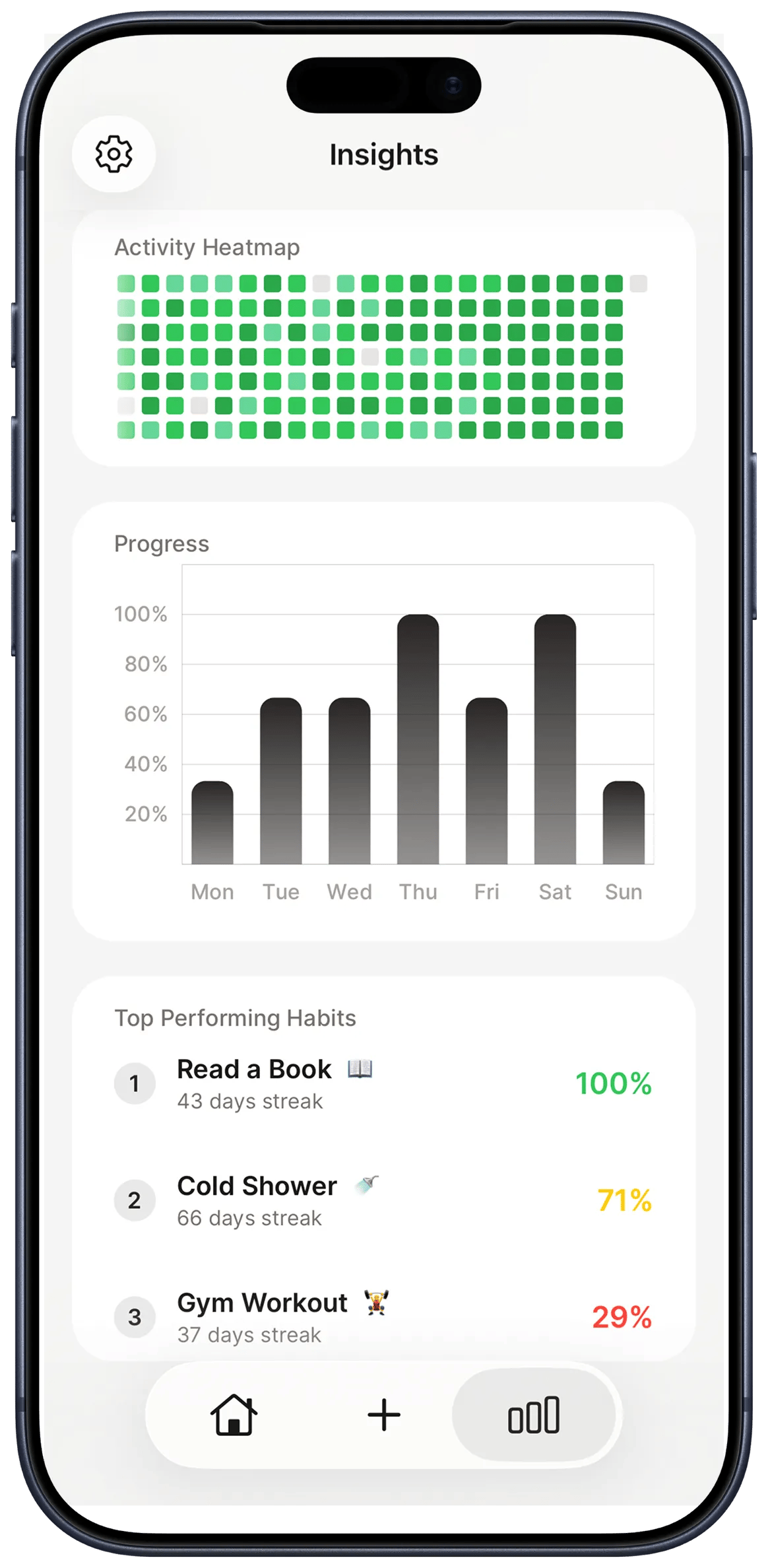
Why Yoga Is One of the Best Habits to Build
Yoga delivers physical and mental health benefits faster than most habits. Unlike exercise routines that take months to show results, many practitioners report feeling calmer and more mobile within their first week.
The research backs this up. A meta-analysis of 42 studies found that yoga significantly reduced cortisol levels, resting heart rate, and blood pressure compared to active control groups. Johns Hopkins Medicine reports that yoga eases joint discomfort, improves heart health, and promotes better sleep. And a review of 27 studies involving 1,805 young participants found reductions in anxiety or depression in 70% of the studies reviewed.
What makes yoga particularly powerful as a habit:
- Low barrier to entry. No gym, no equipment beyond a mat, no minimum fitness level.
- Scales with your life. A 10-minute morning flow works just as well as a 60-minute studio class for maintaining the habit.
- Compounds over time. Harvard Health notes that long-term practitioners who did yoga for at least 30 minutes weekly for four years gained less weight during middle adulthood, with regular practitioners showing lower BMIs overall.
Yoga also pairs naturally with other healthy habits. If you are working on building broader healthy habits, yoga serves as an excellent anchor because the calm focus it requires carries over into other areas of your routine.
Start With 10 Minutes, Not an Hour
The fastest way to kill a yoga habit is to start with a 60-minute class. When sessions feel long and exhausting, you build resistance instead of routine. The goal in week one is not transformation — it is showing up consistently.
Research on habit formation shows that behaviors become automatic through repetition, not intensity. BJ Fogg's Tiny Habits framework emphasizes shrinking a new behavior until it feels almost effortless. For yoga, that means starting with 10 minutes or even less.
Here is a practical progression:
- Week 1-2: 10 minutes per day (3-5 days per week)
- Week 3-4: 15 minutes per day
- Week 5-6: 20 minutes per day
- Week 7+: 25-30 minutes, or whatever feels sustainable
The key insight: ending before you want to creates a positive pull toward tomorrow's session. If you stop at 10 minutes while still enjoying it, your brain associates yoga with pleasure rather than endurance. That emotional association is what makes the habit stick.
Best Yoga Styles for Beginners
Not all yoga is created equal, and the wrong style can discourage a beginner before the habit forms. The best approach is to start with gentle, slow-paced styles and explore from there.
- Hatha Yoga. The most beginner-friendly style. Hatha focuses on basic postures held for several breaths, giving you time to learn alignment. Most "beginner yoga" classes are hatha-based.
- Vinyasa Yoga. A flowing style that links movement with breath. Start with "slow flow" or "beginner vinyasa" classes. The rhythmic quality can feel meditative and helps build cardiovascular fitness.
- Yin Yoga. Passive poses held for 3-5 minutes, targeting deep connective tissue. Excellent for stress relief and flexibility. Works well as an evening wind-down practice.
- Restorative Yoga. Uses props (blankets, bolsters, blocks) to support the body in gentle poses. Almost entirely passive. Ideal if you are recovering from injury or simply want to start with zero physical intensity.
Styles to avoid in your first month: Ashtanga (rigid, demanding sequence), Bikram/hot yoga (intense heat adds unnecessary stress), and power yoga (fast-paced, strength-focused). These are all valid practices, but they create too much friction for someone building an initial habit.
A Simple 7-Day Beginner Yoga Plan
Having a specific plan eliminates decision fatigue, which is one of the top reasons beginners skip sessions. Here is a simple first-week routine that requires no equipment beyond a mat and 10 minutes of your time.
- Day 1 — Grounding. Cat-Cow (1 min), Child's Pose (2 min), Standing Forward Fold (1 min), Mountain Pose with deep breathing (3 min), Corpse Pose (3 min).
- Day 2 — Gentle strength. Sun Salutation A — slow version, 3 rounds (7 min). Finish in Corpse Pose (3 min).
- Day 3 — Rest or Yin. Reclined Butterfly (3 min), Supine Twist each side (2 min each), Legs Up the Wall (3 min).
- Day 4 — Balance. Tree Pose each side (1 min each), Warrior II each side (1 min each), Standing Forward Fold (2 min), Mountain Pose (2 min), Corpse Pose (2 min).
- Day 5 — Flow. 4 slow Sun Salutation A rounds (8 min), Corpse Pose (2 min).
- Day 6 — Flexibility. Seated Forward Fold (2 min), Pigeon Pose each side (2 min each), Supine Twist (2 min), Corpse Pose (2 min).
- Day 7 — Rest or free practice. Repeat your favorite day, try a gentle YouTube class, or simply sit in a comfortable position and breathe for 10 minutes.
You do not need to follow this plan perfectly. The only rule is to get on the mat. Even 5 minutes of breathing in Child's Pose counts as a session. What matters is that you maintain the streak.
When to Practice for Maximum Consistency
The best time to practice yoga is the time you will actually do it. Research does not show a significant difference in physical benefits between morning and evening yoga. What matters is consistency, and that comes from anchoring the habit to your existing schedule.
That said, each time slot has distinct advantages:
- Morning yoga works well if you want to use it as a wake-up ritual. It pairs naturally with existing morning triggers like brushing your teeth or making coffee. You are also less likely to get derailed by unexpected events later in the day.
- Lunchtime yoga can break up sedentary work patterns. Even a 10-minute stretch session resets your posture and focus for the afternoon.
- Evening yoga (especially Yin or Restorative) is ideal for winding down. It can replace screen time before bed and improve your sleep habits.
The technique that makes timing work is habit stacking — linking your yoga practice to something you already do every day. "After I pour my morning coffee, I unroll my mat and practice for 10 minutes" is far more reliable than "I will do yoga today."
70%
of studies found yoga reduces anxiety or depression in young people
Common Beginner Mistakes That Kill the Habit
Most people do not quit yoga because they dislike it — they quit because they set themselves up for failure. Recognizing these patterns early gives you a significant advantage.
- Comparing yourself to others. Social media shows advanced practitioners in impossible poses. That is not yoga for 99% of people. Your practice is about your body and your progress.
- Skipping rest days. Rest is part of the practice, not a failure. Beginners benefit from 3-5 sessions per week, not seven. Overtraining leads to soreness, which leads to skipping, which leads to quitting.
- Chasing complexity too early. You do not need to learn 50 poses in your first month. Master 8-10 foundational poses and build from there. Depth beats variety for beginners.
- Treating a missed day as a failure. Research on habit formation shows that missing a single day does not reset your progress. The real threat is the "what-the-hell effect" — giving up entirely after one lapse. If you miss a day, do 3 minutes the next day. The streak recovers.
- Ignoring breath. Yoga without intentional breathing is just stretching. Focus on slow, steady inhales and exhales through the nose. The breath is what connects the physical practice to the mental benefits.
Tracking Your Yoga Streak
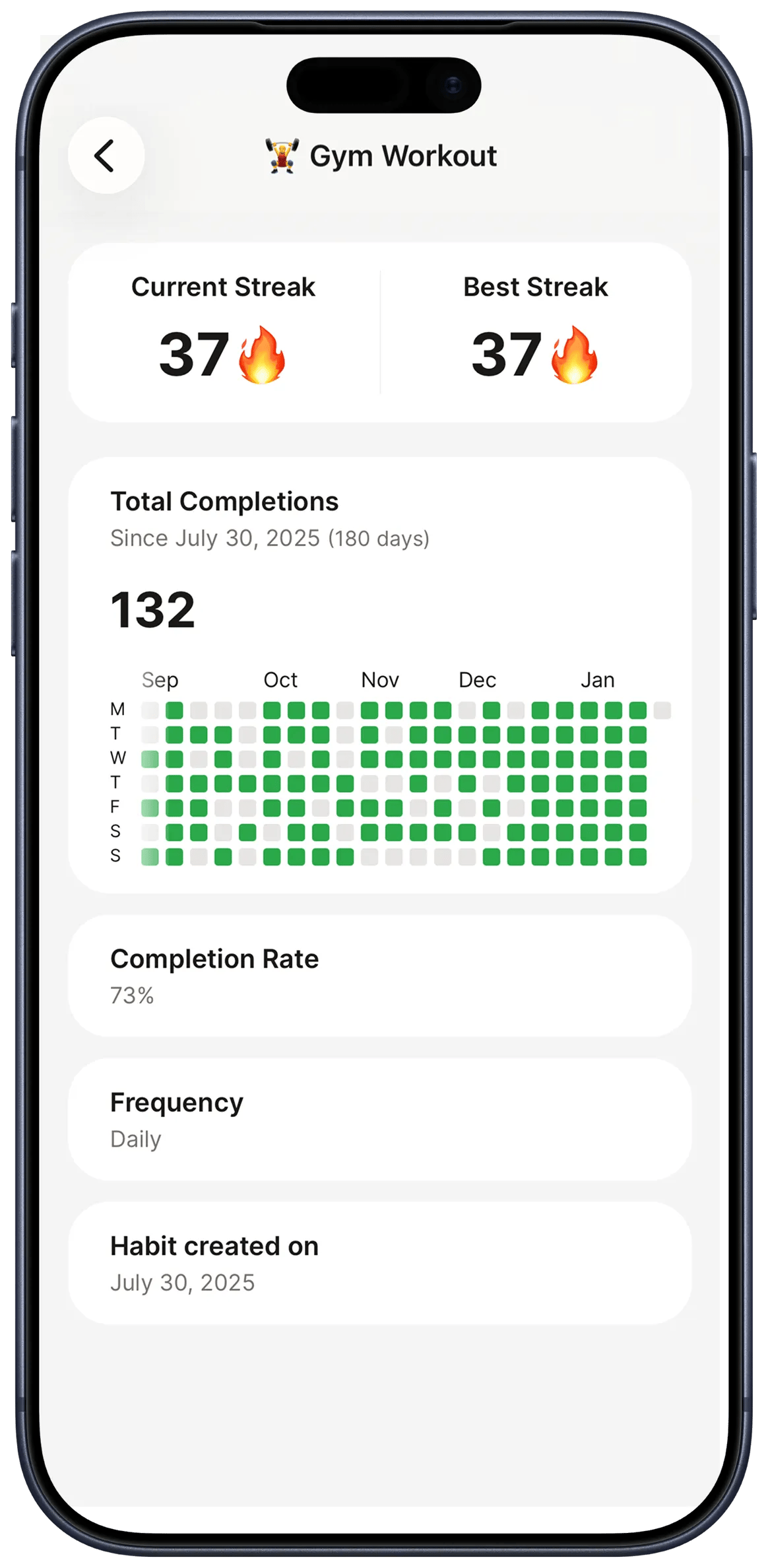
Tracking your practice makes it visible, and visible progress reinforces the habit loop. Research on behavior change consistently shows that self-monitoring is one of the strongest predictors of long-term adherence. When you can see a streak of consecutive days or weeks, the motivation to maintain it grows stronger than the urge to skip.
A few approaches that work well for yoga:
- Habit tracker app. Log each session with a single tap. The visual streak creates accountability without the burden of a detailed journal.
- Calendar marking. The classic "don't break the chain" method. Put an X on each day you practice. After a week of consecutive marks, you will not want to leave a gap.
- Session notes. Jot down one line after each practice — what you did, how you felt. Over weeks, these notes reveal patterns: which days are hardest, which styles you enjoy most, how your flexibility is progressing.
The combination of a short practice and a visible streak is powerful. You are not just doing yoga — you are building evidence that you are someone who does yoga. That identity shift is what turns a behavior into a lifelong habit, as outlined in our guide to the science of building healthy habits.
Start your yoga streak today — track every session and watch your consistency grow
Download FreeFrequently Asked Questions
How often should a beginner do yoga?▼
Three to five sessions per week is ideal for beginners. This frequency gives your body time to recover while building the consistency needed to form a habit. Daily practice is fine if sessions are short (10-15 minutes), but rest days are not a sign of failure — they are part of the process.
Do I need to be flexible to start yoga?▼
No. Flexibility is a result of yoga, not a prerequisite. Every pose can be modified with blocks, straps, or bent knees. A beginner-level hatha class is designed for people with limited range of motion. You will notice improvements within 2-4 weeks of consistent practice.
Can I learn yoga from YouTube or do I need a studio?▼
YouTube is a perfectly valid way to start. Channels like Yoga With Adriene offer structured beginner programs. That said, one or two studio classes can help you learn correct alignment and avoid injury. A hybrid approach — mostly home practice with occasional in-person classes — works well for many beginners.
What equipment do I need to start yoga?▼
Just a yoga mat. That is it. Blocks, straps, and bolsters are helpful but not necessary — you can substitute books for blocks and a towel for a strap. Wear comfortable clothing you can move in. You do not need special yoga clothes or accessories to begin.
How long until I see results from yoga?▼
Most beginners notice improved mood and reduced tension within the first week. Flexibility and balance improvements typically appear within 2-4 weeks. A Frontiers in Public Health study found measurable gains in balance, flexibility, and core strength after just ten weekly sessions. The mental health benefits often arrive before the physical ones.
- 1.Frontiers | Is Weekly Frequency of Yoga Practice Sufficient? Physiological Effects of Hatha Yoga Among Healthy Novice...frontiersin.org
- 2.100+ Yoga Statistics, Trends, + Facts for Yoga Professionals in 2026 | Exercise.comexercise.com
- 3.meta-analysis of 42 studiessciencedirect.com
- 4.Johns Hopkins Medicine reportshopkinsmedicine.org
- 5.Yoga: Effectiveness and Safetynccih.nih.gov
- 6.Yoga – Benefits Beyond the Mathealth.harvard.edu