 By Adrien Blanc
How to Start a Meditation Habit (Even if You Cannot Sit Still)
You do not need to sit perfectly still to meditate. That is the single biggest misconception keeping people from starting. Meditation is a trainable skill, not a personality trait, and there are forms of practice — walking, breathing, movement-based — that work even if stillness feels impossible. A meta-analysis published in JAMA Internal Medicine reviewed 47 clinical trials involving 3,515 participants and found that mindfulness meditation programs produced moderate reductions in anxiety and depression, with effect sizes comparable to antidepressant medication. Meanwhile, a longitudinal study of Calm app users found that 38% of regular meditators reported improved mental health, with consistent practitioners being 8.5 percentage points more likely to report significant improvements. The evidence is clear: meditation works, and you do not need to be naturally calm to benefit from it. Here is how to build a meditation habit that actually sticks.
38%
of regular meditators report improved mental health
Track your daily meditation streak and build lasting calm
Download Free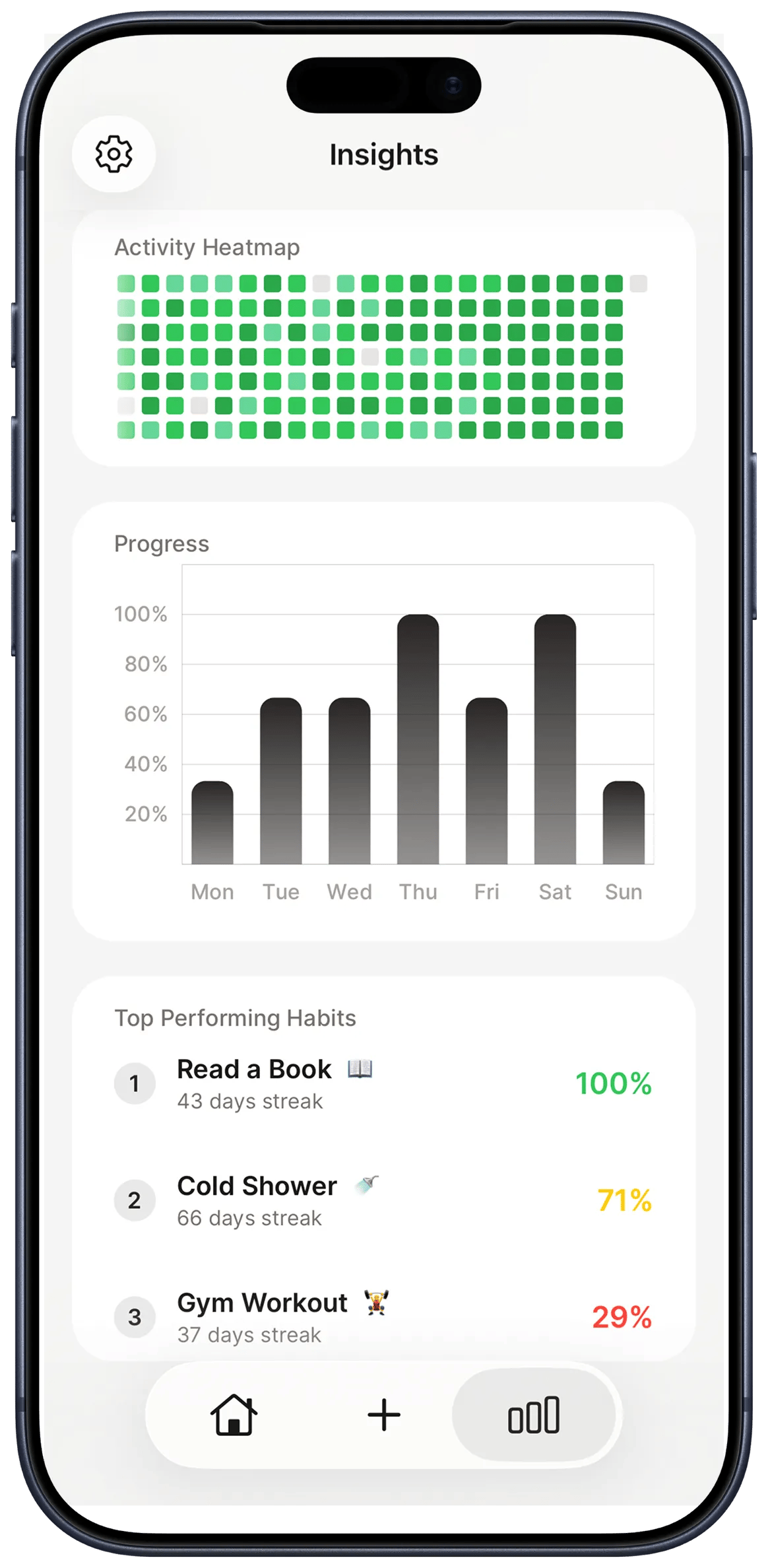
Why Most People Fail at Building a Meditation Habit
The number one reason people quit meditation is unrealistic expectations, not lack of discipline. They try to sit for 20 minutes on day one, their mind races, they feel like they are "doing it wrong," and they never try again. Research supports this: a study on meditation persistence found that individuals who experienced meditation as boring or effortful were more likely to drop out. The average attrition rate in meditation programs is between 26% and 43%.
There are three common traps beginners fall into:
- Starting too long. Twenty minutes feels like an eternity for someone who has never meditated. The friction is too high, and the habit never forms.
- Expecting a blank mind. You are not supposed to stop thinking. Meditation is the practice of noticing when your mind wanders and gently bringing attention back. That "noticing" is the exercise.
- No consistent trigger. Saying "I will meditate sometime today" almost guarantees you will not. Without a specific cue tied to an existing routine, the behavior lacks an anchor. Habit stacking solves this problem.
The good news: once you clear these hurdles, meditation becomes one of the easiest habits to maintain because it requires no equipment, no special location, and as little as two minutes of your time.
Start With 2 Minutes, Not 20
Two minutes is enough to build the habit. The goal at the beginning is not depth of meditation — it is consistency. BJ Fogg's Tiny Habits research shows that shrinking a behavior until it feels almost trivially easy is the fastest path to automaticity. You can always meditate longer once the habit is locked in; you cannot build a habit you keep skipping.
Here is a practical progression:
- Week 1-2: 2 minutes per day
- Week 3-4: 5 minutes per day
- Week 5-6: 8 minutes per day
- Week 7+: 10-15 minutes per day (or whatever feels right)
This approach works because it respects how habit formation actually operates. Research from University College London found that habits take an average of 66 days to become automatic, with a range of 18 to 254 days. Starting small reduces the friction that causes early dropout.
Choosing the Right Type of Meditation
There is no single "correct" way to meditate. The best type is the one you will actually do consistently. Here is a breakdown of the most accessible options for beginners.
Breathing-focused meditation is the simplest starting point. You focus on the sensation of your breath — the rise and fall of your chest, the air passing through your nostrils. When your mind wanders, you notice and return to the breath. Research shows that this practice can produce measurable changes in brain regions associated with self-awareness and stress regulation.
Walking meditation is ideal if sitting still feels unbearable. You walk slowly and deliberately, paying attention to each step — the lift of your foot, the shift of weight, the contact with the ground. A study published in PMC found that both walking and seated meditation significantly improved mood compared to an inactive control group.
Body scan meditation works well for people who carry physical tension. You move attention systematically through your body, from toes to head, noticing sensations without trying to change them. This is especially useful before sleep.
Mantra meditation gives your mind something to do. You repeat a word or phrase — silently or aloud — which occupies the part of your brain that wants to wander. This style is particularly accessible for people with ADHD or racing thoughts.
When to Meditate for Maximum Consistency
Morning meditators are more likely to stick with the habit. A large-scale study analyzing 899,071 meditation app sessions found that 57.8% of consistent practitioners meditate in the morning. The reason is straightforward: mornings have fewer competing demands and interruptions.
That said, the research on timing is nuanced. The same study found that rigid temporal consistency — meditating at exactly the same time every day — helped with short-term adherence but was actually associated with lower long-term persistence. Practitioners who maintained some flexibility in timing tended to stick with meditation longer.
The practical takeaway: pick a general time window (morning, lunch, or evening) and anchor your meditation to an existing habit rather than a clock time. Examples:
- After pouring your morning coffee, sit and meditate for 2 minutes before drinking it
- After closing your laptop at the end of work, meditate before transitioning to your evening
- After getting into bed, do a 5-minute body scan before sleep
Anchoring to a behavior rather than a time means your meditation habit survives schedule changes, travel, and weekends. This is the core principle behind habit stacking, and it works particularly well for meditation because the practice can happen almost anywhere.
What to Do When Your Mind Wanders
Your mind will wander. That is the point. Every time you notice your attention has drifted and bring it back, you are strengthening your capacity for focused attention. It is like a bicep curl for your brain — the "returning" is the repetition that builds the muscle.
Beginners often believe they are failing because their mind keeps wandering. In reality, noticing a wandering mind is a successful moment of meditation, not a failure. The only way to "fail" at meditation is to not notice the wandering at all.
Here is what to do when it happens:
- Notice without judgment. Simply observe that your attention has shifted. "Thinking" is a common mental label practitioners use.
- Release the thought. You do not need to push it away or feel frustrated. Just let it pass, like a cloud moving across a sky.
- Return to your anchor — your breath, your steps, your mantra, or whatever you chose as your focus.
This three-step cycle — notice, release, return — is the entire practice. If you do it fifty times in two minutes, that is fifty repetitions of attention training. That is a productive session.
Building a 30-Day Meditation Streak
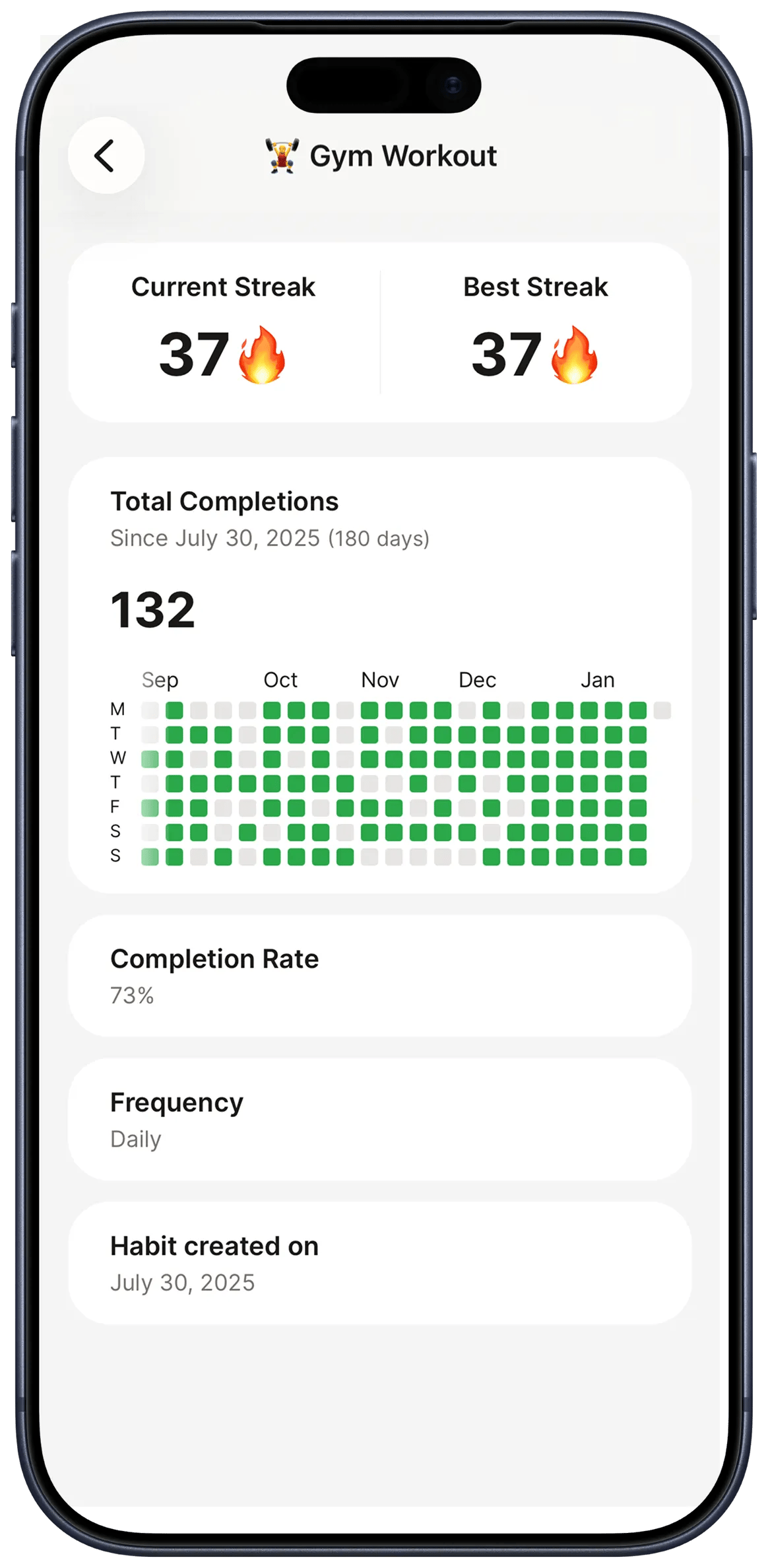
Tracking your meditation streak creates a visual feedback loop that reinforces the habit. Research on habit formation shows that streaks work because they tap into loss aversion — once you have built a streak, the desire not to break it becomes its own motivation.
Here is a 30-day plan for building your meditation habit:
Days 1-7: Establish the anchor. Pick your meditation type (breathing, walking, body scan, or mantra) and your anchor habit. Meditate for just 2 minutes daily. The sole goal this week is to meditate every single day without exception.
Days 8-14: Increase slightly. Bump up to 5 minutes. At this stage, you are beginning to feel the pull of the habit. Notice how it feels easier to start — that is your brain forming the neural pathway.
Days 15-21: Experiment. Try a different meditation style on one or two days. Keep your core practice but explore body scans, walking meditation, or guided sessions. Variety can prevent boredom without disrupting the habit.
Days 22-30: Settle in. By now, the behavior should feel like a natural part of your day. Extend to 8-10 minutes if it feels right, or stay at 5 minutes. Duration matters far less than consistency.
78%
of people who start meditating continue beyond initial exposure
A study on meditation persistence found that 78.3% of people who began meditating continued beyond their initial exposure. The biggest predictor of long-term success was not personality or natural calm — it was perceiving meditation as effective, which only happens if you practice long enough to notice the benefits. That is why the first 30 days matter so much: they get you past the point where meditation shifts from "something I am trying" to "something I do."
How to Meditate Without a Quiet Room
You do not need silence to meditate. In fact, learning to meditate with ambient noise builds a more robust practice. Here are environments that work perfectly fine:
- A parked car before walking into work or home
- A park bench during a lunch break
- Public transit with eyes softly focused downward
- Your desk with headphones (no music needed — headphones signal "do not disturb")
- A bathroom if that is the only private space available
The key is not eliminating distractions but practicing in the presence of them. Sounds become part of the meditation: you notice them, you let them pass, you return to your anchor. This is actually closer to how meditation was traditionally practiced — not in silent retreat centers but in bustling ancient marketplaces and crowded monasteries.
If you want audio guidance, free apps and timers can help. But do not let the search for the "perfect" app delay your start. A phone timer set to 2 minutes works just as well for building the initial habit.
Start your meditation streak today — even 2 minutes counts
Download FreeFrequently Asked Questions
How long should a beginner meditate?▼
Start with 2 minutes. This sounds absurdly short, but the goal is building consistency, not achieving deep states. Research shows that the habit of meditating daily matters more than session length. Once 2 minutes feels automatic — usually after 2 to 3 weeks — increase to 5 minutes, then gradually work up to 10 to 15 minutes.
Can I meditate lying down?▼
Yes. Lying down is one of the four traditional meditation postures. Body scan meditations work especially well in this position. The main risk is falling asleep, which is fine if you are using meditation as a wind-down tool before bed. If you want to stay alert, try lying on the floor rather than your bed, or keep your knees bent with feet flat.
Is guided meditation as effective as silent meditation?▼
Both are effective. Guided meditation is often easier for beginners because the instructor provides structure and reminders to refocus. Over time, many practitioners transition to silent practice. Use whichever approach keeps you consistent — that matters more than the format.
What if I miss a day?▼
Missing one day has negligible impact on habit formation. Research from University College London found that occasional misses do not reset your progress. The real danger is the 'what-the-hell effect' — giving up entirely after one lapse. If you miss a day, simply sit for 1 minute the next day to keep the chain going.
Does meditation help with anxiety?▼
Yes. A meta-analysis in JAMA Internal Medicine found that mindfulness meditation produced effect sizes of 0.22 to 0.38 for anxiety symptoms — comparable to the effect of antidepressant medication. Regular practice helps reduce amygdala reactivity, the brain region responsible for your stress response. For more on this, see our guide to habits that help with anxiety.
- 1.meta-analysis published in JAMA Internal Medicinejamanetwork.com
- 2.Identifying App-Based Meditation Habits and the Associated Mental Health Benefits: Longitudinal Observational Studypmc.ncbi.nlm.nih.gov
- 3.study on meditation persistencepmc.ncbi.nlm.nih.gov
- 4.Eight weeks to a better brainnews.harvard.edu
- 5.Experimental effects of brief, single bouts of walking and meditation on mood profile in young adultspmc.ncbi.nlm.nih.gov
- 6.Time of Day Preferences and Daily Temporal Consistency for Predicting the Sustained Use of a Commercial Meditation Ap...pmc.ncbi.nlm.nih.gov