 By Adrien Blanc
9 Habits That Help With Anxiety, Backed by Research
Anxiety is the most common mental health condition on the planet. The World Health Organization reports that 301 million people worldwide live with an anxiety disorder, and in the United States alone, 19.1% of adults experienced an anxiety disorder in the past year. Yet effective treatment reaches only about one in four people who need it. The good news: daily habits can meaningfully reduce anxiety symptoms without a prescription, a waitlist, or a copay.
That does not mean habits replace professional care. For moderate-to-severe anxiety, therapy and medication remain essential. But for the everyday low-grade tension most people carry, and as a complement to clinical treatment, the research is clear: what you do every day shapes how anxious you feel. The nine habits below each have peer-reviewed evidence behind them. None require special equipment or hours of free time.
Here is where to start.
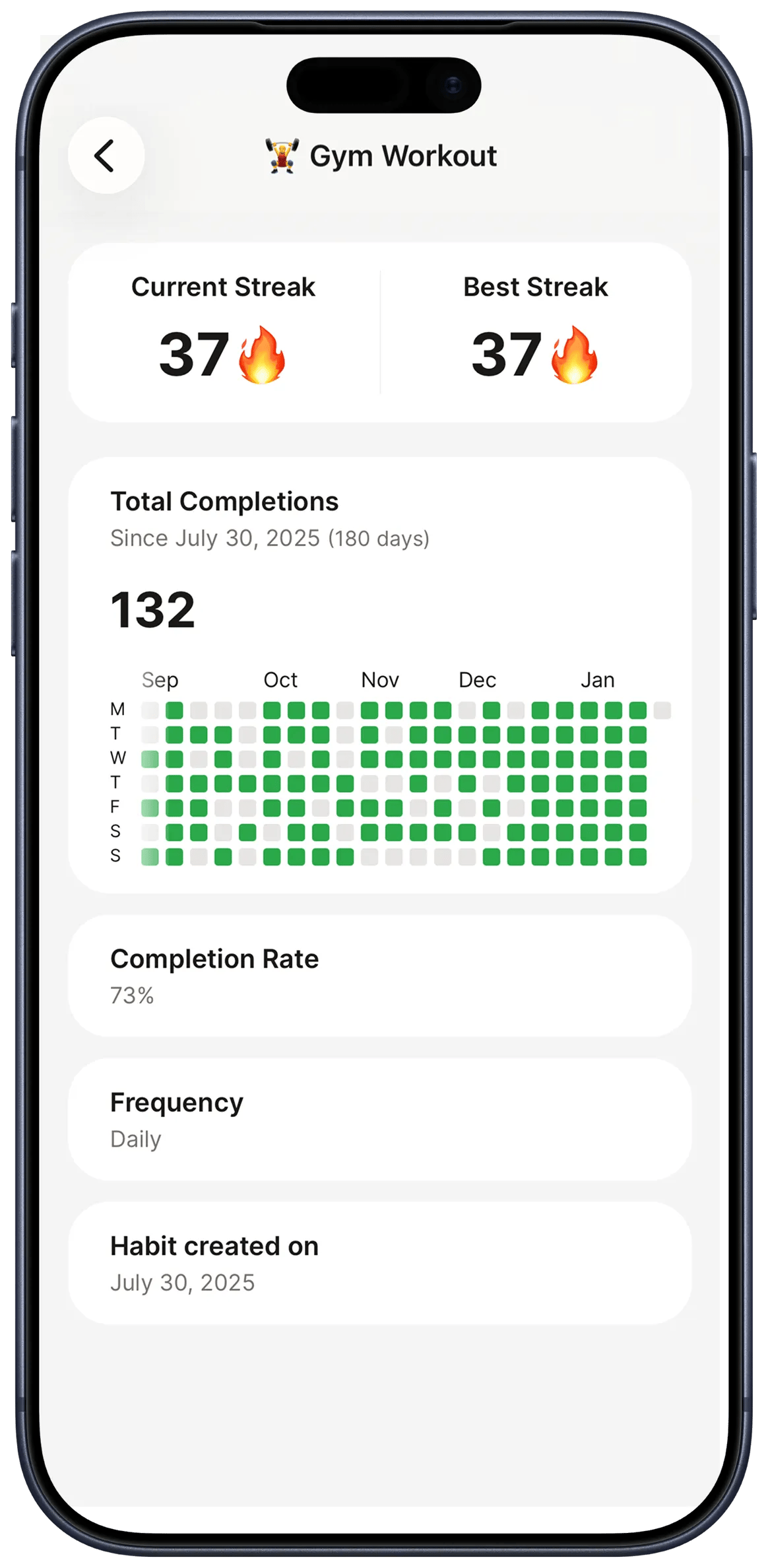
Track your anxiety-reducing habits daily. Habit Streak helps you build and maintain the routines that calm your nervous system.
Download Free
How Daily Habits Rewire Your Anxiety Response
Anxiety is partly a nervous system habit, and habits can be retrained. The brain's threat-detection system, the amygdala, becomes more reactive the more it fires without counterbalancing signals from the prefrontal cortex. Chronic stress strengthens the anxious pathways. But the same neuroplasticity that wires anxiety also allows you to weaken it.
Consistent daily routines reduce cognitive load and keep your autonomic nervous system in balance. When you repeat calming behaviors, you strengthen parasympathetic pathways -- the "rest and digest" side of your nervous system. Over weeks and months, the baseline shifts. You still feel anxiety when it is warranted, but the resting level drops.
The science of building healthy habits shows that starting small and stacking habits onto existing routines is the fastest path to consistency. Pick one or two habits from this list, practice them daily for three weeks, then layer in more.
1. Breathwork and Vagus Nerve Stimulation
Five minutes of structured breathing can lower anxiety more effectively than five minutes of mindfulness meditation. A 2023 Stanford study published in Cell Reports Medicine tested three different breathwork protocols against a mindfulness meditation control and found that all breathing exercises reduced anxiety, but one stood out: cyclic sighing.
Cyclic sighing involves a double inhale through the nose (one deep breath followed by a shorter "sip" of air to fully expand the lungs), then a slow, extended exhale through the mouth. The exhale should be roughly twice as long as the inhales combined. This pattern stimulates the vagus nerve, which activates your parasympathetic nervous system and reduces cortisol and heart rate.
How to practice:
- Inhale deeply through your nose
- Take a second, shorter inhale to fully fill your lungs
- Exhale slowly and completely through your mouth
- Repeat for five minutes
The Stanford researchers found the benefits increased with consecutive days of practice, making this an ideal daily habit.
2. Regular Physical Activity
Exercise is one of the most potent anti-anxiety interventions available. A 2025 dose-response meta-analysis of 11 international cohorts published in eClinicalMedicine found that people who met the WHO's recommended physical activity levels had an 8% to 14% lower risk of developing anxiety compared to inactive individuals. At optimal doses, the risk reduction reached 49% over a five-year follow-up period.
49%
Maximum anxiety risk reduction with regular physical activity over five years
You don't need extreme workouts. A Frontiers in Psychology meta-analysis found that even moderate-frequency exercise significantly reduced anxiety in college students, and sessions as short as 21 minutes can produce measurable relief. Walking, cycling, swimming, and yoga all count.
The key is regularity. Research suggests training programs need to exceed 10 weeks before significant changes in trait anxiety occur. Start with something you enjoy. If you need guidance, our exercise habit guide for beginners breaks down how to build the routine step by step.
3. Consistent Sleep Schedule
Sleep deprivation directly amplifies anxiety. A meta-analysis synthesizing over 50 years of research (154 studies, 5,717 participants) found that all forms of sleep loss increased anxiety symptoms, with effect sizes between 0.57 and 0.63. Even staying up an hour or two later than usual was enough to elevate anxiety the following day.
The relationship runs both directions: people with insomnia are 17 times more likely to have clinical anxiety than the general population. Breaking the cycle requires consistent sleep timing, not just more hours in bed.
Build these into your routine:
- Go to bed and wake up at the same time every day, including weekends
- Avoid caffeine after early afternoon
- Keep screens out of the bedroom for 30 minutes before sleep
- Keep the room cool, dark, and quiet
For a full breakdown, see our sleep habits guide. And if evening wind-down routines feel hard to build, habit stacking can help you attach sleep hygiene steps to things you already do.
4. Reducing Caffeine and Stimulants
Caffeine increases anxiety, even in healthy people. A 2024 meta-analysis in Frontiers in Psychology found that caffeine intake significantly elevated anxiety risk, with a moderate effect at low doses (SMD = 0.61) and a large effect at high doses above 400 mg (SMD = 2.86). For people with panic disorder, a systematic review found that doses equivalent to about five cups of coffee triggered panic attacks in 51% of patients, compared to zero on placebo.
Caffeine works against you by blocking adenosine, the neurotransmitter that helps your body relax. It also triggers the fight-or-flight response, raising heart rate, blood pressure, and restlessness -- symptoms that mimic and worsen anxiety.
You don't need to quit entirely. A 2025 randomized trial found that low doses around 150 mg (roughly 1.5 cups of coffee) didn't trigger significantly different anxiety responses between panic disorder patients and healthy adults. The practical move: cap your intake at one to two cups before noon and notice how your body responds.
5. Mindfulness Meditation
Regular mindfulness meditation reduces anxiety with effect sizes comparable to first-line medications. A landmark 2022 randomized clinical trial published in JAMA Psychiatry found that an eight-week mindfulness-based stress reduction (MBSR) program was noninferior to escitalopram (a common SSRI) for treating anxiety disorders. Both groups improved significantly, but the meditation group achieved those results without medication side effects.
8 weeks
Mindfulness-based stress reduction matched SSRI effectiveness for anxiety
A meta-analysis of 40 randomized controlled trials confirmed that meditative therapies reduce anxiety with a standardized mean difference of -0.59 compared to controls. Even a single introductory session can produce measurable reductions in anxiety scores, with benefits deepening over continued practice.
Start with five to ten minutes a day. Sit quietly, focus on your breath, and notice your thoughts without engaging. Our meditation habit guide covers how to begin and stay consistent.
6. Limiting News and Social Media Consumption
Excessive social media use doubles the risk of anxiety symptoms. Research shows that children and adolescents who spend more than three hours daily on social media face double the risk of mental health problems, including anxiety. For adults, an MIT Sloan study found that college-wide access to Facebook increased anxiety disorder rates by 20%.
News consumption carries similar risks. A 2026 Psychology Today analysis found that passive consumption of news on social media -- scrolling headlines without engaging -- was associated with substantially worse emotional outcomes than active discussion.
Practical boundaries that work:
- Set a daily time limit of 30 minutes for social media apps
- Turn off push notifications for news
- Replace morning phone scrolling with breathwork or journaling
- Designate one time per day to check the news, then stop
A University of Pennsylvania study found that limiting social media to 10 minutes per platform per day led to significant reductions in anxiety and depression over three weeks. Our guide on building a no-phone morning habit is a solid starting point.
7. Time in Nature and Sunlight Exposure
Twenty minutes outdoors is enough to significantly lower cortisol. A 2019 study published in Frontiers in Psychology found that a 20-minute "nature pill" reduced the stress hormone cortisol by 21% per hour and salivary alpha-amylase (another stress biomarker) by 28% per hour. The greatest efficiency of benefit occurred between 20 and 30 minutes.
A meta-analysis of 31 studies (1,842 participants) confirmed that natural environments reduce cortisol, state anxiety, blood pressure, and heart rate. More natural settings like forests provided greater benefits than urban parks.
You don't need wilderness. A lunchtime walk through a park, morning coffee on your porch, or weekend time near trees all count. Sunlight exposure also helps regulate your circadian rhythm, which feeds directly into better sleep (habit #3). Aim for at least 20 minutes outside daily and 120 minutes per week for optimal wellbeing.
8. Journaling for Anxiety Relief
Writing about anxious thoughts for 15 minutes reduces anxiety symptoms by 9% more than control groups. A systematic review and meta-analysis of 20 randomized controlled trials found that journaling interventions produced a statistically significant reduction in anxiety, depression, and PTSD symptoms. For anxiety specifically, the journaling group showed a 9% reduction in scores versus 2% in controls.
A randomized controlled trial published in JMIR Mental Health found that web-based positive affect journaling reduced mental distress and improved wellbeing among patients with anxiety symptoms over 12 weeks. Research also suggests that benefits may be maximized after 30 consecutive days of practice.
For guidance on building the routine, see our journaling habit guide and gratitude journaling guide.
9. Progressive Muscle Relaxation
PMR reduces anxiety across every population studied, from teenagers to psychiatric inpatients. A 2024 systematic review of 46 studies (3,402 participants) found that progressive muscle relaxation produced anxiety-reducing effect sizes ranging from d=0.25 to d=2.54, spanning small to very large effects. Among the studies reviewed, 21 supported PMR's efficacy for anxiety reduction.
The technique is simple: systematically tense and release each muscle group for about five seconds each, moving from your feet to your forehead. A comparison study of relaxation techniques found that PMR and deep breathing produced the greatest anxiety reduction among all methods tested.
A basic PMR routine:
- Find a quiet spot and sit or lie down
- Tense your feet for five seconds, then release for 10 seconds
- Move to your calves, thighs, abdomen, hands, arms, shoulders, and face
- Focus on the contrast between tension and relaxation
- Complete the full cycle in 10 to 15 minutes
PMR is easy to learn, costs nothing, and has no side effects. It pairs well with bedtime routines, making it an effective addition to your evening routine for better sleep.
Putting It All Together
You don't need all nine habits at once. That approach is itself a recipe for anxiety. Instead:
- Pick one or two habits that fit your current lifestyle
- Attach them to existing routines using habit stacking
- Track your consistency rather than perfection
- Add a new habit every two to three weeks once the first ones feel automatic
A realistic anxiety-reducing morning might look like: wake at the same time, skip the phone for 20 minutes, do five minutes of cyclic sighing, then take a short walk outside. That single sequence touches four of the nine habits.
Start with one habit today. Habit Streak makes it easy to build and track the daily routines that reduce anxiety over time.
Download FreeFrequently Asked Questions
How long does it take for daily habits to reduce anxiety?▼
Many habits produce short-term relief within a single session -- breathwork and PMR can calm you in minutes. For lasting trait-level changes, research suggests consistent practice for at least eight to ten weeks. Exercise programs need about 10 weeks to shift baseline anxiety, and mindfulness-based programs typically run for eight weeks.
What is the single most effective habit for anxiety?▼
Exercise consistently ranks highest in meta-analyses, with anxiety risk reductions up to 49% over five years. However, breathwork and mindfulness meditation also show strong effects and require less time. The most effective habit is the one you will actually do every day.
Can habits alone replace anxiety medication?▼
For mild anxiety, daily habits may be sufficient. A JAMA Psychiatry trial found that eight weeks of mindfulness-based stress reduction matched the SSRI escitalopram for anxiety disorders. However, moderate-to-severe anxiety often benefits from a combination of habits, therapy, and medication. Always consult a healthcare provider before changing your treatment plan.
How much exercise do I need to reduce anxiety?▼
Research shows sessions as short as 21 minutes can reduce anxiety symptoms. The WHO recommends 150 minutes of moderate activity per week, which corresponds to an 8% to 14% lower anxiety risk. For maximum benefit, aim for three to five sessions of 30 to 45 minutes each week.
Does caffeine really make anxiety worse?▼
Yes, particularly at higher doses. A 2024 meta-analysis found that caffeine above 400 mg per day (about four cups of coffee) significantly increases anxiety risk even in healthy people. For those with panic disorder, the effect is much stronger. Limiting intake to one to two cups before noon is a reasonable starting point.
- 1.301 million people worldwide live with an anxiety disorderwho.int
- 2.60 Eye-Opening Mental Health Statistics for 2026growtherapy.com
- 3.Brief structured respiration practices enhance mood and reduce physiological arousalpmc.ncbi.nlm.nih.gov
- 4.reduces cortisol and heart ratenature.com
- 5.2025 dose-response meta-analysis of 11 international cohortsthelancet.com
- 6.Frontiers | The effects of physical exercise on anxiety symptoms of college students: A meta-analysisfrontiersin.org
- 7.A meta-analysis on the anxiety-reducing effects of acute and chronic exercise. Outcomes and mechanismspubmed.ncbi.nlm.nih.gov
- 8.meta-analysis synthesizing over 50 years of researchapa.org
- 9.How Sleep Deprivation Impacts Mental Healthcolumbiapsychiatry.org
- 10.2024 meta-analysis in Frontiers in Psychologypmc.ncbi.nlm.nih.gov
- 11.a systematic reviewpubmed.ncbi.nlm.nih.gov
- 12.2025 randomized trialjournals.sagepub.com
- 13.landmark 2022 randomized clinical trial published in JAMA Psychiatryjamanetwork.com
- 14.Meditative Therapies for Reducing Anxiety: A Systematic Review and Meta-analysis of Randomized Controlled Trialspmc.ncbi.nlm.nih.gov
- 15.Even a single mindfulness meditation session can reduce anxietysciencedaily.com
- 16.Social Media and Youth Mental Healthhhs.gov
- 17.Study: Social media use linked to decline in mental healthmitsloan.mit.edu
- 18.The Hidden Mental Health Cost of News on Social Mediapsychologytoday.com
- 19.University of Pennsylvania studymcleanhospital.org
- 20.Frontiers | Urban Nature Experiences Reduce Stress in the Context of Daily Life Based on Salivary Biomarkersfrontiersin.org
- 21.meta-analysis of 31 studiessciencedirect.com
- 22.Efficacy of journaling in the management of mental illness: a systematic review and meta-analysispmc.ncbi.nlm.nih.gov
- 23.Online Positive Affect Journaling in the Improvement of Mental Distress and Well-Being in General Medical Patients Wi...mental.jmir.org
- 24.Efficacy of Progressive Muscle Relaxation in Adults for Stress, Anxiety, and Depression: A Systematic Reviewpmc.ncbi.nlm.nih.gov
- 25.Effectiveness of Progressive Muscle Relaxation, Deep Breathing, and Guided Imagery in Promoting Psychological and Phy...pmc.ncbi.nlm.nih.gov
- 26.no side effectstandfonline.com