 By Adrien Blanc
How to Start a Daily Journaling Habit You Will Actually Keep

Starting a journaling habit is straightforward: pick a time, open a notebook or app, and write for five minutes. The real challenge is doing it again tomorrow, and the day after that. Research by psychologist James Pennebaker at the University of Texas at Austin has shown that expressive writing for just 15 minutes a day can improve both physical and mental health, from fewer doctor visits to lower blood pressure and stronger immune function. Yet only about 8% of people currently keep a journal, despite the evidence.
The problem is not motivation — it is method. Most people start with vague intentions ("I should journal more"), buy a beautiful notebook, write three passionate entries, then let it collect dust. This guide gives you a research-backed system to build a journaling practice that actually sticks, whether you have five minutes or thirty.
Track your daily journaling habit and build a streak that keeps you motivated.
Download Free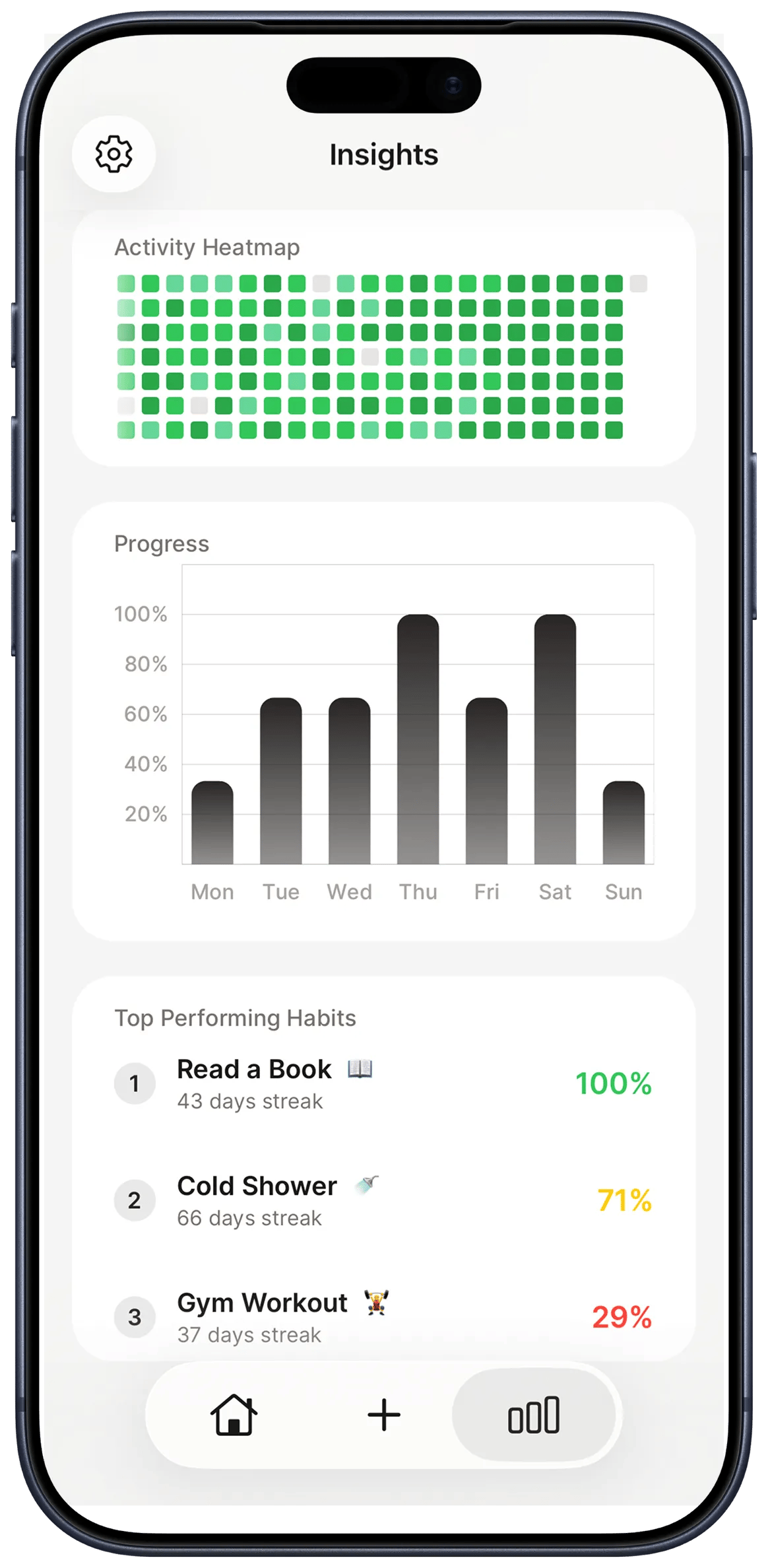
Why Journaling Works: What the Research Says
Journaling is one of the most studied self-improvement practices in psychology. The evidence for its benefits spans more than three decades of peer-reviewed research.
Neuroimaging research from UCLA found that expressive writing activates the prefrontal cortex — the brain's executive control center — while dampening activity in the amygdala, our threat detection system. In practical terms, writing about your thoughts literally calms your brain's stress response.
The benefits go beyond stress relief:
- Mental health: Clinical studies show that regular journaling can reduce symptoms of depression and anxiety by 20-45% and reduce cortisol levels by up to 23%.
- Memory and cognition: 59% of people who journal report improved memory. Writing things down improves the brain's encoding process, leading to roughly a 20-23% improvement in recalling facts and ideas.
- Creativity: 59% of journalers report improved creative thinking and inspiration.
- Physical health: A study on 49 adults in New Zealand found that those who wrote about their feelings for 20 minutes healed faster after a biopsy than those who wrote about daily activities.
23%
reduction in cortisol (stress hormone) from regular journaling
This makes journaling an ideal complement to other habits in a daily routine that actually works. It costs nothing, requires no equipment, and takes less time than brewing your morning coffee.
Choosing Your Journaling Method
There is no single "right" way to journal. The best method is the one you will actually use consistently. Here are the most common approaches, each backed by different research:
- Expressive writing: Pennebaker's original protocol. Write freely about your thoughts and feelings for 15-20 minutes. Best for emotional processing and stress relief.
- Gratitude journaling: List three to five things you are grateful for each day. Research by Digdon and Koble (2011) found this practice helps people fall asleep faster and experience fewer sleep disruptions.
- Bullet journaling: Short, structured entries using bullet points. Great for people who hate writing long paragraphs.
- Morning Pages: Julia Cameron's method from The Artist's Way — three pages of stream-of-consciousness writing immediately after waking. Best for creative work and clearing mental clutter.
- Prompted journaling: Answer a specific question each day. Removes the "what do I write about?" friction entirely.
If you are unsure where to begin, start with prompted journaling or gratitude journaling. Both give you a clear starting point and take less than five minutes.
The 5-Minute Journal Format
You do not need to write for an hour to get results. A simple five-minute format is enough to capture the core benefits of journaling while keeping the barrier to entry low.
Here is a structure that works well for beginners:
Morning (2-3 minutes):
- Three things I am grateful for today
- One thing that would make today great
- One intention or affirmation for the day
Evening (2-3 minutes):
- Three good things that happened today
- One thing I learned
- One thing I could improve tomorrow
This format works because it combines gratitude, intention-setting, and reflection — three practices with strong research support. It also bookends your day, creating two natural anchor points for the habit.
If even five minutes feels like too much, start with a single sentence. The goal in the first two weeks is not depth — it is showing up. Write "Today was fine" if that is all you have. The habit of opening your journal matters more than what you put in it.
20 Journal Prompts to Get You Started
Staring at a blank page is the number-one reason people quit journaling. Prompts eliminate that friction by giving your brain a starting point. Here are 20 prompts organized by category:
Self-reflection:
- What is taking up the most mental space right now?
- What would I do differently if I knew nobody was watching?
- What am I avoiding, and why?
- What drained my energy today? What restored it?
- What would my ideal ordinary Tuesday look like?
Gratitude: 6. What is one small thing I usually take for granted? 7. Who made my life easier this week, and how? 8. What is a recent challenge that taught me something useful? 9. What am I looking forward to this month? 10. What is one ability I have that I am grateful for?
Goals and growth: 11. What is one habit I want to be doing six months from now? 12. What is the smallest step I could take toward my biggest goal today? 13. Where am I making progress that I have not acknowledged? 14. What would I attempt if failure were not an option? 15. What advice would I give my past self from one year ago?
Emotional processing: 16. What emotion showed up strongest today? What triggered it? 17. What am I worried about, and how likely is it to actually happen? 18. When did I last feel truly calm? What was I doing? 19. What boundary do I need to set or reinforce? 20. What do I need to forgive myself for?
When to Journal for Best Results
The best time to journal is whenever you will actually do it. That said, research suggests different times of day serve different purposes.
Morning journaling takes advantage of peak cognitive clarity. Research on willpower by Baumeister and colleagues found that mental energy and decision-making capacity decline throughout the day, making early hours ideal for intentional reflection. Your brain also transitions through alpha and theta waves right after waking — a state associated with creativity and honest self-expression.
Evening journaling excels at emotional processing and sleep quality. A study by Scullin et al. (2018) showed that writing a specific to-do list for just five minutes before bed helped participants fall asleep significantly faster. Another study found that college students who journaled about encouraging or grateful thoughts for 15 minutes before bed experienced fewer sleep disruptions and slept longer.
The practical approach: use habit stacking. Attach journaling to something you already do every day — right after your morning coffee, immediately after brushing your teeth at night, or during your lunch break. The existing habit becomes the trigger for the new one, removing the need for willpower.
If you journal in the evening, it pairs naturally with an evening routine for better sleep.
Overcoming the Blank Page Problem
The biggest obstacle to journaling is not lack of time — it is the feeling of having nothing to say. Here is how to push through that resistance:
- Lower the bar dramatically. Commit to writing one sentence. That is it. Most days, one sentence will turn into a paragraph. But even if it does not, you kept the streak alive.
- Use a timer. Set a five-minute timer and write without stopping. Do not edit, do not cross things out, do not reread. When the timer goes off, you are done.
- Write badly on purpose. Perfectionism kills journals. Your entries are not meant to be published. Spelling mistakes, half-finished thoughts, and messy handwriting are all fine.
- Start with the facts. If feelings feel too heavy, begin with what happened today. "Woke up at 7. Had oatmeal. Meeting ran long." Facts often lead naturally into thoughts and emotions.
Research consistently shows that it takes roughly two months to form a new habit. Push through the initial awkwardness. The first two weeks are the hardest. By week four, reaching for your journal starts to feel automatic.
Tracking Your Journaling Streak
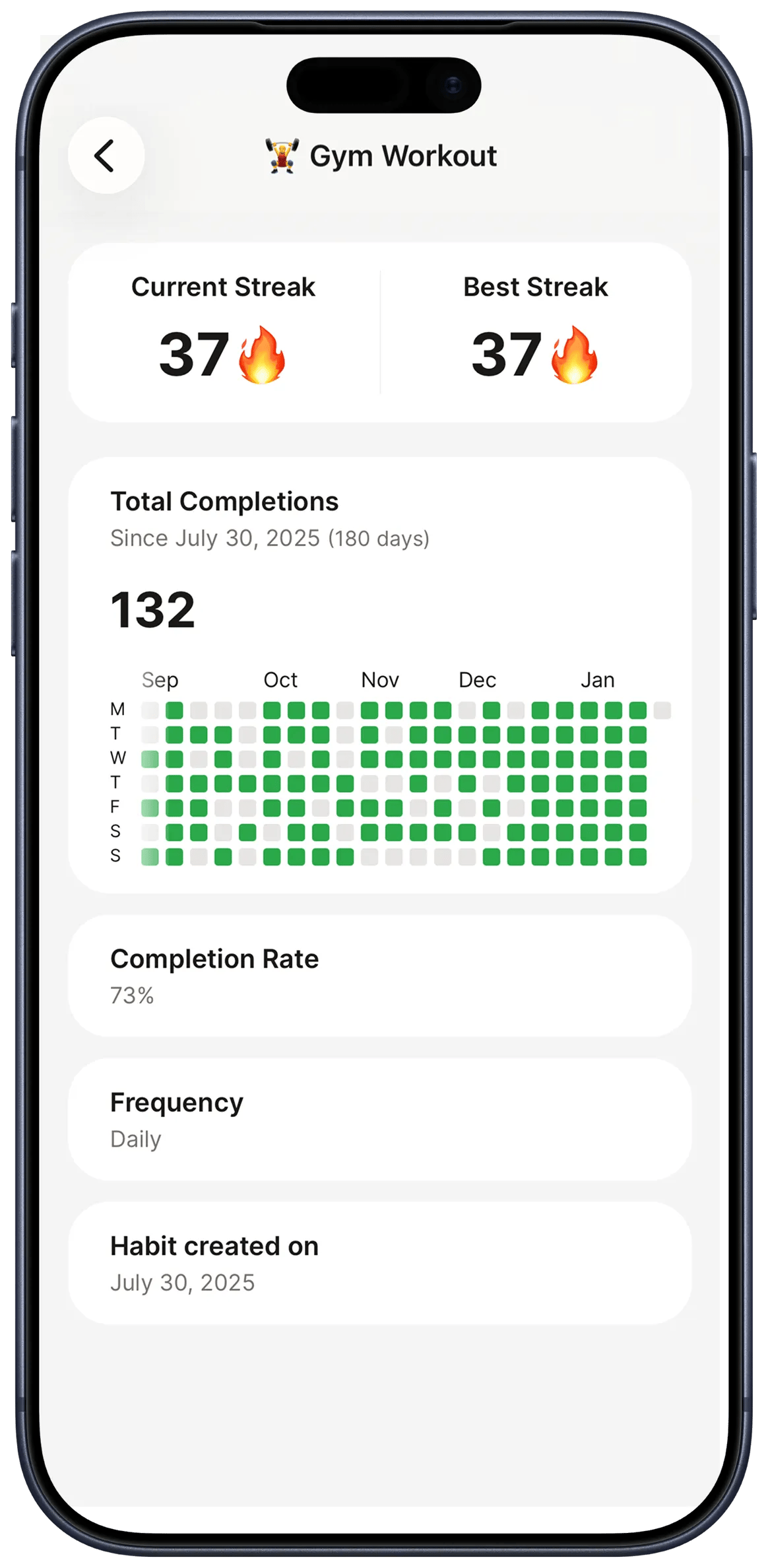
What gets measured gets done. Tracking whether you journaled each day creates a visual chain that becomes its own motivation — a psychological effect researchers call the streak effect.
Here is a simple tracking system:
- Mark each day you journal in a habit tracker app or on a wall calendar
- Record your method (prompted, freewrite, gratitude) to see patterns in what works
- Review weekly to identify your biggest obstacles — are you skipping weekends? Missing mornings?
The key is to count any amount of writing as a success. One sentence counts. A bullet-point list counts. A quick gratitude entry counts. Protect the streak by lowering the bar, not by forcing long entries on days when you have nothing to say.
If you are tracking multiple habits alongside journaling, a complete guide to habit tracking can help you build a system that does not feel overwhelming. And if you do miss a day, remember that one broken day does not erase your progress — just pick up the pen again tomorrow.
Journaling is one of the rare habits that rewards you immediately — with clarity after a stressful day, with insight after a confusing week, with a written record of who you were becoming. The only requirement is that you begin.
Start tracking your journaling streak today. Even one sentence counts.
Download FreeFrequently Asked Questions
How long should I journal each day?▼
Research shows benefits from as little as 5 to 15 minutes per day. James Pennebaker's studies found meaningful health improvements from 15-minute writing sessions over four consecutive days. Start with 5 minutes and increase only if you want to.
Is it better to journal on paper or digitally?▼
Both work. Some research suggests handwriting engages the brain differently and may aid memory retention, but digital journaling is more convenient and searchable. The best tool is the one you will actually use every day.
What if I miss a day of journaling?▼
Missing one day does not reset your progress. Research on habit formation shows that occasional misses do not significantly impact long-term habit strength. The important thing is to write again the next day rather than letting one missed day become a week.
Should I journal in the morning or at night?▼
It depends on your goal. Morning journaling is best for planning, creativity, and setting intentions. Evening journaling is better for emotional processing, reflection, and improving sleep quality. Try both for a week each and see which feels more natural.
What should I write about if I have nothing to say?▼
Start with simple prompts like 'Three things I am grateful for' or 'What is on my mind right now.' You can also describe your day factually — what you ate, who you talked to, what the weather was like. Facts often lead naturally into deeper reflection.
- 1.expressive writing for just 15 minutes a day can improve both physical and mental healthjournals.sagepub.com
- 2.We’ve got 99 Reasons to Journal… here are your top 7habitbetter.com
- 3.Science-Backed Benefits of Journaling for Mental Health: 16 Evidence-Based Research Studies | Online Journal and App ...reflection.app
- 4.Efficacy of journaling in the management of mental illness: a systematic review and meta-analysispmc.ncbi.nlm.nih.gov
- 5.5 Benefits of Journaling for Mental Healthpositivepsychology.com
- 6.Research on willpower by Baumeister and colleaguesrediscoveranalog.com
- 7.it takes roughly two months to form a new habithealthline.com