 By Adrien Blanc
Gratitude Journaling: How to Start and What to Write

Gratitude journaling is the daily practice of writing down things you appreciate, and it takes as little as five minutes. You grab a notebook or open an app, list three to five specific things you feel thankful for, and briefly note why each one matters to you. That is the entire practice. In a landmark study by Emmons and McCullough (2003), participants who wrote down five things they were grateful for each week felt 25% happier, exercised more regularly, and reported fewer physical symptoms than those who journaled about daily hassles. More recently, a 2025 meta-analysis published in PNAS — covering 145 papers, 727 effect sizes, and over 24,800 participants across 28 countries — confirmed that gratitude interventions produce measurable improvements in well-being. The research is clear: writing about what you are grateful for changes how you feel, how you sleep, and how you relate to others. Here is how to start and what to write.
25%
increase in happiness from weekly gratitude journaling
Track your gratitude journaling streak and build the habit that sticks
Download Free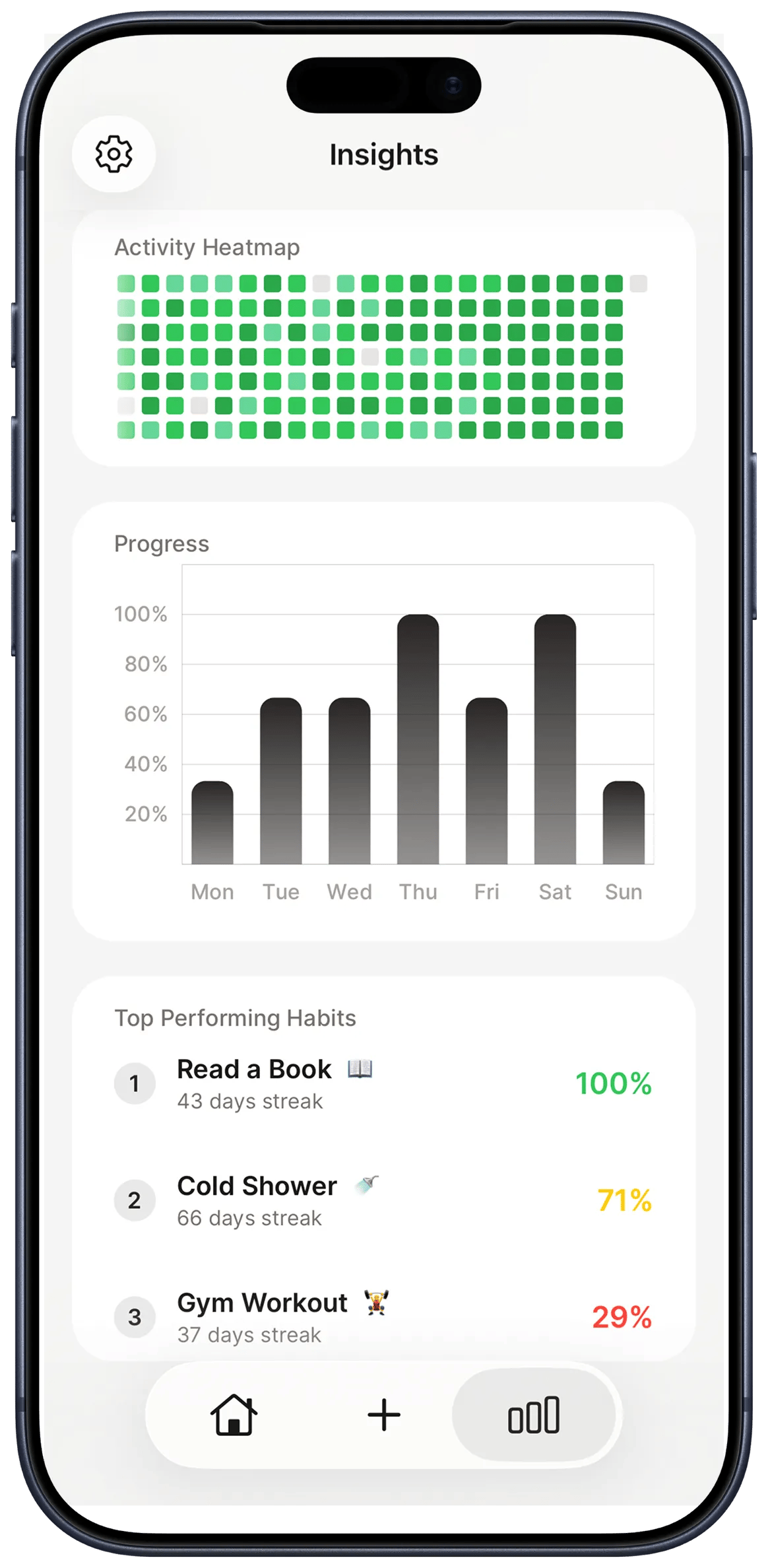
The Science Behind Gratitude Journaling
Gratitude journaling works because it rewires how your brain processes positive experiences. When you focus on what went well, your brain releases dopamine and serotonin — neurotransmitters tied to reward and mood regulation. Over time, this repeated focus on the positive strengthens neural pathways that make optimistic thinking more automatic.
The evidence spans multiple domains of well-being:
- Mental health: A systematic review of 70 studies with responses from over 26,000 people found that higher levels of gratitude are associated with lower levels of depression. Participants in gratitude interventions reported 5.8% better mental health and 7.76% fewer anxiety symptoms compared to control groups.
- Sleep quality: Wood et al. (2009) demonstrated that grateful people experience better subjective sleep quality, longer sleep duration, and less daytime dysfunction. The mechanism? Grateful individuals have more positive pre-sleep thoughts and fewer anxious ones.
- Physical health: In the original Emmons and McCullough research, gratitude journal keepers exercised nearly 1.5 hours more per week and reported fewer physical complaints than those in the control group.
- Relationships: Expressing gratitude strengthens social bonds. Research on couples found that receiving gratitude from a partner creates "relational growth" — both people feel more invested in the relationship.
The effects are not limited to a specific population. The PNAS meta-analysis found benefits across all 28 countries studied, though the size of the effect varied by culture. The consistent finding is that gratitude journaling produces small but meaningful improvements in how people feel and function day to day.
How to Start a Gratitude Journal in 5 Minutes
The simplest way to start is to write three specific things you are grateful for, right now. Do not overthink it. You do not need a special notebook, a morning ritual, or a perfect writing habit already in place. You need five minutes and something to write with.
Here is the step-by-step process:
Step 1: Choose Your Format
Pick whatever feels easiest:
- A dedicated notebook beside your bed
- A notes app on your phone
- A habit tracking app that lets you log entries alongside other daily habits
The format matters far less than consistency. What matters is creating a physical or digital record — research from UC Berkeley emphasizes that the act of writing (not just thinking) is what produces results.
Step 2: Write Three to Five Items
Each entry should answer one question: "What went well today, and why?"
Be specific. "I'm grateful for my friend" is vague. "I'm grateful that Maria called to check on me after my rough day at work" gives your brain something concrete to anchor the positive emotion to.
Step 3: Add the "Why"
Entries that explain the reason behind your gratitude are more effective than simple lists. Asking "why did this good thing happen?" forces you to recognize the sources of good in your life and think more deeply about your appreciation.
Step 4: Attach It to an Existing Habit
The fastest way to make gratitude journaling stick is habit stacking — linking the new behavior to something you already do. "After I pour my morning coffee, I will write three things I am grateful for" gives your brain a reliable cue. No willpower required.
What to Write: 30 Gratitude Journal Prompts
If you are staring at a blank page, prompts help you move past the initial resistance. Use these as starting points — you do not need to answer all of them. Pick one or two per session.
People and Relationships
- Who made me smile today, and what did they do?
- What is one quality I appreciate about my closest friend?
- Who taught me something valuable this year?
- What is a kind thing someone did for me recently that I did not properly thank them for?
- Which relationship am I most grateful for right now, and why?
Everyday Moments
- What small pleasure did I enjoy today (a meal, a song, a walk)?
- What part of my morning routine do I look forward to?
- What is something I use every day that makes my life easier?
- What made me laugh recently?
- What is one thing about my home that I appreciate?
Personal Growth
- What challenge taught me the most about myself?
- What skill have I improved this year?
- When was a time I was afraid but did it anyway?
- What mistake led to something unexpectedly good?
- What is a belief I changed that made my life better?
Health and Body
- What can my body do today that I am thankful for?
- What is one healthy choice I made this week?
- What part of my sleep routine helps me feel rested?
- What physical sensation do I enjoy (warmth, movement, stillness)?
- When did I last feel genuinely energized?
Nature and Surroundings
- What is the most beautiful thing I noticed outdoors this week?
- What season am I currently enjoying, and why?
- What is one thing about the place I live that I appreciate?
- When did I last feel calm in a natural setting?
- What weather did I enjoy today?
Looking Ahead
- What am I looking forward to this week?
- What opportunity do I have that others might not?
- What is one goal I am making progress on?
- What resource (time, money, knowledge) do I have that I sometimes take for granted?
- If I could keep just three things in my life, what would they be?
When to Write for Maximum Impact
Both morning and evening journaling work, but they serve different purposes. Morning gratitude sets a positive tone for the day. Evening gratitude helps you process events and wind down before sleep.
The research leans slightly toward evening. The Wood et al. study on gratitude and sleep found that grateful pre-sleep cognitions — positive thoughts before bed — mediate the relationship between gratitude and sleep quality. Writing your entries before bed replaces anxious rumination with appreciative reflection.
That said, the best time is the time you will actually do it. If mornings are when you have five quiet minutes, write in the morning. If you stack it onto an evening routine like meditation, do that instead.
3-5 items
per entry is the optimal range for gratitude journal benefits
How Often Should You Journal?
Research offers a surprising answer: weekly may be better than daily. Emmons found that participants who journaled once a week showed a significant increase in happiness, while those who wrote three times a week did not. The likely explanation is adaptation — writing too frequently can make the practice feel routine and reduce its emotional impact.
Start with three times per week. If that feels right, maintain it. If you want daily practice, vary your prompts and approach to keep the exercise fresh.
Common Gratitude Journaling Mistakes
Most people who quit gratitude journaling make one of these five errors. Recognizing them helps you avoid the most common failure points.
1. Being Too Generic
"I'm grateful for my family" every day for a month will feel hollow fast. Specificity is what activates the emotional benefit. Name the person, the moment, and the reason.
2. Treating It as a Performance
Your gratitude journal is not a social media post. You do not need to be profound or poetic. A messy, honest entry about being glad the traffic was light is more valuable than a beautifully worded platitude you do not actually feel.
3. Only Writing About Big Things
You do not need a promotion or a vacation to feel grateful. The practice is most effective when you notice small, everyday moments — a warm cup of tea, a coworker who held the door, ten minutes of quiet in the morning.
4. Forcing It When You Are Not Feeling It
On hard days, gratitude can feel impossible. That is okay. Instead of forcing positivity, try writing: "Today was tough. One small thing that was not terrible was..." This acknowledges reality while still gently directing attention toward something neutral or positive.
5. Skipping It After Missing a Day
Missing a day does not erase your progress. Research on habit formation shows that a single missed day has a negligible effect on long-term habit building. The real risk is the "all-or-nothing" mindset that turns one missed day into a permanent stop.
Digital vs. Paper Gratitude Journals
Both formats work. The research does not clearly favor one over the other for gratitude-specific benefits. What matters is choosing the format that reduces friction so you actually write.
Paper journals suit you if:
- You prefer the tactile experience of writing by hand
- You want a screen-free ritual, especially before bed
- You enjoy flipping back through past entries physically
Digital journals and apps suit you if:
- You always have your phone with you
- You want reminders and streak tracking to stay consistent
- You prefer typing and find it faster than handwriting
A practical compromise: use a habit tracking app to log whether you completed your journal entry, and use any format you like for the actual writing. This gives you accountability (the streak) and freedom (the format).
Build a gratitude journaling streak and never miss a day
Download FreeFrequently Asked Questions
How long should a gratitude journal entry be?▼
Three to five sentences is enough. Each entry should name something specific you are grateful for and briefly explain why. Research shows that quality and specificity matter more than length. A five-minute entry with genuine reflection is more beneficial than a long list of generic items.
Can gratitude journaling help with anxiety?▼
Yes. A systematic review in BMC Psychology found that gratitude interventions reduce anxiety symptoms by an average of 7.76% compared to control groups. The practice works by redirecting attention from threats and worries toward positive aspects of your life, which calms the nervous system and reduces cortisol levels.
What if I cannot think of anything to be grateful for?▼
Start with the basics: a roof, clean water, a meal today, someone who knows your name. On difficult days, try writing about one thing that was slightly less bad than expected. You are not trying to feel happy — you are simply noticing what exists. The prompts in this article can help when you feel stuck.
Is there a best time of day to write in a gratitude journal?▼
Evening journaling may offer a slight edge for sleep quality because it replaces anxious pre-sleep thoughts with positive ones. However, morning journaling sets an optimistic tone for the day. The best time is whichever one you can do consistently.
How long before I notice the benefits of gratitude journaling?▼
Some studies report mood improvements within one week. The Emmons and McCullough study found significant effects after 10 weeks of weekly journaling. For lasting changes, research suggests practicing for at least six weeks. Pair it with a habit tracker to stay consistent through the initial period when motivation naturally dips.
- 1.Counting blessings versus burdens: an experimental investigation of gratitude and subjective well-being in daily lifepubmed.ncbi.nlm.nih.gov
- 2.2025 meta-analysis published in PNASpnas.org
- 3.The effects of gratitude interventions: a systematic review and meta-analysispmc.ncbi.nlm.nih.gov
- 4.Gratitude influences sleep through the mechanism of pre-sleep cognitionspubmed.ncbi.nlm.nih.gov
- 5.Gratitude and Well-Beingemmons.faculty.ucdavis.edu
- 6.Gratitude Journal | Practiceggia.berkeley.edu
- 7.The Gratitude Journal: Prompts, PDFs and Worksheetspositivepsychology.com