 By Adrien Blanc
10 Daily Habits That Improve Your Mental Health
Small, consistent daily habits can do more for your mental health than most people realize. According to a study of 1.2 million Americans, people who exercise regularly report 1.5 fewer days of poor mental health per month compared to those who don't. And exercise is just one piece of the puzzle. Research across psychology and neuroscience consistently shows that the routines you repeat each day shape your mood, resilience, and emotional wellbeing far more than occasional grand gestures.
Heading into 2026, 38% of Americans plan to make a mental health-related New Year's resolution, up 5% from last year. The strategies people are turning to -- physical activity, mindfulness, better sleep, time outdoors -- all reflect one truth: mental health is built through daily habits, not one-off fixes.
Here are ten evidence-based habits that can meaningfully improve how you feel every day.
Build your mental health routine one habit at a time. Track your daily wellness habits with Habit Streak.
Download Free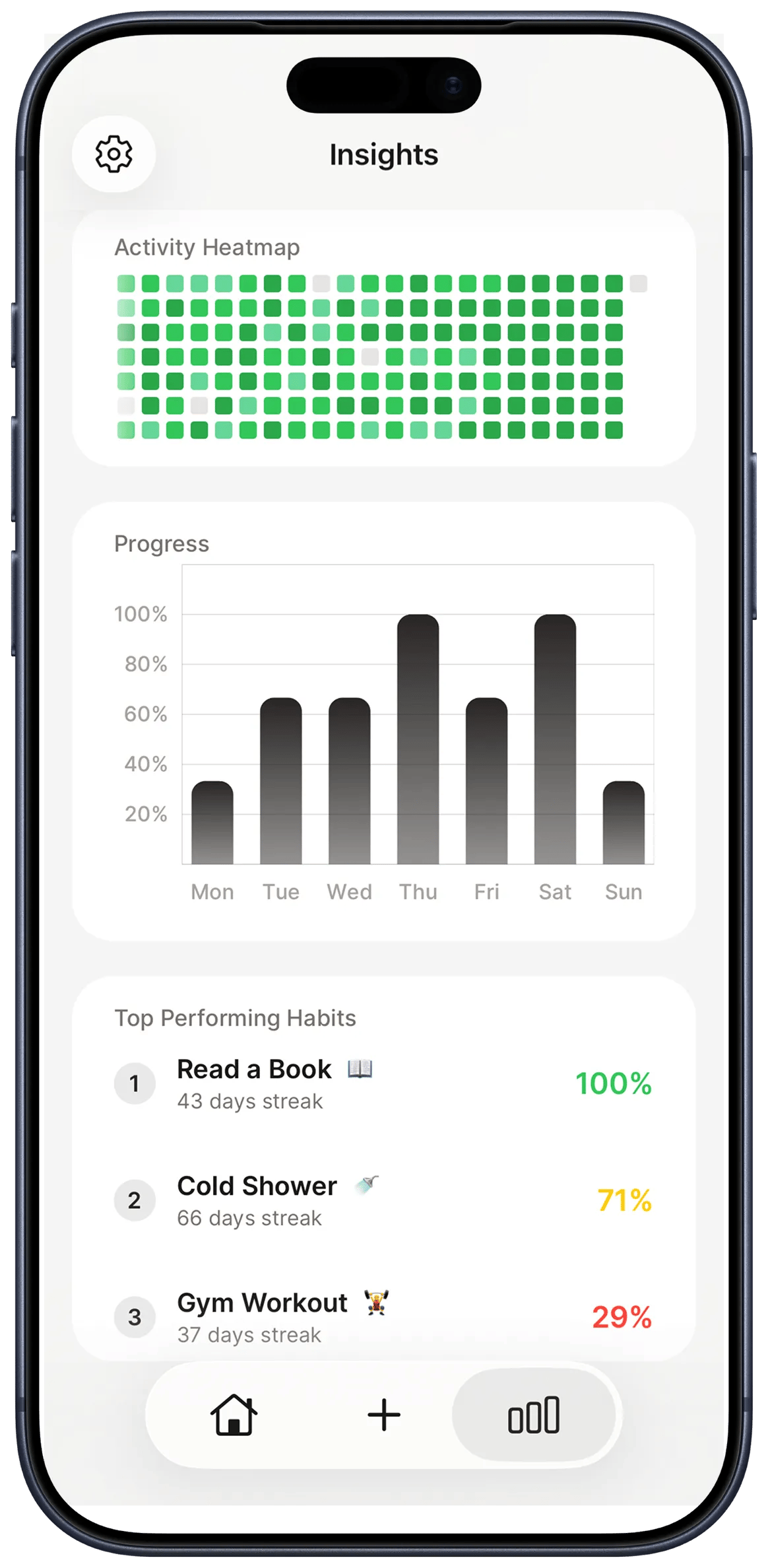
1. Move Your Body
Regular physical activity is one of the most effective things you can do for your mental health. Out of 1,158 studies examined, 89% found a statistically significant positive association between physical activity and mental health outcomes.
You don't need to run marathons. Research shows that three to five 45-minute sessions per week delivers optimal mental health benefits. Walking, cycling, yoga, and even gardening all count. For depression specifically, exercise can be as effective as antidepressants for mild-to-moderate symptoms.
The key is consistency over intensity. Find something you enjoy -- a morning walk, a lunchtime stretch routine, an evening bike ride -- and make it part of your day. For more on building a lasting exercise habit, start with small, manageable sessions and build from there.
2. Practice Mindfulness or Meditation
Just 10 minutes of daily mindfulness can reduce depression symptoms by nearly 20%. It also lowers anxiety, improves focus, and promotes a more positive outlook. Studies have shown measurable changes in brain regions related to memory, emotion regulation, and learning in regular meditators.
You don't need a special setup. Sit quietly, focus on your breathing, and notice your thoughts without judging them. Apps can help, but they're not required. Even a few minutes of focused attention between tasks counts.
If you're new to the practice, our meditation habit guide walks through how to start small and build consistency.
3. Prioritize Sleep
Poor sleep doesn't just leave you tired -- it directly harms your mental health. A meta-analysis of 65 randomized controlled trials found that improving sleep quality produced significant reductions in depression, anxiety, stress, and rumination. The researchers also found a dose-response relationship: the more sleep quality improved, the more mental health improved.
10x
People with insomnia are 10 times more likely to have depression
Good sleep hygiene means:
- Going to bed and waking up at the same time every day, including weekends
- Avoiding screens for at least 30 minutes before bed
- Keeping your bedroom dark, cool, and quiet
- Cutting caffeine after early afternoon
Seven to nine hours is the target for most adults. If you struggle with sleep, our sleep habits guide covers the full routine.
4. Spend Time in Nature
Two hours of nature exposure per week is the threshold for significant mental health benefits. A large-scale study published in Scientific Reports found that people who spent at least 120 minutes per week in nature reported meaningfully higher wellbeing than those who spent no time outdoors. Those who fell short of 120 minutes saw no significant benefit.
The good news: you can split it up. Multiple shorter outings work just as well as one long one. Even 10 to 20 minutes outdoors can measurably reduce stress hormones.
Try a daily walk in a park, eating lunch outside, or weekend hikes. The point is regular contact with green spaces, not epic wilderness adventures.
5. Nurture Social Connections
Strong relationships are consistently linked to better mental health outcomes. Loneliness and social isolation carry health risks comparable to smoking 15 cigarettes a day, according to research from the U.S. Surgeon General.
This doesn't mean you need a packed social calendar. Quality matters more than quantity. A few meaningful actions each day can make a difference:
- Call or text a friend instead of just scrolling social media
- Have a real conversation with a coworker or neighbor
- Schedule a weekly coffee or walk with someone you care about
Building habits for better relationships is one of the most underrated mental health strategies.
6. Keep a Gratitude Practice
Writing down a few things you're grateful for each day can measurably improve your mental health. A meta-analysis of 64 randomized clinical trials found that gratitude interventions led to 6.89% fewer depression symptoms, 7.76% fewer anxiety symptoms, and 6.86% higher life satisfaction scores.
9%
Lower mortality risk for people with the highest gratitude levels over four years
The practice is simple: each morning or evening, write three things that went well or that you appreciate. Research shows that practicing gratitude for 15 minutes a day, five days a week, for at least six weeks can create lasting shifts in perspective.
For a deeper look at how to build this routine, see our gratitude journaling guide.
7. Journal for Emotional Processing
Putting your thoughts on paper helps your brain process difficult emotions. Clinical studies show that regular journaling can reduce symptoms of depression and anxiety by 20 to 45%. It also improves self-awareness and helps you spot patterns in your thinking.
You don't need to write for an hour. Even five to ten minutes of freewriting -- whatever comes to mind, without editing -- can provide relief and clarity.
Some useful prompts to get started:
- What's weighing on my mind right now?
- What would I tell a friend in my situation?
- What went better than expected today?
Journaling pairs well with gratitude practice and can become a single daily ritual that covers both.
8. Limit Social Media Use
Reducing social media use for at least one week can improve symptoms of anxiety and depression. A study published in JAMA Network Open found that young adults who cut their daily social media use from two hours to 30 minutes experienced a 16% reduction in anxiety, a 24% decrease in depression symptoms, and a 14.5% decrease in insomnia over three weeks.
Practical steps that work:
- Set daily screen time limits on social media apps
- Turn off non-essential notifications
- Keep your phone out of the bedroom
- Replace scrolling time with a walk, reading, or conversation
9. Eat Well and Stay Hydrated
What you eat directly affects your brain chemistry. About 90% of the body's serotonin -- a key mood-regulating neurotransmitter -- is produced in the gut, not the brain. This means your diet plays a direct role in how you feel emotionally.
Diets rich in whole foods, fruits, vegetables, lean proteins, and healthy fats support neurotransmitter production and reduce inflammation. Meanwhile, highly processed diets are linked to higher rates of depression and anxiety.
A few daily nutrition habits worth building:
- Eat at least one serving of leafy greens each day
- Include omega-3-rich foods like salmon, walnuts, or flaxseed
- Stay hydrated -- even mild dehydration can impair mood and concentration
- Limit added sugars and ultra-processed snacks
Check out our drinking water habit guide for tips on staying consistently hydrated.
10. Build a Consistent Routine
Having a predictable daily structure reduces decision fatigue and provides a sense of control -- both of which protect mental health. You don't need a rigid schedule, but anchoring your day with a few consistent habits creates stability.
The science of building healthy habits shows that routines reduce cognitive load and free up mental energy for the things that matter. When your morning routine, mealtimes, and bedtime are roughly consistent, your nervous system stays calmer.
A strong mental health routine might look like:
- Morning: Wake at the same time, drink water, 5 minutes of gratitude journaling
- Midday: A 20-minute walk outside, a balanced lunch
- Evening: Screen-free wind-down, brief journaling, consistent bedtime
You don't need all ten habits at once. Pick two or three that feel manageable and build from there. Habit stacking -- attaching a new habit to an existing one -- is one of the most effective ways to make these stick.
Start building your mental health habits today. Habit Streak helps you track and maintain the daily routines that matter most.
Download FreeFrequently Asked Questions
How long does it take for daily habits to improve mental health?▼
Research varies, but many studies show measurable improvements within two to six weeks of consistent practice. Gratitude journaling, for example, has shown effects in as little as one week, while exercise benefits can appear within a few sessions. The key factor is consistency -- daily repetition compounds over time.
Which single habit has the biggest impact on mental health?▼
Exercise consistently ranks as the most impactful single habit for mental health. A review of over 1,100 studies found that 89% showed a positive association between physical activity and mental health. However, sleep is a close second -- poor sleep amplifies nearly every mental health challenge.
Can daily habits replace therapy or medication?▼
Daily habits are powerful supplements to professional treatment, but they are not replacements for it. For mild symptoms, habits like exercise and mindfulness may be sufficient. For moderate to severe depression, anxiety, or other conditions, professional guidance from a therapist or psychiatrist is recommended alongside healthy habits.
How many habits should I try to build at once?▼
Start with one or two habits and practice them consistently for at least two to three weeks before adding more. Trying to adopt too many habits at once increases the chance of burnout and failure. Habit stacking -- linking a new habit to an existing routine -- can help you add habits gradually without overwhelming yourself.
Does reducing social media really help mental health?▼
Yes, when sustained for at least one week. A 2025 study in JAMA Network Open found that cutting social media use from two hours to 30 minutes daily led to a 24% decrease in depression symptoms and a 16% reduction in anxiety over three weeks. Short detoxes of only a few days may not produce the same benefits.
- 1.Exercise linked to improved mental health, but more may not always be bettersciencedaily.com
- 2.More Americans Plan Mental Health Resolutions Heading Into 2026psychiatry.org
- 3.Role of Physical Activity on Mental Health and Well-Being: A Reviewpmc.ncbi.nlm.nih.gov
- 4.The Role of Exercise in Management of Mental Health Disorders: An Integrative Reviewpmc.ncbi.nlm.nih.gov
- 5.How to Improve Mental Health: Daily Habits & Strategiespositivepsychology.com
- 6.Improving sleep quality leads to better mental health: A meta-analysis of randomised controlled trialspmc.ncbi.nlm.nih.gov
- 7.large-scale study published in Scientific Reportsnature.com
- 8.10 to 20 minutes outdoorsfrontiersin.org
- 9.The effects of gratitude interventions: a systematic review and meta-analysispmc.ncbi.nlm.nih.gov
- 10.Health benefits of gratitudeuclahealth.org
- 11.study published in JAMA Network Openjamanetwork.com
- 12.90% of the body's serotonincaltech.edu