 By Adrien Blanc
15 Good Habits for Students That Boost Grades and Wellbeing

The habits you build as a student matter more than raw talent or the number of hours you study. Research consistently shows that structured daily routines, not marathon study sessions, predict academic success. A 2025 study published in Nature analyzing over 3 million data points from 3,499 undergraduates found that positive lifestyle habits — including consistent sleep, regular meals, and structured study time — were significant predictors of academic performance. Separately, research from the University of Georgia found that students who use deeper learning strategies consistently earn better grades than those who rely on surface-level memorization. The message is clear: what you do every day shapes your GPA far more than any single night of cramming.
This guide covers 15 specific habits across studying, health, sleep, time management, and mental wellbeing. Each one is backed by research and practical enough to start today — even with a packed schedule. If you are building a daily routine that actually works, these habits are a strong foundation.
25%
of academic performance variance explained by sleep alone
Track your student habits and build streaks that stick
Download Free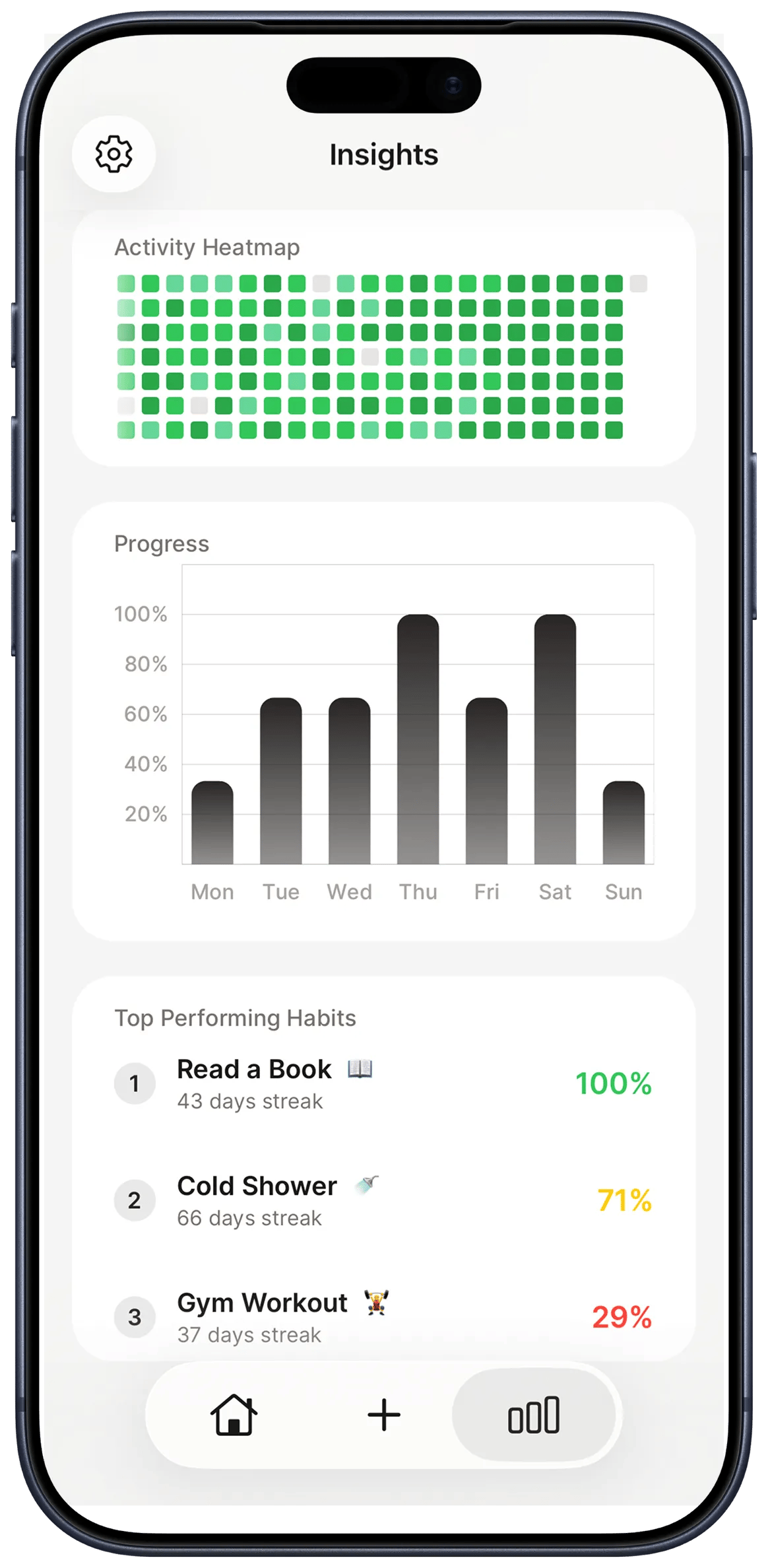
Why Habits Matter More Than Motivation for Students
Motivation is unreliable. Habits are automatic. The first week of a new semester, you are fired up. By week six, motivation has faded — but habits keep running. Research by Wendy Wood at USC found that roughly 43% of daily behaviors are performed habitually, meaning nearly half your day is already on autopilot. The question is whether those automatic behaviors help or hurt your grades.
Students who build consistent routines outperform those who depend on willpower alone. A meta-analysis of study habits research confirmed a positive association between effective study habits — including time management, note-taking, goal setting, and self-testing — and academic outcomes across multiple studies. The effect holds regardless of subject or education level.
The best time to build academic habits is now, not the week before finals. Small, repeatable behaviors compound over a semester in ways that last-minute effort cannot match.
Study and Learning Habits
How you study matters more than how long you study. Students who use active learning strategies — self-quizzing, summarization, teaching material to others — outperform those who passively reread notes. Here are five study habits that move the needle.
1. Use Spaced Repetition Instead of Cramming
Spaced repetition means reviewing material at increasing intervals rather than in one marathon session. The evidence is overwhelming: research across 800+ experiments shows spaced repetition improves long-term retention by up to 200% compared to massed study. One study found students who spaced their learning retained 82% of course material weeks later, while crammers retained just 27%.
Start by reviewing your notes briefly the day after a lecture, then again three days later, then a week later. Flashcard apps with built-in spaced repetition algorithms make this nearly effortless.
2. Practice Active Recall
Instead of rereading highlighted passages, close your notes and try to recall the information from memory. A study at a life sciences program found that students who used active strategies and spent a higher proportion of study time on them performed significantly better on exams. Retrieval practice strengthens memory traces in ways that passive review simply does not.
3. Study in Focused 25-50 Minute Blocks
Extended study sessions lead to diminishing returns. Research shows students are distracted roughly 20% of their study time on average. Working in focused blocks of 25-50 minutes with short breaks keeps attention sharp. Set a timer, eliminate distractions, and commit to one subject per block. Learn more about this approach in our guide to deep work habits.
4. Teach What You Learn
Explaining material to someone else — a classmate, a study group, or even an empty room — forces you to organize your thinking and identify gaps. This "protege effect" has been documented across multiple studies: teaching reinforces the teacher's own understanding and recall.
5. Review Before Bed
Your brain consolidates memories during sleep. Briefly reviewing key material before bed — even for just 10 minutes — gives your brain the raw material to process overnight. This pairs well with an evening routine designed for better sleep.
Health and Energy Habits
Your brain runs on fuel, not willpower. Physical health habits directly influence cognitive performance, yet they are the first thing students sacrifice during busy weeks.
6. Eat Breakfast (or at Least Eat Regularly)
The Nature study on student lifestyle habits found that consistent eating patterns correlated with better academic outcomes. Research also shows that eating before studying boosts recall by approximately 16%. You do not need a gourmet meal — a banana and some oats will do. The point is to avoid starting your study session running on empty.
7. Move Your Body for 20-30 Minutes Daily
Exercise is not just for fitness. A study published in Frontiers in Psychology found that regular physical activity reduces academic fatigue and improves sleep quality among university students. Even a brisk walk between classes counts. Movement increases blood flow to the brain, improves mood, and helps you focus during study sessions afterward.
8. Stay Hydrated
Mild dehydration — even 1-2% body water loss — impairs attention, working memory, and mood. Keep a water bottle at your desk and drink consistently throughout the day. This is one of the simplest habits on the list, and one of the most commonly neglected. For a deeper look at building this habit, see our guide on building a water-drinking habit.
Sleep and Recovery Habits
Sleep is not a luxury for students — it is a performance tool. An MIT study published in npj Science of Learning gave 100 students wearable trackers and found that sleep quality, duration, and consistency accounted for nearly 25% of the variance in academic performance. That is a larger effect than most study techniques.
74%
of college students report sleep disturbances
9. Get 7-8 Hours of Sleep Consistently
Students who slept 7-8 hours nightly showed 24% better focus than those who did not. Critically, the MIT study found that sleep on the night before a test had no special effect — it was sleep during the entire week and month before that mattered. Consistency beats one-night heroics.
10. Set a Consistent Bedtime
The MIT researchers discovered that students who went to bed after roughly 2 AM performed worse regardless of total sleep duration. A consistent bedtime anchors your circadian rhythm, which improves both sleep quality and daytime alertness. Pick a target bedtime and protect it at least five nights per week.
11. Avoid Screens 30 Minutes Before Bed
Blue light from phones and laptops suppresses melatonin production and delays sleep onset. Research on college student sleep quality identifies excessive screen use before bed as one of the primary drivers of poor sleep among students. Swap scrolling for reading, journaling, or reviewing notes (habit #5).
Time Management Habits
Students who manage their time well do not just get more done — they stress less. Research shows a substantial correlation between students' perceived control of their time and their GPA.
12. Plan Your Week on Sunday
Spend 15-20 minutes each Sunday mapping out your assignments, study blocks, and commitments. 65% of students already use a planner or calendar to manage their time — and they outperform those who wing it. The goal is not to schedule every minute, but to know what your priorities are before Monday hits.
13. Use Time Blocking for Study Sessions
A study of high-performing professionals found that people who scheduled specific time blocks for important activities were 3.2 times more likely to follow through. Apply this to studying: block dedicated time slots for each subject on your calendar. Treat these blocks like classes you cannot skip.
14. Set Daily "Top 3" Priorities
Rather than a sprawling to-do list, identify the three most important tasks each morning. Research on student goal-setting confirms that students who set specific, realistic goals — like what to accomplish in an hour or a week for a specific course — perform better than those without clear targets. Three priorities keep you focused without overwhelming your schedule.
Social and Mental Health Habits
Academic performance and mental health are not separate — they are deeply connected. Students who manage stress effectively earn better grades, and students who earn better grades report lower stress. Breaking this cycle starts with intentional habits.
15. Practice 5-10 Minutes of Mindfulness Daily
A meta-analysis by Schutte and Malouff found a positive correlation between mindfulness and academic performance. A separate Frontiers in Psychology study showed that a mindfulness program significantly reduced stress, anxiety, and depression while improving sleep quality among college students. You do not need an hour of meditation — even five minutes of focused breathing before a study session can reduce anxiety and improve concentration. Check out our meditation habit guide for a simple starting framework.
Beyond mindfulness, invest in your social connections. Research on high-achieving students found they were more socially supported than their peers. Study groups, regular check-ins with friends, and asking for help when you need it are not distractions from academics — they are part of the support structure that makes academic success sustainable. A study found that 59% of students who reached out for help during tough semesters improved their GPA by at least one full point.
How to Start Without Overwhelming Your Schedule
Start with one habit. Master it. Then add the next. Research on habit formation shows it takes an average of 66 days for a behavior to become automatic. Trying to overhaul your entire routine in one week guarantees failure.
Here is a practical three-phase plan:
- Weeks 1-3: Pick one study habit and one health habit. For example, start with spaced repetition reviews (#1) and a consistent bedtime (#10).
- Weeks 4-6: Once those feel natural, add a time management habit like Sunday planning (#12) and daily top-3 priorities (#14).
- Weeks 7-9: Layer in mindfulness (#15) and another study technique like active recall (#2).
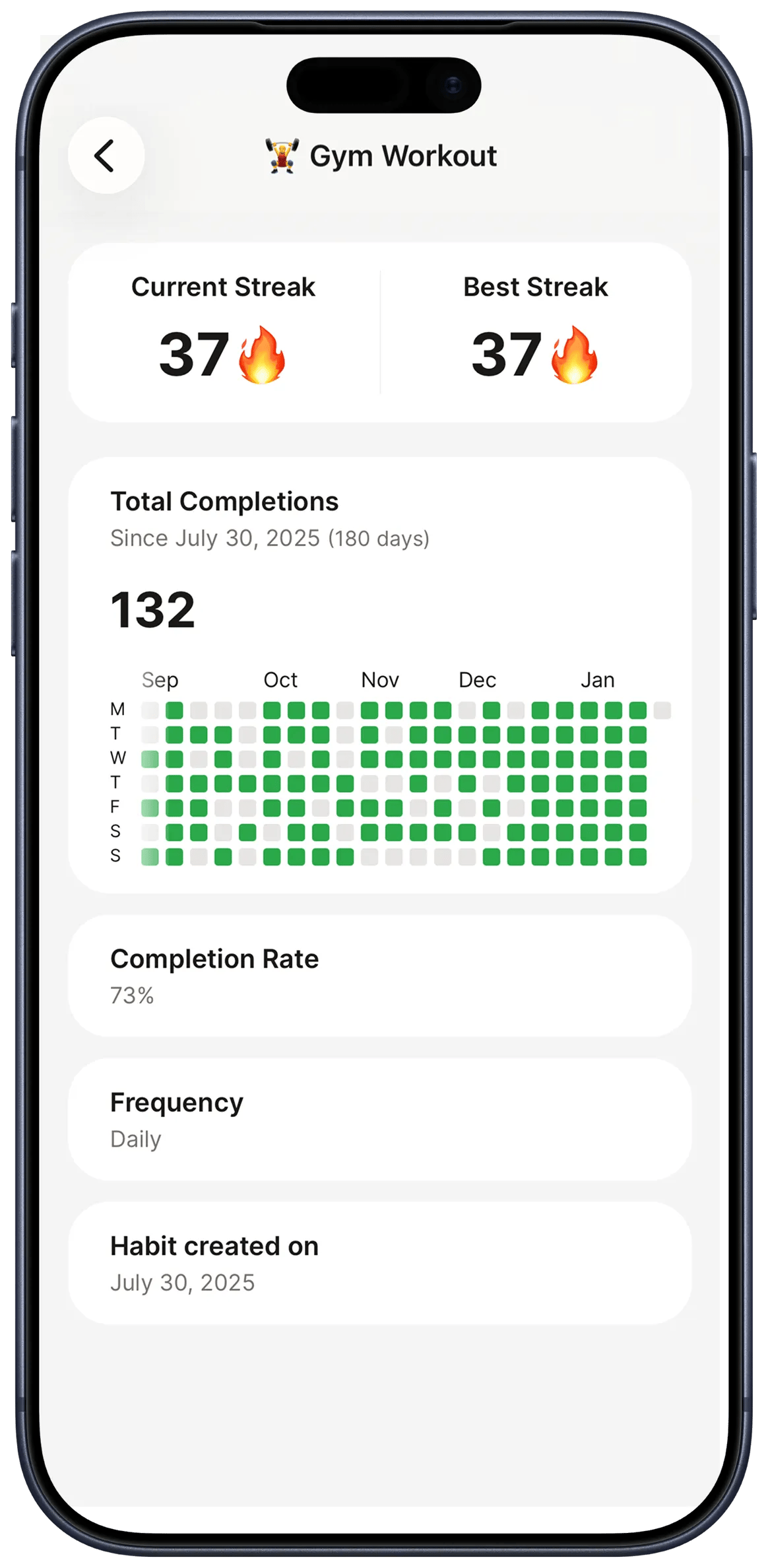
Track your progress. Tracking makes habits visible and builds accountability. Each completed day is evidence that you are becoming the kind of student you want to be. Learn more about why streaks work and how to use them effectively.
The students who earn the best grades and maintain their wellbeing are not the ones who study the most hours. They are the ones who build smart, sustainable habits and stick with them day after day. Start small, stay consistent, and let the compound effect do the work.
Start tracking your student habits today
Download FreeFrequently Asked Questions
What are the most important habits for students?▼
The highest-impact habits for students are consistent sleep (7-8 hours), spaced repetition for studying, regular exercise, and weekly planning. Research from MIT shows sleep alone accounts for 25% of academic performance variance. Combine a solid sleep schedule with active study strategies and basic time management for the biggest improvement.
How can I build good study habits if I have no motivation?▼
Motivation is unreliable by nature — habits work precisely because they do not depend on it. Start with a habit so small it requires no motivation: review one flashcard, study for five minutes, or write one sentence in your planner. Research shows that once a behavior becomes automatic (roughly 66 days on average), it runs on autopilot regardless of how motivated you feel.
Is cramming the night before an exam effective?▼
No. Research across 800+ experiments shows spaced repetition improves long-term retention by up to 200% compared to cramming. One study found spaced learners retained 82% of material weeks later versus 27% for crammers. Cramming may help you pass tomorrow's test, but it fails for cumulative exams and real-world application.
How many hours should a student study per day?▼
Quality matters more than quantity. Roughly half of students study less than two hours per day, while the most effective approach is focused blocks of 25-50 minutes with breaks. Research shows students lose about 20% of study time to distractions, so three focused hours often outperform six distracted ones.
Can habits really improve both grades and mental health?▼
Yes. The same habits that boost grades — consistent sleep, exercise, and structured routines — also reduce stress, anxiety, and depression. A 2025 Frontiers in Psychology study found mindfulness programs significantly improved both mental health and academic-related outcomes in college students. Good habits create a positive cycle where better health supports better performance and vice versa.
- 1.2025 study published in Naturenature.com
- 2.Focusing on self-improvement, not competition, may boost gradesnews.uga.edu
- 3.Psychology of Habitpubmed.ncbi.nlm.nih.gov
- 4.meta-analysis of study habits researchijcsrr.org
- 5.outperform those who passively reread noteslifescied.org
- 6.research across 800+ experimentsirjmets.com
- 7.To What Extent Do Study Habits Relate to Performance?pmc.ncbi.nlm.nih.gov
- 8.boosts recall by approximately 16%research.com
- 9.Frontiers | The effect of exercise on academic fatigue and sleep quality among university studentsfrontiersin.org
- 10.MIT study published in npj Science of Learningnature.com
- 11.Research on college student sleep qualityresearch.com
- 12.An Analysis of Study Habits for Students in the U.S.gcu.edu
- 13.study of high-performing professionalscoachpedropinto.com
- 14.Frontiers | Mindfulness and its relationship to academic achievement among university studentsfrontiersin.org
- 15.Frontiers | Effect of a mindfulness program on stress, anxiety, depression, sleep quality, social support, and life s...frontiersin.org
- 16.The impact of study habits and personal factors on the academic achievement performances of medical studentspmc.ncbi.nlm.nih.gov
- 17.habit formationonlinelibrary.wiley.com