 By Adrien Blanc
How to Build a Deep Work Habit for Intense Focus

Building a deep work habit means training yourself to enter a state of distraction-free concentration where you produce your highest-quality output. The concept, coined by computer science professor Cal Newport, describes professional activity that pushes your cognitive capabilities to their limit -- the kind of focused thinking that creates real value and is genuinely hard to replicate.
And most of us are terrible at it. Research from ActivTrak analyzing over 164,000 workers found that focused work sessions averaged just 13 minutes in 2025 -- down 9% from two years prior. Meanwhile, the American Psychological Association reports that context switching consumes up to 40% of productive time. That means a typical eight-hour workday yields barely five hours of real output.
The good news: deep work is a trainable skill. Like any habit, it strengthens with consistent daily practice. This guide walks you through exactly how to build that practice -- from choosing your scheduling strategy to tracking your progress over time.
Track your daily deep work sessions and build an unbreakable focus streak with Habit Streak.
Download Free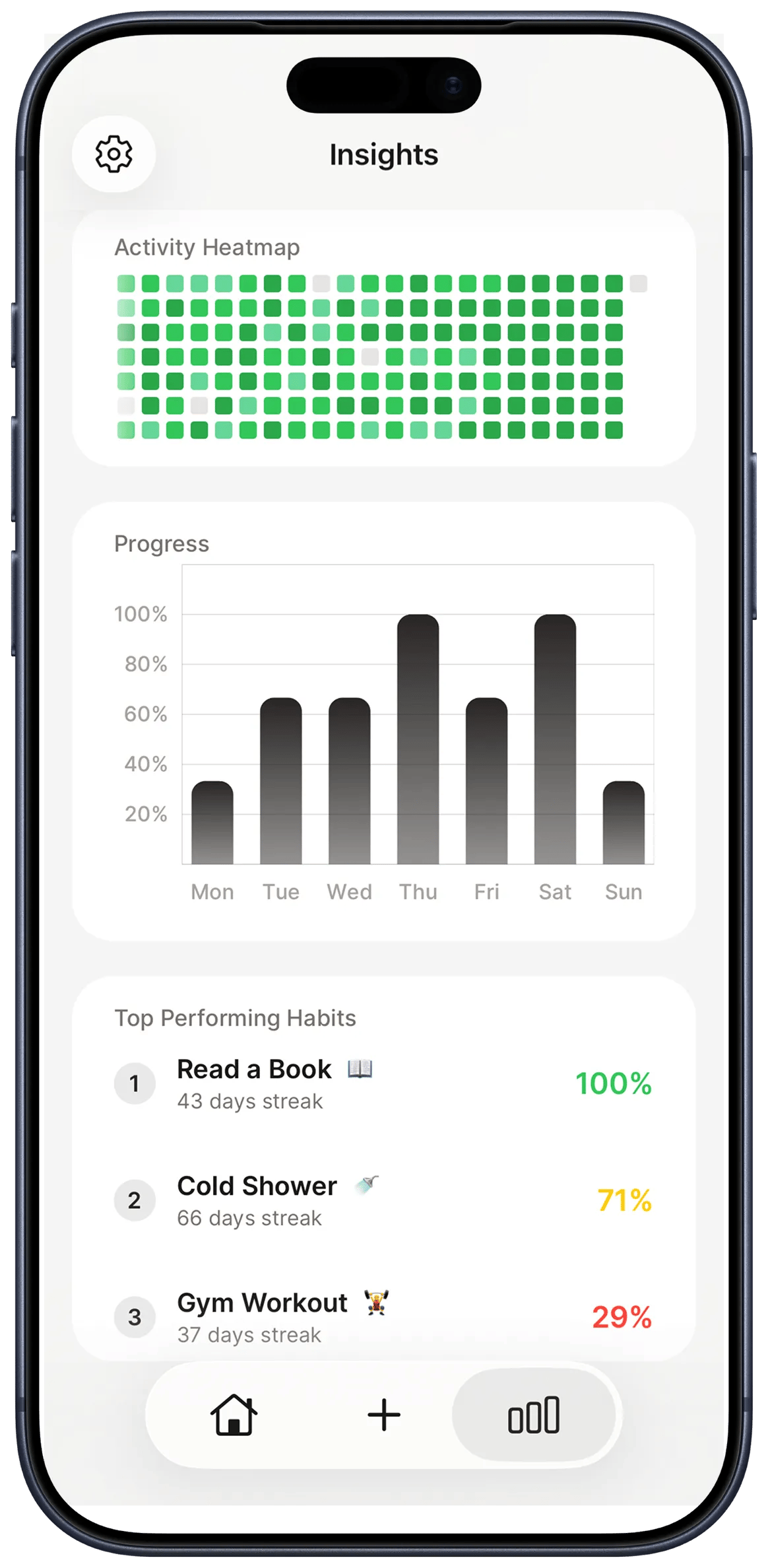
What Is Deep Work and Why It Matters
Deep work is sustained, focused effort on cognitively demanding tasks -- writing, coding, analyzing, designing, or learning something difficult. It stands in contrast to "shallow work," which Newport defines as logistical-style tasks that can be performed while distracted: email, Slack, routine admin.
The distinction matters because deep work produces disproportionate results. Asana's research found that 60% of work time is now spent on "work about work" -- searching for information, switching between apps, and attending status meetings. Only a fraction of most people's days involves the kind of concentrated effort that actually moves projects forward.
Research also shows that deep work is becoming rarer. A Fortune analysis of 2026 workplace data revealed that even as AI adoption surged to 80% of employees, the time devoted to focused, uninterrupted work actually declined. Focus efficiency hit a three-year low of 60%.
This scarcity creates an opportunity. As Newport puts it: "The ability to perform deep work is becoming increasingly rare at exactly the same time it is becoming increasingly valuable in our economy." Those who build this skill gain a serious edge.
The Four Deep Work Scheduling Strategies
Not everyone can structure their focus time the same way. Newport outlines four scheduling philosophies -- pick the one that fits your life:
- Monastic: Eliminate or radically minimize shallow obligations. Best for researchers, authors, or anyone whose primary value comes from sustained creative output.
- Bimodal: Alternate between stretches of deep work (days or weeks) and periods of normal availability. Think: a professor who is unreachable during research weeks but fully available during teaching semesters.
- Rhythmic: Schedule deep work at the same time every day. This is the most practical approach for most knowledge workers. Even 60-90 minutes of consistent daily practice compounds fast.
- Journalistic: Fit deep work into any available gap in your schedule. Requires strong focus skills since you need to switch into deep mode on demand.
For most people, the rhythmic approach works best. It turns deep work into a daily habit rather than an occasional event. Block the same window each day -- ideally during your peak cognitive hours -- and protect it the way you would protect an important meeting.
The rhythmic strategy also pairs naturally with daily routines that actually work. When deep work is embedded into a broader routine, the activation energy to get started drops significantly.
How to Start a Daily Deep Work Block
Starting small is non-negotiable. Deep work capacity is like a muscle: go too heavy on day one and you will burn out. Here is a progressive approach:
Week 1-2: Start with 30-45 minutes. Pick one task that requires real concentration. Set a timer. Work on nothing else until it rings. No phone, no email, no browser tabs unrelated to the task.
Week 3-4: Extend to 60-75 minutes. By now, your brain is adapting. You will notice it gets easier to enter the focused state. Start refining your pre-work ritual -- the same cup of coffee, the same playlist, the same desk setup.
Week 5-8: Build toward 90 minutes. Research suggests most people need 6-8 weeks to comfortably sustain 90-minute deep work sessions. Progress tends to accelerate around weeks 3-5 as your brain adapts to the routine.
4 hours
Maximum daily deep work capacity for most humans
The upper limit for most people is about four hours of deep work per day. Even elite performers -- concert violinists, chess grandmasters, mathematicians -- rarely sustain more than that. But those four hours of truly focused work can produce more value than an entire day of fragmented effort.
Managing Distractions During Deep Work
The biggest threat to deep work is not a lack of willpower -- it is a poorly designed environment. Research on "brain drain" found that your phone becomes a distraction just by being near you, even with notifications off.
Here is a practical distraction management checklist:
- Phone in another room. Not silenced on your desk. In another room. The mere presence of your phone reduces available cognitive capacity.
- Close communication tools. Shut down email, Slack, and messaging apps entirely. A study by Gloria Mark at UC Irvine found that it takes an average of 23 minutes and 15 seconds to fully regain deep focus after a single interruption.
- Use a website blocker. Tools like Cold Turkey or Freedom can enforce your commitment when self-control wavers.
- Communicate boundaries. Tell colleagues when you are in a deep work block. Most interruptions are not truly urgent.
- Prepare everything before you start. Have all materials, references, and tools ready. Every time you pause to search for something, you risk falling out of the focused state.
Newport's second rule -- "embrace boredom" -- is equally important here. If you train your brain to expect stimulation every idle moment (checking your phone in line, scrolling during TV commercials), you erode the concentration capacity you need for deep work. Practicing tolerance for boredom outside of work sessions strengthens your ability to focus during them. This principle aligns well with building a no-phone morning habit to start your day without digital noise.
Building Up Your Deep Work Capacity
23 min 15 sec
Average time to regain focus after one interruption
Think of deep work capacity as a spectrum. When you first start, 25 minutes of genuine focus might feel exhausting. That is completely normal. The key is progressive overload -- gradually increasing the duration and intensity of your focus sessions.
Strategies to build capacity faster:
- Practice productive meditation. Newport recommends spending 2-3 sessions per week focusing on a single professional problem during a physical activity like walking. This trains directed attention without the pressure of output.
- Train with deliberate rest. Research from DeskTime shows top performers work in focused blocks followed by real breaks. Current data suggests a pattern of roughly 75 minutes of focused work followed by 30 minutes of genuine rest.
- Set a hard shutdown time. End work at a fixed time every day. This creates urgency during work hours and ensures your brain gets the recovery it needs. A 2025 study published in Science found that even one night of poor sleep reduces working memory capacity by up to 40%.
- Eliminate shallow work creep. Audit your schedule weekly. If meetings and admin tasks are expanding, they are eating into your deep work capacity. Drain the shallows deliberately.
Tracking Deep Work Hours
What gets measured gets managed. Tracking your deep work sessions serves two purposes: it creates accountability, and it reveals patterns you would otherwise miss.
A simple tracking method:
- Log each session. Record the date, start time, end time, and what you worked on.
- Tally daily and weekly totals. Aim for a gradual upward trend, not perfection.
- Note your focus quality. Was the session genuinely deep, or were you half-distracted? Honest self-assessment matters more than the raw number.
- Review weekly. Look for patterns: What time of day produces your best focus? Which tasks resist deep work? What keeps breaking your concentration?
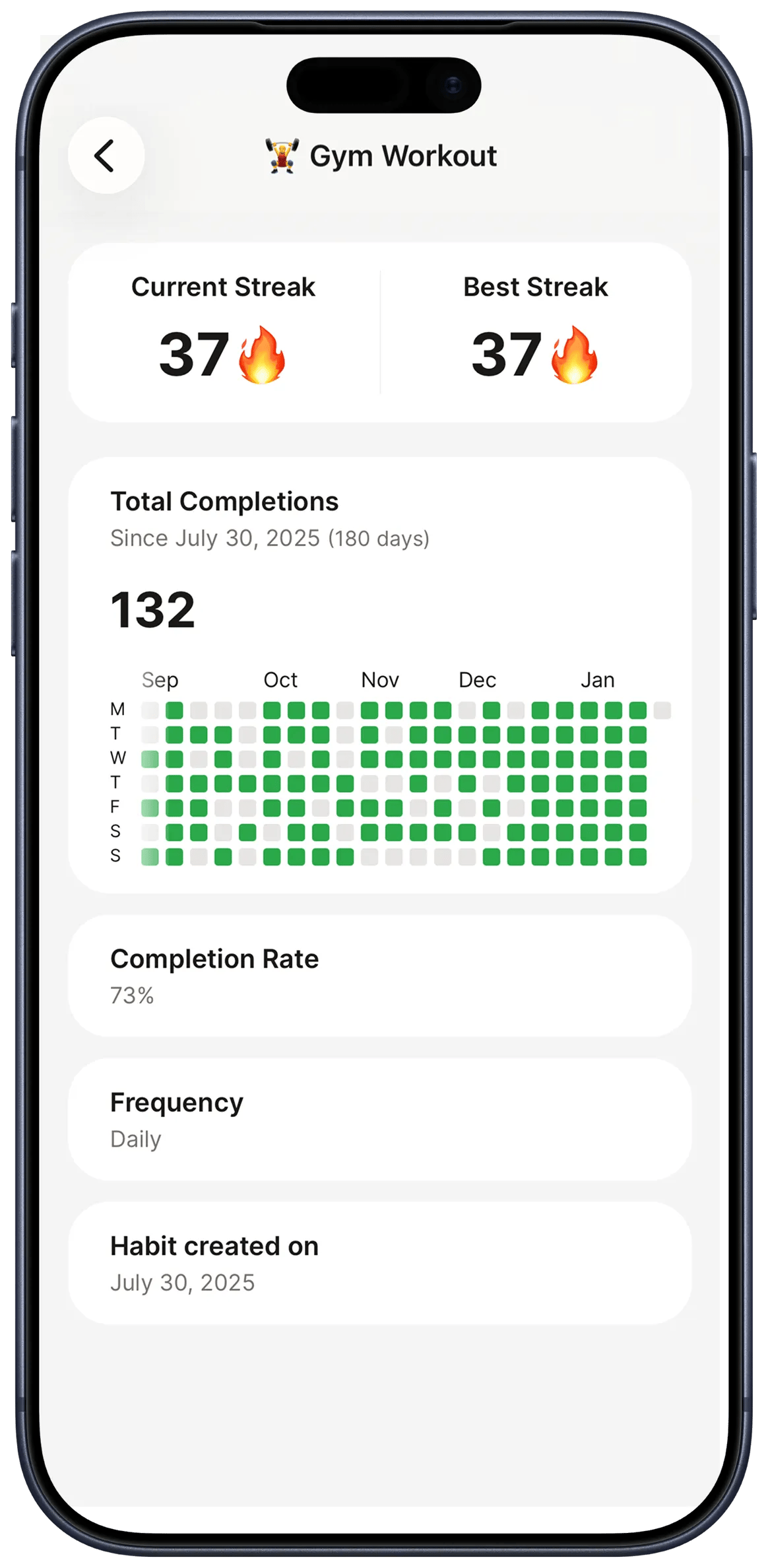
Cal Newport himself tracks deep work hours on a physical tally sheet and reviews his monthly totals. The act of marking each completed session creates a visual streak that motivates consistency -- much like how habit streaks work for any behavior you want to maintain.
A habit tracking app makes this even easier. Instead of manual tallies, you can log each deep work block as a daily habit, track your streak, and spot trends over weeks and months. The visual feedback of an unbroken chain is a powerful motivator to show up tomorrow even when you do not feel like it.
A weekly review also helps you connect your deep work practice to outcomes. Are you producing better work? Learning faster? Finishing projects ahead of schedule? These results reinforce the habit loop and make the practice self-sustaining. For more on building an effective review practice, see our guide to journaling as a habit.
Log your deep work sessions daily and watch your focus streak grow. Download Habit Streak to get started.
Download FreeFrequently Asked Questions
How many hours of deep work should I aim for each day?▼
Most experts agree that four hours is the practical upper limit for deep work in a single day. Beginners should start with 30-60 minutes and build up gradually over 6-8 weeks. Even 90 minutes of consistent daily deep work will produce significantly better results than a full day of shallow, distracted effort.
What is the best time of day for deep work?▼
For most people, the first few hours after waking offer the strongest cognitive performance -- typically between 8-11 AM. However, this varies by chronotype. Night owls may find their peak focus window in the late morning or afternoon. Track your sessions for two weeks to identify your personal best time.
Can I do deep work with music or background noise?▼
It depends on the type of work. Research suggests that music with lyrics impairs performance on tasks requiring language processing (writing, reading). Ambient sounds, white noise, or instrumental music can help some people enter a focused state. Experiment to find what works for you, but silence is generally safest for complex cognitive tasks.
How is deep work different from flow state?▼
Deep work is a deliberate practice -- you schedule it, protect it, and intentionally focus on demanding tasks. Flow state is a psychological phenomenon where you become so absorbed in a task that you lose track of time. Deep work often leads to flow, but they are not the same thing. You can do deep work without reaching flow, and the habit of deep work makes flow more likely to occur.
What if my job requires constant availability and communication?▼
Start with the journalistic scheduling approach -- fitting deep work into whatever gaps you can find, even 30-minute blocks. Communicate with your manager about protecting one or two focus blocks per day. Many teams now adopt 'no-meeting mornings' or 'focus Fridays' to create space for concentrated work. Even small amounts of protected deep work produce outsized results.
- 1.2026 State of the Workplaceactivtrak.com
- 2.American Psychological Association reportsapa.org
- 3.Deep Work: Meaning, Benefits, and 7 Ways to Focus Today [2025] • Asanaasana.com
- 4.A Fortune analysis of 2026 workplace datafortune.com
- 5.Deep Work: The Complete Guide (Inc. a Step-by-Step Checklist)todoist.com
- 6.Context Switching Statistics 2026: The Hidden Cost of Multitasking, App Toggling, and Fragmented Focusspeakwiseapp.com
- 7.The Hidden Costs of Context Switchingactivtrak.com
- 8.10 productivity research studies from 2025desktime.com
- 9.The Science of Productivity Focus in 2026: Brain Based Habits for Better Work and Clear Thinkingdeepfocuspro.com