 By Adrien Blanc
11 Daily Habits of Highly Productive People
The average employee is only productive for 2 hours and 53 minutes per day out of a full 8-hour workday. That means most of us waste more than 60% of our working hours. The difference between the most productive people and everyone else is not talent, willpower, or caffeine intake -- it is daily habits.
Highly productive people build repeatable systems that protect their focus, manage their energy, and reduce decision fatigue. Research from a meta-analysis published in PLOS ONE confirms that structured time management is moderately but consistently related to job performance, academic achievement, and overall wellbeing. The good news: these habits are learnable, stackable, and do not require a 4 a.m. alarm.
Below are 11 daily habits backed by behavioral science that separate high performers from everyone else. Whether you are a student, remote worker, or professional, these habits form a daily routine that actually works.
82%
of people have no time management system
Start building your productivity routine today. Track all 11 habits in one place with Habit Streak.
Download Free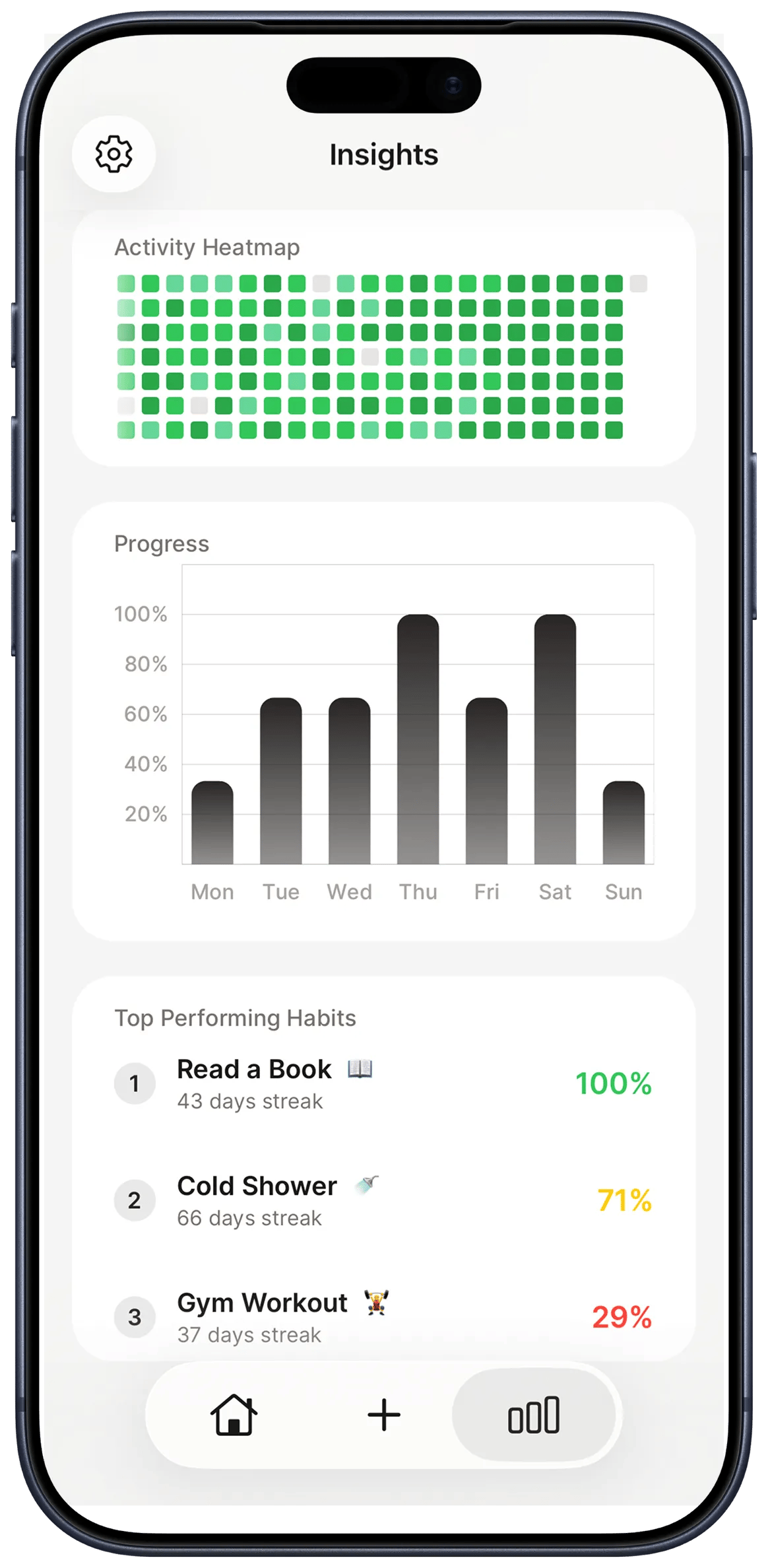
1. Plan Your Day the Night Before
Planning tomorrow before bed removes the biggest friction point from your morning: deciding what to do. When you wake up with a clear plan, you skip the indecision that burns mental energy before you even start working.
Research supports this. A study found that 75% of people who prepared the night before reported higher satisfaction with their work, and 60% felt they were more productive the following day. Planning at night also helps your brain process upcoming tasks during sleep, a phenomenon psychologists call the Zeigarnik effect.
Your evening plan does not need to be elaborate:
- Write 3 priority tasks for the next day
- Identify your single most important task (the one that moves the needle)
- Review your calendar so there are no surprises
Pair this with a strong evening routine for better sleep and you set the stage for a productive morning before your head hits the pillow.
2. Start With Your Hardest Task
The most productive people tackle their hardest, most cognitively demanding work first. This approach, sometimes called "eating the frog," works because your prefrontal cortex -- the brain region responsible for complex thinking -- performs best in the first few hours after waking.
Delaying difficult tasks leads to procrastination spirals. Easy tasks feel productive but rarely move you toward meaningful goals. By frontloading hard work, you guarantee progress on what matters most, even if the rest of your day goes sideways.
Pair this habit with deep work sessions of 60-90 minutes for maximum impact. Close your email, silence notifications, and give your best hours to your best work.
3. Time Block Your Calendar
Time blocking means assigning every hour of your day to a specific task or category of work. It turns your to-do list into a structured schedule. Without it, most people default to reacting -- answering emails, attending unplanned meetings, and handling whatever feels urgent.
Research shows that 82% of people lack a structured time management system, and those who rely on "dealing with whatever comes up" are the least productive group studied. On the other hand, people who use the Eisenhower Matrix or time blocking report feeling in control of their tasks nearly every day.
How to start time blocking:
- Block 2-3 hours for deep work in the morning (guard this ruthlessly)
- Batch admin tasks like email into specific windows
- Schedule breaks so they actually happen
- Leave buffer time between blocks for overflow
4. Take Regular Breaks
Working without breaks does not make you more productive. It makes you slower, less accurate, and more stressed. DeskTime's research on top performers found that the most productive workers now follow a pattern of roughly 75 minutes of focused work followed by 33 minutes of rest.
75 / 33
minutes work-to-rest ratio of top performers
This has evolved from the original 52/17 ratio discovered pre-pandemic, suggesting that modern workers need even longer recovery periods between focused sessions. The key insight: rest is not the opposite of productivity -- it is a requirement for it.
During breaks, step away from screens. Walk, stretch, or do something completely unrelated to work. Your brain continues processing problems in the background through what neuroscientists call the "default mode network."
5. Single-Task Instead of Multitask
Multitasking is one of the most persistent productivity myths. A landmark study by Rubinstein, Evans, and Meyer found that task-switching can reduce productivity by up to 40%. The more complex the tasks, the greater the loss.
The damage goes beyond speed. Multitasking:
- Increases error rates by 12.6%
- Extends task completion time by up to 50%
- Costs workers roughly 6 hours per week in lost productivity
- Raises stress levels, contributing to burnout
Only about 2.5% of people can multitask effectively. For everyone else, single-tasking -- giving one task your full attention before moving to the next -- is the better strategy. Participants in UC Berkeley's "Focus Sprint" research who avoided task-switching felt 43% more productive.
6. Batch Similar Tasks Together
Task batching means grouping similar activities and handling them in a single block. Answer all emails at once. Make all phone calls back-to-back. Write all reports during one session. The principle is simple: context-switching has a cognitive cost, and batching eliminates it.
Every time you shift between different types of thinking -- from strategic planning to data analysis to creative writing -- your brain needs time to recalibrate. Research on interruptions shows it takes an average of 23 minutes to fully refocus after switching contexts. If you switch tasks 10 times a day, that is nearly 4 hours lost.
Common batches for productive people:
- Communication batch: emails, Slack messages, texts (2-3 times daily)
- Creative batch: writing, designing, brainstorming
- Admin batch: invoices, scheduling, filing
- Meeting batch: stack meetings together to protect uninterrupted blocks
7. Review and Reflect Weekly
Daily habits keep you moving. Weekly reviews keep you moving in the right direction. Without regular reflection, it is easy to stay busy without making meaningful progress. A systematic review in Frontiers in Education found that planning, goal-setting, and prioritization are among the most beneficial strategies for both productivity and wellbeing.
A productive weekly review takes 15-30 minutes and covers:
- What went well this week (celebrate wins)
- What fell short and why
- Top priorities for next week
- Habits or systems to adjust
Pair this with a journaling habit and you build a feedback loop that refines your approach over time.
8. Protect Your Energy, Not Just Your Time
Time management gets all the attention, but energy management is what separates good days from great ones. You can have 3 hours blocked for deep work, but if you spent the morning in draining meetings, those hours will produce mediocre output.
A study from Oxford University found that happy employees are up to 13% more productive. Mood and energy are not soft skills -- they directly impact output quality.
Protecting your energy means:
- Scheduling demanding work during peak energy hours (typically morning)
- Saying no to commitments that drain you without proportional benefit
- Managing your environment -- noise, lighting, temperature all affect focus
- Building recovery into your day, not just your evening
This is also why reducing screen time matters. Constant digital stimulation drains cognitive reserves faster than most people realize.
9. Limit Meetings and Notifications
Meetings and notifications are two of the biggest productivity killers in modern work. Employees consider 71% of meeting time unproductive, and days without meetings increase productivity by 22%.
Meanwhile, the average worker loses 1 hour and 18 minutes daily to distractions, adding up to roughly 340 hours per year. Once interrupted, it takes 23 minutes to regain full focus.
Practical steps to reclaim your attention:
- Disable non-essential notifications during work hours
- Check email at set times (2-3 times per day, not every 56 minutes)
- Propose async alternatives to meetings where possible
- Advocate for no-meeting days at your workplace
10. Move Your Body Daily
Exercise is not just a health habit -- it is a productivity habit. A Bristol University study of 200 employees found that on workout days, concentration scores improved by 21%, on-time task completion rose by 22%, and motivation jumped by 41%.
You do not need an intense gym session. Research suggests that low to moderate intensity exercise provides the greatest productivity benefits. A 20-minute walk, a yoga session, or a quick bodyweight routine is enough to trigger the neurochemical changes that sharpen focus and elevate mood.
The timing matters too. People who exercise in the morning report better overall wellbeing and are significantly more likely to feel productive throughout the day. If mornings are not realistic, any time works -- the best exercise habit is the one you actually do. For more guidance, check out our morning routine guide.
11. Track Your Habits for Accountability
You cannot improve what you do not measure. Research shows that people who track their habits are 2.5 times more likely to maintain them than those who rely on memory alone. A meta-analysis of over 19,000 participants confirmed that monitoring goal progress significantly increases rates of goal attainment.
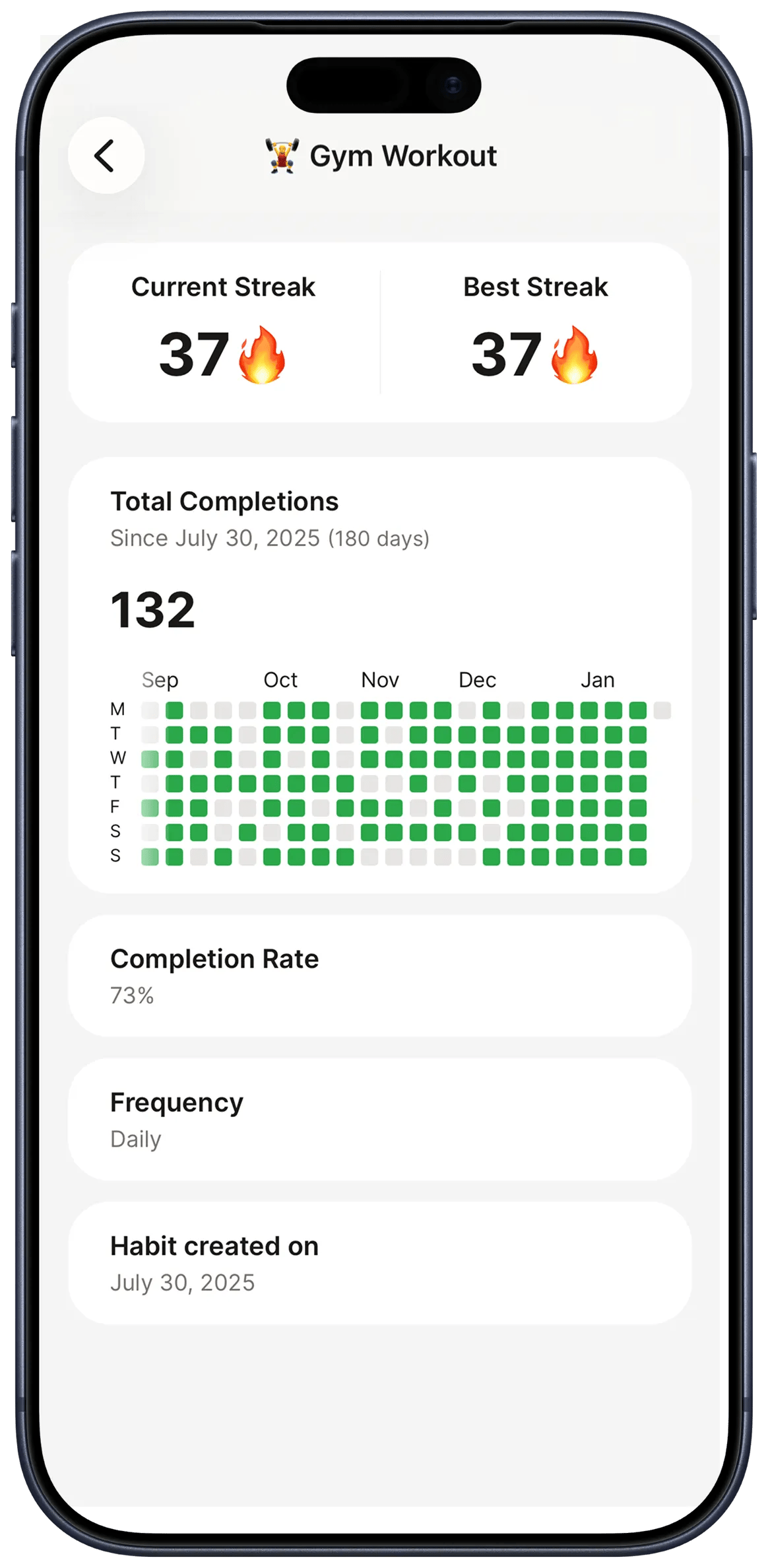
Tracking works because it creates awareness. When you see a streak building -- 10, 20, 50 days in a row -- you become invested in maintaining it. Behavioral economists found that people expend 40% more effort to maintain a streak than to achieve the same behavior without streak tracking.
Adding accountability amplifies the effect even further. Studies show that having an accountability partner increases goal completion by up to 95% compared to going alone.
The key is to keep it simple. Track the process (did I do my deep work session?) rather than outcomes (did I finish the project?). Process tracking leads to 37% higher habit persistence.
Ready to build these 11 habits? Habit Streak makes tracking simple with streaks, reminders, and progress charts.
Download FreePutting It All Together
You do not need to adopt all 11 habits overnight. That is a recipe for burnout, not productivity. Start with 2-3 habits that address your biggest bottlenecks. If mornings are chaotic, begin with planning the night before. If you constantly feel scattered, try time blocking and single-tasking first.
The most productive people treat their habits like compound interest. Small, consistent improvements stack over time into extraordinary results. Track your progress, review what works, and adjust as you go. That is the real secret to lasting productivity -- not a hack, but a system built on daily routines that actually work.
Frequently Asked Questions
How many productivity habits should I build at once?▼
Start with 1-3 habits maximum. Research on habit formation shows that trying to change too many behaviors simultaneously reduces your success rate. Once a habit becomes automatic (typically 2-3 months), add another one.
What is the single most impactful productivity habit?▼
Planning your day the night before is often cited as the highest-leverage habit. It eliminates morning decision fatigue and ensures you start each day with clear priorities. Pair it with tackling your hardest task first for maximum results.
Does tracking habits actually make you more productive?▼
Yes. A meta-analysis of over 19,000 participants found that self-monitoring significantly improves goal attainment. People who track their habits are 2.5 times more likely to maintain them long-term compared to those relying on memory alone.
How long does it take to build a new productivity habit?▼
The popular claim of 21 days is a myth. Research published in the European Journal of Social Psychology found habit formation ranges from 18 to 254 days, with an average of about 66 days. Be patient and focus on consistency over perfection.
Can these habits work for remote workers?▼
Absolutely. Remote workers actually have more control over their environment, which makes time blocking, single-tasking, and limiting notifications even more effective. The key challenges for remote workers are creating structure and separating work from personal time.
- 1.2025 Productivity Statistics: Latest Data and Trends Reportproductivity.design
- 2.Does time management work? A meta-analysispmc.ncbi.nlm.nih.gov
- 3.90% of Americans love morning routines, but most spend under 30 minutes on them: 'You're not set up to thrive,' exper...cnbc.com
- 4.Research shows that 82% of people lack a structured time management systemacuitytraining.co.uk
- 5.10 productivity research studies from 2025desktime.com
- 6.landmark study by Rubinstein, Evans, and Meyerapa.org
- 7.How Is Productivity Affected When Employees Multitask?activtrak.com
- 8.Multicosts of Multitaskingpmc.ncbi.nlm.nih.gov
- 9.Frontiers | Boosting productivity and wellbeing through time management: evidence-based strategies for higher educati...frontiersin.org
- 10.100+ Key Employee Productivity Statistics for 2026selectsoftwarereviews.com
- 11.How does exercise improve work productivity?ciphr.com
- 12.Morning Routines of Productive Peoplemonitask.com
- 13.The Science Behind Habit Trackingpsychologytoday.com
- 14.The Complete Science of Habit Tracking and Measurementcohorty.app
- 15.having an accountability partner increases goal completion by up to 95%askwonder.com