 By Adrien Blanc
Is a 5 AM Morning Routine Worth It? Honest Pros and Cons

For about 20-25% of people, a 5 AM routine is genuinely beneficial. For everyone else, it is likely counterproductive. The answer depends almost entirely on your chronotype — your genetically determined preference for when you sleep and wake. Forcing a 5 AM alarm when your biology favors a later schedule does not build discipline. It builds sleep debt, and research from the University of Pennsylvania found that sleeping six hours per night for just two weeks produces cognitive deficits equivalent to staying awake for 24 hours straight — while participants barely noticed the decline.
The 5 AM club, popularized by Robin Sharma's 2018 book, has become a cultural shorthand for ambition. Celebrities and tech CEOs publicly champion early rising, and social media is flooded with pre-dawn routine videos. But sleep scientists are increasingly pushing back. The real question is not "should I wake up at 5 AM?" but rather "does 5 AM align with my biology, and am I protecting my total sleep?"
This article breaks down exactly who benefits from a 5 AM wake-up, who does not, and how to find the routine that actually works for your body — because the best morning routine is one built on daily habits that actually stick.
Track your ideal morning routine — whether it starts at 5 AM or 8 AM.
Download Free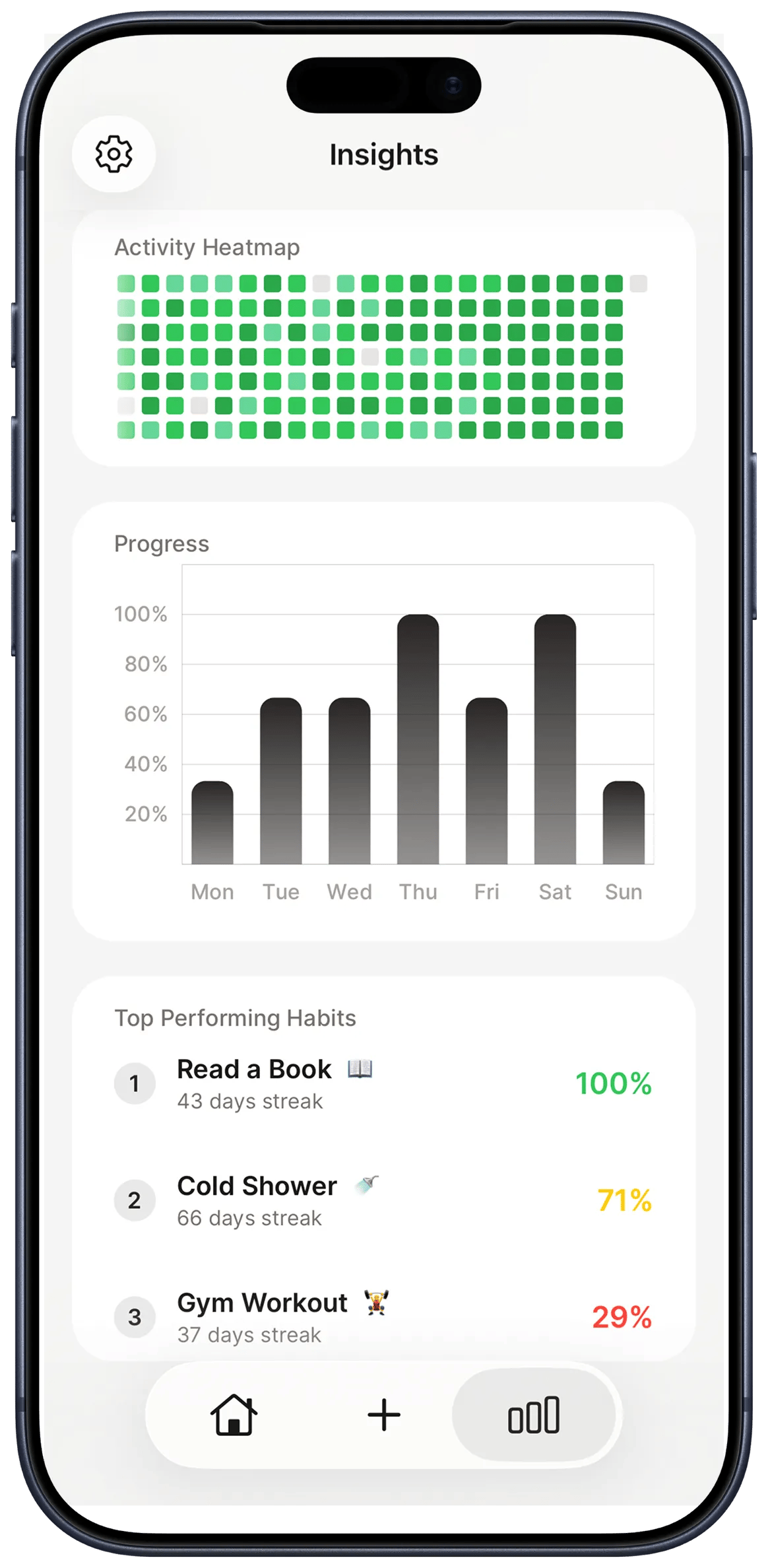
Why the 5 AM Club Became So Popular
The 5 AM movement taps into a real desire for uninterrupted time before the world wakes up. Sharma's "20-20-20" formula — 20 minutes of exercise, 20 minutes of reflection, and 20 minutes of learning — is appealing because it gives structure to a chaotic part of the day.
There is legitimate psychology behind it. A 2025 survey commissioned by Nespresso and Project Healthy Minds found that 90% of Americans say their morning routine sets the tone for their mental wellness throughout the day. The problem is that most people spend less than 30 minutes on their morning routine. Waking earlier seems like the obvious fix.
The narrative is also reinforced by survivorship bias. We hear about Tim Cook waking at 3:45 AM and Mark Zuckerberg's early starts, but we rarely hear from the millions of people who tried 5 AM and quietly abandoned it after a week of exhaustion. The success stories get amplified. The failures stay silent.
90%
of Americans say their morning routine sets the tone for their mental wellness
The Real Benefits of Waking Up at 5 AM
When done correctly — meaning you also go to bed early enough — a 5 AM routine offers several measurable advantages. These benefits are not about the hour itself, but about what early rising enables.
- Uninterrupted focus time. Before emails, messages, and family obligations begin, the early morning offers a window for deep, focused work that is hard to replicate later in the day.
- Higher daily energy. According to a study in the Journal of Behavioral Medicine (2024), people who follow structured morning routines report 32% higher daily energy and improved sleep quality.
- Better mood from morning exercise. Research published in the British Journal of Sports Medicine shows that 20 minutes of morning movement enhances mood and reduces anxiety more effectively than later workouts when done consistently.
- Cortisol alignment. Your body's cortisol levels naturally peak in the early morning, promoting alertness and metabolic readiness. Waking during this peak means you are working with your biology, not against it — if you are a morning chronotype.
- Morning light exposure. Even 5-10 minutes of outdoor light without sunglasses triggers serotonin release. Data from the National Sleep Foundation (2025) confirms this enhances focus and emotional stability throughout the day.
The Downsides Nobody Talks About
The biggest risk of a 5 AM routine is chronic sleep deprivation — and most people who attempt it fall into this trap. Going to bed at 9 PM is socially and practically difficult for many adults, especially parents, shift workers, or anyone with evening commitments.
Here is what the research warns about:
- Invisible cognitive decline. The University of Pennsylvania study mentioned above found that people sleeping six hours nightly were as impaired as someone who had been awake for 24 hours — yet they rated themselves as only "slightly sleepy." You will not feel how impaired you are.
- Productivity loss. Analysis from SlumberTheory shows those sleeping 5-6 hours experience 19% more productivity loss compared to optimal sleepers, while those under 5 hours lose 29%.
- Mental health impact. Sleep deprivation increases anxiety, reduces empathy, and makes social interactions more difficult. As neurologist Dr. Birgit Hogl notes, insufficient sleep impairs working memory, emotion regulation, and decision-making.
- Chronic disease risk. Long-term studies link chronic sleep restriction to higher rates of metabolic disorders, diabetes, and high blood pressure.
- Social isolation. A 9 PM bedtime means missing evening time with partners, friends, and family. The social cost is real and rarely discussed in productivity content.
19-29%
more productivity loss from sleeping 5-6 hours vs. optimal sleep
Chronotypes: Why 5 AM Works for Some and Not Others
Your chronotype is genetically determined and cannot be retrained through willpower. A landmark 2019 study of nearly 700,000 people identified 351 genetic variants associated with morningness, demonstrating that sleep timing preferences are deeply biological.
The population breaks down roughly as follows:
| Chronotype | % of Population | Natural Wake Time | 5 AM Compatibility |
|---|---|---|---|
| Morning lark | 20-25% | 5:00-6:30 AM | High — aligns with natural rhythm |
| Intermediate (dove) | ~50% | 6:30-8:00 AM | Moderate — possible with gradual shift |
| Night owl | 20-30% | 8:00 AM or later | Low — works against biology |
Research from Imperial College London analyzing UK Biobank data found that adults who are naturally more active in the evening actually performed better on cognitive tests than morning types. Being a night owl is not a flaw to fix. It is a different biological pattern with its own cognitive advantages.
The real problem is not chronotype itself — it is that modern society structures work and school around early schedules. Morning types appear more successful partly because the system was built for them, not because early rising creates success.
5 AM Routine: Honest Pros and Cons Summary
| Pros | Cons |
|---|---|
| Quiet, distraction-free hours for focused work | Requires 9 PM bedtime — socially restrictive |
| Aligns with cortisol peak for natural larks | Causes sleep debt for non-morning chronotypes |
| Morning exercise boosts mood all day | Invisible cognitive decline from insufficient sleep |
| Structured start reduces decision fatigue | Initial motivation fades; biology reasserts itself |
| Sense of accomplishment before the day begins | Chronic health risks if total sleep is sacrificed |
How to Find Your Optimal Wake-Up Time
The best wake-up time is the one that gives you 7-9 hours of sleep and aligns with your natural energy peaks. Research from the UK Biobank study of nearly 480,000 individuals found that cognitive performance peaks at exactly 7 hours of sleep, then declines in both directions.
Here is how to find yours:
- Track your natural wake time. Spend a week (ideally on vacation) going to bed when tired and waking without an alarm. Note when you naturally wake up. That is your biological baseline.
- Identify your peak energy window. For two weeks, rate your energy and focus hourly from 1-10. You will notice a pattern — your morning routine should be built around these peaks.
- Work backward from your required wake time. If you must wake at 6:30 AM for work, your bedtime needs to be 9:30-11:30 PM. Protect this window with a consistent evening routine.
- Optimize the routine, not the hour. A focused 45-minute routine at 7 AM beats a groggy 90-minute routine at 5 AM. Structure matters more than the timestamp.
If You Do Want to Try 5 AM: A Gradual Approach
If you are a morning-leaning chronotype and want to experiment with 5 AM, the key is to shift gradually and protect your total sleep. Dr. Leah Kaylor recommends moving in 15-minute increments: go to bed 15 minutes earlier and wake 15 minutes earlier, repeating until you reach your target.
Here is a practical 4-week plan:
- Week 1: Move bedtime and wake time 15 minutes earlier. Focus on an evening wind-down routine to make falling asleep easier.
- Week 2: Shift another 15 minutes. Add one morning habit — light exposure, movement, or journaling.
- Week 3: Shift again. Build a 30-minute morning block. Keep your phone away for the first hour.
- Week 4: Reach your target time. Evaluate honestly: are you sleeping 7+ hours? Do you feel more energized, or just more disciplined?
The litmus test is simple. After four weeks, if you are waking before your alarm, feeling rested, and performing well — the routine works for you. If you are dragging through afternoons, relying on caffeine, or dreading the alarm — your body is telling you something. Listen to it.
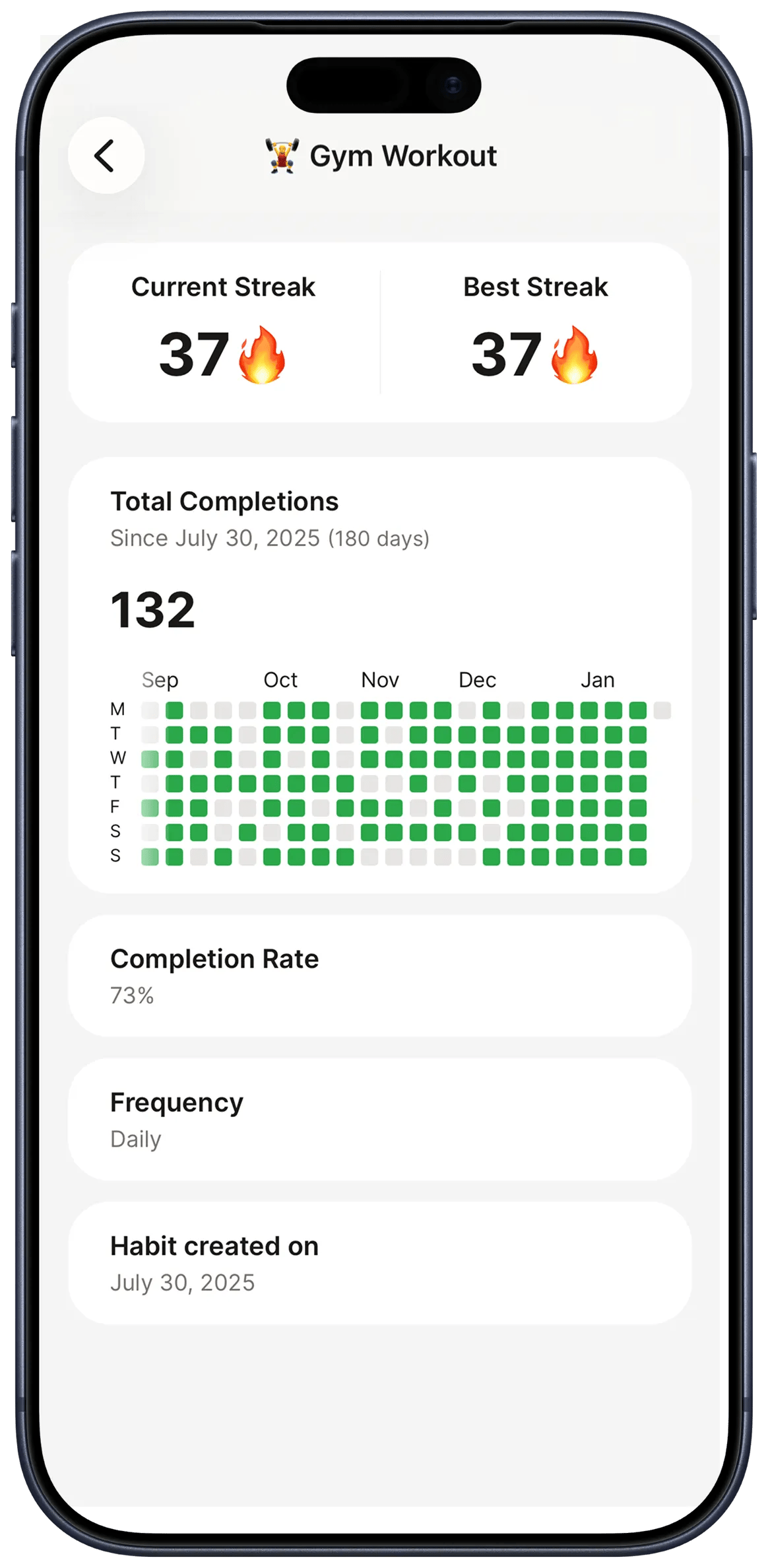
Use Habit Streak to gradually shift your wake-up time — track bedtime, wake time, and energy levels in one place.
Download FreeFrequently Asked Questions
Is waking up at 5 AM healthy?▼
It can be healthy if you are a morning chronotype and you consistently sleep 7-9 hours by going to bed early enough. For night owls or intermediate types who do not adjust their bedtime, waking at 5 AM leads to chronic sleep deprivation, which is associated with cognitive decline, mood disorders, and increased disease risk.
How long does it take to adjust to a 5 AM wake-up?▼
Sleep experts recommend shifting in 15-minute increments, which means reaching a 5 AM wake-up from a 7 AM baseline takes about 8 weeks. However, if your chronotype is genuinely evening-oriented, you may never fully adapt because your circadian rhythm is genetically determined.
What should I do first thing at 5 AM?▼
Get natural light exposure within the first 10 minutes to suppress melatonin and boost serotonin. Follow with hydration, then choose one high-value activity: exercise, journaling, reading, or focused work. Avoid checking your phone — the dopamine hit from notifications undermines the calm focus that makes early mornings valuable.
Can I become a morning person if I am naturally a night owl?▼
You can shift your schedule somewhat, but you cannot change your underlying chronotype. Research has identified over 350 genetic variants tied to sleep timing. Night owls who force early schedules often accumulate sleep debt and experience worse cognitive performance. A better approach is to optimize your routine for your natural rhythm.
What is a good alternative to a 5 AM routine?▼
Focus on a structured morning routine at whatever time you naturally wake — whether that is 6 AM, 7 AM, or 8 AM. The benefits attributed to 5 AM routines (focus, exercise, personal growth) come from the structure and intentionality, not the clock time. Protect your sleep, build a consistent routine, and match your deep work to your peak energy hours.
- 1.Sleep deprivation: Impact on cognitive performancepmc.ncbi.nlm.nih.gov
- 2.90% of Americans love morning routines, but most spend under 30 minutes on them: 'You're not set up to thrive,' exper...cnbc.com
- 3.The Perfect Morning Routine (Backed By Science)taylorpearson.me
- 4.Homepage | BJSMbjsm.bmj.com
- 5.Sleep and Circadian Regulation of Cortisol: A Short Reviewpmc.ncbi.nlm.nih.gov
- 6.National Sleep Foundationthensf.org
- 7.How Sleep Hours Affect Work Performance: 2025 Analysisslumbertheory.com
- 8.Chronotypes: Is it better to be a night owl or an early bird?nesslabs.com
- 9.Being a ‘night owl’ is associated with mental sharpness, study shows | Imperial Newsimperial.ac.uk
- 10.The 5am myth: why waking early won’t make you more successfultheconversation.com