 By Adrien Blanc
Make Your Bed Every Morning: The Simplest Habit With Big Impact
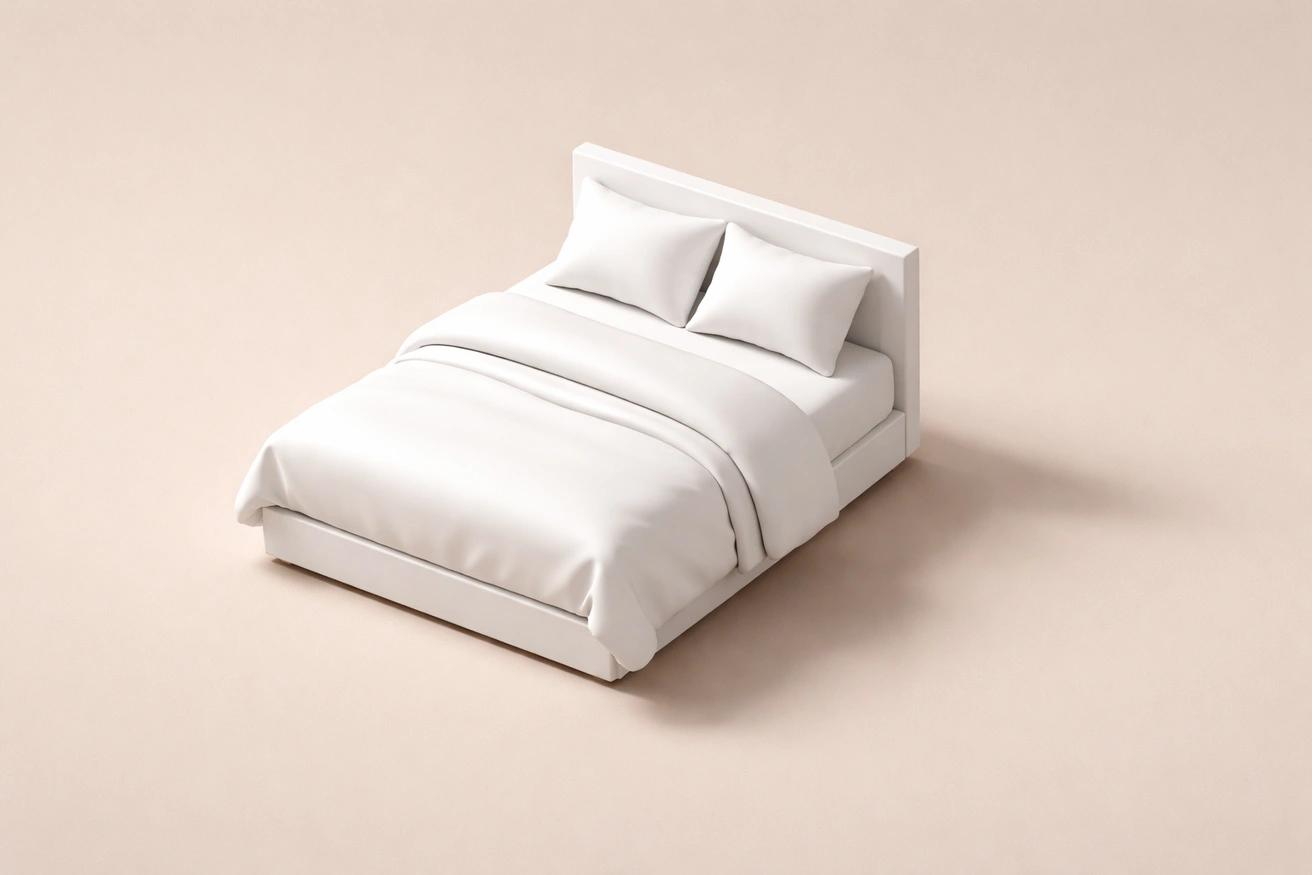
Making your bed every morning is one of the easiest habits you can build, and the research suggests it pays off far beyond a tidy bedroom. A survey of 68,000 people by Hunch.com found that 71% of bed makers consider themselves happy, while 62% of non-bed makers describe themselves as unhappy. In a separate study by Best Mattress Brand, 92% of people who make their bed reported feeling productive at work, compared to only 84% of those who skip it.
The habit takes roughly two minutes. It requires no equipment, no preparation, and no special motivation. Yet it consistently shows up in productivity research as what behavioral scientists call a keystone habit — a small routine that triggers a chain reaction of other positive behaviors throughout the day.
71%
of bed makers report being happy vs. 62% of non-bed makers reporting unhappiness
If you are building a daily routine that actually works, making your bed is one of the simplest and most effective places to start. Here is why it works, what the research actually shows, and how to turn it into a habit that sticks.
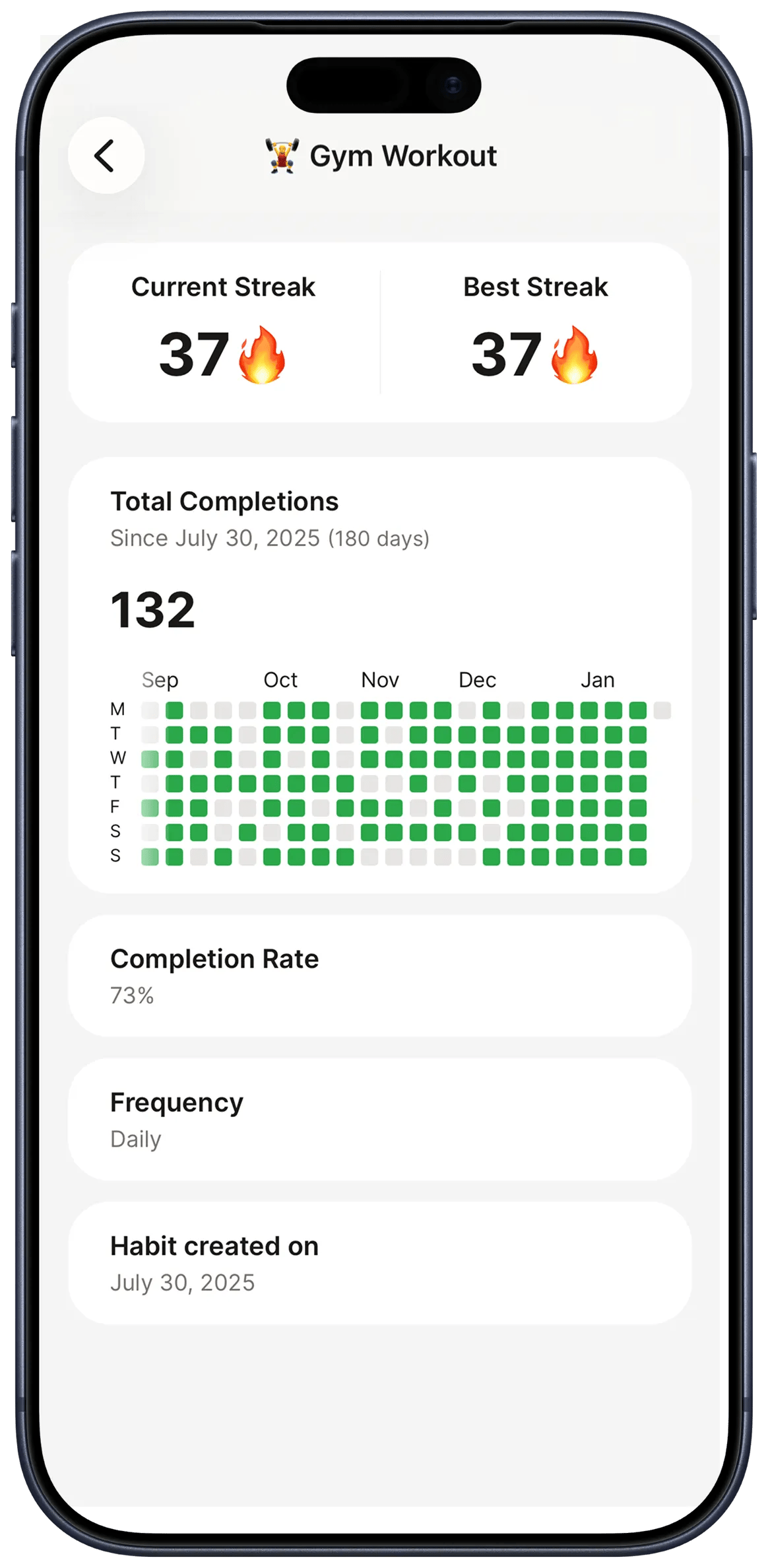
Start your morning with a win — track your bed-making streak with Habit Streak
Download Free
What Makes Bed Making a Keystone Habit
A keystone habit is a small behavior that naturally spills over into other areas of your life. The term was popularized by Charles Duhigg in The Power of Habit, where he specifically highlighted bed making as a prime example. His research-backed observation: "Making your bed every morning is correlated with better productivity, a greater sense of well-being, and stronger skills at sticking with a budget."
Keystone habits work because they create what researchers call "small wins." Each small win builds your confidence and momentum, making the next positive decision slightly easier. Making your bed is the perfect keystone habit because:
- It is effortless. Two minutes, no willpower required once it becomes automatic.
- It provides immediate feedback. You can see the result instantly.
- It anchors your morning. It gives you a consistent starting point for stacking other habits.
- It signals identity. You start the day as someone who follows through.
The Best Mattress Brand survey confirmed this spillover effect: individuals who consistently make their beds are more likely to follow routines and schedules (over 80%), eat healthier (15% more likely), and exercise regularly (17% more likely).
What the Research Says About Bed Makers
People who make their beds consistently tend to be more productive, more organized, and more satisfied with their lives. The data across multiple studies paints a remarkably consistent picture.
Key findings from the research:
- Productivity: 34% of bed makers rated themselves "very productive" at work, compared to roughly 20% of non-bed makers.
- Accomplishment: 74% of bed makers feel very accomplished at the end of the day, versus only 50% of those who skip it.
- Work quality: 76% of bed makers said their work quality is always to the best of their ability, compared to 68% of non-bed makers.
- Organization: 72% of bed makers organize and plan their daily lives, versus just 46% of non-bed makers.
Why Two Minutes Can Change Your Whole Day
Completing a small task first thing in the morning triggers a dopamine release that primes your brain for more accomplishment. This is the neurological reason bed making works as a morning anchor.
When you finish a task — even a tiny one — your brain releases dopamine, the neurotransmitter linked to motivation and reward. Research published in the National Library of Medicine has shown that engaging in simple small acts like making the bed when you wake up leads to feelings of accomplishment that create a domino effect of increased motivation throughout the day.
Admiral William H. McRaven, former commander of U.S. Special Operations Command, made this point famous in his 2014 commencement speech at the University of Texas at Austin, which has been viewed over 10 million times:
"If you make your bed every morning, you will have accomplished the first task of the day. It will give you a small sense of pride, and it will encourage you to do another task and another and another."
His reasoning was simple: if you cannot do the small things right, you will never do the big things right. The bed-making routine he learned during Navy SEAL training became a daily ritual he carried through decades of military leadership.
How Making Your Bed Builds Discipline and Order
A made bed creates a visual cue of order that influences how you treat the rest of your environment. Psychologists refer to this as environmental priming — your physical surroundings shape your mental state.
When your bedroom is tidy, you are more likely to keep other spaces clean. When your first act of the day is orderly, you are more likely to approach the rest of your tasks with structure. The Best Mattress Brand survey found that over 80% of bed makers report having clean living spaces, compared to less than two-thirds of non-bed makers.
This connects to a broader psychological principle: the environment you create reinforces the person you become. A cluttered space increases cortisol and anxiety. A tidy space promotes calm and focus. Making your bed is the simplest way to start your day in an environment that supports clear thinking.
The discipline benefit also compounds over time. Each morning you follow through, you reinforce the neural pathway that says "I do what I set out to do." That pattern carries into work projects, exercise commitments, and other productive habits.
Bed Making and Better Sleep
Making your bed in the morning may actually help you sleep better at night. This finding might seem counterintuitive — how does a morning habit affect nighttime sleep? — but the data is clear.
The National Sleep Foundation's Bedroom Poll surveyed 1,500 Americans and found that people who make their beds every day were 19% more likely to report getting a good night's sleep compared to those who do not. Over the course of a week, bed makers get an estimated extra two hours and 24 minutes of sleep.
19%
more likely to get good sleep if you make your bed daily
The connection likely comes down to environment. The same survey found that 62% of sleepers feel that resting in a tidy, organized bedroom helps them feel more relaxed and sleep better. A made bed signals your brain that the space is ready for rest, not for scrolling or working.
If you are working on improving your sleep quality, pair bed making with other evidence-based habits from our evening routine for better sleep guide.
How to Stack Other Habits After Making Your Bed
Bed making works best when you use it as the first link in a morning habit chain. This approach is called habit stacking — attaching a new behavior to an existing one so that completing the first habit automatically cues the next.
Here is a simple morning chain that starts with making your bed:
- Make your bed (2 min) — your anchor habit
- Drink a glass of water (1 min)
- Step outside for sunlight (5 min)
- Stretch or do bodyweight exercises (5-10 min)
- Write your top 3 priorities (3 min)
The key is a fixed sequence. You do not decide each morning whether to exercise or journal. You just follow the chain. Each completed step provides a small dopamine hit that powers the next one.
If you want to go deeper on the science of why streaks and chains work so well, read our guide on why streaks work.
How Long Does It Take to Make Bed Making Automatic
On average, it takes about 66 days for a new habit to become automatic, according to research published in the European Journal of Social Psychology. But simpler habits form faster. Because making your bed is low-effort and context-dependent (same place, same time, same cue every day), most people report it feeling automatic within two to four weeks.
Tips to speed up habit formation:
- Same time every day. Make your bed immediately after your feet hit the floor. The less time between waking and doing it, the stronger the cue.
- Keep it simple. You do not need hospital corners. Pull up the covers, straighten the pillows, done. Perfectionism kills consistency.
- Track it visually. Marking a streak — even a simple checkmark on a calendar — activates your brain's commitment system. Seeing an unbroken chain makes you less likely to skip a day.
- Never miss twice. If you forget one morning, do it the next. One miss is an accident. Two misses is the start of a new pattern.
For a deeper look at how long habits really take to form, check out our guide on how long it takes to form a habit.
Track your bed-making streak and build momentum — download Habit Streak
Download FreeFrequently Asked Questions
Does making your bed really make you more productive?▼
Research shows a strong correlation between bed making and productivity. In one survey, 92% of bed makers reported feeling productive at work versus 84% of non-bed makers. While the relationship is correlational rather than proven causal, the habit costs two minutes and provides a psychological 'first win' that primes your brain for more accomplishment throughout the day.
How long does it take to make bed making a habit?▼
Because bed making is simple and context-dependent (same place and time every day), most people find it becomes automatic within 2-4 weeks. The general research average for habit formation is 66 days, but low-effort habits like this one tend to form much faster. Track it daily to speed up the process.
What did Admiral McRaven say about making your bed?▼
In his famous 2014 University of Texas commencement speech, Admiral William H. McRaven said that making your bed every morning gives you a small sense of pride and encourages you to complete more tasks throughout the day. He learned the habit during Navy SEAL training and argued that if you cannot do the small things right, you will never do the big things right.
Is making your bed a keystone habit?▼
Yes. Charles Duhigg identified bed making as a keystone habit in The Power of Habit — a small routine that triggers positive changes in other areas of life. Research shows bed makers are more likely to exercise regularly, eat healthier, stick to budgets, and maintain organized living spaces.
Can making your bed help you sleep better?▼
According to the National Sleep Foundation's Bedroom Poll, people who make their beds daily are 19% more likely to report getting a good night's sleep. The connection is likely environmental: a tidy bedroom promotes relaxation and signals your brain that the space is ready for rest.
- 1.survey of 68,000 people by Hunch.compsychologytoday.com
- 2.Can Making the Bed in the Morning Make You Happier?bestmattressbrand.com
- 3.Itreviewed.com
- 4.What are the mental health benefits of making your bed in the morning?patient.info
- 5.2014 commencement speech at the University of Texas at Austinnews.utexas.edu
- 6.Homesleepfoundation.org
- 7.research published in the European Journal of Social Psychologyonlinelibrary.wiley.com