 By Adrien Blanc
12 Essential Habits for Remote Workers to Stay Productive

The most productive remote workers rely on consistent daily habits -- not willpower or motivation -- to stay focused and avoid burnout. While working from home offers flexibility, that same freedom creates challenges: blurred boundaries, creeping isolation, and a tendency to either overwork or underwork.
The data confirms both the upside and the risk. A study published in Nature by Stanford economist Nicholas Bloom found that hybrid remote workers showed no drop in productivity compared to fully in-office peers, with employee turnover falling by 33%. At the same time, Eagle Hill Consulting reports that 61% of fully remote employees experience burnout -- partly because 81% check work emails outside of regular hours, including 63% on weekends.
The difference between thriving and struggling as a remote worker comes down to habits. These 12 practices, drawn from research and real-world experience, cover your morning start, your focus blocks, your physical health, your boundaries, and your end-of-day shutdown.
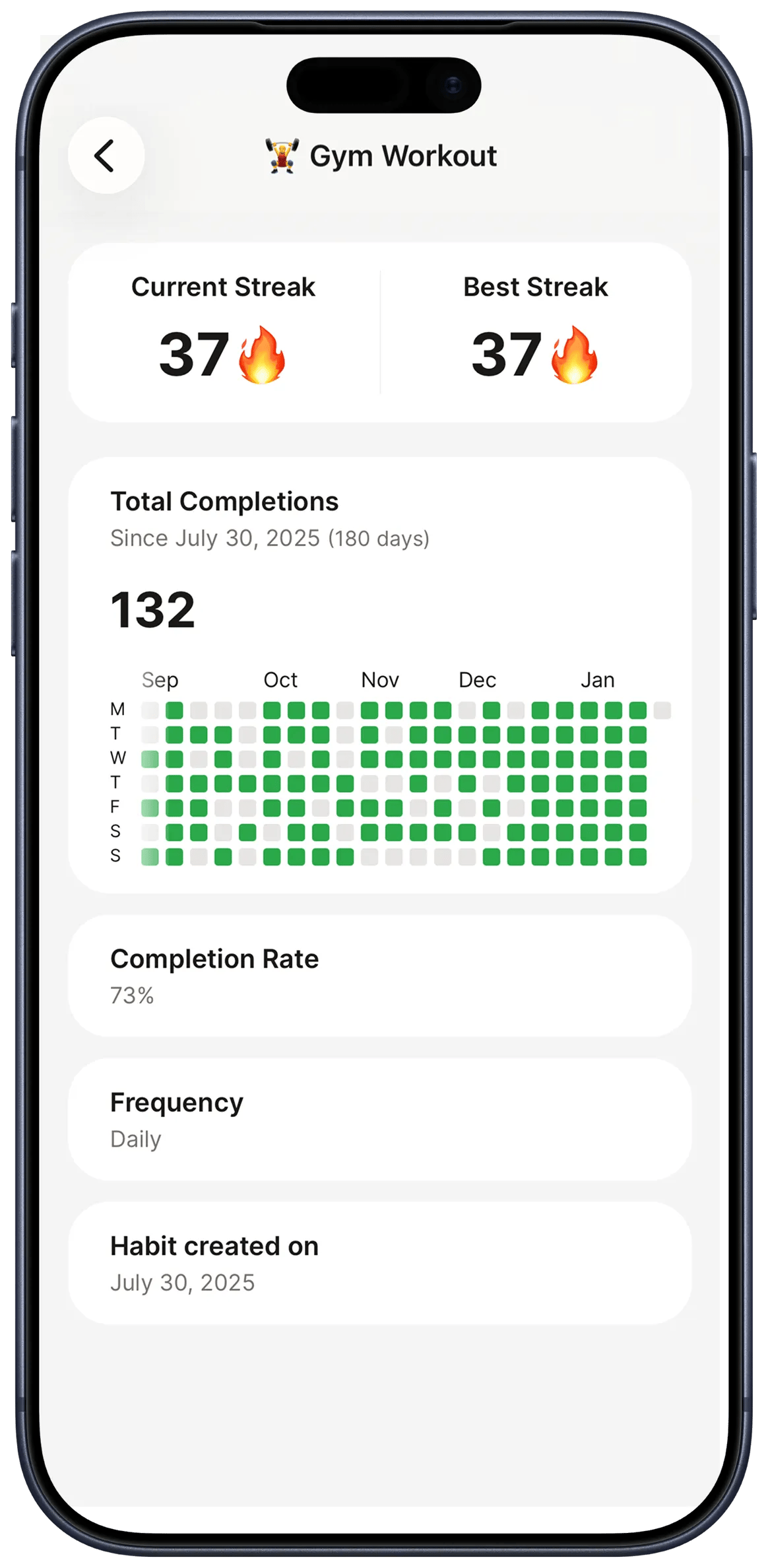
Build your remote work routine one habit at a time. Track your daily progress with Habit Streak.
Download Free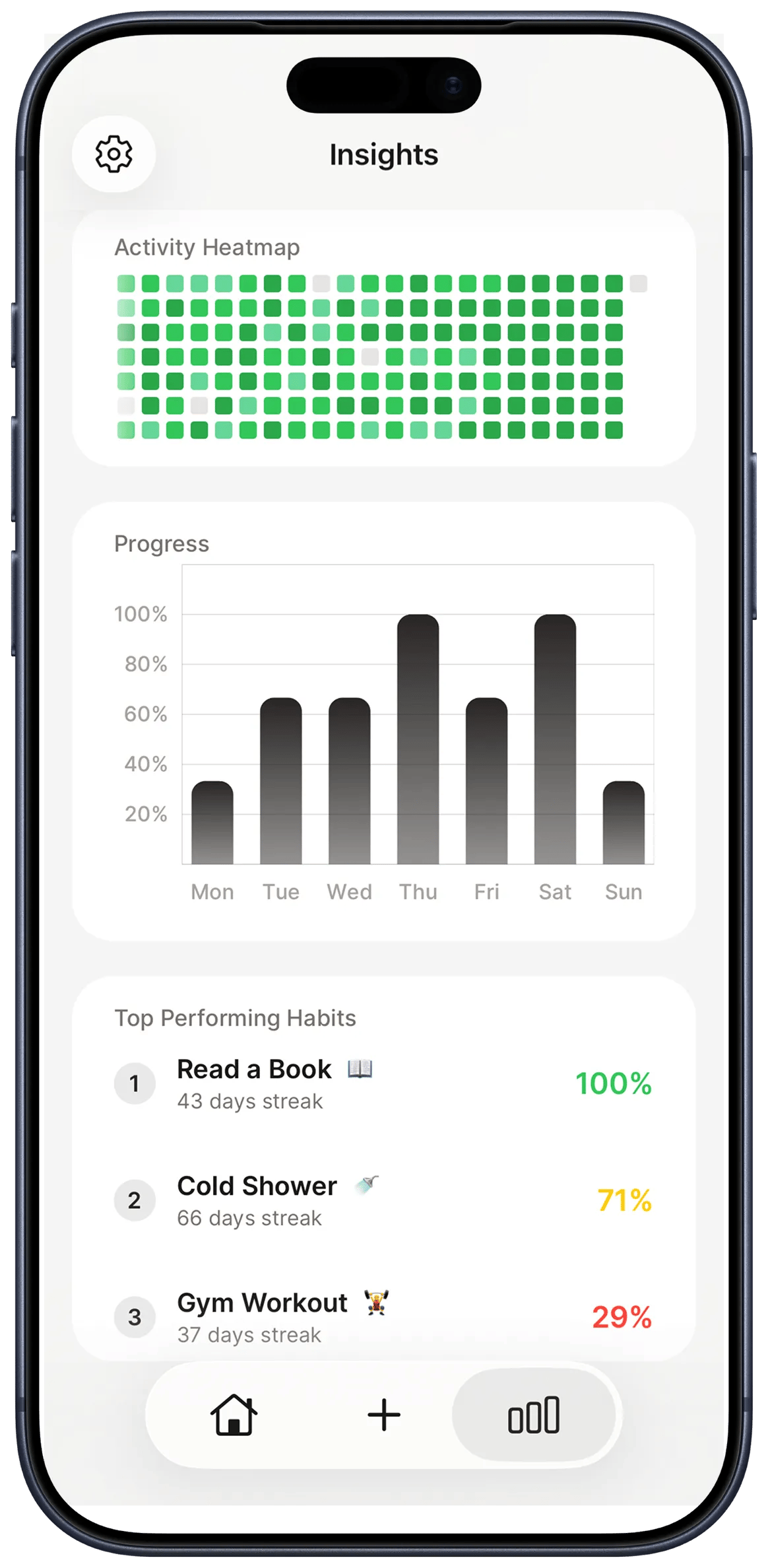
1. Start With a Consistent Wake-Up Time
A fixed wake-up time anchors your entire day and regulates your circadian rhythm. Without it, your schedule drifts -- and so does your productivity.
This does not mean you need to wake up at 5 AM. It means picking a time that gives you enough runway to prepare for your workday and sticking to it within a 30-minute window, even on weekends. Consistency is what matters. Your body adjusts its alertness, hunger, and energy cycles around your wake-up time, so shifting it daily forces your brain to constantly recalibrate.
If you are curious whether an early start is right for you, read our analysis of the 5 AM morning routine trend.
2. Create a Pre-Work Transition Ritual
A transition ritual replaces the commute your brain used to rely on for shifting into work mode. Without physical separation between home and office, you need an intentional signal that tells your nervous system: "Work is starting now."
This can be simple:
- Make coffee and carry it to your desk
- Change out of pajamas (even into casual clothes)
- Take a 10-minute walk around the block
- Review your task list for the day
The ritual itself matters less than its consistency. Over time, these cues become automatic triggers for focused attention -- the same principle behind habit stacking, where you chain new behaviors onto existing ones.
3. Define Your Top Three Priorities Each Morning
Start every workday by choosing your three most important tasks. Not ten. Not "whatever is in my inbox." Three specific outcomes you will push forward today.
This habit fights the single biggest productivity killer for remote workers: reactive work. Without a manager physically nearby or the structure of an office, it is easy to spend the entire day responding to messages, joining calls, and checking off tiny tasks while the meaningful work never gets done.
Write your three priorities down before you open email or Slack. The act of writing forces clarity. If a task feels vague ("work on the project"), break it down until you have a concrete next step ("draft the introduction section"). For a deeper system around prioritization and daily structure, see our guide on daily routines that actually work.
4. Schedule Blocks of Uninterrupted Focus Time
Protect at least one 60-90 minute block each day for concentrated, distraction-free work. This is where your most valuable output happens.
23 min
Average time to refocus after a single interruption
Research from Gloria Mark at UC Irvine found that it takes an average of 23 minutes and 15 seconds to fully regain focus after a single interruption. In a remote environment saturated with Slack pings, email notifications, and video calls, this means that even brief distractions can destroy an hour of productive work.
During your focus block:
- Close email and messaging apps entirely
- Put your phone in another room
- Set your status to "Do Not Disturb"
- Use a website blocker if needed
This is not about working more hours -- it is about making your existing hours count. Even one protected focus block per day can transform your output. For a full breakdown of this practice, see our guide on building a deep work habit.
5. Move Your Body During the Workday
Physical movement is not optional for remote workers -- it is a productivity strategy. When your commute is ten steps from bed to desk, you can easily go an entire day without meaningful physical activity.
Research cited by Great Place To Work shows that companies supporting remote worker wellbeing see up to 42% higher productivity levels. And data from a Breeze analysis found that 91.5% of remote workers who reported increased efficiency regularly engaged in wellness activities -- compared to 81.5% of onsite workers.
Build movement into your schedule, not around it:
- A 10-minute walk between meetings
- Stretching or bodyweight exercises at lunch
- A standing desk for part of the afternoon
- A post-work run or gym session as your "reverse commute"
The goal is not athletic performance. It is maintaining the baseline energy and cognitive sharpness that sedentary remote work quietly erodes.
6. Eat Lunch Away From Your Desk
This sounds trivial. It is not. Eating at your desk trains your brain to associate your workspace with every part of your life, making it harder to enter focused mode and harder to switch off at the end of the day.
Step away from your screen for at least 20 minutes at midday. Eat in a different room, on your balcony, or at a nearby cafe. The physical change of environment gives your prefrontal cortex a genuine rest -- the same cognitive resource you need for afternoon focus.
Remote workers who skip real breaks are not working harder. They are working with diminishing returns. A clear midday break actually increases your total useful output by preserving afternoon energy.
7. Set and Communicate Hard Boundaries
65%
of remote workers put in more hours than they did at the office
Boundary-setting is the single most protective habit against remote work burnout. Buffer's State of Remote Work report found that the top struggles for remote workers revolve around staying home too often (33%) and loneliness (23%) -- both symptoms of poor boundaries between work and personal life.
Effective boundary habits include:
- Fixed start and stop times. Decide when your workday ends and treat it as non-negotiable. Close your laptop at that time.
- A dedicated workspace. Even if it is a corner of your living room, having a physical "work zone" that you leave at the end of the day creates psychological separation.
- Communication with household members. Let partners, family, or roommates know your work hours and when you need uninterrupted time.
- Notification management. Turn off work notifications on your phone after hours. The "just one email" trap is how 34% of remote workers end up checking work messages on vacation.
8. Build Social Connection Into Your Week
Remote work solves many problems, but it creates a real one: isolation. Gallup research found that 25% of fully remote employees experience loneliness, compared to 16% of on-site workers. Among Gen Z remote workers, nearly 8 in 10 report feeling lonely at times.
Loneliness is not just an emotional issue -- it degrades cognitive performance and decision-making. Treat social connection as a habit, not something that happens spontaneously:
- Schedule a weekly virtual coffee chat with a colleague
- Join a coworking space one or two days per week
- Attend local meetups or professional events monthly
- Maintain non-work friendships with regular plans
You do not need to become an extrovert. You need a minimum viable social routine that prevents the slow drift into isolation that remote work enables.
9. Take a Genuine Midday Break Outdoors
Natural light exposure during the day regulates melatonin production, improves mood, and sharpens afternoon focus. Most remote workers are severely underexposed to daylight because they never leave the house.
A 15-20 minute outdoor break around midday is one of the highest-return habits you can build. Walk around your neighborhood. Sit in a park. The point is sunlight on your face and a change of visual scenery -- both of which reset your attention system.
This pairs naturally with an evening routine for better sleep, since adequate daytime light exposure is one of the strongest predictors of sleep quality.
10. Keep a Consistent End-of-Day Shutdown
A shutdown ritual is the bookend to your morning transition. It signals to your brain that work is finished, allowing you to actually recover during your personal time.
A simple shutdown ritual:
- Review what you accomplished today
- Write tomorrow's top three priorities
- Close all work tabs and applications
- Set your Slack status to offline
- Physically leave your workspace
The review step is especially valuable. It prevents the anxious "did I forget something?" loop that keeps remote workers mentally tethered to their job long after they have stepped away. Writing tomorrow's priorities also removes the cognitive load of planning from your evening, freeing that time for genuine rest.
11. Batch Communication Instead of Reacting All Day
Constant message-checking fragments your attention and keeps you in a reactive state. Instead, batch your communication into two or three dedicated windows per day.
For example:
- Check and respond to email at 9 AM, 12 PM, and 4 PM
- Review Slack messages at the start of each focus block break
- Schedule all non-urgent calls into a single afternoon window
This does not mean ignoring urgent requests. It means training yourself (and your colleagues) to expect response times measured in hours, not seconds. Most remote work communication is asynchronous by nature -- treat it that way.
Batching communication protects your focus blocks and reduces the cognitive switching cost that makes remote workers feel busy but unproductive. If you struggle with compulsive phone-checking, our guide on building a no-phone morning habit offers practical strategies.
12. Review and Adjust Your Habits Weekly
No routine survives contact with real life without periodic adjustment. Set aside 15-20 minutes each week -- Friday afternoon works well -- to review how your habits are performing.
Ask yourself:
- Which habits did I follow consistently this week?
- Where did I struggle, and why?
- Is my energy better or worse than last week?
- Do I need to adjust any timing or add a new habit?
This weekly review turns your remote work routine from a rigid prescription into a living system that adapts to changing demands. It is also the natural place to use a habit tracking app -- reviewing your streaks and completion rates gives you objective data instead of relying on memory.
Start with three or four of these habits, not all twelve. Build consistency with a small set, then add more as each one becomes automatic. Trying to overhaul your entire routine at once is a recipe for abandoning everything within two weeks.
Track your remote work habits daily and see your consistency grow. Download Habit Streak for free.
Download FreeFrequently Asked Questions
How long does it take to build a remote work routine?▼
Most people need 4-8 weeks to establish a stable remote work routine. Research on habit formation suggests that simpler habits (like a consistent wake-up time) become automatic in about 3 weeks, while more complex behaviors (like a full shutdown ritual) can take 6-8 weeks. Start with 2-3 habits and add more once those feel effortless.
What is the biggest mistake remote workers make with their habits?▼
Skipping boundaries between work and personal time. Most remote work burnout stems not from the work itself but from the inability to stop working. Setting a hard stop time and a shutdown ritual is the single most protective habit you can build. Without it, remote work gradually takes over your evenings, weekends, and mental health.
Should I work from a coworking space or from home?▼
It depends on your personality and your home environment. If you live alone and struggle with loneliness or motivation, a coworking space two or three days per week can provide social interaction and environmental variety. If you have a dedicated home office and prefer quiet, home may be more productive. Many remote workers find a hybrid approach -- mostly home with occasional coworking days -- works best.
How do I stay productive when I do not feel motivated?▼
Rely on habits, not motivation. That is the entire point of building a routine. When your morning transition, focus blocks, and shutdown ritual are habitual, you do not need to feel motivated to be productive. The habit carries you through low-energy days. Track your habits daily to build streaks that create their own momentum.
Can these habits work for hybrid workers too?▼
Yes. Most of these habits -- morning transitions, focus blocks, boundaries, shutdown rituals -- apply whether you work from home five days a week or two. Hybrid workers may need to adapt their routines for office days versus home days, but the core principles of intentional structure, protected focus time, and clear boundaries remain the same.
- 1.Hybrid working works: huge study reveals no drop in productivitynature.com
- 2.41 Startling Remote Work Burnout Statistics (2026)apollotechnical.com
- 3.Buffer | 2023 State Of Remote Workbuffer.com
- 4.The Hidden Costs of Context Switchingactivtrak.com
- 5.Remote Work Productivity Study: Surprising Findings From a 4-Year Analysisgreatplacetowork.com
- 6.Remote work statistics you need to know (2026)breeze.pm
- 7.The Future of the Office Has Arrived: It's Hybridgallup.com