 By Adrien Blanc
The State of Habit Tracking in 2026: Trends and Data
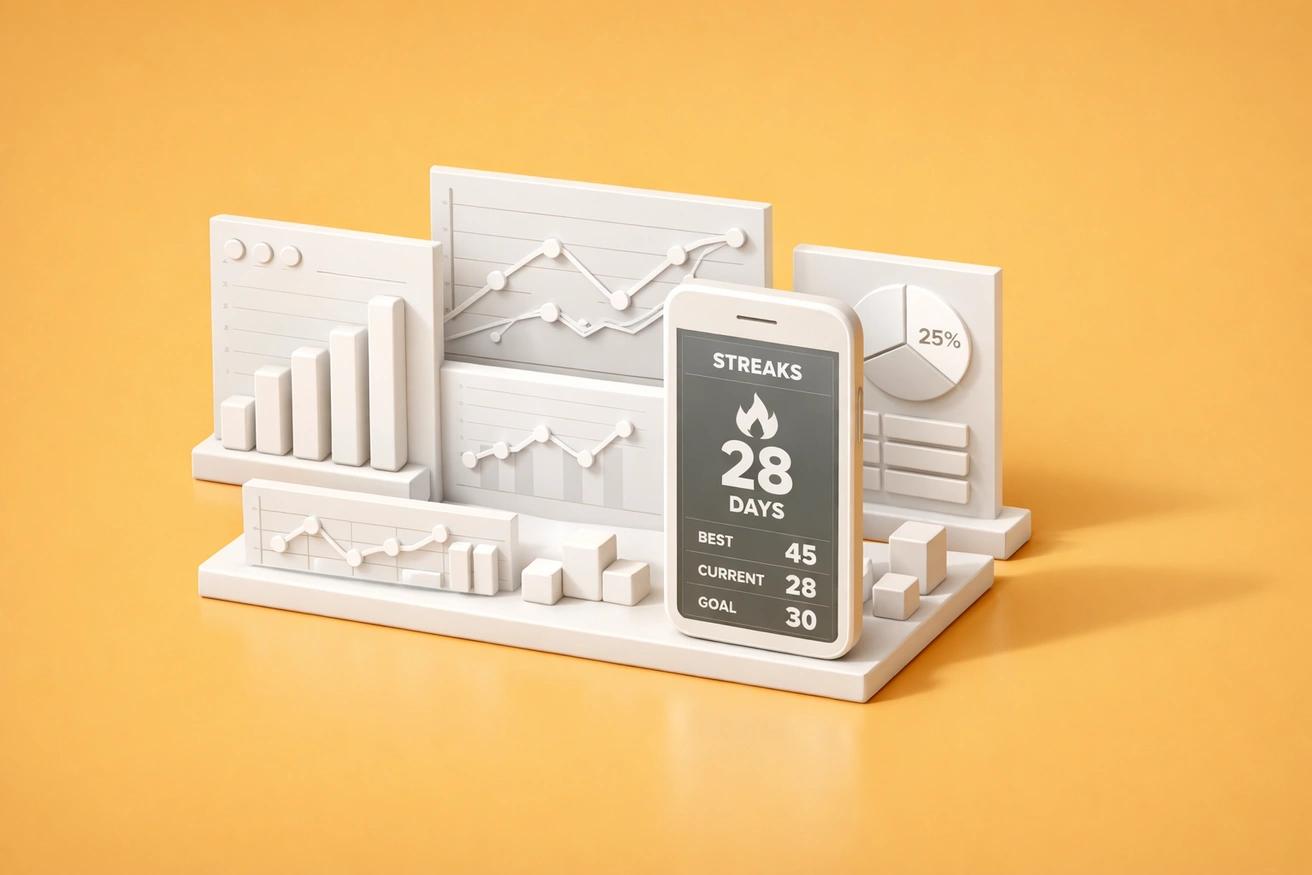
Habit tracking has moved from a niche productivity hack to a mainstream behavior change tool used by millions worldwide. The global habit tracking app market reached an estimated $13 billion in 2025 and is projected to hit nearly $15 billion by the end of 2026, growing at a compound annual rate above 14%. More than 65% of US adults now actively monitor their daily routines through some form of tracker, and adult user engagement surged 48% over the past year alone.
The biggest shift in 2026 is not just that more people track habits -- it is how they track them. AI-powered coaching, wearable integration, and corporate wellness programs have fundamentally reshaped the landscape. Yet the core challenge remains stubbornly familiar: over half of users quit within 30 days. This article breaks down the numbers, the trends, and what it all means for anyone trying to build better habits this year.
$14.9B
projected global habit tracking market size in 2026
Start tracking your habits with a simple, streak-based approach.
Download Free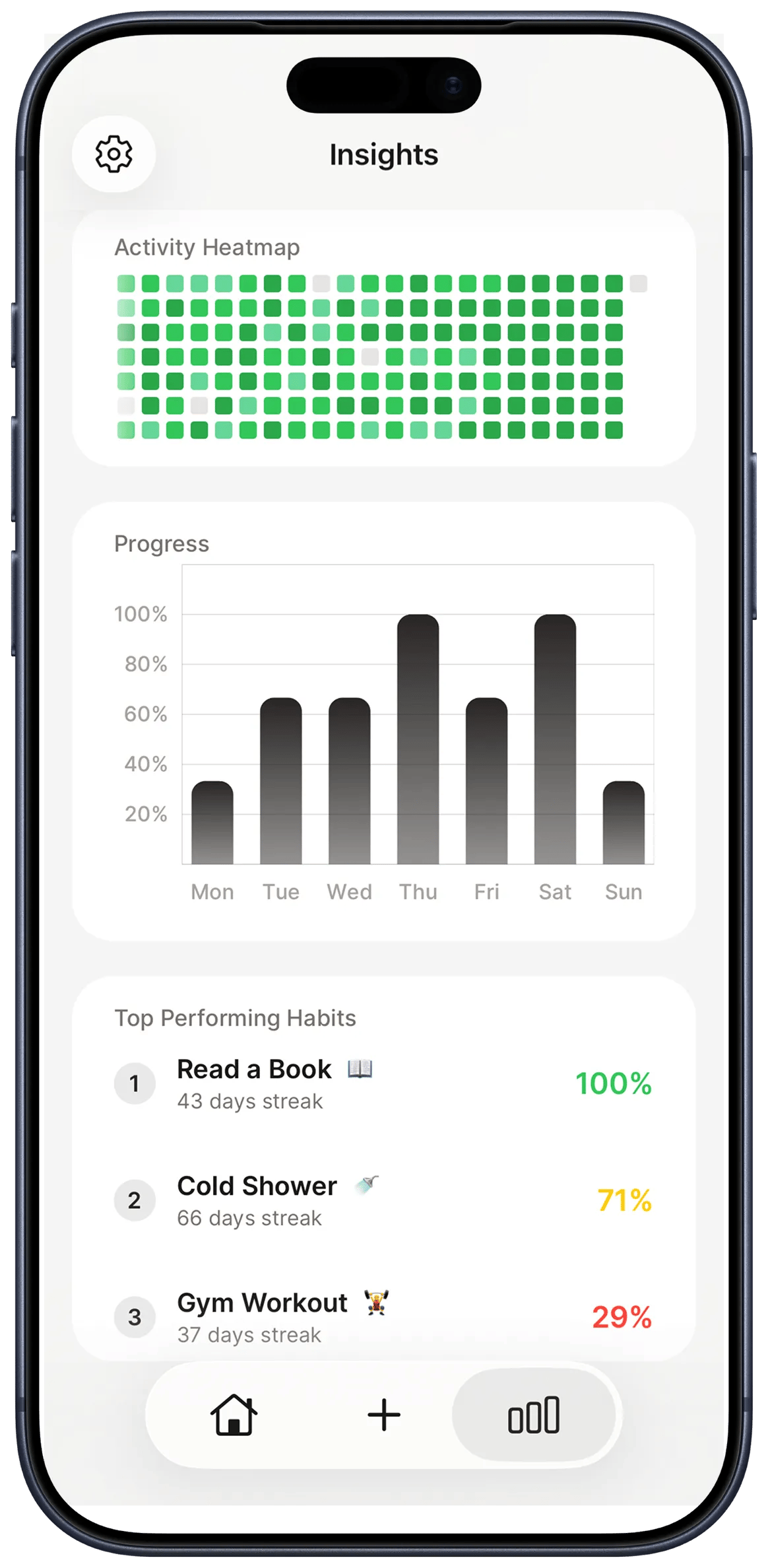
The Habit Tracking Market in Numbers
The habit tracking industry is growing fast by any measure. Straits Research values the market at $1.9 billion in 2025, projecting $5.5 billion by 2033 at a 14.2% CAGR. Broader estimates from Global Growth Insights put the 2025 figure at $13.06 billion when including the wider ecosystem of wellness and productivity tools that incorporate habit tracking features.
The US alone accounts for a significant share. Market Research Future projects the US habit tracker app market will grow from $5.8 billion in 2025 to $20.76 billion by 2034, reflecting a 15.2% CAGR.
Key drivers behind this growth:
- Wellness adoption: 64% of users adopt habit trackers for wellness-related goals
- Productivity tracking: A 46% rise in productivity-focused habit tracking
- Corporate integration: 59% of companies now integrate some form of habit or wellness tracking into employee programs
- Wearable syncing: 49% of habit tracking apps now sync with wearable devices
North America holds 36% of the global market share, followed by Asia-Pacific at 29% and Europe at 27%.
How People Track Habits Today: App vs Paper vs Hybrid
Digital habit tracking dominates in 2026, but paper is not dead. 63% of millennials and Gen Z users prefer mobile-based habit tracking tools over traditional journaling. Over 55% of app users track daily, with streak counting and reminders being the most-used features.
That said, research on whether apps or paper produce better results is nuanced. A study in Obesity found that self-monitoring -- whether digital or analog -- improved outcomes compared to no tracking at all. The medium matters less than the consistency. For a detailed comparison of both approaches, see our guide on digital vs paper habit tracking.
The hybrid approach is gaining ground. Some users plan habits on paper (activating the deeper memory encoding that comes with handwriting) and log completions in an app for reminders and streak tracking. The best method is the one you can maintain every single day -- and the data shows that tracking itself is what moves the needle.
The Most Popular Habits People Track
Survey data from YouGov and Talker Research reveals what Americans are most committed to building in 2026:
- Exercise and physical fitness -- 25% of Americans resolved to exercise more (up from 22% in 2024)
- Saving money -- 45% named putting more into savings as a top priority
- Eating healthier -- 22% chose better nutrition as a primary goal
- Mental health and happiness -- 23% resolved to prioritize being happy; younger adults are far more likely to track mental health
- Losing weight -- 17% set weight loss as a key goal
- Spending time outdoors -- 29% want more outdoor time
- Reducing screen time -- 21% aim to cut social media usage
Generational patterns are striking. Gen Z prioritizes family time and sleep (both 36%), millennials lean toward music and podcasts (43%), and boomers prefer regular walks (46%). Within the app ecosystem, the market data shows 44% of users specifically seek mental wellness tracking tools -- a category that barely existed five years ago.
Streak Psychology: What the Data Shows
Streaks remain one of the most powerful motivational tools in habit tracking. Research from behavioral economists found that people exert 40% more effort to maintain a streak than to achieve the same behavior without one -- even when the streak condition offered less financial reward.
Each checkmark in a habit tracker activates the brain's dopaminergic reward system. The visual progress itself becomes the cue and the reward. Over time, the brain starts associating the behavior with that small burst of satisfaction, making the habit increasingly automatic.
Additional findings from 2025 research:
- Binary tracking outperforms detailed metrics early on: People using simple yes/no tracking maintained habits 27% longer than those logging detailed data during the formation phase
- Time-blocking triples success: A study of 300 executives found those who scheduled specific time blocks for new habits were 3.2 times more likely to maintain them
- Missing a streak hurts retention: 44% of users report motivation drop-off after breaking a streak, with many uninstalling or switching apps entirely
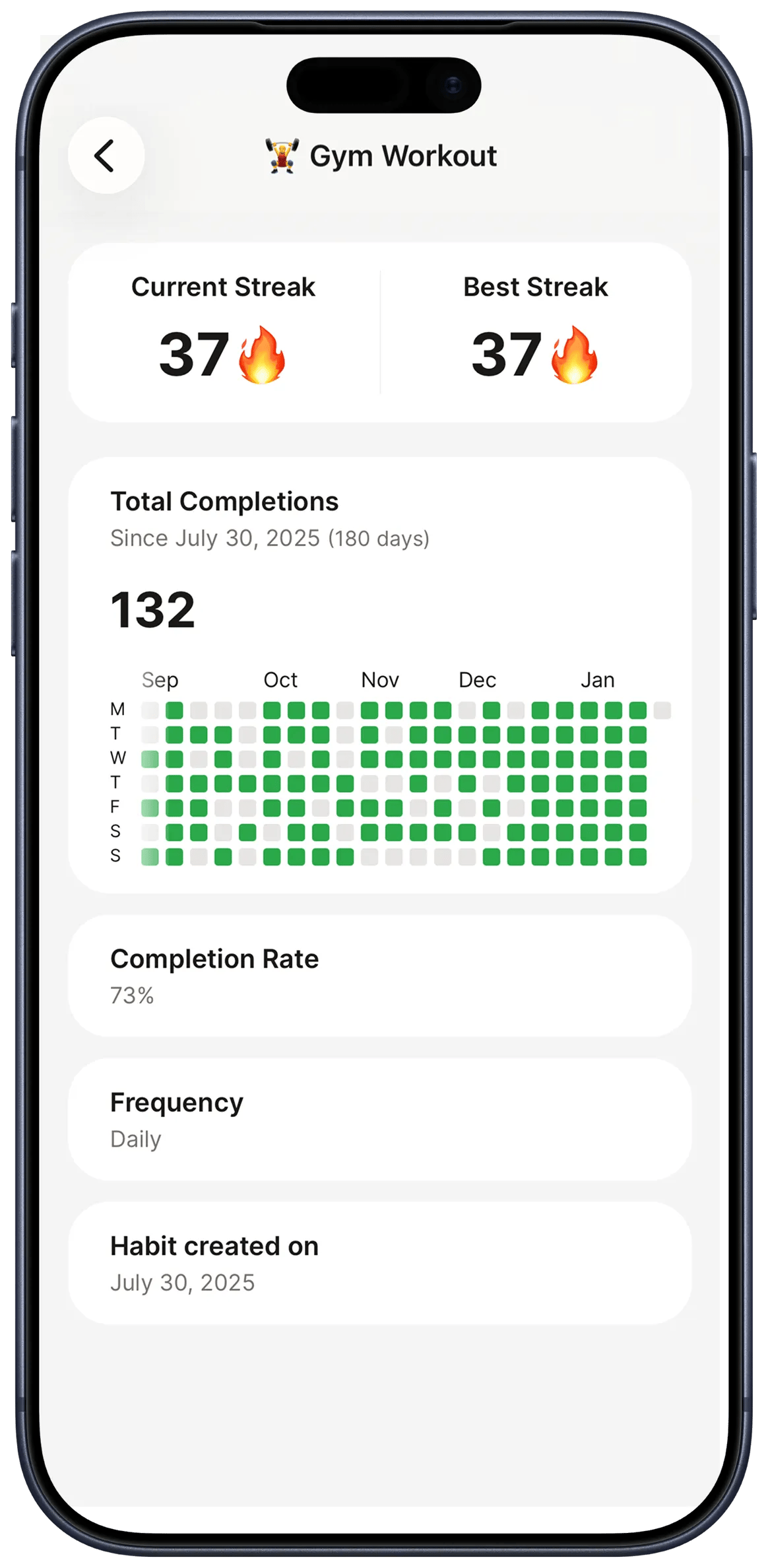
The takeaway: streaks work, but they need a safety net. The best habit trackers let users recover from a missed day without losing all momentum. For a deeper look at the science behind consecutive-day tracking, read why streaks work.
40%
more effort exerted to maintain a streak vs. non-streak behavior
The Rise of AI-Powered Habit Coaching
AI is the defining technology trend in habit tracking for 2026. 58% of newly launched habit tracking apps now include AI-driven features, from personalized suggestions to adaptive reminders.
Here is what AI looks like in practice:
- Predictive habit suggestions: 46% of new apps use behavioral data to recommend which habits to build next
- Dynamic reminders: 41% of apps now adjust reminder timing based on user patterns rather than fixed schedules
- Voice and gesture logging: 27% of new platforms support voice-enabled habit updates or gesture-based logging
- Wearable AI integration: 60% of health technology experts named wearable devices providing real-time metabolic feedback as the most important health tech trend of 2026
The global market for AI-powered wearables is forecast to surpass $39 billion by 2026, driven by demand for real-time, personalized health insights. Modern wearables track heart rate, sleep quality, and stress markers -- then feed that data back into habit tracking apps to create a continuous feedback loop.
The Retention Problem: Why Most People Still Quit
Despite all the growth, habit tracking apps still struggle with retention. Over 52% of users discontinue use within the first 30 days due to lack of personalization or overwhelming interfaces. Industry-wide, mobile apps average just 7.88% retention by Day 30.
The retention funnel tells a stark story:
- Day 1: ~28% of users return after installing
- Day 7: ~18% are still active
- Day 30: ~8% remain
Apps that activate users within three minutes of opening see nearly 2x higher retention rates. And users who receive even a single push notification in the first 90 days are three times more likely to stay.
What separates apps that retain users from those that don't? Gamification boosts engagement by 61%. Simple onboarding matters. And streak-based design creates a powerful reason to come back each day -- which is exactly why the habit tracking mistakes people make during their first week are so consequential.
Privacy and Data Ownership Trends
As habit trackers collect increasingly personal data -- sleep patterns, mood logs, health metrics -- privacy has become a real concern. 48% of users express hesitation about sharing personal behavioral patterns due to lack of transparency in data policies.
The regulatory landscape is tightening in response:
- GDPR enforcement is accelerating: Europe has issued 2,245 GDPR fines totaling over 5.65 billion euros since 2018, with 2025 alone accounting for 2.3 billion euros -- a 38% year-over-year increase
- US state privacy laws are expanding: 20 US states now enforce consumer privacy statutes, with more joining each year
- Health and biometric data face heightened scrutiny: Regulators on both sides of the Atlantic are intensifying oversight of how sensitive health data is collected and reused for AI systems
A 2025 University College Dublin study found that real-world behavior by wearable companies often diverges from their stated privacy policies -- through omission, ambiguity, or misrepresentation. Only 37% of habit tracking apps clearly disclose their data sharing practices.
For users, the practical advice is straightforward: choose apps that store data locally or offer end-to-end encryption, read permissions carefully before granting access, and prefer apps that let you export or delete your data at any time.
Predictions for the Future of Habit Tracking
Based on current data and trajectory, here is where habit tracking is headed:
- AI coaching will become standard, not premium. As AI costs drop, expect personalized coaching to shift from paid tiers to free features within 18 months.
- Wearable-first tracking will grow. With 49% of apps already syncing to wearables and the AI wearable market hitting $39 billion, passive habit tracking (where the device logs behavior automatically) will reduce friction.
- Corporate wellness will drive B2B growth. With 59% corporate integration already and employer adoption up 42%, expect more companies to offer habit tracking as a standard employee benefit.
- Privacy-first apps will differentiate. As regulations tighten and user awareness grows, apps with transparent data practices and local-first storage will gain a competitive edge.
- Personalization will close the retention gap. The 52% 30-day drop-off rate is the industry's biggest problem. AI-driven personalization -- adaptive reminders, context-aware nudges, and flexible streak recovery -- represents the most promising path to solving it.
For a comprehensive overview of habit tracking fundamentals and how to get started, see our complete guide to habit tracking.
Track your habits simply and keep your data private. Try Habit Streak for free.
Download FreeFrequently Asked Questions
How big is the habit tracking market in 2026?▼
The global habit tracking app market is projected to reach approximately $14.9 billion in 2026, growing at a compound annual rate above 14%. The US market alone is valued at roughly $5.8 billion in 2025 and is expected to more than triple by 2034.
What percentage of habit tracker users quit within 30 days?▼
Over 52% of habit tracking app users discontinue use within the first 30 days. The industry-wide average for mobile app retention at Day 30 is approximately 8%. Apps with strong onboarding, streak mechanics, and push notifications see significantly better numbers.
What are the most popular habits people track?▼
Exercise and physical fitness top the list, followed by saving money, eating healthier, mental health and happiness, losing weight, spending time outdoors, and reducing screen time. Mental wellness tracking has seen the fastest growth, with 44% of users seeking it.
How does AI affect habit tracking in 2026?▼
58% of newly launched habit tracking apps now include AI features such as predictive habit suggestions, dynamic reminders that adapt to user behavior, and voice or gesture-based logging. AI-powered wearable integration is also growing fast, with 49% of apps now syncing to wearable devices.
Is it better to track habits with an app or on paper?▼
Research shows that the act of tracking matters more than the medium. Apps offer automation, reminders, and streak tracking. Paper activates deeper memory encoding. 63% of millennials and Gen Z prefer apps. Many successful trackers use a hybrid approach combining both methods.
- 1.Habit Tracking App Market Size Share & Analysis 2035globalgrowthinsights.com
- 2.Habit Tracking Apps Market Size, Share, Growth & Trends Chart by 2033straitsresearch.com
- 3.US Habit Tracker APPS Market Size, Global Growthmarketresearchfuture.com
- 4.What are Americans’ New Year’s resolutions for 2026?today.yougov.com
- 5.Savings and fitness? Six resolutions top Americans’ 2026 planstalkerresearch.com
- 6.Hot streaks boost productivity, study showsualberta.ca
- 7.The Science Behind Habit Trackingpsychologytoday.com
- 8.3.2 times more likely to maintain themcoachpedropinto.com
- 9.The biggest health trends in 2026, according to US Newsadvisory.com
- 10.Why Wearable Health Tech Is Booming in 2026smartdatainc.com
- 11.2026 Guide to App Retention: Benchmarks, Stats, and Moregetstream.io
- 12.Privacy and Cybersecurity 2025–2026: Insights, challenges, and trends aheadwhitecase.com
- 13.Data, Cyber + Privacy Predictions for 2026mofo.com
- 14.Privacy in consumer wearable technologies: a living systematic analysis of data policies across leading manufacturerspmc.ncbi.nlm.nih.gov