 By Adrien Blanc
Habit Tracking for Couples: Build Better Routines Together

Tracking habits as a couple means choosing a few shared behaviors, logging them together daily, and using that shared record to stay aligned on the goals that matter to your relationship. It works because it combines two powerful forces: the accountability of having a partner and the intimacy of working toward something together. A study from Indiana University found that couples who exercised together had only a 6.3% dropout rate over a year, compared to a 43% dropout rate for those who worked out separately. That is a dramatic difference, and it extends well beyond fitness.
Shared habits create a feedback loop: you show up for the habit, you show up for each other, and both the habit and the relationship get stronger. Research published in Annals of Behavioral Medicine confirms that more satisfied couples engage in more joint health behaviors, and those joint behaviors in turn predict better health outcomes and fewer depressive symptoms for both partners. Whether you are trying to cook more meals at home, meditate before bed, or simply put your phones away during dinner, a shared habit tracker gives you a concrete way to invest in your relationship every day.
94%
of couples stuck to their fitness plans when exercising together
If you are new to habit tracking in general, start with our complete guide to habit tracking for the foundations before layering in shared habits.
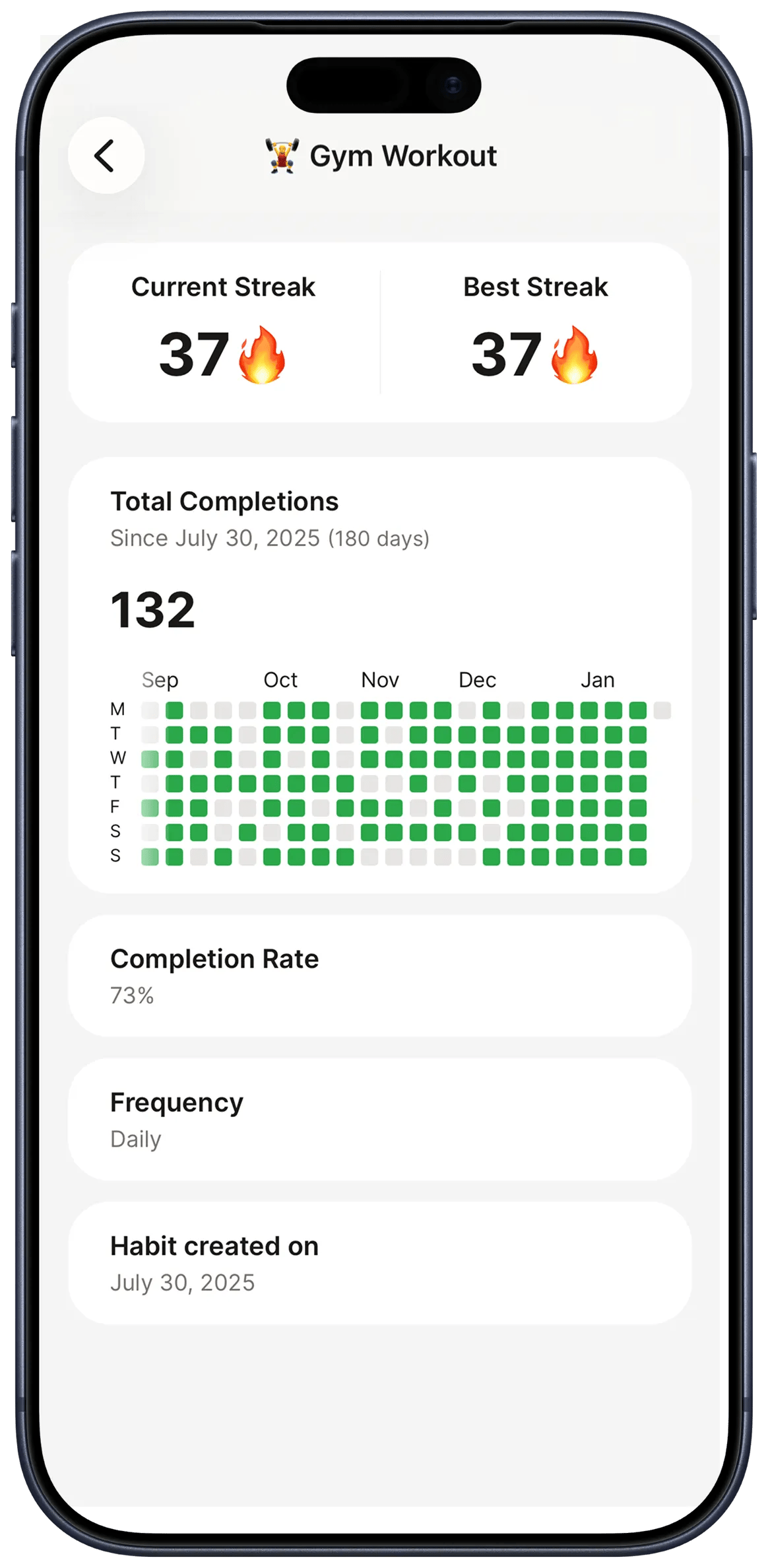
Track shared habits side by side with Habit Streak. Download free for iOS.
Download Free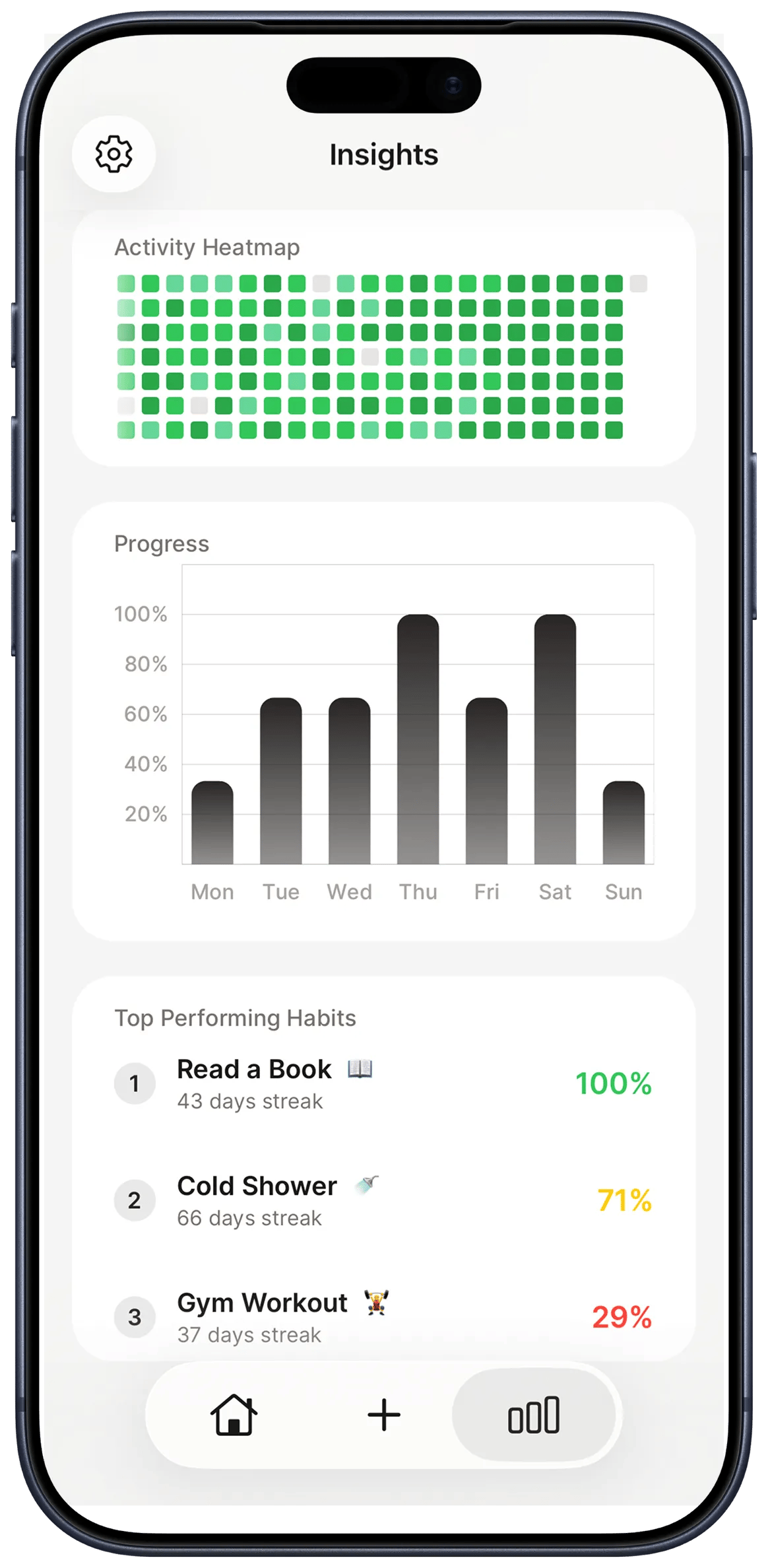
Why Shared Habits Strengthen Relationships
Shared habits strengthen relationships because they create regular moments of connection and mutual investment. A longitudinal study of 148 couples published in the International Journal of Applied Positive Psychology found that couples who coordinated their personal goals achieved more of them over a one-year period, and that increased goal attainment raised life satisfaction for both partners.
The mechanism is straightforward. When you commit to a shared routine, you are:
- Creating predictable togetherness. Regular rituals reduce the uncertainty that erodes closeness over time.
- Aligning on values. Choosing which habits to share forces a conversation about what matters most to both of you.
- Building trust through consistency. Showing up day after day demonstrates reliability in a tangible way.
- Generating shared wins. Celebrating small milestones together releases dopamine in a relational context, bonding you to each other and to the behavior.
A meta-analysis on goal interdependence in couples reported a strong correlation (r = .43) between goal congruence and relationship satisfaction. That is a stronger effect than either goal support or goal conflict alone. In practical terms, it means that simply agreeing on what you are working toward matters more than any single act of encouragement.
Best Habits for Couples to Track Together
The best shared habits are ones that both partners genuinely want to do. If only one person cares about the habit, resentment builds fast. Start with two or three habits from the categories below and expand once those feel automatic.
Health and fitness:
- Morning walk or workout together
- Cooking a homemade dinner at least four nights a week
- Drinking enough water (individual tracking, shared encouragement)
Connection and communication:
- 10-minute phone-free conversation each evening
- Weekly date night (even if it is just a walk)
- Daily gratitude exchange: each person names one thing they appreciate about the other
Household and finances:
- 15-minute evening tidy-up together
- Weekly budget check-in
- Meal planning every Sunday
Personal growth:
- Reading for 20 minutes before bed (side by side counts)
- Practicing a shared hobby like a language or instrument
- Journaling or meditation
If you are unsure how many habits to start with, our guide on how many habits to track at once offers a practical framework. For couples, we recommend starting with no more than three shared habits.
How to Start a Shared Habit Routine Without Creating Conflict
Starting a shared habit routine requires buy-in from both partners. The fastest way to create conflict is for one person to announce a new system and expect the other to comply. Here is a better approach.
1. Have a low-pressure conversation. Pick a calm moment, not during an argument. Ask: "Are there any routines you wish we did together?" Listen more than you pitch.
2. Choose habits together. Both partners should feel genuine enthusiasm. If one person wants to meditate and the other does not, that habit stays individual.
3. Start absurdly small. A common mistake with habit tracking is biting off too much. Instead of "cook dinner together every night," try "cook together on Tuesdays and Thursdays." Success breeds motivation.
4. Pick a tracking method you both like. Whether you use an app, a shared whiteboard on the fridge, or a simple checklist, the tool needs to be frictionless for both of you. If one partner hates apps, do not force a digital solution.
5. Set a trial period. Commit to two weeks. After the trial, review what worked and adjust. This removes the pressure of permanent commitment and makes the process feel collaborative.
Individual vs. Shared Habit Tracking
Not every habit should be shared. Healthy couples maintain a balance between togetherness and autonomy. The key is distinguishing between habits that benefit from partnership and habits that are deeply personal.
| Individual Tracking | Shared Tracking | |
|---|---|---|
| Best for | Personal goals (fitness PRs, journaling, reading) | Relationship goals (date nights, communication, household) |
| Motivation source | Self-discipline, personal streaks | Mutual accountability, shared celebration |
| Risk if neglected | Only affects you | Can create resentment if one partner stops |
| Privacy level | Fully private | Visible to partner |
| Flexibility | Change anytime without discussion | Requires conversation to modify |
The best approach is a mix of both. Each partner keeps a few personal habits tracked privately, plus two or three shared habits visible to each other. This preserves independence while creating points of connection.
A study on joint health behaviors in 234 married couples found that while joint activities predicted health concordance between partners, individual relationship satisfaction still independently predicted better personal health outcomes. Both channels matter.
Accountability Without Nagging
The line between accountability and nagging is thinner than most couples realize. Accountability feels supportive. Nagging feels controlling. The difference comes down to tone, timing, and intent.
What accountability looks like:
- "Hey, we were going to do our evening walk. Want to go now, or should we push it to after dinner?"
- Completing your own habit visibly, which gently reminds your partner without words
- Celebrating when you both check off a shared habit: "Three days in a row, nice."
What nagging looks like:
- "You didn't do your habit again."
- Checking the tracker and confronting your partner about gaps
- Keeping score of who misses more often
Research from the Gottman Institute has consistently shown that criticism is one of the strongest predictors of relationship breakdown. Using a habit tracker as evidence in arguments will backfire every time.
Three rules to stay on the right side:
- Focus on your own streak first. Leading by example is the most effective form of influence.
- Use "we" language. "We missed our walk today" is very different from "You missed your walk."
- Let the app do the reminding. A notification from an app feels neutral. The same reminder from your partner can feel like a judgment. Let technology handle the nudges.
Understanding why streaks work can help both partners appreciate the psychological pull of maintaining a shared streak, without weaponizing it.
Celebrating Shared Milestones
Shared milestones give couples something concrete to celebrate together. The act of recognizing progress, even small progress, reinforces the behavior and deepens the bond.
Milestone ideas by streak length:
- 7 days: Acknowledge it out loud. "We did a full week. That's great."
- 30 days: Small reward. A nice dinner, a movie night, something you both enjoy.
- 90 days: Bigger reward. A weekend trip, a new piece of gear for a shared hobby, or adding a new habit to the mix.
- 365 days: Reflect on how the habit changed your relationship. Write it down. This becomes part of your story as a couple.
r = .43
Correlation between goal congruence and relationship satisfaction in couples
Do not skip the celebration. Research on habit formation consistently shows that positive reinforcement strengthens the habit loop. When the reinforcement is shared between two people who care about each other, it is doubly effective.
Handling Setbacks as a Team
Every couple will hit weeks where the habits slip. Someone gets sick, work gets intense, a family emergency takes over. The way you handle these disruptions determines whether shared habits become a long-term fixture or a source of guilt.
When one partner falls off:
- Do not make it about blame. Say, "Life got busy. Want to restart tomorrow?"
- Keep your own habit going if you can. This preserves the routine for when your partner is ready to rejoin.
- Revisit the difficulty level. Maybe the habit was too ambitious and needs to be scaled back.
When both partners fall off:
- Pick one habit to restart, not all of them. Rebuilding momentum is easier with a single focus.
- Talk about what caused the disruption. Was it external stress or a sign the habit is not a good fit?
- Remember that a broken streak is not a failure. It is data. Use it to build a more resilient routine.
For a structured approach to getting back on track, a 30-day habit challenge can be a fun way for couples to recommit together after a break.
Restart your shared streaks together. Habit Streak makes it simple.
Download FreeFrequently Asked Questions
What is the best habit tracker app for couples?▼
The best app depends on your needs. Look for an app that supports individual and shared views so each partner can maintain private habits alongside joint ones. Habit Streak, HabitShare, and Couple Habits are all popular choices. The most important factor is that both partners find the app easy to use.
How many shared habits should couples track?▼
Start with two or three shared habits at most. Adding too many creates pressure and increases the chance of conflict. Once your initial habits feel automatic (usually after 30-60 days), you can introduce a new one.
What if my partner does not want to track habits?▼
Do not force it. Start tracking your own habits and let your partner see the results. Often, seeing visible progress creates natural curiosity. If they remain uninterested, respect that and keep your habit practice individual.
Can habit tracking cause arguments in a relationship?▼
It can if used as a tool for criticism or scorekeeping. The key is to treat the tracker as a shared project, not a performance review. Use 'we' language, celebrate wins together, and never use missed habits as ammunition during disagreements.
How do couples stay motivated with shared habits long term?▼
Celebrate milestones together, adjust habits as your life changes, and keep the stakes low. Research shows that couples who coordinate goals achieve more of them over time, which boosts life satisfaction for both partners. The habit itself matters less than the act of pursuing something together.
- 1.study from Indiana Universityjournals.sagepub.com
- 2.The Implications of Being “In it Together”: Relationship Satisfaction and Joint Health Behaviors Predict Better Healt...pmc.ncbi.nlm.nih.gov
- 3.Flourishing Together: The Longitudinal Effect of Goal Coordination on Goal Progress and Life Satisfaction in Romantic...pmc.ncbi.nlm.nih.gov
- 4.meta-analysis on goal interdependence in couplesjournals.sagepub.com
- 5.criticism is one of the strongest predictors of relationship breakdownscholarsarchive.byu.edu