 By Adrien Blanc
Lost Your Streak? 5 Ways to Bounce Back Stronger

A broken streak does not erase your progress -- and how you respond in the next 48 hours determines whether you bounce back or give up entirely. Research from the University of Pennsylvania's Behavior Change for Good Initiative found that people who resumed a habit within 24 hours of a lapse were 71% more likely to maintain long-term consistency than those who let the gap widen. Meanwhile, a landmark study by Phillippa Lally at University College London confirmed that missing a single day had no measurable impact on habit formation -- the brain's automaticity picked up right where it left off.
The real enemy isn't the missed day. It's the emotional spiral that follows. Psychologists call it the "what-the-hell effect" -- a pattern first identified by researchers Janet Polivy and Peter Herman where one small lapse triggers total abandonment. If you've ever thought "I already broke it, why bother?" -- that's exactly what this article is here to fix. These five strategies will help you recover, rebuild, and come back with a system that's stronger than before. If you're new to the app, our complete getting started guide covers the basics of setting up your first habits.
71%
more likely to maintain habits when resuming within 24 hours
Bounce back from a broken streak with flexible tracking in Habit Streak
Download Free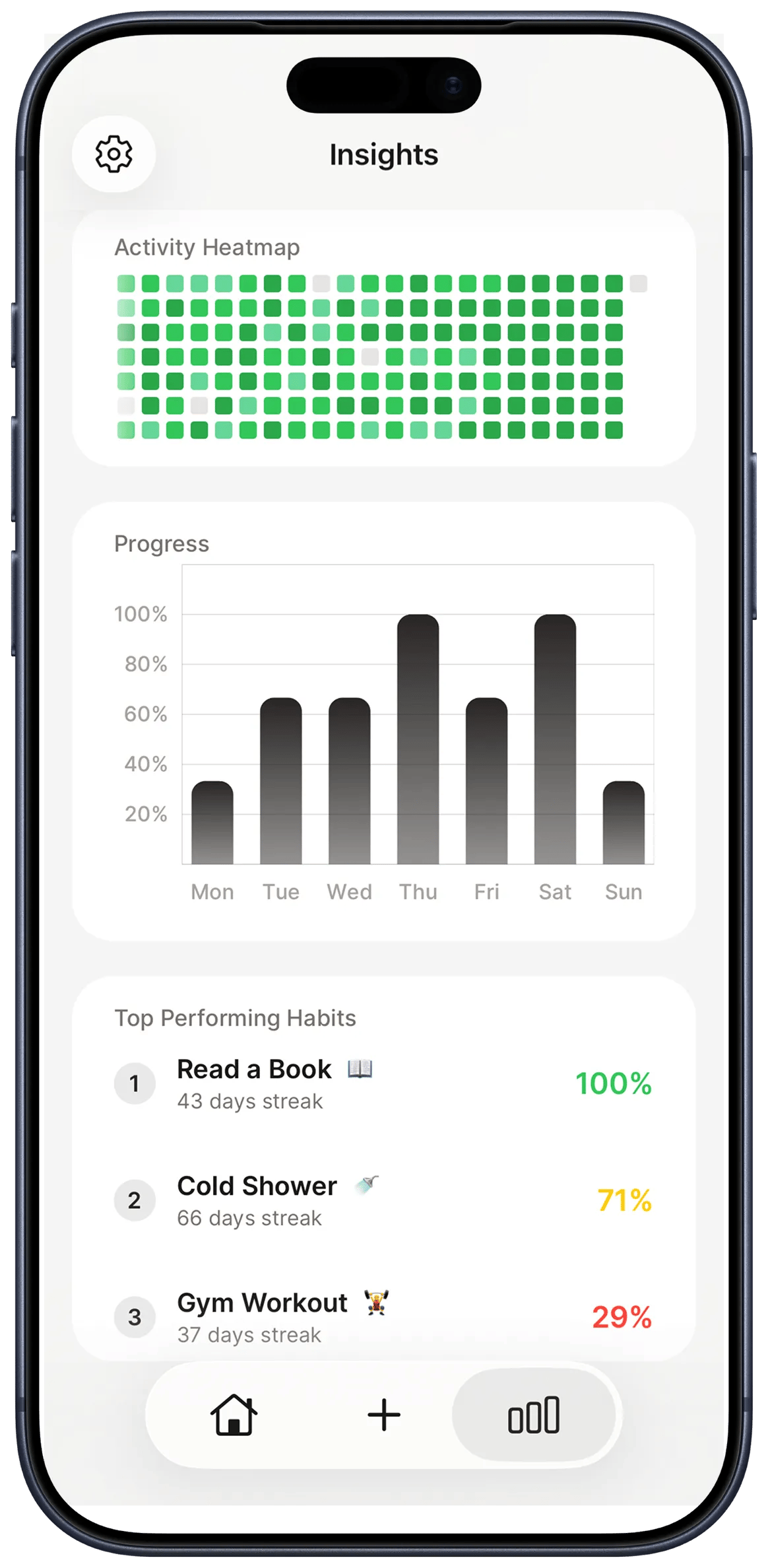
Why Losing a Streak Hurts So Much
The pain of a broken streak is about loss aversion, not actual failure. Nobel laureate Daniel Kahneman's research on prospect theory showed that losing something feels roughly twice as intense as gaining the same thing. When you see that streak counter reset to zero, your brain doesn't register "I completed 45 out of 46 days." It registers a total loss.
This emotional intensity is compounded by identity threat. If you've been telling yourself "I'm someone who meditates every day," a broken streak challenges that self-image. Research from Hustle Escape on streak psychology explains how streaks breed pride, fear, and guilt in equal measure -- the longer they go, the greater the perceived loss of breaking them.
Here's the critical reframe: your streak counter is not your habit. The neural pathways you built over 30, 60, or 100 days are still there. Lally's research confirmed that automaticity resumed its upward trend as soon as participants returned to the behavior. A broken streak is a number resetting. It is not your brain resetting.
Strategy 1: Apply the 48-Hour Rule
The single most important thing you can do after breaking a streak is restart within 48 hours -- ideally within 24. This isn't just motivational advice. The Behavior Change for Good Initiative's research shows that the recovery window after a lapse is narrow: people who recommit quickly are dramatically more likely to sustain the habit long-term.
Here's how to apply this in practice:
- Set a "recovery reminder" immediately. The moment you realize you've missed a day, open Habit Streak and set a reminder for tomorrow. Don't wait until you feel motivated -- schedule the restart now.
- Do the tiniest possible version. You don't need to come back at full intensity. One pushup, one paragraph, one minute of stretching. The goal is reactivation, not compensation.
- Don't try to "make up" for the missed day. Doing a double session creates pressure and often leads to skipping the next day. Just do today's version and move forward.
The never-miss-twice principle, popularized by James Clear, captures this perfectly: missing once is an accident; missing twice is the start of a new pattern. For more strategies on keeping your streak alive in the first place, check out our guide on how to never break a streak.
Strategy 2: Shrink the Habit to Its Minimum
When you restart after a break, lower the bar dramatically. BJ Fogg's Tiny Habits research at Stanford demonstrates that the size of the habit matters far less than the act of showing up. A 2-minute version of your habit still fires the same neural pathway, still checks the box, and still reinforces the identity of "someone who does this."
Practical examples of minimum versions:
- Meditation habit: Sit in your spot and take three deep breaths (instead of 20 minutes)
- Exercise habit: Do five jumping jacks (instead of a 45-minute workout)
- Reading habit: Read one page (instead of a chapter)
- Journaling habit: Write one sentence (instead of a full entry)
The logic here is counterintuitive but well-supported. After a broken streak, both motivation and self-trust are low. Trying to restart at full intensity creates a high-friction moment that your depleted willpower can't handle. Starting absurdly small removes friction entirely. You can always do more once you've started -- but the start is what matters.
In Habit Streak, consider adjusting your habit's goal temporarily. Set the minimum that counts as "done" to something you could accomplish in under two minutes. Once you've built a new streak of 7-10 days, scale back up gradually.
Strategy 3: Identify What Caused the Break
Every broken streak contains useful information about your habit system. Rather than treating a missed day as a personal failure, treat it as data. Ask yourself three diagnostic questions:
- Was it a one-time disruption? Travel, illness, an unusually hectic day -- these are situational and don't require system changes. Just restart.
- Is it a recurring pattern? If you keep breaking the same habit at the same point (every weekend, every time you travel, every stressful week), your system has a design flaw.
- Has the habit stopped fitting your life? Goals change. A habit that made sense three months ago might not align with your current priorities.
For recurring breaks, here are common fixes:
- Wrong time of day: A morning habit that keeps getting skipped might work better after lunch or in the evening.
- Too ambitious: Research shows that maintaining a habit 80% of the time produces nearly identical long-term results to 100% adherence. If your target is too aggressive, scale it down.
- Missing a trigger: Habits stick best when anchored to an existing routine. If yours lacks a clear cue, try habit stacking -- attaching the new behavior to something you already do automatically.
Strategy 4: Celebrate Your Previous Streak
Most people focus on what they lost. Instead, focus on what you built. If you maintained a habit for 30 days before breaking, that's 30 days of neural pathway reinforcement. That's 30 data points proving you can do this. Research on self-compassion by Breines and Chen found that people who acknowledged setbacks without harsh self-judgment showed more motivation to improve and were less likely to repeat mistakes.
Here's a concrete exercise:
- Write down your previous streak number. This is your benchmark, not your ceiling.
- List three things you learned during that streak. Maybe you discovered your best time of day, or realized you need a visual reminder, or found that stacking the habit after coffee made it effortless.
- Set your next milestone at your old streak + 1. If you hit 30 days before, aim for 31. Small, achievable targets rebuild confidence faster than grand ambitions.
Self-criticism after a broken streak activates your body's stress response, which paradoxically makes future lapses more likely. As psychologist Kelly McGonigal explains, the guilt and shame following a slip are what drive the spiral -- not the slip itself. Treating your previous streak as an accomplishment, rather than a loss, short-circuits that destructive cycle.
Strategy 5: Set a New Milestone Goal
Use the fresh start effect to your advantage. Research by Hengchen Dai, Katherine Milkman, and Jason Riis at the Wharton School found that people are significantly more motivated to pursue goals at temporal landmarks -- the start of a new week, a new month, a birthday, or even a Monday. These moments create psychological distance from past failures and make new beginnings feel achievable.
How to apply this after a broken streak:
- Pick a restart date that feels like a fresh start. Next Monday, the first of the month, or today -- whatever feels like a clean slate.
- Set a concrete, short-term milestone. Instead of "rebuild my streak," aim for "7 days without missing." Short goals create quick wins that restore confidence.
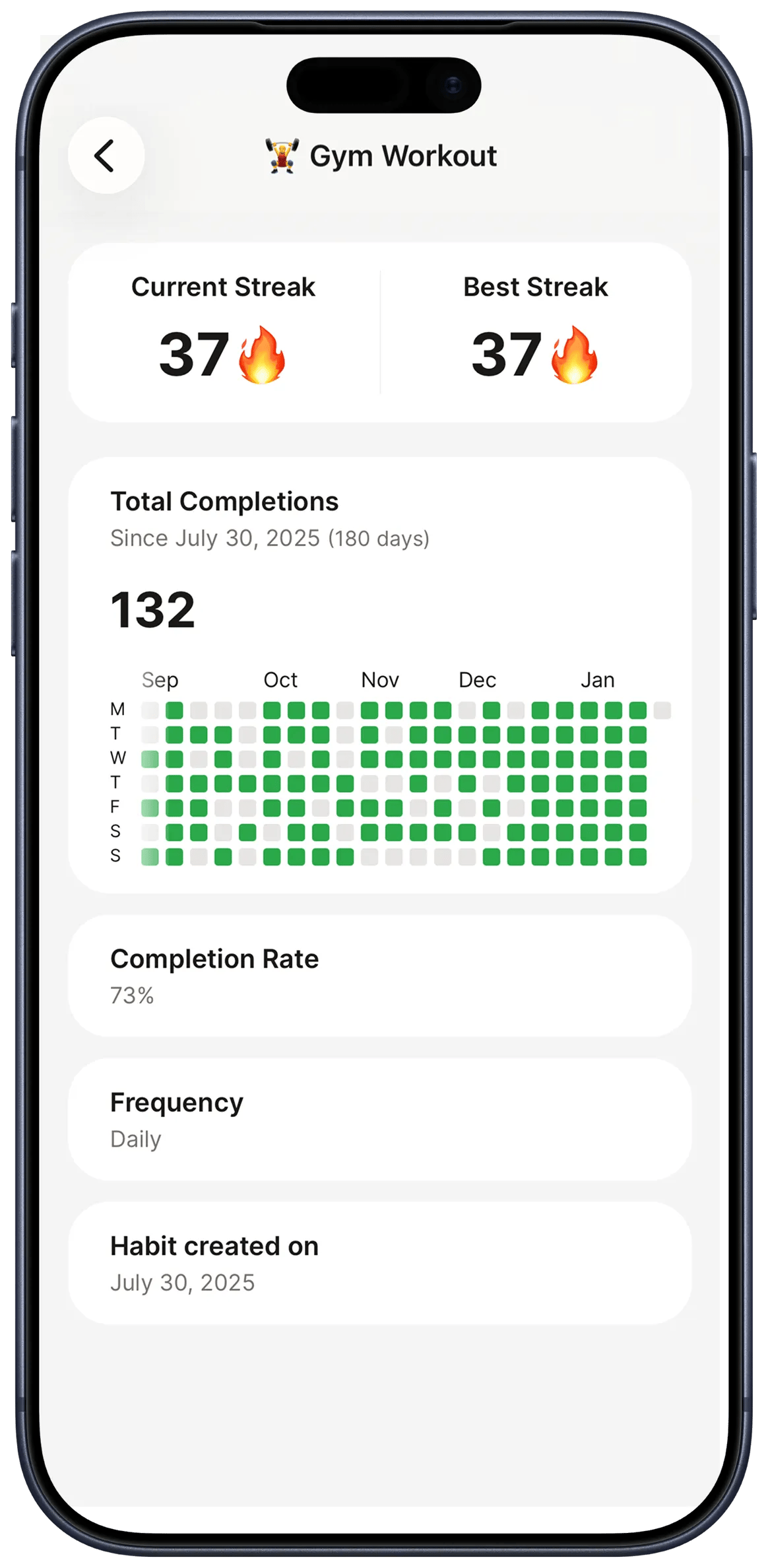
- Make the milestone visible. In Habit Streak, your streak counter naturally provides this visibility. Watch the number climb and let each day's completion reinforce the new pattern.
The fresh start effect works because it lets you psychologically separate from your "past self" who broke the streak. You're not restarting the same streak. You're starting a new one with all the knowledge and neural wiring from the previous attempt. That's not failure -- it's iteration.
If you want to pick the right habits to focus your energy on during recovery, our guide on the best habits to start tracking can help you prioritize.
When a Broken Streak Is Actually a Good Thing
Sometimes a broken streak is your system telling you something needs to change. A qualitative study published in Taylor & Francis on "run streaking" found that while long streaks brought benefits like a sense of accomplishment, many participants also reported running through injuries, skipping rest days, and experiencing increased stress when daily routines were disrupted.
A broken streak can be a positive signal when:
- The habit was causing more stress than benefit. If maintaining the streak felt like a burden rather than a practice, the break is an opportunity to redesign.
- You were doing the minimum just to keep the number alive. A streak built on hollow completions isn't building real automaticity.
- Your goals have evolved. The habit that served you six months ago might not be the one you need now. Use the break as permission to swap, adjust, or refocus.
The goal of habit tracking is a better life, not a higher number. If your streak was holding you hostage rather than helping you grow, the break might be the healthiest thing that could have happened. For more on finding the right balance, see our article on whether habit tracking is right for everyone.
Habit Streak tracks your consistency rate alongside your streaks -- so one missed day never erases your progress
Download FreeFrequently Asked Questions
Does breaking a habit streak mean I lose all my progress?▼
No. Research by Phillippa Lally at University College London found that missing a single day had no measurable impact on habit formation. The neural pathways you've built remain intact. Your automaticity -- the feeling that the habit happens without thinking -- resumes as soon as you get back on track.
How quickly should I restart after breaking a streak?▼
Within 24-48 hours, ideally. Research from the University of Pennsylvania found that people who resumed within 24 hours were 71% more likely to maintain long-term consistency. The longer you wait, the harder it becomes to restart due to the 'what-the-hell effect' -- a psychological pattern where one lapse triggers full abandonment.
Should I restart at the same intensity or scale back?▼
Scale back. BJ Fogg's Tiny Habits research at Stanford shows that restarting with a minimal version of your habit (2 minutes or less) dramatically increases your chances of sustaining it. Once you've built a new streak of 7-10 days, gradually increase back to your original level.
Is it normal to feel guilty after breaking a streak?▼
Yes, and it's explained by loss aversion -- the psychological principle that losing something feels twice as painful as gaining it. However, research shows that self-compassion after a lapse actually increases motivation to improve, while self-criticism makes future lapses more likely. Acknowledge the feeling, then redirect your focus to restarting.
How many times can I break and restart a habit before it sticks?▼
There's no set number. Habit formation research shows that the average time to automaticity is 66 days, but the range spans 18 to 254 days. Each restart carries forward the neural pathways from previous attempts. Many people need several cycles of building and breaking before a habit becomes truly automatic.
- 1.Research Explains Why Streaks Make Resolutions Sticknewswise.com
- 2.landmark study by Phillippa Lally at University College Londononlinelibrary.wiley.com
- 3.The “What the Hell" Effect & How to Conquer Its Vicious Cyclebrainscape.com
- 4.prospect theorypubs.aeaweb.org
- 5.The Psychology of Maintaining and Breaking Streakshustleescape.com
- 6.Tiny Habitstinyhabits.com
- 7.Why Most Habit Streaks Fail (And How to Build Ones That Don't)mooremomentum.com
- 8.Publications by Kristin Neffself-compassion.org
- 9.fresh start effectpubsonline.informs.org
- 10.qualitative study published in Taylor & Francistandfonline.com