 By Adrien Blanc
How to Maintain a Habit Streak: 9 Proven Strategies

The best way to maintain a habit streak is to make the habit so small on hard days that skipping it feels harder than doing it. Research from University College London found that it takes an average of 66 days for a new behavior to become automatic — but missing a single day doesn't reset that progress. What actually derails people is what psychologists call the "what-the-hell effect": one missed day triggers a spiral of giving up entirely. A study on behavioral economics shows that people are willing to expend 40% more effort to maintain an existing streak than to achieve the same behavior without one. That's loss aversion working in your favor.
The strategies below are designed to keep that streak alive — even on your worst days. They're backed by behavioral science, tested by real habit builders, and easy to apply whether you're on day 3 or day 300. If you're brand new to habit tracking, start with our complete app tutorial first, then come back here to protect your progress.
40%
more effort people invest to protect an existing streak
Start building streaks that stick with Habit Streak
Download Free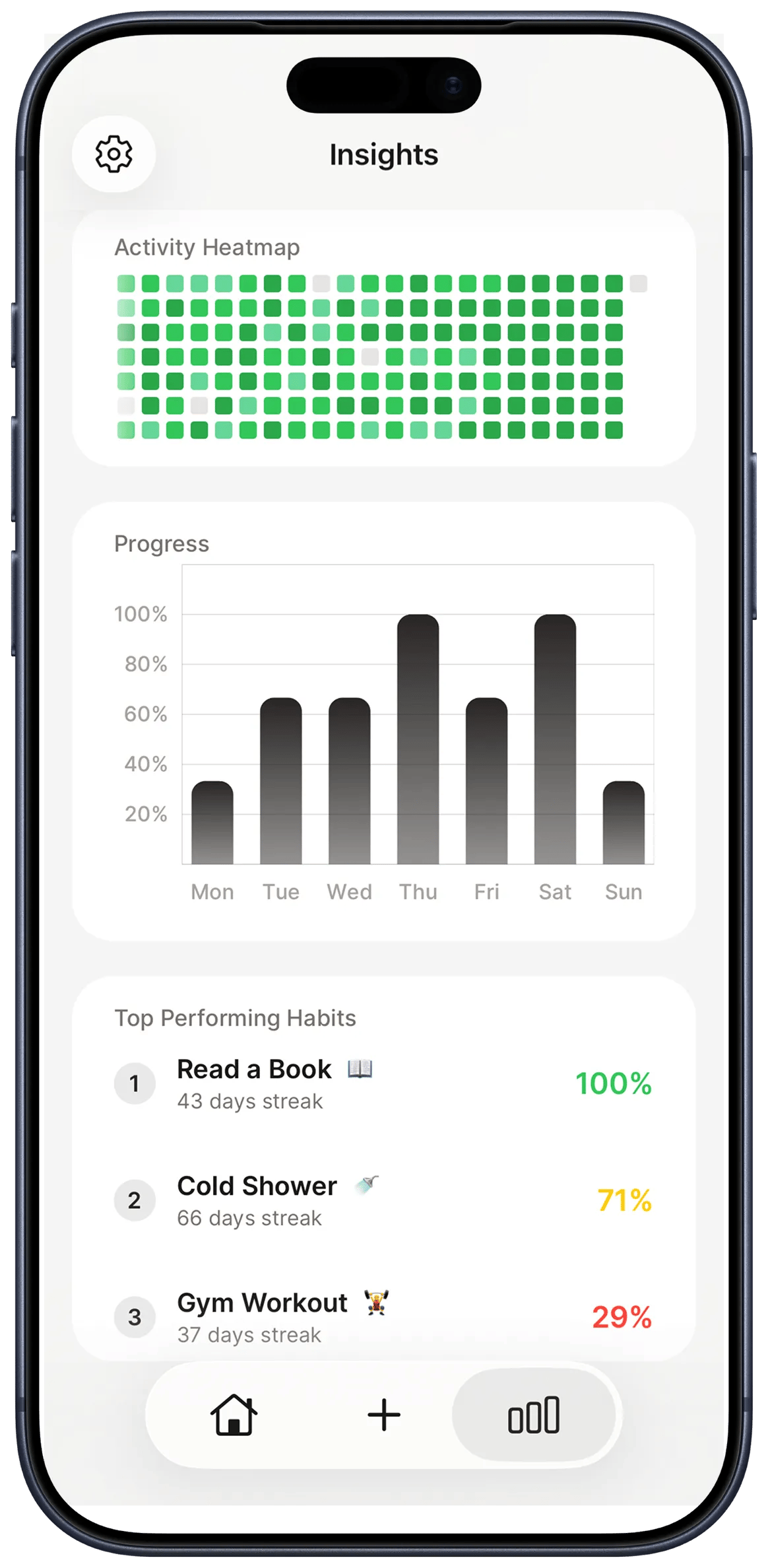
Why Streaks Are So Powerful for Motivation
Streaks tap into two of the strongest forces in human psychology: loss aversion and the dopamine reward cycle. Nobel laureate Daniel Kahneman's research on prospect theory established that the pain of losing something is roughly twice as intense as the pleasure of gaining the same thing. Once you've built a 30-day streak, the thought of losing it creates a motivational pull that willpower alone can't match.
Each time you check off a completed habit, your brain releases a small hit of dopamine — the same neurotransmitter involved in reward and motivation. Over time, this creates a positive feedback loop: complete the habit, feel good, want to repeat. The streak counter turns an invisible internal process into something visible and measurable.
But streaks have a dark side too. If your only goal is "don't break the chain," a single missed day can feel catastrophic. The strategies below are designed to give you the benefits of streak motivation without the perfectionism trap. The goal isn't a flawless record — it's a system that bends without breaking.
Strategy 1: Make It Impossibly Small on Hard Days
When motivation is low, shrink the habit to its smallest possible version. This is often called the 2-minute rule: if you can't do the full habit, do a version that takes two minutes or less. Can't run 5 kilometers? Walk around the block. Can't meditate for 20 minutes? Take three deep breaths. Can't journal a full page? Write one sentence.
BJ Fogg's Tiny Habits research at Stanford demonstrates that the size of the habit matters less than the consistency of showing up. What keeps the streak alive is the act of doing — not the scale of what you do. A 2-minute version still fires the neural pathway, still checks the box, and still tells your brain "I'm the kind of person who does this."
This is especially effective during travel, illness, or high-stress weeks. Set a minimum threshold for each habit in your tracker — the absolute floor that counts as "done." On good days you'll exceed it. On hard days you'll hit it. Either way, the streak survives.
Strategy 2: Stack Habits to Existing Routines
Attaching a new habit to a behavior you already do consistently is one of the most reliable ways to ensure you don't forget. This technique, called habit stacking, was popularized by James Clear and is based on research showing that environmental and contextual cues are stronger triggers for behavior than motivation or willpower.
The formula is simple: "After I [existing habit], I will [new habit]."
- After I pour my morning coffee, I will write down three things I'm grateful for.
- After I sit down at my desk, I will read for 10 minutes.
- After I brush my teeth at night, I will meditate for 5 minutes.
The existing routine serves as an automatic reminder. You don't need to think about when to do the new habit — it's wired to something you already do without effort. Over time, the two behaviors fuse into a single sequence, and skipping the new habit feels as unnatural as skipping the original one.
Strategy 3: Set Smart Reminders at the Right Time
Reminders work best when they arrive at the moment you're most likely to act — not just at a convenient time. Research suggests that morning routines are 43% more effective for establishing new habits than evening ones, partly because decision fatigue hasn't set in yet. But the best reminder time depends on your specific habit and daily rhythm.
Here's how to set effective reminders:
- Tie reminders to transitions. Set them for when you wake up, finish work, or arrive home — moments when you naturally shift activity.
- Use location-based cues. Some tracker apps allow reminders based on where you are, not just what time it is.
- Adjust after the first week. If you're consistently dismissing a reminder, it's at the wrong time. Move it.
In Habit Streak, you can set custom reminder times for each individual habit. The key is treating reminder setup as an experiment: test a time, observe whether you act on it, and adjust. A well-timed reminder is the difference between "I forgot" and "I almost forgot."
Strategy 4: Use the Never-Miss-Twice Rule
Missing one day is an accident. Missing two days is the start of a new pattern. This principle, often called the "never miss twice" rule, is one of the most effective safeguards against streak collapse. Research from the University of Pennsylvania's Behavior Change for Good Initiative found that people who committed to resuming a habit within 24 hours of a miss were 71% more likely to maintain long-term consistency.
71%
more likely to maintain consistency with a 24-hour recovery rule
The psychology behind this is straightforward. One missed day doesn't significantly affect habit automaticity — the Lally et al. study confirmed that occasional missed days don't derail the habit formation process. But two or more consecutive misses trigger what researchers call the "abstinence violation effect," where you start to redefine yourself as someone who doesn't do this habit.
Practical application: if you miss today, make tomorrow's version of the habit non-negotiable — even if it's the 2-minute version from Strategy 1. The combination of these two strategies creates a nearly unbreakable safety net.
Strategy 5: Design Your Environment
Your environment shapes your behavior more than your intentions do. Studies show that people who strategically modified their physical spaces to support desired habits reported 58% higher success rates than those relying on memory and motivation alone. The principle is simple: make good habits easy to start and bad habits hard to reach.
Environment design strategies that protect streaks:
- Make cues visible. Leave your journal on your pillow. Put your running shoes by the door. Keep your water bottle on your desk.
- Reduce friction. Prep your workout clothes the night before. Pre-load your meditation app. Set your guitar on its stand instead of in its case.
- Remove competing cues. If you want to read before bed, charge your phone outside the bedroom. If you want to eat healthier, don't keep snacks on the counter.
The best part of environment design is that it works when willpower doesn't. You don't need to feel motivated to trip over your running shoes every morning — the cue does the work for you.
Strategy 6: Track Publicly for Accountability
Sharing your streak with someone else makes you significantly more likely to maintain it. A meta-analysis of 42 studies found that people with structured accountability systems were 2.8 times more likely to stick with new habits than those going solo. You don't need a formal accountability partner — even a small amount of social visibility helps.
Ways to add accountability to your streak:
- Share your tracker screen with a friend or partner weekly
- Post milestone updates (7 days, 30 days, 100 days) to a group chat or social media
- Find an accountability partner who is building a similar habit
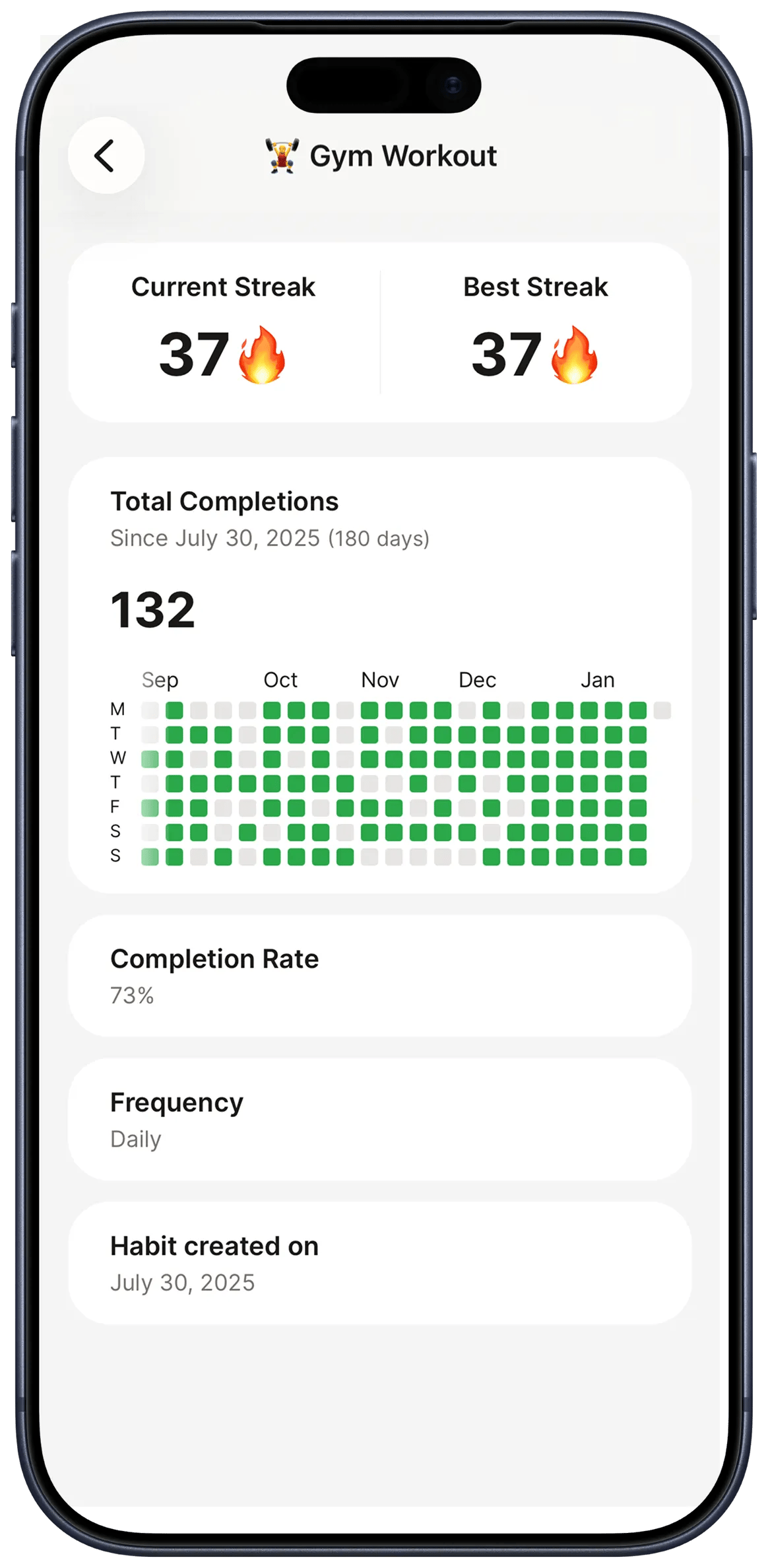
- Use a shared habit — Habit Streak lets you track habits together with someone else
The mechanism here is straightforward: we care more about commitments when others can see them. Public accountability adds a layer of social motivation on top of the internal drive, and that combination is harder to ignore than either force alone.
Strategy 7: Celebrate Small Wins
Acknowledging progress — even tiny progress — reinforces the neural pathways that make habits stick. BJ Fogg's research at Stanford found that immediate celebration after completing a habit is one of the fastest ways to wire a behavior into your routine. The celebration doesn't need to be big. A fist pump, a mental "nice," or simply pausing to notice your streak counter going up is enough.
Why this matters for streaks specifically:
- Milestones create momentum. When you hit 7 days, 30 days, or 100 days, take a moment to recognize it. These aren't arbitrary numbers — they represent genuine consistency.
- Small rewards prevent burnout. A habit that's all discipline and no satisfaction will eventually feel like a chore.
- Celebration closes the habit loop. The cue-routine-reward cycle only becomes automatic when the reward component is present.
Strategy 8: Plan for Disruptions in Advance
The habits most likely to survive are the ones with a backup plan. Travel, illness, holidays, schedule changes — disruptions are inevitable, and the people who maintain long streaks are the ones who plan for them rather than hoping they won't happen.
Before a disruption arrives, answer these questions:
- What's the minimum version of this habit I can do anywhere? (Strategy 1 applies here too)
- What time will I do it when my normal schedule is gone?
- What environmental cue will remind me?
For example, if you meditate every morning at home but you're traveling next week, decide now: "I'll meditate for 3 minutes right after brushing my teeth in the hotel." Remove the need for in-the-moment decisions. The more specific your backup plan, the more likely you are to follow through.
If you're curious about how to pick the right habits to protect with a streak, our guide on the best habits to start tracking can help you focus on what matters most.
Strategy 9: Know When to Adjust the Habit
A streak worth maintaining is one that still serves you. If your habit has become a source of anxiety rather than growth, the streak isn't protecting your progress — it's holding you hostage. The most sustainable approach is to periodically review whether the habit itself still makes sense.
Signs it's time to adjust:
- You dread the habit more days than not
- The habit no longer aligns with your current goals
- You're doing the minimum every single day just to keep the streak alive, without any benefit
- The streak creates guilt instead of motivation
Adjusting doesn't mean quitting. It means modifying: changing the frequency, lowering the threshold, or replacing the habit with a better-suited alternative. A 90-day streak on a habit that stopped serving you three weeks ago isn't progress — it's stubbornness. For more on how many habits to track at once, check our dedicated guide.
The goal is to build habits that improve your life, not to serve the streak counter. Use the streak as a tool, not an identity. When the tool stops working, adjust it.
Protect your streaks with smart reminders and streak freezes
Download FreeFrequently Asked Questions
How long does it take for a habit to become automatic?▼
Research from University College London found that the average is 66 days, but the range varies widely from 18 to 254 days depending on the habit's complexity. Simple habits like drinking water become automatic faster than complex ones like a workout routine. The key finding: missing a single day doesn't significantly delay habit formation.
Does missing one day ruin my habit streak progress?▼
No. The Lally et al. study on habit formation confirmed that occasional missed days don't derail the habit formation process. What matters more is avoiding consecutive misses. Use the 'never miss twice' rule: if you miss today, make tomorrow non-negotiable, even if you do the smallest possible version of the habit.
What should I do if I keep breaking my streak?▼
First, check if the habit is too ambitious. Shrink it to a 2-minute version that's almost impossible to skip. Second, review your reminder timing — it may be set at a moment when you can't act. Third, try habit stacking by attaching the new behavior to something you already do consistently. If you've already lost a streak, see our guide on streak recovery tips for a full recovery plan.
Is it better to track one habit or multiple habits at once?▼
Start with 1-3 habits and add more only after those feel automatic (usually 4-8 weeks). Research shows that tracking more than 7 habits simultaneously increases the risk of abandoning all of them. Quality of consistency beats quantity of habits.
Should I use streak freezes or skip days?▼
Streak freezes can be a useful safety valve for genuinely unavoidable situations like illness or travel. Use them sparingly — they're a parachute, not a crutch. If you find yourself relying on freezes regularly, it's a sign the habit itself needs adjusting rather than the tracking system.
- 1.University College Londononlinelibrary.wiley.com
- 2.study on behavioral economicsbehavioraleconomics.com
- 3.prospect theorypubs.aeaweb.org
- 4.Tiny Habitstinyhabits.com
- 5.environmental and contextual cuespmc.ncbi.nlm.nih.gov
- 6.morning routines are 43% more effectivecoachpedropinto.com
- 7.Homebcfg.wharton.upenn.edu