 By Adrien Blanc
8 Daily Habits That Help You Save More Money
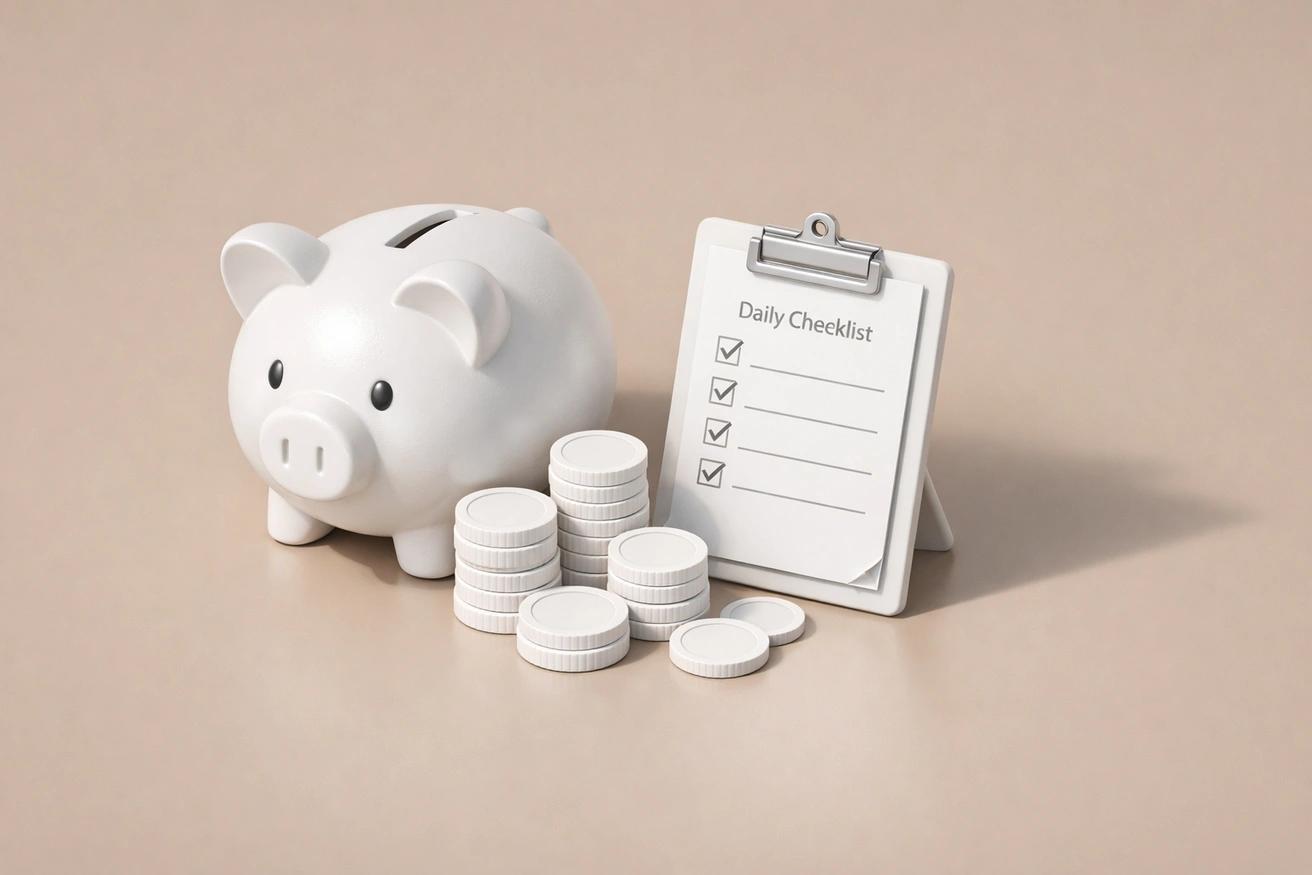
Most people approach saving money as a willpower problem -- something you muscle through each month after the bills are paid. But the research tells a different story. Saving is a habit problem, and the people who build wealth consistently do so through small, repeatable daily actions rather than dramatic sacrifices.
The average American consumer spends an estimated $282 per month on impulse purchases alone, totaling over $3,300 a year. Meanwhile, CNET's 2025 subscription survey found that people waste an average of $204 per year on subscriptions they do not even use. These are not budget-breaking splurges -- they are small, automatic spending patterns that quietly drain your finances.
The fix is equally automatic. When you build the right daily habits around money, saving stops requiring constant effort and starts happening on its own. Below are eight daily habits, grounded in behavioral science and real-world data, that can help you keep more of what you earn. These habits fit naturally into a daily routine that actually works.
$3,381
average annual impulse spending per American consumer
Build your money-saving habits one day at a time. Track your financial routines with Habit Streak.
Download Free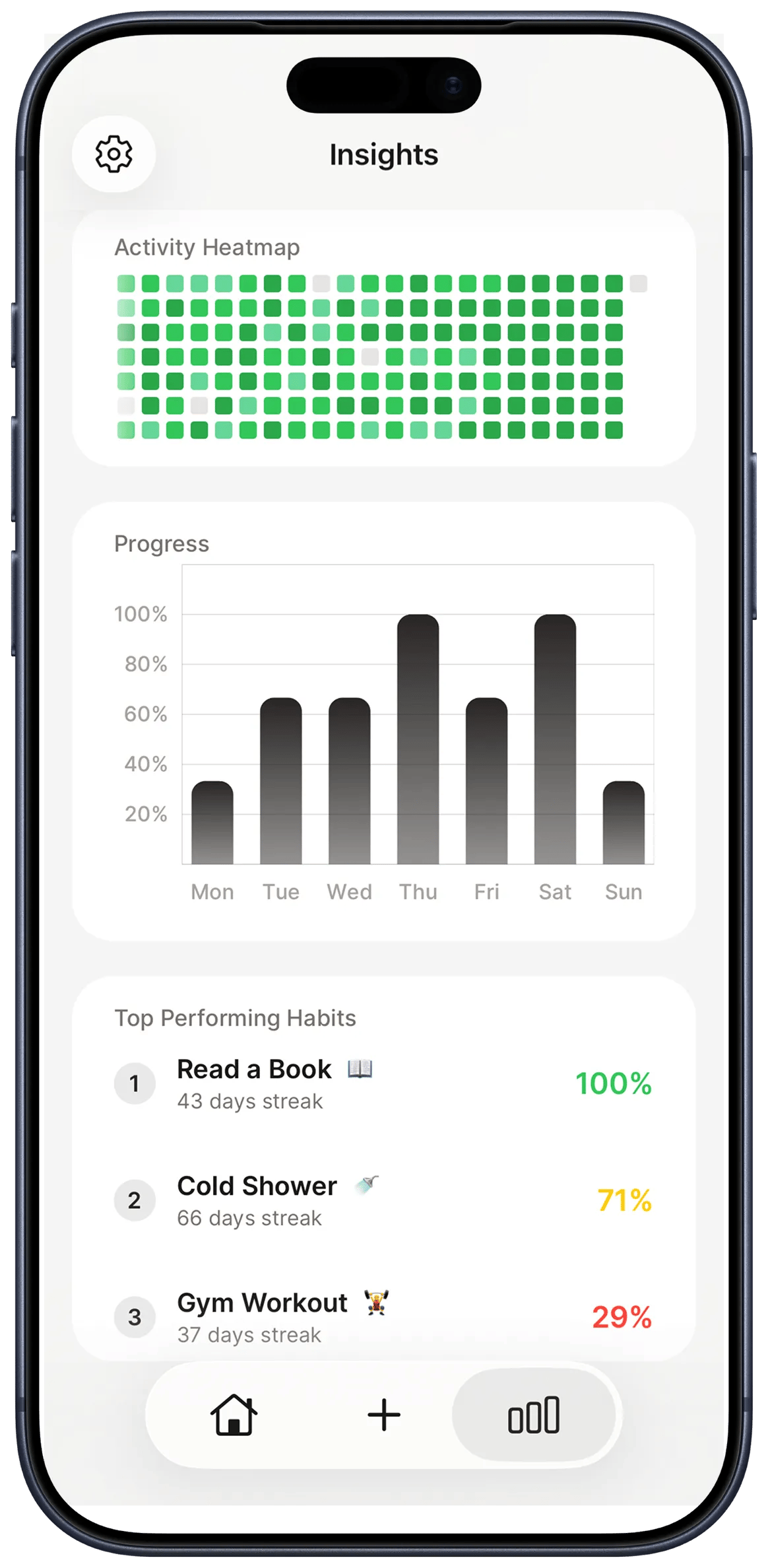
1. Track Every Expense Daily
Awareness is the first step to behavioral change, and daily expense tracking is the fastest way to build financial awareness. When you know exactly where your money goes, you naturally start questioning whether each purchase is worth it.
A study published in Frontiers in Behavioral Economics found that both behavioral and contextual factors play a significant role in determining saving outcomes -- and active monitoring is one of the strongest predictors of positive saving behavior. People who track spending daily report finding $100 to $300 per month in expenses they did not realize they had.
Getting started does not need to be complicated:
- Log every purchase at the end of each day (use an app or a simple note)
- Categorize spending into needs, wants, and waste
- Review weekly patterns to spot recurring leaks
- Aim for no-spend days -- some savers target 13-18 per month
One habit tracker user shared that by tracking daily and aiming for no-spend days, they added over $1,000 per month to savings. Tracking works because it turns unconscious spending into conscious decisions. If you are new to building a tracking routine, a habit tracker for beginners can help you stay consistent.
2. Wait 24 Hours Before Non-Essential Purchases
The 24-hour rule is one of the simplest and most effective tools for reducing impulse spending. When you feel the urge to buy something you had not planned on, you wait a full day before completing the purchase. Most of the time, the desire fades.
The psychology behind this is well-documented. Perry Wright, a senior behavioral researcher at Duke University's Common Cents Lab, explains that "the best trick for saving is to eliminate the decision to save" -- and the 24-hour rule works by eliminating the impulse decision to spend. Studies show that the dopamine hit from shopping peaks before the purchase, not after. By waiting, you let that artificial urgency pass.
The numbers are striking. The average consumer makes 9.75 impulse buys per month at roughly $29 each. Even cutting those in half saves $1,200-$1,700 per year.
How to apply the 24-hour rule:
- Add items to a wish list instead of your cart
- Delete shopping apps from your phone's home screen
- Unsubscribe from marketing emails that trigger impulse browsing
- Set a dollar threshold (e.g., anything over $30 waits 24 hours)
3. Automate Your Savings
Automation removes the daily decision of whether to save, which is exactly why it works so well. When money moves to savings before you see it in your checking account, you adjust your spending to match what is left -- not the other way around.
Behavioral science backs this strongly. Research published in the Journal of Consumer Affairs found that savings automation is particularly effective when paired with a savings mindset -- the combination helps people of all income levels build liquid savings faster. Fidelity recommends aiming to save 15% of pre-tax income toward retirement, including employer matches.
Set up automation in layers:
- Emergency fund transfer the day after each paycheck
- Retirement contributions through your employer (maximize any match)
- Round-up investing through micro-investment apps (spare change adds up)
- Separate savings accounts for specific goals (vacation, car, home)
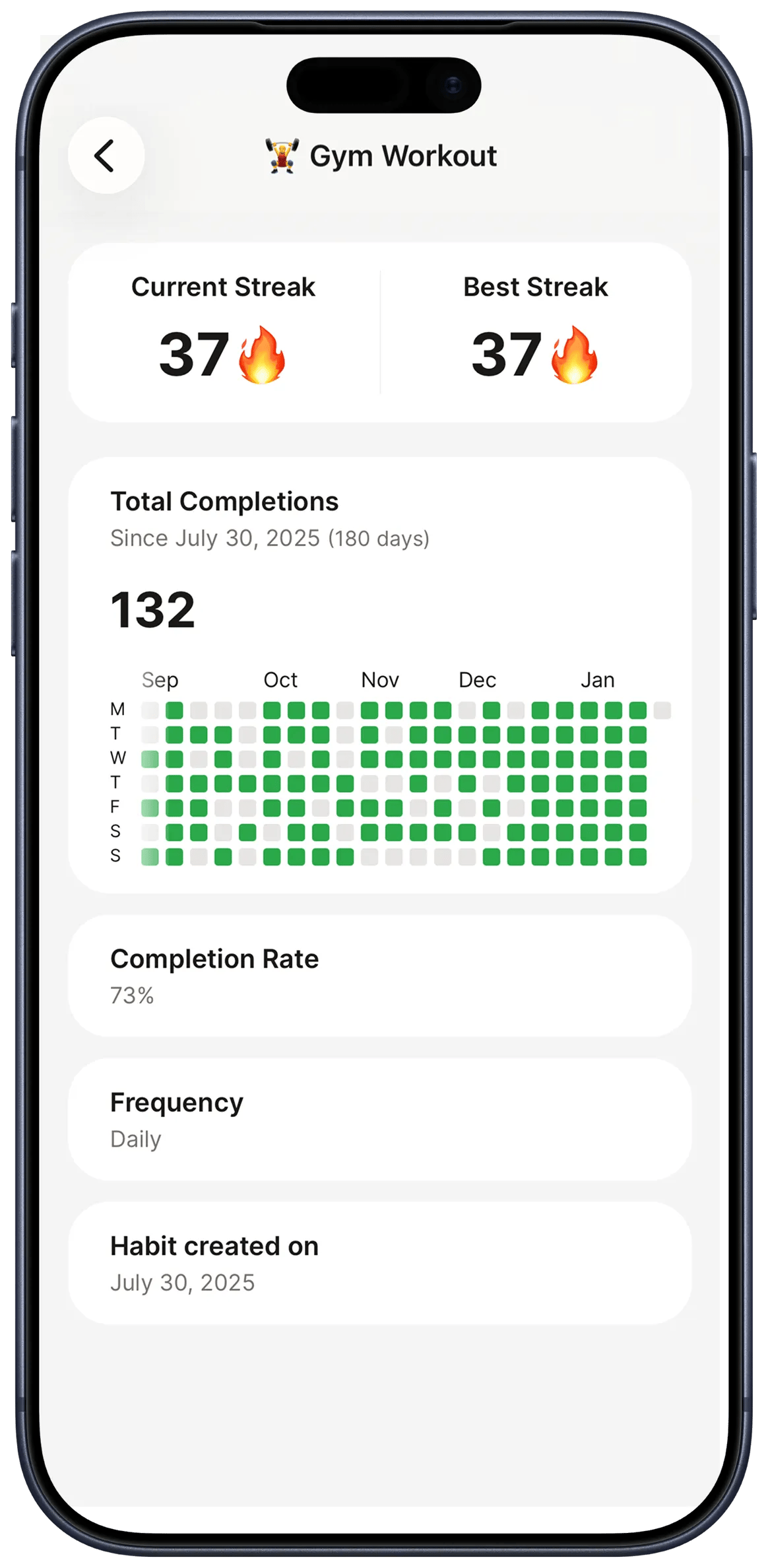
The daily habit here is not the transfer itself -- it is the mindset. Check your savings balance each morning as part of your routine. Watching your progress builds motivation, the same way tracking a streak reinforces any positive behavior.
4. Pack Your Lunch
Bringing food from home instead of buying lunch is one of the highest-return daily habits you can build. The math is straightforward, and the savings compound quickly.
According to Empower's food spending research, Americans now spend approximately $879 per month on restaurant and takeout food. Lunch is the most common meal eaten away from home -- 53% of households eat lunch out in a given week. With the average restaurant meal costing $11-$30 per person, buying lunch five days a week can easily run $2,500-$3,000 per year.
A packed lunch costs $3-$5 on average. That difference -- roughly $1,500-$2,000 per year -- is real money that can go straight into savings or debt repayment.
Tips for making this habit stick:
- Meal prep on Sundays for the entire work week
- Cook slightly larger dinners and pack leftovers
- Keep it simple -- sandwiches, salads, and grain bowls work every day
- Allow yourself one lunch out per week so the habit does not feel restrictive
5. Review Subscriptions Monthly
The average American spends $1,080 per year on subscriptions, and most people drastically underestimate how much they are paying. A 2024 C+R Research study found that when asked to guess their monthly subscription costs, people estimated around $111 -- while their actual spending averaged $219. That is a 146% underestimation.
Worse, 54.9% of subscribers have at least one subscription going unused each month. The average waste: $10-$17 per month on services you are not even opening.
Build a monthly subscription review habit:
- Set a recurring calendar reminder on the first of each month
- List every active subscription and its monthly cost
- Ask two questions for each: "Did I use this in the last 30 days?" and "Would I sign up for this today at this price?"
- Cancel immediately if the answer to either question is no
- Downgrade tiers where possible (do you really need the premium plan?)
6. Use the One-In-One-Out Rule
Every time you buy something new, remove something you already own. This simple constraint forces you to evaluate whether a new purchase is genuinely better than what you have -- and it naturally slows down accumulation.
The one-in-one-out rule works because of a behavioral economics principle called loss aversion. We feel the pain of losing something roughly twice as strongly as the pleasure of gaining something equivalent. By making yourself give up an item each time you buy one, you create a small but meaningful psychological barrier to unnecessary purchases.
This habit is especially effective for:
- Clothing -- new shirt means an old one gets donated
- Kitchen gadgets -- new appliance means one leaves the counter
- Electronics -- new device means an old one gets sold or recycled
- Books -- new book means one gets passed along (or use the library)
Bonus: selling the outgoing item offsets the cost of the new one. Over time, this habit trains you to be more intentional about what enters your home -- and your wallet.
7. Set a Daily Spending Limit
A daily spending cap turns your monthly budget from an abstract number into a concrete daily decision. Instead of wondering whether you can afford something midway through the month, you know exactly how much discretionary money you have today.
The popular 50/30/20 framework suggests allocating 30% of after-tax income to wants. For someone earning $4,000 per month after taxes, that is $1,200 for discretionary spending -- about $40 per day. Knowing that number changes how you evaluate a $7 coffee or a $25 impulse buy.
How to set your daily limit:
- Calculate your monthly discretionary budget (income minus bills, savings, and essentials)
- Divide by 30 to get your daily number
- Track against it each evening as part of your expense logging habit
- Roll over unspent amounts to create a small buffer for bigger planned purchases
This habit pairs naturally with daily expense tracking (habit #1). Together, they create a closed-loop system: you set the limit, track against it, and adjust in real time rather than discovering overspending at the end of the month.
8. Invest the Difference
Every dollar you save through these habits is a dollar that can grow. The final habit is not about spending less -- it is about redirecting the money you have freed up into places where it compounds over time.
Micro-investing platforms have made this easier than ever. Round-up features invest the spare change from everyday purchases. If your morning coffee costs $4.50, the app rounds up to $5.00 and invests the $0.50 difference. A Berkeley Economic Review analysis found that these micro-investment techniques, rooted in behavioral economics, make saving feel painless because the amounts are too small to notice individually -- but they add up to hundreds of dollars per year.
Ways to invest the difference:
- Round-up investing on daily purchases
- Redirect cancelled subscription money into an index fund
- Automate transfers equal to what you save by packing lunch
- Increase retirement contributions by 1% each quarter
The key insight: saving is only half the equation. Investing is what turns daily habits into long-term wealth. Even modest amounts, invested consistently, benefit from compounding returns over decades.
$204/yr
average wasted on unused subscriptions
Ready to build better financial habits? Track your money-saving streaks and watch your progress grow with Habit Streak.
Download FreeBuilding Your Money-Saving Routine
You do not need to adopt all eight habits at once. Start with one or two that feel manageable and build from there. Research on habit formation shows that the factors driving you to start a new behavior are different from those that keep you going -- early momentum matters, but long-term consistency comes from seeing results.
A solid starting point: begin with daily expense tracking and the 24-hour rule. These two habits create immediate awareness and an instant barrier against impulse spending. Once those feel automatic, layer in automation and the lunch-packing habit for structural savings.
The pattern across people who save successfully is remarkably ordinary. They are not following extreme budgets or depriving themselves. They are paying attention to small daily habits and questioning whether each purchase actually improves their life. That mindset shift, practiced daily, is what separates savers from spenders.
Frequently Asked Questions
How much money can daily habits realistically save?▼
The amount varies by income and lifestyle, but most people find $200-$500 per month through a combination of expense tracking, reduced impulse buying, and subscription audits. Packing lunch alone can save $1,500-$2,000 per year. The key is consistency -- small amounts compound over time.
What is the best first habit to start with for saving money?▼
Daily expense tracking is the highest-impact starting point. You cannot fix what you cannot see. Most people who track their spending for even two weeks discover recurring expenses they did not realize they had. From there, the 24-hour rule for impulse purchases is a natural second step.
Does automating savings actually work?▼
Yes. Behavioral research from Duke University's Common Cents Lab shows that automating savings removes the moment-to-moment decision of whether to save, which dramatically increases follow-through. The key is setting up transfers right after payday so you adjust spending to what remains rather than saving what is left over.
How do I stick with money-saving habits long term?▼
Treat financial habits the same way you would any other habit: track your progress, celebrate small wins, and do not try to change everything at once. Using a habit tracker to maintain a streak creates accountability. Research shows that satisfaction with early results is the strongest predictor of whether you will continue a habit.
Is it better to focus on cutting spending or increasing income?▼
Both matter, but daily spending habits give you immediate control. Cutting $200 per month from impulse purchases and subscriptions takes effect right away, while income increases often take months or years to materialize. The best approach is to build strong saving habits first, then redirect any income gains into investments.
- 1.Impulse Buying Statistics (2025): Consumer Spending Habitscapitaloneshopping.com
- 2.CNET's 2025 subscription surveyfinance.yahoo.com
- 3.Frontiers | Behavioral and contextual determinants of different stages of saving behaviorfrontiersin.org
- 4.Frugal People Are Sharing The One Practice That Saved Them The Most Money In 2025buzzfeed.com
- 5.The easiest way to save money every month, according to a behavioral research expertcnbc.com
- 6.Research published in the Journal of Consumer Affairsjournals.sagepub.com
- 7.5 ways to save more in 2026fidelity.com
- 8.Tracking America’s food spending: People spend $1,546 a month on groceries and restaurantsempower.com
- 9.2025 Consumer Dining Trends: How Americans Are Spending on Restaurants and Takeoutescoffier.edu
- 10.Cost of Unused Subscriptionsself.inc
- 11.How to Save Money: 28 Waysnerdwallet.com
- 12.Micro Investment and the Behavioral Economics of Savings: The Power of Small Stepseconreview.studentorg.berkeley.edu