 By Adrien Blanc
Habit Tracking With ADHD: Strategies That Actually Work
Standard habit tracking advice -- streaks, rigid daily checklists, "just be consistent" -- often backfires for people with ADHD. The reason is neurological, not motivational. ADHD affects the brain's dopamine reward pathway and executive function systems, making it genuinely harder to initiate, sustain, and automate repeated behaviors. A study published in Molecular Psychiatry found that adults with ADHD show decreased dopamine receptor and transporter availability in brain regions that process motivation and reward, directly undermining the reinforcement loop that habit formation depends on.
That does not mean habit tracking is useless for ADHD brains. It means the approach needs to be different. With the right strategies -- flexible tracking, environmental cues, smaller habit units, and external accountability -- people with ADHD can build lasting routines. The key is working with your neurology instead of fighting it.
This guide covers research-backed strategies designed specifically for the ADHD brain, drawn from behavioral science and the lived experience of the neurodivergent community.
6%
of U.S. adults have ADHD -- roughly 15.5 million people
Build habits that work with your brain, not against it
Download Free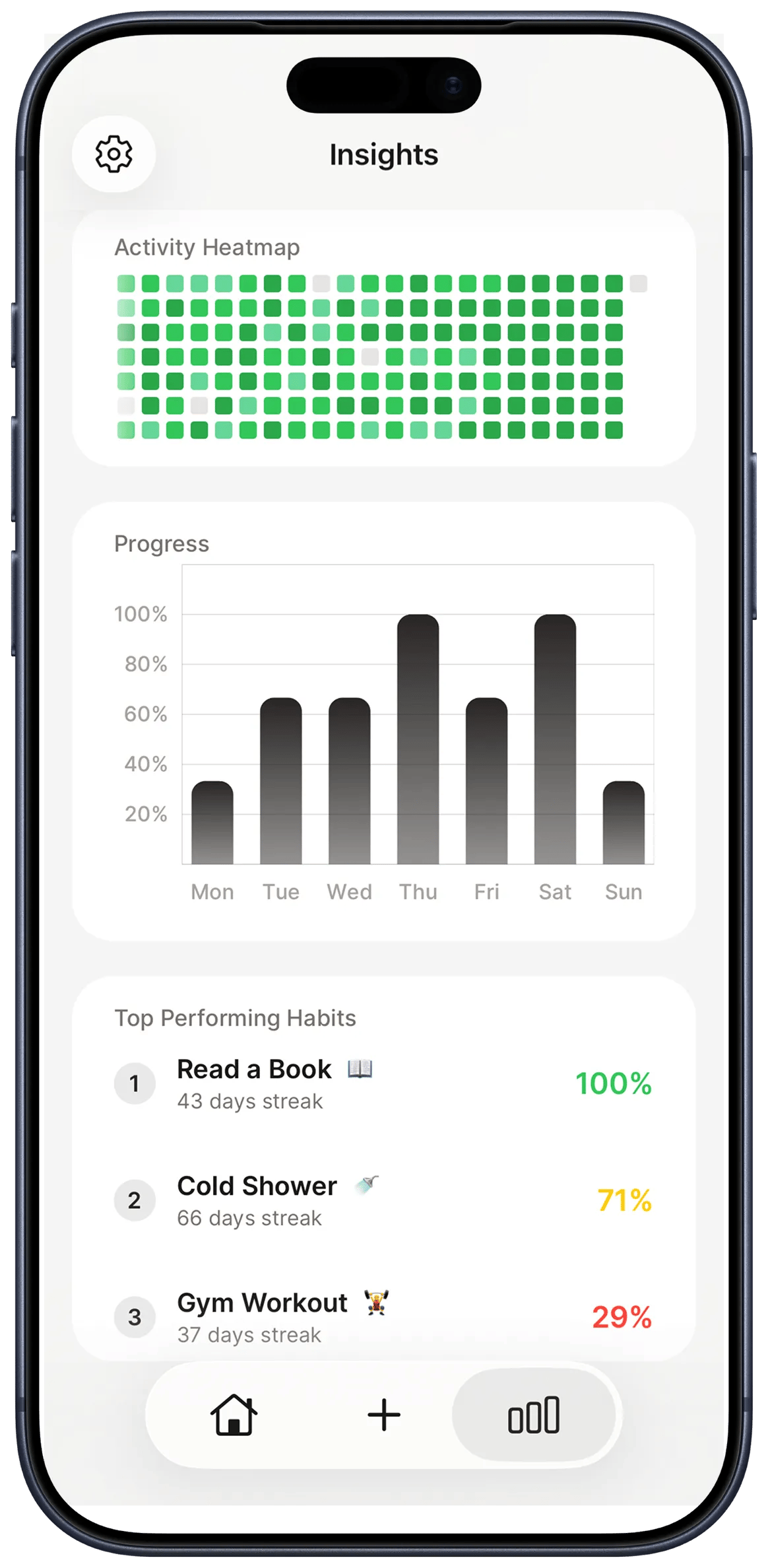
Why Traditional Habit Tracking Fails With ADHD
Most habit systems are designed for neurotypical brains, and they assume consistent executive function. They rely on internal motivation, working memory, and the ability to delay gratification -- all areas where ADHD creates measurable deficits.
Here is what goes wrong:
- The streak trap. Binary "done/not done" tracking punishes inconsistency. One missed day resets the counter, triggering the "what the hell" effect where a single slip leads to total abandonment. This is especially damaging for ADHD brains that already struggle with self-criticism.
- Invisible rewards. Habit tracking asks you to delay gratification: do the thing now, see the benefit weeks later. But research on the ADHD reward pathway shows that people with ADHD have a stronger preference for small immediate rewards over larger delayed ones. A checkmark next to "meditate" may not generate enough dopamine to compete with whatever is more stimulating in the moment.
- Working memory overload. Remembering to check your tracker, recalling what habits you committed to, and evaluating your progress all require working memory -- a core deficit in ADHD. Without external reminders, the tracker itself gets forgotten.
- All-or-nothing goals. "Run 5 km every morning" looks great on paper but creates task paralysis when energy is low. ADHD brains need permission to do less, not rigid targets that feel overwhelming.
If any of this sounds familiar, the problem is not your discipline. It is a mismatch between the tool and the brain using it. For more on common pitfalls, see our guide to habit tracking mistakes.
Understanding Executive Function and Habits
Executive function is the brain's management system -- and ADHD disrupts nearly every part of it that habit formation requires. Planning, task initiation, working memory, time perception, and emotional regulation are all governed by the prefrontal cortex, which functions differently in ADHD brains.
A meta-analytic review of executive functioning in adult ADHD found medium effect sizes for deficits in verbal fluency, inhibition, and set-shifting. In practical terms, this means:
- Starting a habit is harder than maintaining it. Task initiation requires more activation energy for ADHD brains. The gap between "I should do this" and actually beginning feels enormous.
- Automatic behaviors take longer to form. Phillippa Lally's research at University College London found that the average person needs about 66 days to form a habit. For people with executive function challenges, this timeline may stretch to 106-154 days depending on the behavior's complexity. That means patience is not optional -- it is a requirement.
- Interest-based nervous system. ADHD brains are driven by novelty, urgency, challenge, and personal interest rather than importance or routine. A habit that feels boring will be nearly impossible to sustain without external scaffolding.
Understanding these mechanisms is not about making excuses. It is about designing systems that account for real neurological differences. For a broader overview of how habits form, check our complete guide to habit tracking.
Flexible Tracking Over Rigid Streaks
The single most important adaptation for ADHD-friendly habit tracking is replacing rigid pass/fail systems with flexible ones. Perfectionism and ADHD are a toxic combination. When your tracker only offers "yes" or "no," every imperfect day registers as failure.
Here is how to build flexibility into your system:
- Track effort, not perfection. Instead of "did I meditate for 20 minutes?", track "did I sit down to meditate at all?" A two-minute session counts. The goal is repetition, not duration.
- Use a minimum viable habit. Define the smallest version of each habit that still counts. If your habit is "exercise," the minimum might be putting on your shoes and walking to the end of the driveway. On good days, you will do more. On hard days, the minimum keeps the pattern alive.
- Allow partial credit. Some trackers let you mark habits as partially completed. This preserves momentum without demanding perfection. A 50% day is infinitely better than a 0% day.
- Limit what you track. People with ADHD are especially vulnerable to over-tracking. Start with one to two habits, maximum. Master those before adding anything new. Research backs this up: tracking fewer habits leads to better outcomes.
External Cues and Environmental Design
ADHD brains struggle with internal cues, so the solution is to make the external environment do the remembering. This is not a workaround -- it is a well-supported strategy from behavioral science.
Environmental design strategies that work:
- Visual cues. Place physical reminders where you will see them. Put your journal on your pillow. Leave your vitamins next to your coffee mug. Put your running shoes by the front door. ADHD brains respond strongly to what is directly in front of them.
- Habit stacking. Attach new habits to existing routines. "After I pour my morning coffee, I write in my journal for two minutes." The existing behavior becomes the trigger, removing the need to remember. This technique, popularized by James Clear, is particularly effective for ADHD because it reduces the executive function demand of task initiation.
- Reduce friction to zero. Every step between "decide to do the habit" and "actually doing it" is a point where ADHD can derail you. Want to exercise? Sleep in your workout clothes. Want to read? Keep the book open on your nightstand, face down on the page where you stopped.
- Phone notifications with context. Set alarms that include what you need to do, not just "habit time." A notification that says "Take vitamins -- they are on the kitchen counter next to the blue mug" is far more effective than a generic reminder.
The Power of Body Doubling and Accountability
Body doubling -- doing a task in the presence of another person -- is one of the most widely recommended strategies in the ADHD community. The concept is simple: having someone nearby, even if they are working on something completely different, provides enough external structure to help you stay on task.
While formal research is still catching up, a 2024 study found that body doubling is effective for task initiation and completion in individuals with ADHD. The likely mechanism involves social facilitation -- the well-established finding that the mere presence of others increases arousal and engagement -- combined with the dopamine boost from social interaction.
Practical ways to use accountability for habit building:
- In-person body doubling. Work alongside a friend, partner, or coworker. You do not need to be doing the same task.
- Virtual body doubling. Platforms like Focusmate or Discord "study with me" channels pair you with someone online. This works surprisingly well for ADHD brains.
- Accountability partners. Share your habit tracking data with someone who checks in weekly. The mild social pressure creates an external deadline that ADHD brains respond to.
- Public commitment. Tell someone what you plan to do today. The act of saying it out loud activates a different kind of motivation than internal intention-setting.
Choosing ADHD-Friendly Habits to Track
Not all habits are equally suited for ADHD brains. The habits that stick share specific characteristics. Selecting the right habits matters more than tracking perfectly.
Traits of ADHD-friendly habits:
- Short. Five minutes or less to start. You can always do more, but the entry point must be low.
- Concrete. "Drink a glass of water after breakfast" beats "stay hydrated." Vague habits require executive function to interpret; specific ones do not.
- Immediately rewarding. Pair habits with something enjoyable. Listen to a favorite podcast only while exercising. Have your best coffee only after journaling. This is called temptation bundling, and it directly addresses the ADHD reward deficit.
- Flexible in timing. "Sometime today" works better than "at 7:00 AM sharp" for most ADHD brains. Rigid time slots create anxiety and set you up for failure when the day inevitably goes off-script.
- Connected to identity. "I am someone who moves my body daily" is more motivating than "I have to exercise." Identity-based habits tap into intrinsic motivation, which is more durable for ADHD brains than external obligation.
Habits to approach with caution:
- Anything requiring multiple steps before you even start (e.g., habits that need special equipment or preparation)
- Habits that only show results after weeks or months (the delayed reward will not sustain ADHD motivation)
- Habits that depend on someone else's schedule or availability
Using Technology to Support Your ADHD Brain
The right app can serve as an external executive function system -- handling the remembering, tracking, and rewarding that ADHD brains find difficult. But not all apps work equally well for neurodivergent users.
What to look for in an ADHD-friendly habit tracker:
- Smart reminders. Notifications at the right time, with enough context to prompt action.
- Flexible completion. The ability to mark partial progress, not just binary yes/no.
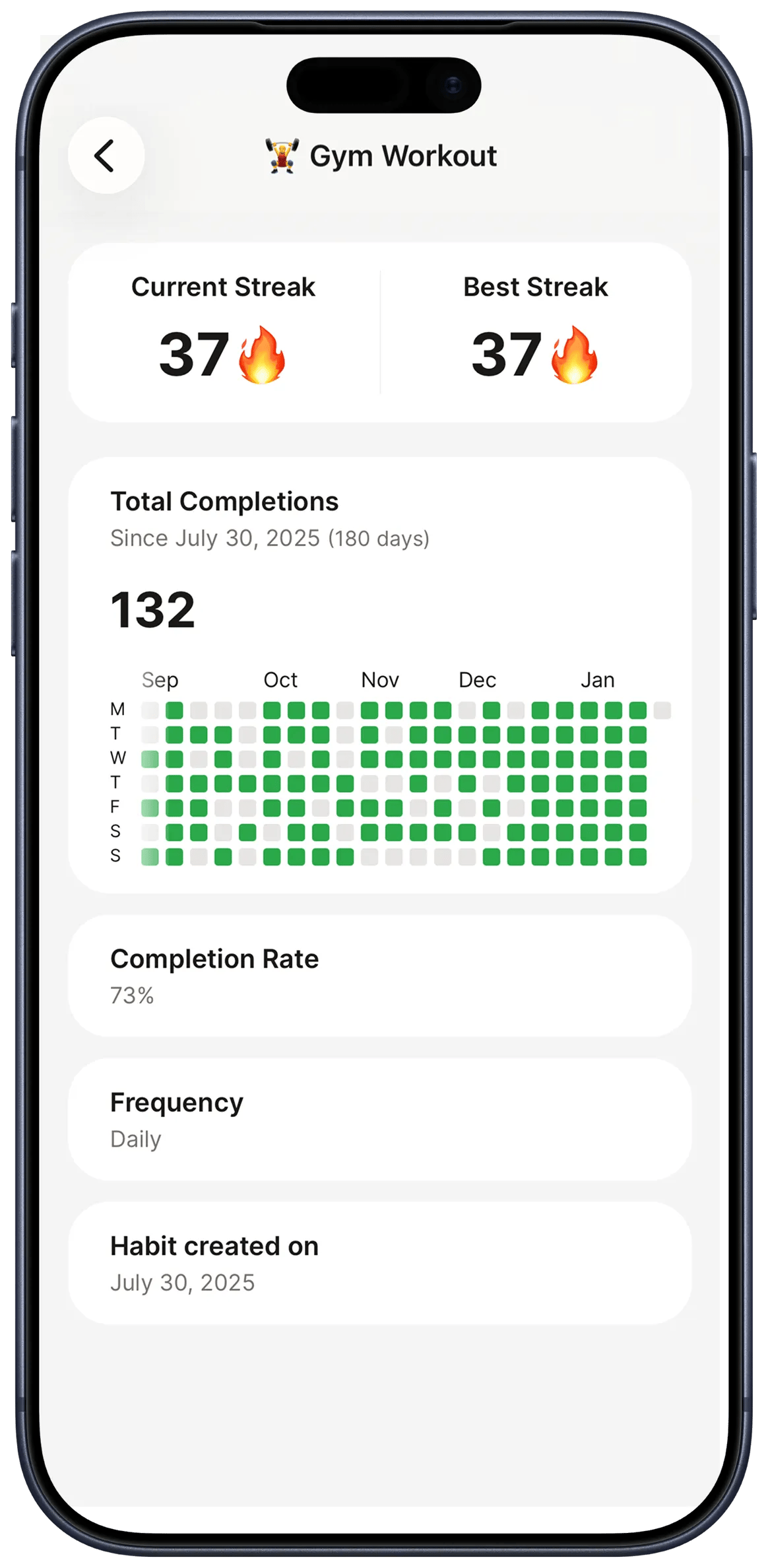
- Visual progress. Charts, streaks, and completion rates that provide immediate visual feedback. ADHD brains respond well to seeing progress represented graphically.
- Low setup friction. If configuring the app takes 30 minutes, you may never open it again. The best tool is the one you actually use.
- Gentle streak recovery. Apps that allow you to miss a day without losing all visual progress work far better for ADHD than rigid streak counters.
Beyond dedicated habit trackers, consider these supporting tools:
- Timers. The Pomodoro technique (25-minute focused blocks) gives ADHD brains a sense of urgency and a visible endpoint. Knowing the timer will go off in 25 minutes makes starting feel less overwhelming.
- Calendar blocking. Schedule habits as calendar events with alerts. Treat them like appointments you cannot cancel.
- Automation. Use your phone's built-in automation to trigger habit reminders based on location, time, or other actions.
Building a System That Lasts
The goal is not to track habits perfectly. It is to build a system that survives your worst ADHD days. Here is a practical framework:
- Pick one habit. Just one. Make it small and concrete.
- Attach it to an existing routine. Use habit stacking to eliminate the need for memory.
- Set up external cues. Visual reminders, phone notifications, environmental design.
- Track flexibly. Partial credit counts. Minimum viable versions count.
- Get an accountability partner. Even a weekly check-in makes a measurable difference.
- Review monthly, not daily. Zoom out. Look at the trend line, not individual days. Are you doing the habit more often than you were a month ago? That is progress.
- Add a second habit only after the first feels easy. Resist the urge to overhaul your entire life at once.
For ADHD brains, the system matters more than the streak. Build something flexible enough to handle bad days, simple enough to maintain without much executive function, and rewarding enough to keep you coming back.
Start with one habit today -- Habit Streak makes flexible tracking simple
Download FreeFrequently Asked Questions
What is the best habit tracker for someone with ADHD?▼
The best habit tracker for ADHD is one that offers flexible completion (not just yes/no), smart reminders, and visual progress without punishing missed days. Look for apps that allow partial credit and keep setup simple. The most effective tool is the one you actually use consistently.
Why is it so hard to build habits with ADHD?▼
ADHD affects the brain's dopamine reward pathway and executive function systems. Research shows that adults with ADHD have lower dopamine receptor availability in motivation-related brain regions, making it harder to sustain effort for delayed rewards. Task initiation, working memory, and consistency are all more difficult -- not due to laziness, but neurology.
How long does it take someone with ADHD to form a habit?▼
While the average person takes about 66 days to automate a habit (per Lally et al. at UCL), people with ADHD may need longer -- studies on complex behaviors suggest 106 to 154 days. The timeline varies by habit complexity. Expect around three to five months and focus on consistency over perfection.
Should I use streaks if I have ADHD?▼
Streaks can be motivating, but rigid streak tracking often backfires for ADHD brains. A broken streak can trigger the 'what the hell' effect and lead to giving up entirely. Use streaks as a gentle motivator, but choose a system that allows recovery from missed days rather than resetting to zero.
Can body doubling help with habit building?▼
Yes. Body doubling -- working alongside another person, in person or virtually -- is widely recommended in the ADHD community. A 2024 study found it effective for task initiation and completion. The presence of another person provides external structure and a mild dopamine boost from social interaction, both of which help ADHD brains stay on task.
- 1.study published in Molecular Psychiatrynature.com
- 2.The “What the Hell" Effect & How to Conquer Its Vicious Cyclebrainscape.com
- 3.research on the ADHD reward pathwaypmc.ncbi.nlm.nih.gov
- 4.Executive functioning in adult ADHD: a meta-analytic reviewpubmed.ncbi.nlm.nih.gov
- 5.Phillippa Lally's research at University College Londononlinelibrary.wiley.com
- 6.Time to Form a Habit: A Systematic Review and Meta-Analysis of Health Behaviour Habit Formation and Its Determinantspmc.ncbi.nlm.nih.gov
- 7.Body doubling for ADHD: Definition, how it works, and moremedicalnewstoday.com
- 8.How Body Doubling Helps With ADHDhealth.clevelandclinic.org